
Age-appropriate gift books are children's books selected to match a child's developmental stage, emotional readiness, and personal interests, rather than simply their chronological age. For kids between 3 and 8, the right book does more than entertain. It builds emotional literacy, models empathy, and creates the kind of shared reading experience that children remember for years. Understanding what are age-appropriate gift books explained means knowing which stories serve as mirrors reflecting a child's own world and which open windows into lives beyond their own. This article gives you a practical framework for choosing books that genuinely connect.
What are age-appropriate gift books and why do they matter?
Age-appropriate gift books are defined by three factors working together: cognitive readiness, emotional readiness, and interest alignment. A book that checks all three becomes a gift a child reaches for again and again. One that misses even one factor tends to sit on the shelf.
Narrative comprehension and theory of mind develop strongly between ages 3 and 8, which means children in this window are actively learning to understand characters' feelings, motivations, and perspectives. Stories are not passive entertainment at this age. They are the primary tool through which children practice empathy and process their own big feelings. This is why the books you choose as gifts carry real developmental weight.
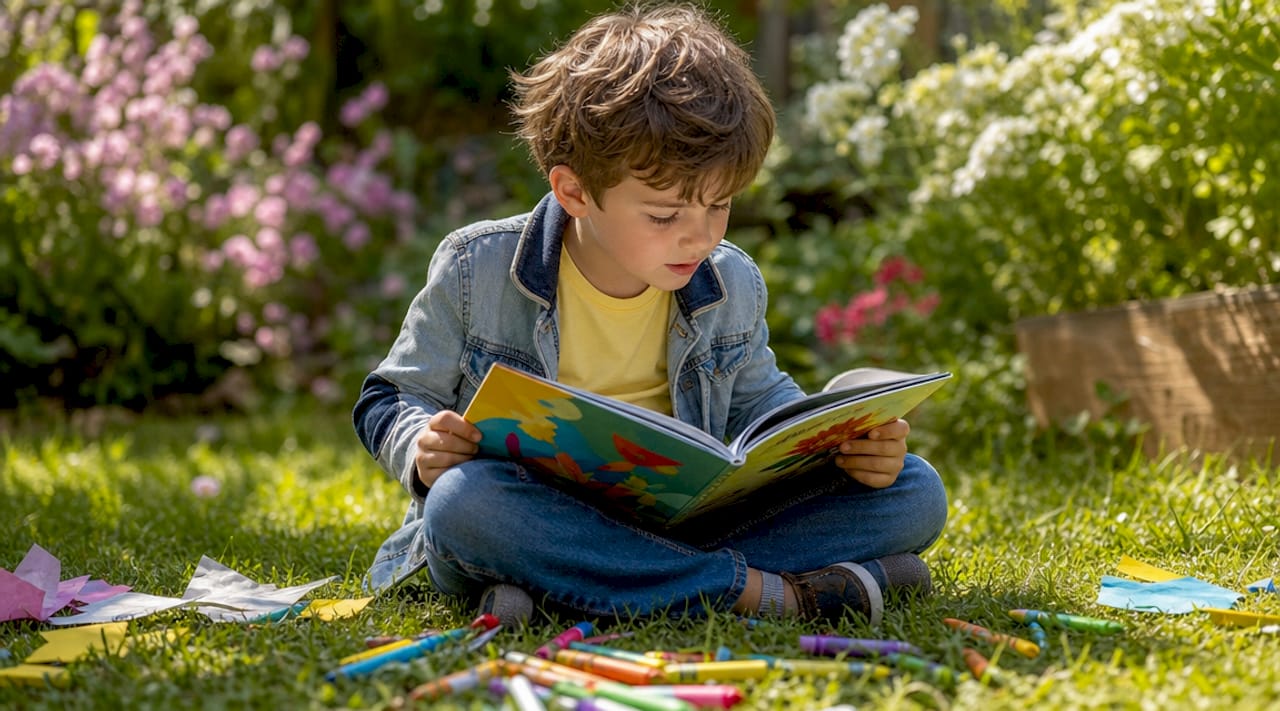
The concept of "interest age" versus "reading age" matters just as much. A 6-year-old obsessed with dinosaurs will engage far more deeply with a dinosaur-themed story slightly above their decoding level than with a perfectly leveled book about a topic that bores them. Matching thematic interests is the single most reliable predictor of whether a book gets read, according to Latimer Tuition's children's book framework. That insight reframes the entire gift selection process.
The best children's books also serve a dual function. They act as mirrors and windows, reflecting a child's own experience back to them while simultaneously showing them lives and feelings they have not yet encountered. A book about a child starting a new school speaks directly to a 5-year-old facing that transition. A book about a flamingo who feels different teaches belonging to any child who has ever felt out of place.
How do developmental milestones shape book selection for ages 3-8?
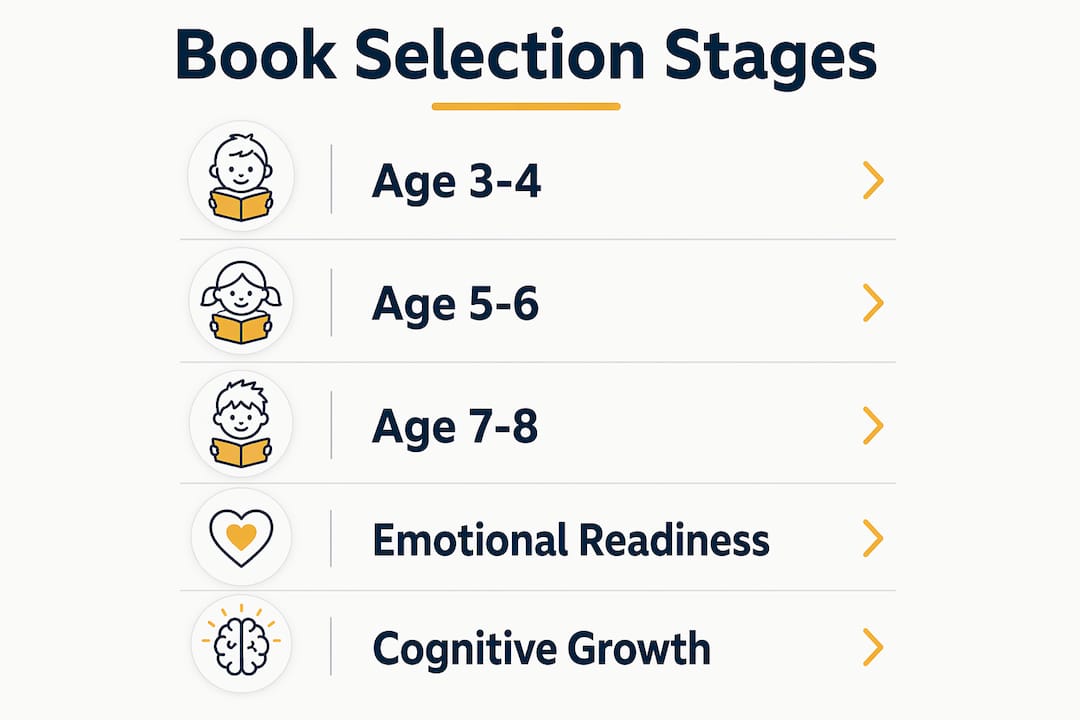
Children between 3 and 8 are not a single audience. They span at least three distinct developmental phases, and the books that work for a 3-year-old will frustrate a 7-year-old and vice versa.
Here is what changes across this window and why it matters for gift selection:
- Ages 3 to 4: Children at this stage process stories primarily through illustration. They follow simple cause-and-effect plots and respond strongly to repetition, rhythm, and humor. Picture books with bold visuals and predictable text structures are the right format. Book behavior, such as handling books correctly and pointing at images, is still developing, so durable formats matter.
- Ages 4 to 5: Narrative comprehension deepens. Children begin tracking character motivations and can hold a slightly longer plot in mind. They start asking "why" about characters' choices. Books that model emotional problem-solving, like a character working through fear or disappointment, land particularly well at this stage.
- Ages 5 to 6: Reading readiness arrives for many children. Controlled vocabulary books and early readers become appropriate, but picture books remain valuable for emotional depth and shared reading. Forcing a transition to chapter books before a child is ready risks damaging their love of reading, even when they can technically decode the words.
- Ages 6 to 8: Independent reading begins. Children can sustain attention through longer narratives and begin preferring books that reflect their specific interests, whether that is animals, adventure, humor, or fantasy. Graphic novels and illustrated chapter books are legitimate and effective formats at this stage.
Emotional and conceptual readiness also varies within each age group. Nuanced topics like grief or family change need careful matching to a specific child's temperament and lived experience, not just their birthday.
How to choose age-appropriate gift books: principles that actually work
Choosing the right book is less about finding the "correct" title and more about applying a short set of principles that account for the whole child.
- Start with the child's current obsession. A child fixated on space, animals, or a specific character will engage with almost any book that touches that theme. Interest alignment beats reading level every time. Ask a parent what the child talks about constantly, then find a book that lives in that world.
- Select 3 to 5 books across varied formats. Offering a selection spanning fiction, nonfiction, and visual formats encourages engagement more effectively than a single title. It also gives the child a sense of ownership over what they read first.
- Prioritize emotional and conceptual readiness over cover age labels. Publisher age labels are conservative averages. A sensitive 5-year-old may not be ready for a book about loss that a confident 4-year-old handles easily. You know the child better than the label does.
- Use award lists as a quality filter, not a prescription. Caldecott and Newbery Medal winners signal narrative quality and thematic appropriateness. They are a reliable starting point when you are unsure, but they are not the only path to a great gift.
- Apply the read-aloud test before you buy. Read the first few pages aloud to yourself. If the rhythm feels natural and the vocabulary holds your attention, the book will work in a shared reading session. Adult enjoyment of reading rhythm directly predicts how often a child will ask for the book to be read again.
Pro Tip: If you are buying for a child you do not know well, a personalized book with their name woven into the story is the single safest gift choice. It removes the interest-alignment guesswork entirely and creates an immediate emotional connection.
Comparing gift book types by age and occasion
Different moments in a child's life call for different kinds of books. The table below maps book types to the ages and occasions where they have the most impact.
| Age range | Best book type | Ideal occasion | Why it works |
|---|---|---|---|
| Ages 3 to 4 | Picture books with high illustration value | Birthday, holiday | Visual storytelling matches cognitive stage; humor and repetition build engagement |
| Ages 4 to 5 | Personalized adventure stories | Birthday | Child's name and likeness create immediate emotional investment |
| Ages 5 to 6 | Social transition books | First day of school, new sibling | Cognitive rehearsal through story modeling reduces anxiety about real events |
| Ages 6 to 7 | Controlled vocabulary early readers | Any occasion | Supports emerging independence without abandoning illustration support |
| Ages 7 to 8 | Illustrated chapter books or graphic novels | Birthday, holiday | Matches growing attention span and specific interest areas |
Beyond age, occasion shapes the right choice. Birthday gifts benefit from personalized stories where the child is the hero of a narrative adventure. Holiday gifts work well as books that anchor family traditions, particularly when they feature recurring characters or seasonal themes a family returns to each year. Books addressing social transitions, like starting kindergarten or moving to a new home, are most powerful when given just before the event rather than after it.
A few additional principles for occasion-based selection:
- For a child you know well, match the book's emotional theme to something they are currently navigating.
- For a child you know less well, a personalized book or a title from a current award list removes most of the risk.
- Avoid gifting books that are clearly below a child's current level. A 7-year-old receiving a board book, even a beautiful one, will feel the mismatch.
Why personalization makes gift books more meaningful
Personalized books are not a novelty. Research by Kucirkova, Messer, and Whitelock demonstrates measurably higher engagement when children encounter their own name and likeness within a story. That engagement translates directly into more repeated readings, deeper emotional processing, and stronger memory anchors around the story's themes.
The mechanism is straightforward. When a child sees their name in a sentence, their brain treats the story as personally relevant rather than abstract. The emotional content of the narrative, whether it is about belonging, courage, or self-acceptance, attaches to the child's own identity rather than floating as a general lesson. This is why a personalized book about feeling different lands harder and lasts longer than a generic book on the same theme.
"The best gift books do not just tell a story. They tell the child's story back to them in a way that makes them feel seen."
Matching a book's theme to a child's current passion amplifies this effect further. A child who loves animals and receives a personalized story where they go on a wildlife adventure with a quirky animal character will return to that book far more often than they would return to a well-reviewed but thematically neutral title.
Pro Tip: When personalizing a book, go beyond just the child's name. Look for options that incorporate their appearance, their friends, or a specific detail about their life. The more specific the personalization, the stronger the emotional connection.
Avoiding generic gifts is not about being precious. It is about recognizing that a book chosen with genuine attention to who a child is communicates something beyond the story itself. It tells the child that someone paid attention to them specifically. That message is part of the gift.
Key takeaways
Age-appropriate gift books work best when they match a child's emotional readiness and personal interests, not just the age printed on the back cover.
| Point | Details |
|---|---|
| Interest age beats reading age | Match themes to a child's current passions first; reading level is secondary to engagement. |
| Developmental stage shapes format | Picture books suit ages 3 to 5; controlled readers and graphic novels fit ages 6 to 8. |
| Personalization increases engagement | Research confirms children engage measurably more with stories featuring their own name and likeness. |
| Occasion guides theme selection | Social transition books work best before the event; personalized adventures suit birthdays. |
| Read-aloud test predicts success | If the adult enjoys reading it aloud, the child will ask for it repeatedly. |
Why I think we overcomplicate children's book gifts
I have watched parents spend twenty minutes in a bookstore paralyzed between two picture books, both perfectly good, while the real question they needed to answer was simpler: what is this child thinking about right now?
The reading level debate is the biggest distraction in children's book gifting. Parents fixate on whether a book is "too easy" or "too hard" when the child's actual experience of the book depends almost entirely on whether the story feels relevant to their life. A 6-year-old who feels like they do not quite fit in will read a book about belonging three times before bed. The same child will ignore a technically appropriate adventure story that has nothing to do with how they feel.
What I have found consistently is that the books children return to are the ones that made them feel understood. Not challenged. Not educated. Understood. That is the bar worth aiming for when you choose a gift book. Caldecott lists and age labels are useful shortcuts, but they are shortcuts to quality, not shortcuts to connection.
The other thing worth saying plainly: gifting a book is an act of attention. When you choose a book that reflects something specific about a child, you are telling them you noticed who they are. That is a more powerful message than any story on the page.
— Derek
Find the right book gift for the child in your life
Choosing a book that genuinely connects with a child takes more than browsing a bestseller list. It takes knowing what to look for and where to find it.
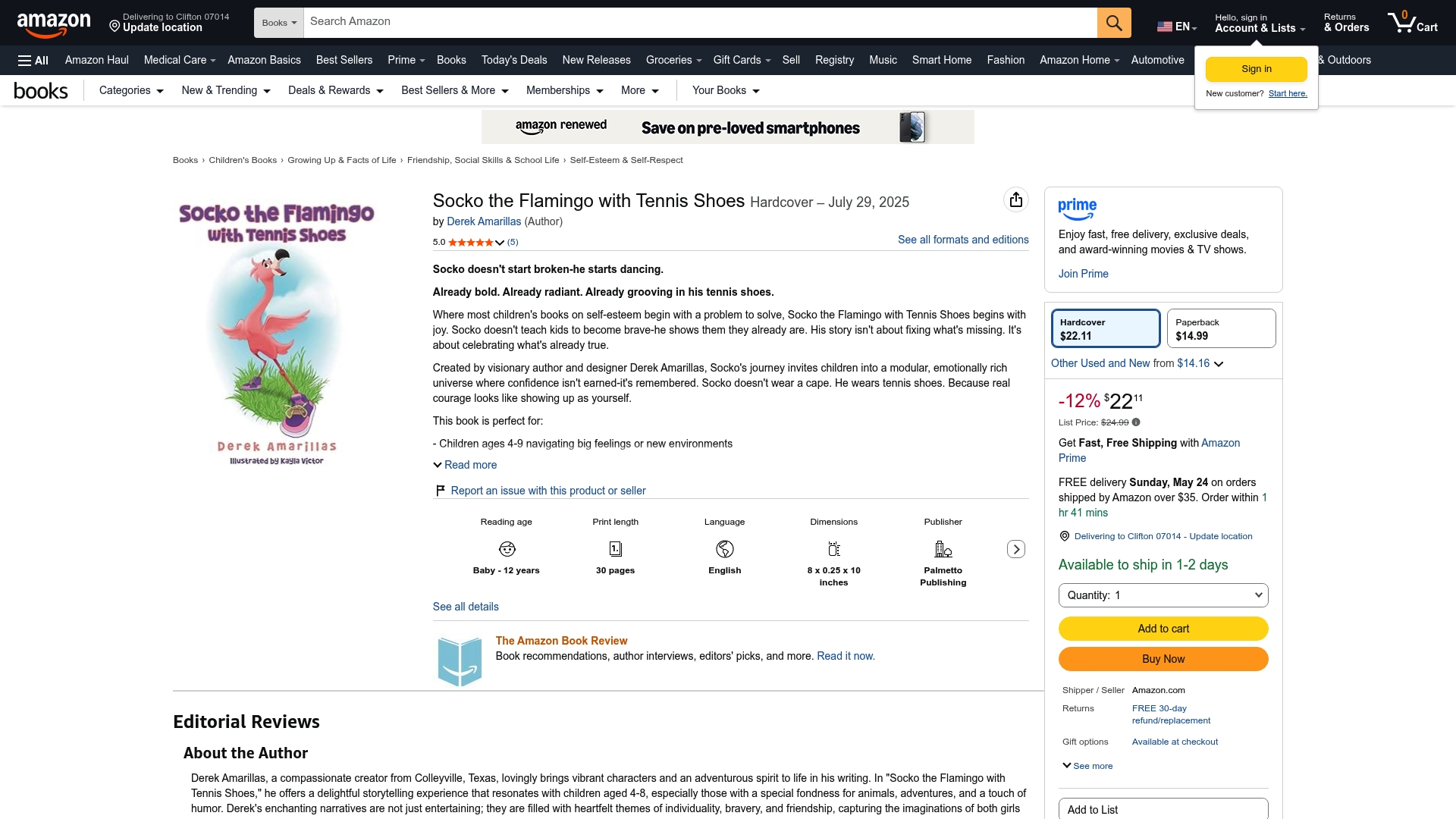
Socko the Flamingo with Tennis Shoes, from A, is a picture book character built specifically for kids ages 3 to 8 who are working through big feelings about belonging, identity, and self-acceptance. The stories use humor and imagination to open conversations that parents and children can have together, making them ideal for shared reading and emotional literacy building. If you are looking for a thoughtful book gift that does exactly what this article describes, Socko is worth a look. The character resonates most with children who have ever felt a little different, which, at some point, is every child.
FAQ
What makes a book age-appropriate for a 3 to 8-year-old?
An age-appropriate book matches a child's cognitive stage, emotional readiness, and personal interests simultaneously. Publisher age labels are a starting point, but emotional and conceptual fit matters more than the number on the back cover.
How do I choose between picture books and early readers for a 6-year-old?
Follow the child's preference rather than the format. Forcing a transition to chapter books before a child is ready risks reducing their motivation to read. Graphic novels and illustrated chapter books are equally valid at this age.
Do personalized books actually make better gifts?
Yes. Research by Kucirkova, Messer, and Whitelock confirms that personalized stories produce measurably higher engagement than standard books, because children treat personally relevant content as more meaningful.
What is the read-aloud test and how do I use it?
Read the first few pages of a book aloud to yourself before buying. If the rhythm feels natural and the vocabulary holds your attention, adult reading enjoyment predicts the child will ask for repeated readings.
How many books should I give as a gift?
Giving 3 to 5 books across different formats, such as fiction, nonfiction, and visual storytelling, encourages engagement more effectively than a single title and gives the child a sense of choice.