
Most parents, teachers, and librarians pick social-emotional learning books by scanning competency checklists: Does it cover empathy? Conflict resolution? Self-regulation? That approach has real value, but it misses something that changes the entire outcome. The role of author intent in selecting SEL books is one of the most underexamined factors in emotional literacy education. Understanding author motivation shifts you from picking books that look like they teach feelings to picking books that actually move children emotionally. That difference matters more than any checklist.
Table of Contents
- Key takeaways
- The role of author intent in selecting SEL books
- How author intent shapes emotional development
- Challenges of applying author intent to SEL selection
- Practical guidelines for evaluating author intent
- My take on why author intent changes everything
- Start with books that were written to matter
- FAQ
Key takeaways
| Point | Details |
|---|---|
| Intent shapes emotional depth | Books written with genuine emotional motivation produce richer, more relatable characters than those built around a lesson. |
| Unconscious motive matters most | Children respond to emotional honesty they can feel, not just messages an author consciously tried to send. |
| Semantic autonomy is real | Once a book is published, its meaning evolves with readers, so author intent alone cannot define a book's SEL value. |
| Track record over isolated titles | Evaluating an author's body of work reveals consistent emotional authenticity better than any single published statement. |
| Balance intent with child context | The most effective SEL selections align author motivation with the developmental needs and cultural background of the child. |
The role of author intent in selecting SEL books
Before you can use author intent as a selection tool, you need to define what it actually means. Author intent is not simply the topic an author chose to write about. It has two distinct layers: conscious intent, meaning the deliberate lesson or message the author set out to deliver, and unconscious motivation, meaning the emotional truth or personal experience driving the story beneath the surface.
In general literature, the gap between these two layers is interesting but not critical. In SEL books for children, that gap is everything. SEL books are often selected based on alignment with core competencies like self-awareness or responsible decision-making, with authorial motivation treated as secondary. But when a book's emotional resonance depends on how honestly the author engaged with the material, skipping that analysis means you are selecting on surface features alone.
Consider the difference between an author who writes about grief because a publisher needed a grief-themed picture book and an author who writes about grief because they experienced loss and needed to make sense of it. The competency column for both might read "emotional processing" and "empathy." The actual impact on a child sitting with that book is entirely different.
- Conscious intent: The explicit lesson, theme, or moral the author designed the book to convey
- Unconscious motivation: The deeper personal, cultural, or emotional experience that shaped how the story was written
- Theme vs. intent: Theme is what the book is about; intent is why it exists at all
- Reader interpretation: Even with clear intent, each child brings their own emotional filter to the text
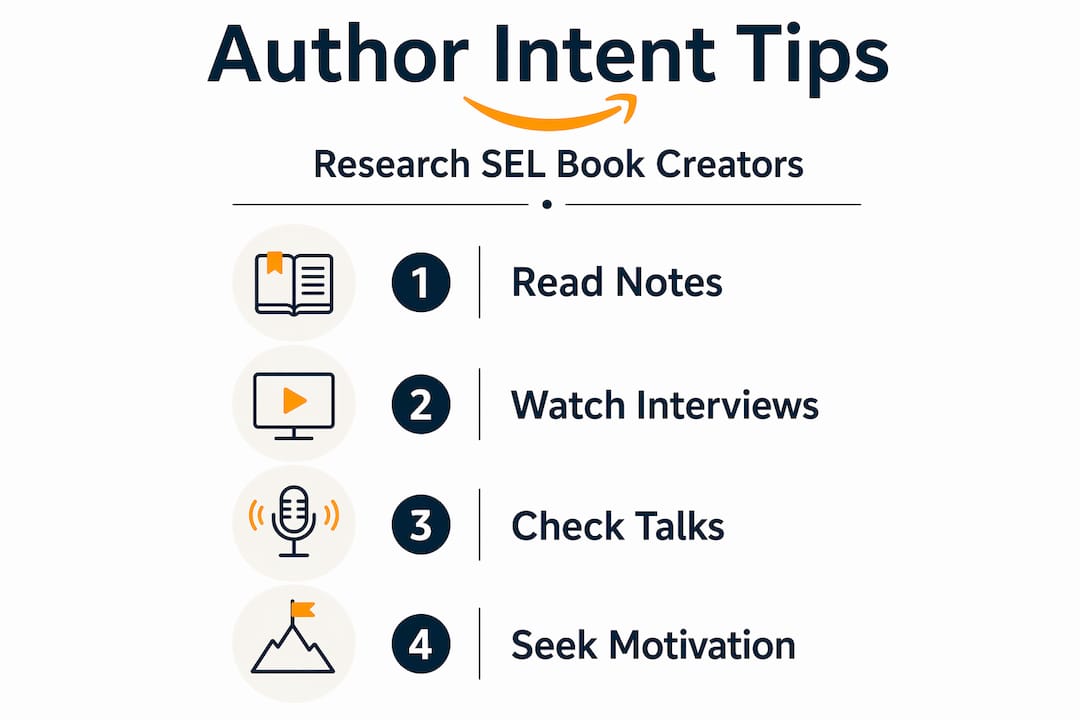
Pro Tip: When researching an author for SEL selection, look for interviews, author's notes, or talks where they discuss why they wrote the book, not just what it is about. The language they use to describe their personal connection to the material tells you far more than any book jacket summary.
How author intent shapes emotional development
The mechanics of how author motivation influences a child's emotional experience go deeper than most selection guides acknowledge. The author's unconscious motivation often outshines conscious intent in the emotional impact a story delivers. Children are remarkably sensitive to the difference between a story that feels alive and one that feels manufactured, even when they cannot articulate it.
Here is how this plays out in practice when you are evaluating books for emotional literacy:
-
Character complexity reflects author honesty. When an author writes from genuine emotional experience, characters carry contradictions, fears, and moments of confusion that feel real. A character who is both scared and brave, both jealous and loving, gives children permission to hold complex feelings at the same time.
-
Didactic messaging creates resistance. Books with a primarily instructional intent, those whose main purpose is to teach a lesson, tend to produce the opposite of their goal. When authorial intent fails to connect emotionally, readers often reject the message entirely. Children especially sense when they are being lectured rather than invited.
-
Empathy requires space. Stories driven by genuine emotional intent leave interpretive room. They do not tell the child how to feel at the end. They create conditions for the child to feel something, which is a fundamentally different experience.
-
Emotional transport is the goal. High-quality SEL fiction aims to transport readers emotionally rather than deliver a fixed message. Selectors should actively look for this quality by asking: Does this book make me feel something? If yes, it probably will for the child too.
"The most effective SEL books create a gap gently navigated between author's message and the child's experience, encouraging internalization rather than resistance."
This means the best SEL books are not the ones with the clearest stated lesson. They are the ones where the author trusted the story enough to let it breathe, and trusted the child enough to arrive at their own emotional understanding.
Challenges of applying author intent to SEL selection

Understanding author motivation is genuinely useful, but treating it as the only lens creates its own problems. The concept of semantic autonomy explains why: once a text is published, its meaning evolves independently of the author's original intent. A book about belonging that an author wrote from one cultural experience can become profoundly meaningful to a child from an entirely different background for entirely different reasons. That is not a bug in the system. That is literature doing exactly what it should.
The challenge for SEL selectors is knowing when to trust the author's intent and when to recognize that the text has grown beyond it.
| Selection approach | Strengths | Limitations |
|---|---|---|
| Intent-led selection | Connects emotional authenticity to story design | Risks missing culturally evolved meanings |
| Competency-led selection | Ties books directly to SEL frameworks | Can overlook emotional depth in favor of topic match |
| Reader-response focused | Centers the child's actual experience | May undervalue the importance of author motivation |
| Balanced approach | Uses intent, competency, and reader context together | Requires more research and evaluative skill |
Market forces complicate this further. Algorithmic book discovery narrows reader experience and tends to surface books that fit neat categories. The most emotionally rich SEL books often resist easy classification. A picture book about a flamingo who wears tennis shoes and navigates not fitting in might not surface under "self-acceptance" in a standard search, but its emotional honesty makes it exactly the kind of book that works.
Pro Tip: When algorithmic search keeps returning the same titles, deliberately seek out books that blend genres or resist easy labels. The books that live between categories often carry the most surprising emotional insights for children.
A rigid reliance on stated author intent also risks excluding books whose original cultural context differs from the child's world, even when the emotional truth inside those books is universal. SEL selectors need to account for evolving textual interpretation by incorporating reader context alongside author motivation.
Practical guidelines for evaluating author intent
Knowing the theory is one thing. Actually applying it when you are standing in a library or browsing an online catalog is another. These guidelines give you a working process for evaluating author motivation as part of a broader selection framework.
-
Look beyond stated intent. An author's website or jacket bio might say the book is "about kindness." That is the conscious intent. Search for longer interviews, articles, or talks where they describe what personally compelled the story. Emotional honesty in how they talk about the book is a reliable signal.
-
Evaluate the author's track record. Trust in an author develops through consistent engagement with their body of work. An author who has written multiple books featuring emotionally complex characters, without defaulting to tidy resolutions, has demonstrated a pattern you can rely on.
-
Look for character-driven depth. Books featuring complex "deeper whys" of characters allow children to explore difficult emotions in a safe context. Ask: Does this character have motivations that make sense even when the behavior is hard? That is the mark of an author who understands emotional truth.
-
Check for trauma-sensitive framing. For children navigating anxiety, loss, or identity challenges, books that incorporate trauma-informed approaches provide emotional safety alongside growth. An author writing with this awareness produces stories where discomfort is acknowledged rather than rushed toward resolution.
-
Test it against your own emotional response. Before giving a book to a child, read it yourself and notice what you feel. Effective SEL fiction avoids moralizing and provides complexity that creates empathy. If you find yourself moved or surprised, the author's emotional intent likely landed.
-
Align with developmental stage. Author intent works in concert with where a child is developmentally. A book written with profound emotional honesty about grief will read differently to a six-year-old than a ten-year-old. Matching emotional depth to developmental readiness amplifies the impact.
Pro Tip: Create a simple two-question test for any SEL book candidate: (1) Does the author talk about why they wrote it in a way that feels personal and specific? (2) Does the main character's emotional journey feel unscripted? If both answers are yes, the book is worth a closer look.
My take on why author intent changes everything
I've looked at a lot of SEL book lists over the years, and the one thing that separates the books children actually carry around from the ones that get shelved is not the topic. It's whether the author meant it.
What I've learned is that the dismissal of author intent usually comes from a good place. Educators want practical tools. Parents want clear outcomes. So they gravitate toward books where the intention is labeled and obvious. But in my experience, those are often the books that produce the most resistance in children, because kids can feel a sales pitch even when they cannot name it.
The books that genuinely shift emotional literacy are the ones where I can read an author interview and sense that they were working something out when they wrote the story. Not just fulfilling a brief. The unconscious motivation bleeds through in ways no editorial process fully removes, and children pick up on that honesty at a cellular level.
My practical advice is this: do not dismiss books that surprise you or make you feel something unexpected. That surprise is often the signal that an author's deeper motivation was working at a level beyond the stated lesson. That is exactly where emotional growth for children lives.
— Derek
Start with books that were written to matter
If this article changed how you think about the SEL books you choose, the next step is finding titles that actually reflect these principles. A has built its whole identity around exactly this kind of emotional honesty in children's storytelling. Socko the Flamingo with Tennis Shoes was not created to tick a competency box. It was created because belonging, identity, and the courage to be different are real emotional experiences children need to see reflected back at them with humor and warmth.
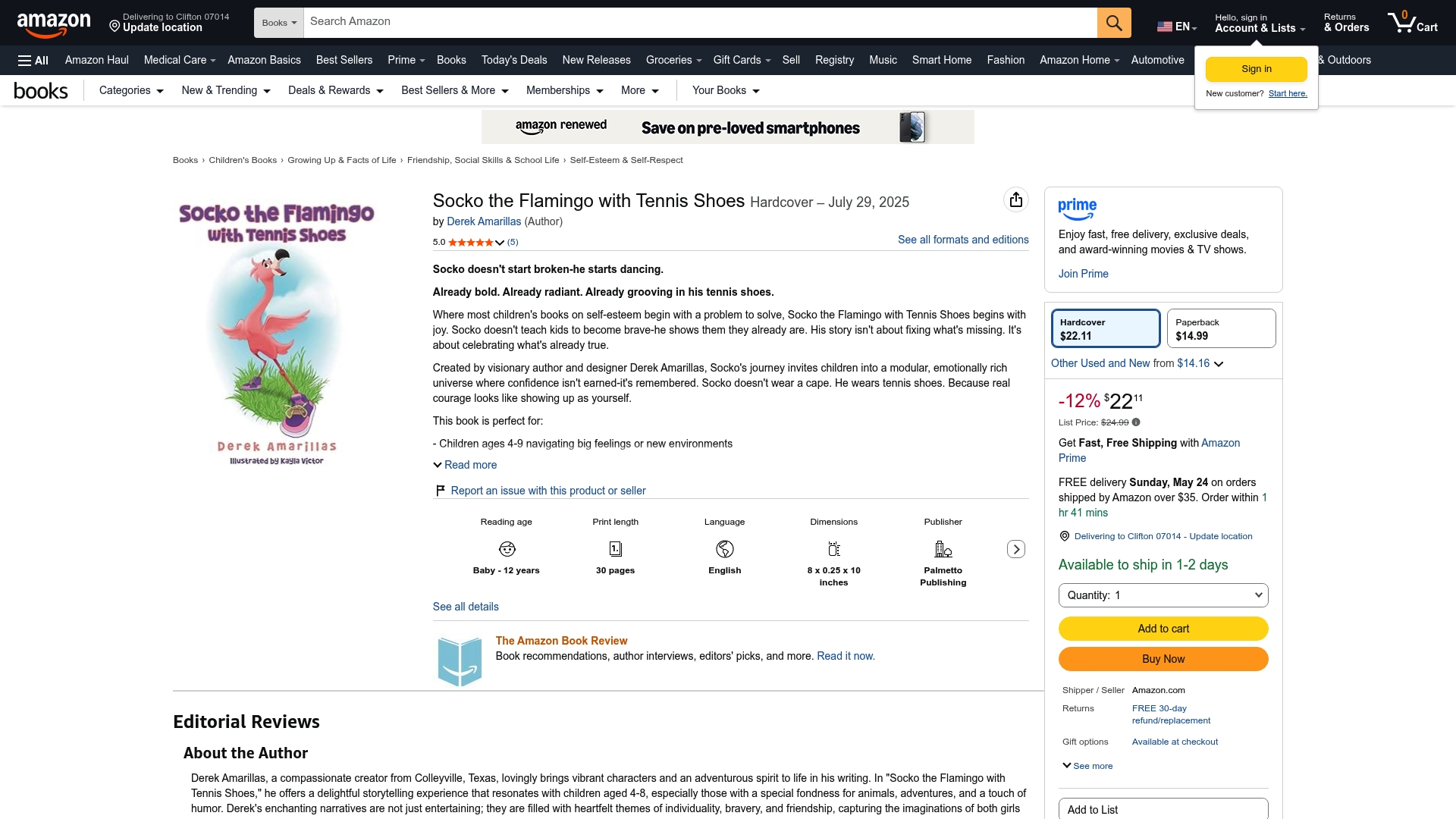
If you are ready to bring that kind of genuine emotional literacy into your home or classroom, explore the Socko the Flamingo books and supporting materials on Amazon. These are the kinds of books that spark real conversations, not just comprehension questions.
FAQ
What is author intent in SEL book selection?
Author intent refers to the motivation and purpose behind why an author wrote a book. In SEL selection, it means evaluating whether a book's emotional content comes from genuine motivation or simply surface-level topic coverage.
Why does author intent matter more than topic alone?
A book's topic tells you what it covers, but the author's intent tells you how honestly and deeply it engages with the emotional content. Children respond to emotional authenticity in ways they cannot always articulate, and books that transport emotionally produce better SEL outcomes than those that simply moralize.
Can a book have good SEL value even if the author's stated intent is unclear?
Yes. Semantic autonomy means a book's meaning evolves with its readers beyond what the author originally intended. A book can carry genuine emotional value for a child even when the author's stated purpose was different or incomplete.
How do I research an author's motivation before selecting a book?
Look for author interviews, TED-style talks, or personal essays where they describe why they wrote the book. Authors who speak specifically and personally about their emotional connection to the material are more likely to have written with the kind of deep motivation that produces lasting SEL impact.
Should I always prioritize author intent over competency alignment?
No. The most effective approach balances both. SEL materials aligned with competencies show improved outcomes, but pairing that alignment with genuine author motivation gives you books that both fit your curriculum and connect emotionally with children.