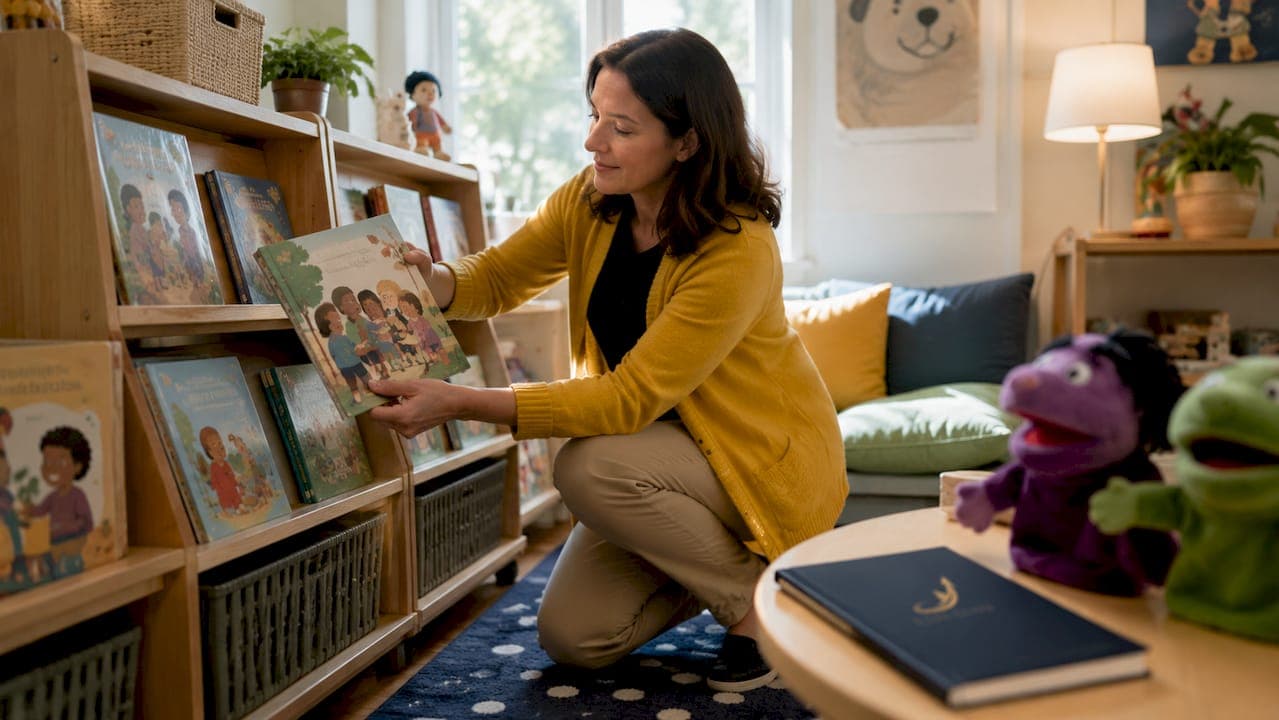
Curated SEL picture book displays are defined as intentionally selected, front-facing collections of social-emotional learning titles arranged at child eye level to promote emotional literacy and independent reading in children aged 3–8. The benefits of curated SEL picture book displays go well beyond shelf organization. Research confirms that front-facing displays with 10–20 titles increase independent engagement and support emotional literacy in young children. SEL covers five core dimensions: self-awareness, self-management, social awareness, relationship skills, and responsible decision-making. No single picture book addresses all five. That is exactly why curation matters.
1. Benefits of curated SEL picture book displays for emotional learning
Curated SEL picture book displays directly support all five SEL competencies when titles are chosen with intention. A random shelf of books cannot do this. Only deliberate selection ensures children encounter stories that address each dimension at a developmentally appropriate level.

Picture books with SEL themes use relatable characters and emotionally honest stories to help children develop empathy, identity, and social skills. Stories serve as safe spaces where children can experience big feelings without real-world consequences. That emotional safety is what makes picture books uniquely powerful for ages 3–8.
The five SEL dimensions map naturally to specific book types:
- Self-awareness: Books about feelings, identity, and personal strengths (characters like Socko the Flamingo in A model self-acceptance through humor)
- Self-management: Stories about calming down, making choices, and handling frustration
- Social awareness: Books featuring diverse characters, community helpers, and different family structures
- Relationship skills: Stories about friendship, sharing, conflict resolution, and kindness
- Responsible decision-making: Tales where characters face choices and experience consequences
No single book covers all SEL aspects. Curation fills that gap by building a collection that works as a complete system rather than a collection of random titles.
2. Key design principles for effective curated SEL picture book displays
Display design determines whether children actually pick up books or walk past them. The physical arrangement is not decorative. It is functional.
Front-facing covers beat spine-out storage every time. Children aged 3–8 cannot reliably read titles on spines. They respond to cover art, color, and familiar characters. A front-facing display communicates "this book is for you" in a way that a spine-out shelf never can.
Here are the core design principles that produce results:
- Place displays at child eye level. Positioning at child height removes the single biggest barrier to independent book choice. This is especially critical for children under six.
- Limit visible titles to 10–20. Overcrowding reduces visual clarity and overwhelms young readers. Fewer choices produce more engagement.
- Use color and thematic signage. Display units with color, signage, and interactive spaces encourage browsing, sitting, and richer engagement with books.
- Rotate titles regularly. Store the rest of your collection off-display and swap titles every two to four weeks to maintain novelty.
- Group by SEL theme, not by author or alphabet. A "Feelings" section or a "Friendship" corner gives children a reason to browse with purpose.
- Add a comfortable seating element nearby. A small rug or cushion signals that this is a place to stop, sit, and read.
Pro Tip: Label each display section with a simple emotion word or SEL theme in large, child-readable font. Even pre-readers respond to visual cues like a heart icon for "Feelings" or two stick figures for "Friendship."
3. Cost-effective strategies for curating SEL picture book collections
Budget is the most common reason educators and caregivers delay building a curated collection. The good news is that curated SEL book packs of 10 titles can cost as low as $30, which is substantially less than buying individual retail titles. That price point makes thematic curation accessible for classrooms, home libraries, and childcare centers alike.
The recommended collection structure balances visibility with variety:
| Collection layer | Size | Purpose |
|---|---|---|
| Active display | 8–12 titles | Visible, front-facing, child-accessible |
| Rotating reserve | 50–100+ titles | Swapped in regularly to maintain freshness |
| Thematic packs | 10 titles per theme | Grouped by SEL dimension for targeted use |
Recommended collections include 50 to 100+ titles with 8–12 visible at a time for rotation and freshness. That ratio keeps the display manageable while giving you enough variety to rotate monthly without repeating titles too quickly.
Sourcing strategies that reduce cost without sacrificing quality include library sales, school book fairs, educator discount programs, and curated packs from publishers who specialize in SEL content. A, the brand behind Socko the Flamingo with Tennis Shoes, offers titles specifically designed to spark conversations about belonging and identity at an accessible price point.
4. How curated SEL picture book displays impact motivation and reading habits
Displays do more than organize books. They send a message to children about what adults value. Library and classroom displays act as environment signals that communicate priorities and directly impact children's motivation to engage with reading and SEL topics. A well-maintained display says: emotional literacy matters here.
Children respond to choice. When a display is curated and accessible, children exercise agency by selecting their own books without adult direction. That sense of ownership increases reading frequency and builds the habit of reaching for a book independently.
"When children can see the covers, reach the shelf, and choose freely, they stop waiting for permission to read. The display itself becomes an invitation. Curated SEL collections make that invitation specific: come here to understand your feelings, your friendships, and yourself."
The psychological effect is real and measurable in behavior. Children who regularly access front-facing, curated displays show stronger associations between reading and emotional exploration. They begin to see books as tools for understanding their own experiences, not just entertainment.
5. Practical tips for educators and caregivers to build effective displays
Building a curated display does not require a large budget or a redesigned classroom. It requires intention and a consistent refresh schedule.
Start with these practices:
- Involve children in selection. Ask children which books they want to see on the display. This builds ownership and increases the chance they will actually read what is shown.
- Refresh the display every two to four weeks. Novelty drives engagement. A display that never changes becomes invisible to children within days.
- Use thematic signage tied to current classroom or family conversations. If a child is navigating a new sibling or a friendship conflict, a "Feelings" or "Friendship" display section becomes immediately relevant.
- Create an interactive element. A sticky-note wall where children can write or draw their reaction to a book extends the SEL conversation beyond the story itself.
- Pair display books with brief read-aloud sessions. Reading a displayed title aloud once dramatically increases the number of children who independently pick it up afterward.
Pro Tip: Photograph your display at the start of each rotation cycle. Over time, you will build a visual record of which themes generated the most engagement, which helps you plan future curation with real evidence from your own classroom or home.
The importance of curated displays grows when children face social or emotional transitions. Back-to-school season, holidays, and family changes are all moments when a targeted SEL display can provide comfort and language for feelings children cannot yet name on their own.
Key takeaways
Curated SEL picture book displays are the most effective tool educators and caregivers have for building emotional literacy and independent reading habits in children aged 3–8.
| Point | Details |
|---|---|
| Front-facing design drives engagement | Display covers, not spines, so children aged 3–8 can self-select without adult help. |
| Limit visible titles to 10–20 | Fewer books on display produce more engagement by reducing visual overload. |
| Curation covers all five SEL dimensions | No single book addresses all SEL competencies; a curated collection fills every gap. |
| Eye-level placement is non-negotiable | Positioning displays at child height is the single most critical factor in independent access. |
| Rotate every two to four weeks | Regular refresh cycles sustain curiosity and keep SEL themes relevant to children's lives. |
What I have learned from watching children choose their own books
I have spent years watching children interact with book displays in classrooms, libraries, and home reading corners. The pattern is consistent. Children walk past spine-out shelves without slowing down. They stop at front-facing displays, especially when the covers show characters who look like them or feel like them.
The most underrated insight in early childhood literacy is this: curation is not about restricting choice. It is about making choice possible. A child standing in front of 200 spine-out books is not empowered. A child standing in front of 12 front-facing books organized around feelings they recognize is genuinely free to choose.
I have also seen educators treat display rotation as a low-priority task. That is a mistake. The moment a display stops changing, children stop seeing it. Freshness is not cosmetic. It is the mechanism that keeps the display working as an SEL tool rather than furniture.
A's Socko the Flamingo with Tennis Shoes is a strong example of what the right book in the right display can do. A character who is visibly different, joyful, and unashamed of who they is gives children permission to feel the same way. That conversation does not happen if the book is spine-out on a crowded shelf.
— Derek
A great place to start your curated SEL display
Building a curated SEL picture book collection does not have to be complicated or expensive. A, the brand behind Socko the Flamingo with Tennis Shoes, creates picture books designed specifically to open conversations about big feelings, belonging, and self-acceptance in children aged 3–8.
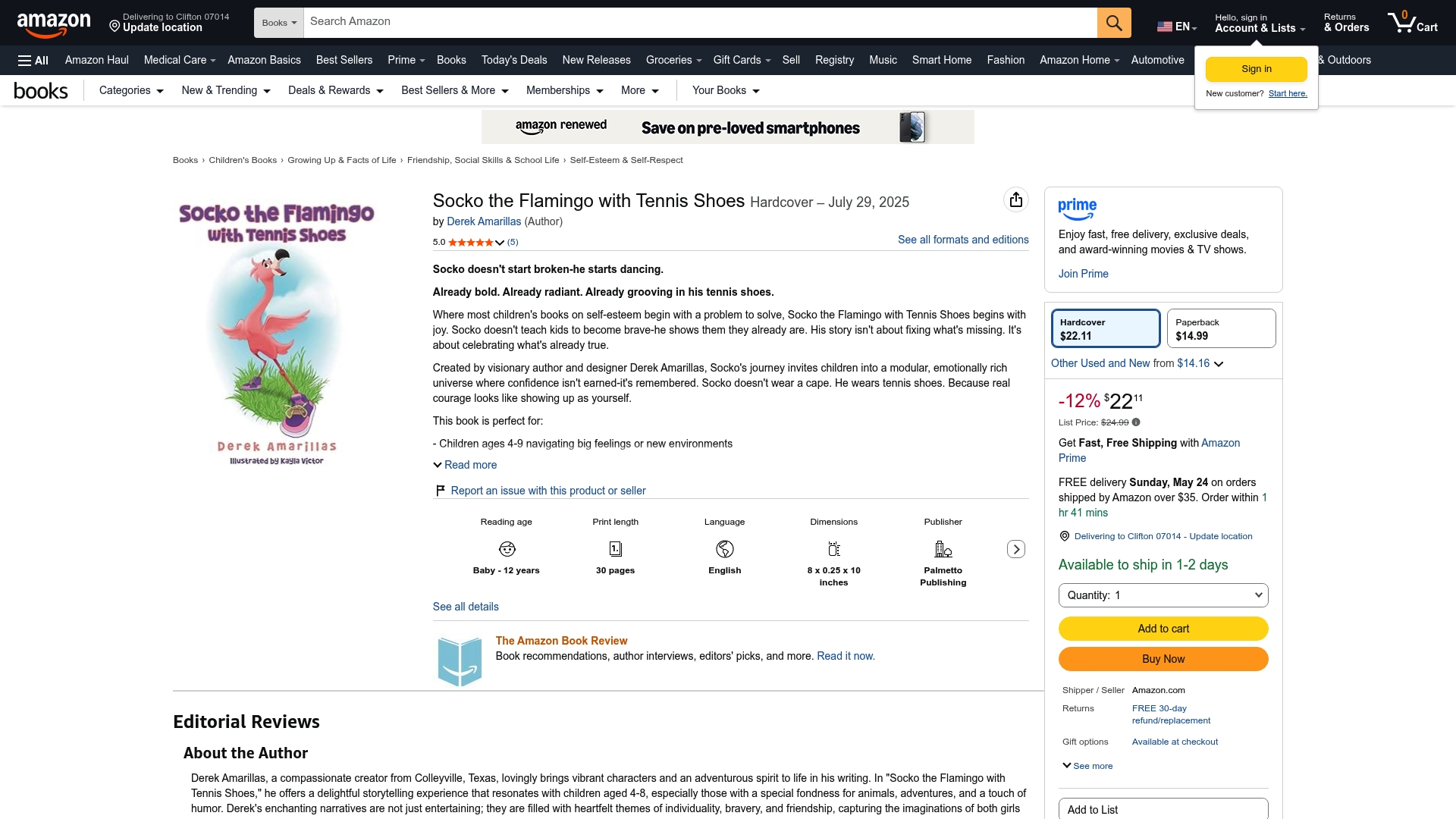
Socko's stories work especially well as anchor titles in a "Feelings" or "Identity" display section. They pair naturally with other SEL titles and give children a character they genuinely want to return to. You can find Socko the Flamingo books on Amazon, making it straightforward to add a high-impact SEL title to your next display rotation without a complicated ordering process.
FAQ
What are the benefits of curated SEL picture book displays?
Curated SEL picture book displays increase independent reading, build emotional literacy, and give children access to stories that address all five SEL competencies: self-awareness, self-management, social awareness, relationship skills, and responsible decision-making. Front-facing, child-height displays are the most effective format for children aged 3–8.
How many books should a curated SEL display include?
Effective displays show 10–20 front-facing titles at a time, with a rotating reserve of 50–100+ books stored off-display. Keeping the visible count low preserves visual clarity and encourages self-selection.
How often should I rotate a curated SEL picture book display?
Rotate your display every two to four weeks. Regular rotation maintains novelty, keeps SEL themes relevant to children's current experiences, and prevents the display from becoming invisible through familiarity.
Why does eye-level placement matter for SEL picture book displays?
Child eye-level placement removes the physical barrier to independent book choice and is especially critical for children under six. When children can reach and see books without adult help, they develop ownership over their reading and engage more frequently.
Can curated SEL picture book displays work at home, not just in classrooms?
Yes. The same principles apply at home: front-facing covers, child-height placement, and a small rotating selection of 10–15 titles. A dedicated reading corner with a simple display shelf and a comfortable cushion creates the same environment signal at home that a classroom display creates at school.