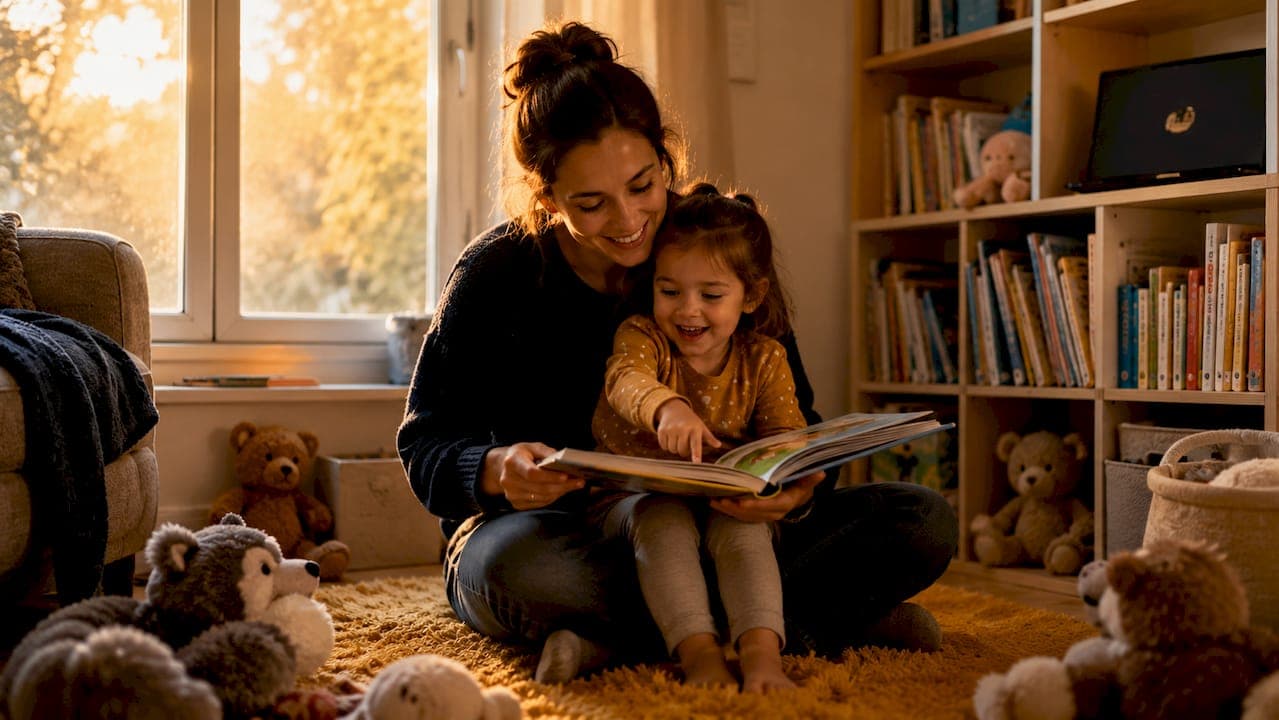
Reading emotional books to children is the most direct way to build empathy, emotional regulation, and social understanding during the years that matter most. The benefits of reading emotional books to kids extend well beyond bedtime routines. Research shows that just 14 days of daily reading improves cognitive empathy and creative fluency in children aged 6–8. Books like those featuring A's character Socko the Flamingo give children a mirror for their own big feelings and a vocabulary to name them. Parents and educators who make emotional literature a daily habit are building something that lasts.
1. How reading emotional books develops empathy in children
Empathy in children is not a fixed trait. It is a skill that grows with practice, and reading emotional books is one of the most reliable ways to practice it.
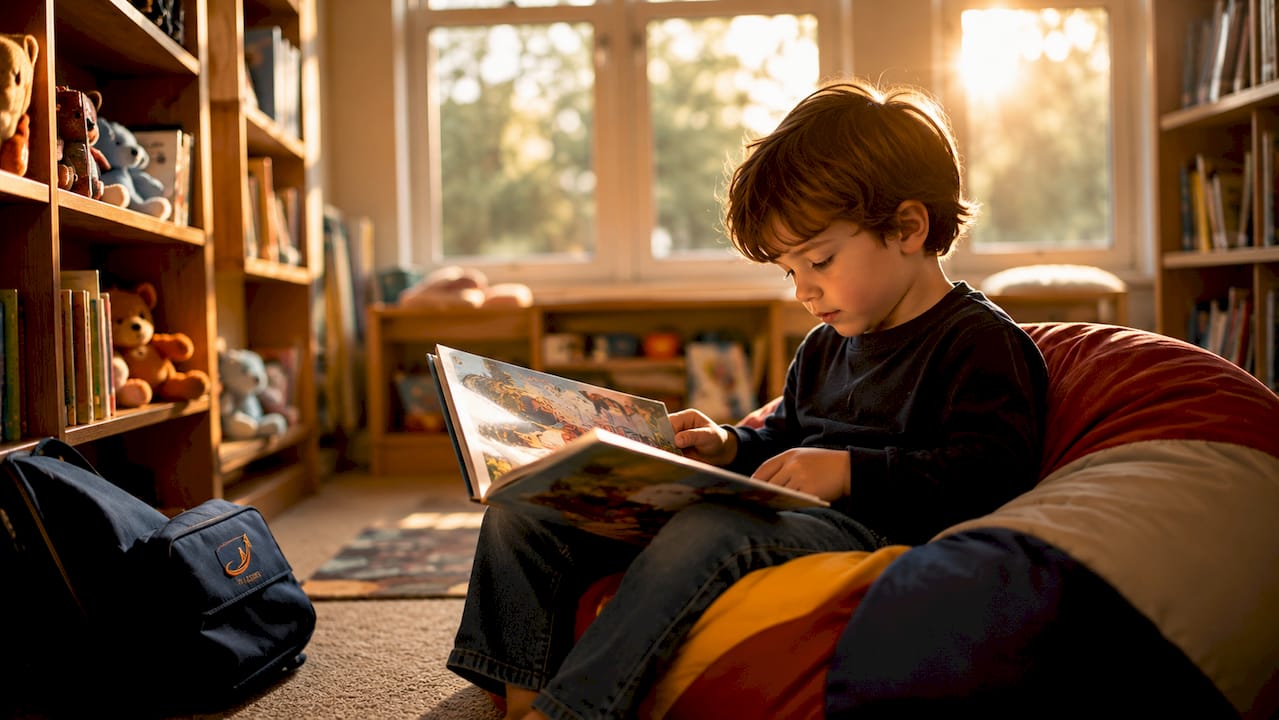
Researchers distinguish between two types of empathy. Cognitive empathy means understanding what another person is thinking or feeling. Emotional empathy means actually feeling what they feel. Cognitive empathy develops faster through reading routines, while emotional empathy requires longer neurological change. That distinction matters for parents and educators setting realistic expectations.
Researcher Erin Clabough compares reading to children to practicing an instrument. Each session strengthens neural pathways for perspective-taking, just as scales build finger memory. The more consistently children hear character-driven stories that show big emotions, the stronger those circuits become.
A study with 38 children aged 6–8 found that 14 days of bedtime reading improved total empathy and creative fluency. The gains appeared regardless of whether parents asked questions or simply read straight through. That finding removes a major barrier for busy families.
- Character-driven stories that show fear, joy, or loneliness give children a safe model for those feelings.
- Stories featuring characters who look or live differently from the reader stretch perspective-taking the furthest.
- Repeated exposure to the same emotional story deepens comprehension of the feeling being portrayed.
- Fiction for emotional growth works even when children cannot yet articulate what they are experiencing.
Pro Tip: Pick books where the main character faces a problem they cannot solve immediately. Sustained emotional tension is what activates empathy circuits, not quick resolutions.
2. Building emotional vocabulary through children's stories
Children cannot manage feelings they cannot name. Books are the most natural way to give them that naming power.
Emotional vocabulary is the set of words a child uses to identify and describe internal states. When books introduce age-appropriate words like "frustrated," "nervous," or "proud," children gain tools to label what is happening inside them. Specific emotional words help children label and manage emotions more effectively. That labeling reduces the frustration that often spills into behavioral problems.
Picture books use two techniques that make abstract emotions concrete. The first is color coding, where a character's mood shifts the palette of the page. The second is metaphorical characters, where a storm cloud follows a sad child or a volcano represents anger. Both techniques let children see an emotion before they have the words to describe it.
Here is a practical sequence for building emotional vocabulary through reading:
- Choose books that name at least three distinct emotions in the story.
- Pause after a character's feeling is shown, not described, and ask the child what they notice on the character's face.
- Introduce the word for that feeling after the child has observed it visually.
- Revisit the same book within a week. Repetition locks in new vocabulary faster than variety.
- Connect the story word to a real moment: "Remember when Socko felt left out? Did you ever feel that way?"
Pro Tip: Books with a single dominant emotion per story work better for children under age 5. Save emotionally complex narratives with mixed feelings for ages 6 and up, when children can hold two feelings at once.
3. How emotional books support regulation and cognitive growth
Emotional regulation is the ability to manage feelings without being overwhelmed by them. Reading emotional picture books builds that ability in measurable ways.
A 12-week intervention study with preschool children found that picture book reading significantly improved emotional regulation and cognitive function. Correlation coefficients ranged from r = 0.426 to 0.578 (p < 0.01). Those numbers confirm that the relationship between book exposure and regulation skills is not coincidental.
The cognitive gains matter as much as the emotional ones. Children who regulate emotions better also show stronger working memory, attention, and problem-solving. Reading emotional books trains both systems at once, which is why the approach fits naturally into kindergarten curricula focused on social-emotional learning.
| Benefit | What it looks like in practice |
|---|---|
| Improved emotional regulation | Child pauses before reacting; uses words instead of tantrums |
| Stronger cognitive function | Better focus during class; improved memory for instructions |
| Expanded empathy | Child notices when a peer is upset and responds with care |
| Richer emotional vocabulary | Child says "I feel anxious" instead of "I feel bad" |
| Reduced behavioral issues | Fewer classroom disruptions tied to unmanaged frustration |
Books are also one of the most cost-effective interventions available to educators. A single picture book read across a school week costs nothing beyond the initial purchase and delivers benefits that extend into social behavior and academic readiness.
4. The safe distance that stories create for big feelings
Stories give children permission to feel difficult emotions without being overwhelmed by them. That distance is not avoidance. It is a developmental tool.
When a child reads about a character who feels grief or depression, they experience those feelings at one remove. They can observe the emotion, feel it partially, and then close the book. That on-off control is something real life rarely offers. Stories provide essential emotional distance, allowing children to safely explore difficult feelings and build resilience.
Books like The Princess and the Fog use metaphor to explain childhood depression in a way that feels accessible rather than clinical. The fog is not a diagnosis. It is something the child can picture, talk about, and eventually imagine lifting. That metaphorical frame makes a hard conversation possible.
"Metaphorical storytelling helps children engage with difficult internal states, making abstract emotions more tangible and manageable. When a child sees a character navigate sadness through a story, they learn that hard feelings have a shape, and that shapes can change."
Adult guidance amplifies this benefit. When a parent or educator sits with a child after a difficult story and asks open questions, the child learns that big feelings are safe to discuss. The book opens the door. The adult keeps it open.
5. How reading aloud shapes social understanding
Reading aloud to children builds more than literacy. It builds the social brain.
Books focused on friendship and emotional identification give children a sense of control during instability. That is especially true for children navigating transitions like starting school, moving, or family change. A story about a character who feels scared but finds belonging tells a child that their experience is normal and survivable.
The read-aloud format also models emotional language in real time. When an adult reads with expression, pausing at a sad moment or softening their voice during a tender scene, the child learns that emotions have texture. They learn that feelings are worth slowing down for.
Pro Tip: Read with your phone face-down. Distraction-free reading sessions signal to children that the story, and their emotional response to it, deserves full attention.
Key Takeaways
Reading emotional books to children builds empathy, emotional vocabulary, and regulation skills through consistent exposure to character-driven stories, and no special technique is required to see results.
| Point | Details |
|---|---|
| Empathy grows with practice | Just 14 days of bedtime reading improves cognitive empathy and creative fluency in children aged 6–8. |
| Vocabulary reduces frustration | Books that name specific feelings give children tools to label emotions, which lowers behavioral issues. |
| Regulation and cognition improve together | A 12-week picture book study showed strong correlations between emotional regulation gains and cognitive function. |
| Metaphor makes hard topics safe | Stories like The Princess and the Fog use metaphor to help children process grief and depression without being overwhelmed. |
| Simple reading is enough | Straight-through reading without interactive questioning produces the same empathy gains as guided discussion. |
Why I stopped overthinking bedtime stories
For a long time, I thought I needed a method. A set of questions to ask. A framework for the conversation after the book. I watched parents around me turn reading time into a structured exercise, and I wondered if I was doing it wrong by just reading.
The research settled that for me. Simply reading straight through produces the same empathy gains as interactive reading. The story does the work. Your job is to show up consistently and read without distraction.
What I have seen, both personally and in classrooms, is that children who hear emotional stories regularly develop a different relationship with their own feelings. They have words for things. They recognize emotions in others faster. They are less likely to shut down when something hard happens.
The books that do this best are not the ones with the most elaborate illustrations or the cleverest rhymes. They are the ones where a character feels something real and works through it. A flamingo who feels out of place but finds his footing. A child who is scared but stays anyway. Those stories accumulate. They become part of how a child understands the world.
Embed emotional books into your daily routine the same way you embed meals. Not as a special occasion. Not as a reward. As a given.
— Derek
A great place to start building your emotional book collection
Reading emotional books to children pays off in ways that show up at the dinner table, on the playground, and in the classroom. The challenge for most parents and educators is knowing where to begin.

A's Socko the Flamingo character was built exactly for this purpose: to give children a funny, imaginative entry point into big feelings like belonging, identity, and self-acceptance. If you are ready to put emotionally rich books in front of the children in your life, this curated collection of children's books focused on emotional growth is a practical starting point. The titles there are selected for different age groups and cover the full range of feelings children need language for.
FAQ
What are the main benefits of reading emotional books to kids?
Reading emotional books builds empathy, expands emotional vocabulary, and improves emotional regulation. Research shows that just two weeks of daily reading produces measurable gains in empathy and creative thinking in children aged 6–8.
Do parents need to ask questions during reading for it to work?
No. A 2026 study found that reading straight through without stopping for questions produces the same empathy gains as interactive reading. Consistent, distraction-free reading is what matters most.
What age should children start reading emotional books?
Children benefit from emotional picture books from toddlerhood onward. Books with simple, single-emotion stories work best for children under 5, while more complex emotional narratives suit children aged 6 and up.
How does emotional vocabulary from books reduce behavioral issues?
When children have specific words for their feelings, they can name and communicate distress instead of acting it out. Psychotherapists recommend books that introduce words like "angry," "sad," and "nervous" as a first step toward emotional self-management.
Can emotional books help children process grief or depression?
Yes. Books that use metaphor, such as depicting depression as a fog, give children a safe, concrete way to understand difficult internal states. Adult guidance after reading deepens that processing and signals that hard feelings are safe to discuss.