
The best SEL books for early elementary children are those that teach social-emotional skills through stories and activities matched to how 3 to 8 year olds actually think and feel. Social-emotional learning (SEL) is the recognized term for the process of developing self-awareness, empathy, responsible decision-making, and relationship skills. The best SEL books early elementary 2026 picks covered here range from classic picture books like Have You Filled a Bucket Today? to reusable wipe-off workbooks and full curricula like KinderSocialSkills. Each title was selected because it combines engaging narrative with practical skill-building, not just one or the other.
1. Best SEL books for early elementary 2026: the top picks
The titles below represent the strongest early elementary SEL recommendations available for the 2026 school year. They span picture books, workbooks, and structured curricula so you can match the format to your setting.
Have You Filled a Bucket Today? by Carol McCloud
This is the most widely used SEL picture book for ages 3 to 9 in American classrooms. The bucket metaphor gives children a concrete, visual way to understand kindness and empathy without abstract vocabulary. Simple illustrations and a short narrative make it accessible for Pre-K read-alouds and independent reading in 1st grade. Teachers report that children naturally start using "bucket filling" language on the playground within days of the first read.

Get Ready for School: Social and Emotional Learning Wipe-Off Workbook
This reusable wipe-off workbook targets Pre-K through 2nd grade and covers five SEL skill areas through tracing, coloring, and fill-in-the-blank activities. It ships with a dry-erase marker, so children can complete, erase, and repeat every activity. That design matters because repeated practice is what moves SEL skills from awareness into habit. For classrooms with limited budgets, one workbook can serve an entire school year without wearing out.
Pro Tip: Laminate a few extra pages from any SEL workbook and add them to a morning meeting rotation. Children who practice the same scenario multiple times retain the skill far better than those who see it once.
KinderSocialSkills curriculum
KinderSocialSkills delivers 75 SEL lessons and social stories for Pre-K through 1st grade, built around two recurring characters children recognize and trust across the year. The curriculum includes differentiated response sheets: coloring pages for non-writers and simple sentence frames for emerging writers. That built-in differentiation makes it one of the few SEL resources that genuinely works across a mixed-ability Pre-K or kindergarten classroom without extra teacher prep. A longitudinal study tracking kindergarteners over 20 years found that social skills in early childhood predict long-term success more strongly than academic achievement alone. That finding makes a 75-lesson curriculum a serious investment, not a nice-to-have.
The Shy Book and The Worried Book by Howard Pearlstein
These two picture books by Howard Pearlstein, illustrated by James Munro, target ages 3 to 6 and address two of the most common emotional experiences in early childhood. Simple, concrete images replace abstract emotional language, which is exactly what young children need. Both books are short enough for a single sitting and open-ended enough to spark a five-minute conversation afterward. They work equally well at bedtime at home or during a morning circle at school.
Additional titles worth adding to your shelf
Beyond the core four, several other SEL books for kids deserve a spot in any early elementary collection:
- The Invisible String by Patrice Karst addresses separation anxiety and belonging for ages 4 to 8.
- Grumpy Monkey by Suzanne Lang teaches emotional awareness and the idea that it is okay not to be okay, targeting ages 3 to 7.
- In My Heart by Jo Witek uses sensory language to describe ten different emotions, making it ideal for Pre-K vocabulary building.
- A Little Spot of Emotion series by Diane Alber gives each emotion a character, which helps children label feelings before they can fully articulate them.
2. How to choose the right SEL book for your child or classroom
Choosing the right SEL book comes down to three factors: developmental stage, learning goal, and how you plan to use it.
Match the format to the child's age. Children under 5 need concrete metaphors and very short text. The bucket in Have You Filled a Bucket Today? works because every child has held a bucket. Abstract concepts like "empathy" or "self-regulation" land better when they are attached to a physical image. Concrete metaphors reduce cognitive load, which means children spend their mental energy on the feeling itself rather than decoding the language.
Identify the specific SEL skill you want to build. Not every book covers every competency. The Worried Book targets anxiety specifically. KinderSocialSkills covers a broad range of social skills across 75 lessons. The Get Ready for School workbook focuses on five defined skill areas. Picking a book because it is popular is less effective than picking one because it addresses the exact gap you are seeing in a child or classroom.
Decide between story-based and practice-based formats. Picture books are excellent for introducing a concept and sparking conversation. Workbooks and curricula are better for repeated skill application. Combining both formats produces stronger outcomes than using either alone. A practical sequence: read the picture book on Monday, use a related workbook activity on Tuesday, and revisit the concept through role-play by Friday.
Pro Tip: When evaluating a curriculum like KinderSocialSkills, check whether it includes differentiated materials before you buy. A single-level resource forces you to create your own adaptations, which adds hours of prep time per week.
3. Side-by-side comparison of top SEL books
The table below compares the featured titles on the criteria that matter most to parents and educators making a purchase decision.
| Title | Age range | Core SEL focus | Format | Reusable? |
|---|---|---|---|---|
| Have You Filled a Bucket Today? | 3 to 9 | Kindness, empathy | Picture book | No |
| Get Ready for School Wipe-Off Workbook | Pre-K to 2nd grade | 5 SEL skill areas | Wipe-off workbook | Yes |
| KinderSocialSkills | Pre-K to 1st grade | Broad social skills | Curriculum (75 lessons) | Yes (digital) |
| The Shy Book | 3 to 6 | Shyness, belonging | Picture book | No |
| The Worried Book | 3 to 6 | Worry, anxiety | Picture book | No |
| Grumpy Monkey | 3 to 7 | Emotional awareness | Picture book | No |
| In My Heart | Pre-K to K | Emotion vocabulary | Picture book | No |
Picture books are the entry point. Workbooks and curricula are the practice layer. The most effective SEL programs for early elementary use at least one of each.
4. Tips for integrating SEL books into daily routines
The difference between a book that sits on a shelf and one that actually changes behavior is how consistently you use it. These practices make SEL literature for young students stick:
- Pair every read-aloud with one immediate activity. After reading Have You Filled a Bucket Today?, give children a paper bucket and ask them to draw one way they filled someone's bucket that day. The activity takes three minutes and locks in the concept.
- Use dry-erase workbooks at a dedicated station. Place the Get Ready for School workbook at a morning arrival station. Children who complete one page before the day starts begin the school day with a regulated, focused mindset.
- Let characters do the heavy lifting. KinderSocialSkills uses recurring characters specifically because children build emotional attachment to them. When a character struggles with sharing, children feel it. That emotional connection is what makes the lesson transfer to real situations.
- Adapt for attention span. For 3 and 4 year olds, read half a book, stop, and discuss. Finishing a book is not the goal. Building a habit of noticing feelings is.
- Rotate titles seasonally. Introduce worry-focused books like The Worried Book at the start of the school year when anxiety peaks. Use kindness books in winter when social dynamics in classrooms tend to get complicated.
Pro Tip: SEL workbooks designed for repeated use are worth the slightly higher upfront cost. A single reusable workbook replaces dozens of printed worksheets across a school year, and children take the repetition more seriously when the format feels intentional.
Key takeaways
The best SEL books for early elementary children combine concrete storytelling with repeated, structured practice across multiple skill areas.
| Point | Details |
|---|---|
| Match format to age | Use concrete metaphors and short text for children under 5; add workbooks for ages 6 to 8. |
| Prioritize reusable materials | Wipe-off workbooks covering five SEL skill areas support repeated practice without extra cost. |
| Combine story and practice | Pairing picture books with immediate activities produces stronger skill retention than reading alone. |
| Use differentiated curricula | Resources like KinderSocialSkills include response sheets for both non-writers and emerging writers. |
| Start with a specific skill gap | Choose titles that target the exact SEL competency you observe a child or class needing most. |
What I have learned from years of watching kids respond to SEL books
I have watched a lot of children sit through SEL read-alouds with polite but blank expressions. The books were fine. The problem was that the lesson ended when the book closed. What changed my thinking was seeing a kindergarten teacher use the Get Ready for School wipe-off workbook the morning after a read-aloud. The children were not just recalling the story. They were practicing the skill with their hands, erasing it, and doing it again. That repetition is what most SEL book lists leave out entirely.
The other thing I have noticed is that educators and parents tend to underestimate how much a single concrete metaphor can do. The bucket in Have You Filled a Bucket Today? is not a clever device. It is a cognitive anchor. Children who cannot yet define empathy will absolutely tell you whether someone filled or dipped their bucket. That is the same skill, expressed in language a 4 year old can own.
My honest recommendation: do not build a shelf of SEL books. Build a system. One picture book to introduce a concept, one reusable workbook to practice it, and one recurring character-based curriculum to hold it all together across the year. The titles in this article cover all three layers. The research on early social skills predicting adult outcomes is not a reason to panic. It is a reason to be intentional about which books you put in front of children and how you use them.
— Derek
Where to find these SEL books for your classroom or home
A is built around Socko the Flamingo with Tennis Shoes, a picture-book character who teaches emotional literacy, belonging, and self-acceptance through humor and imagination. If you are looking for fun SEL books for kids that spark real conversations about big feelings and identity, Socko is a natural starting point alongside the titles listed here.
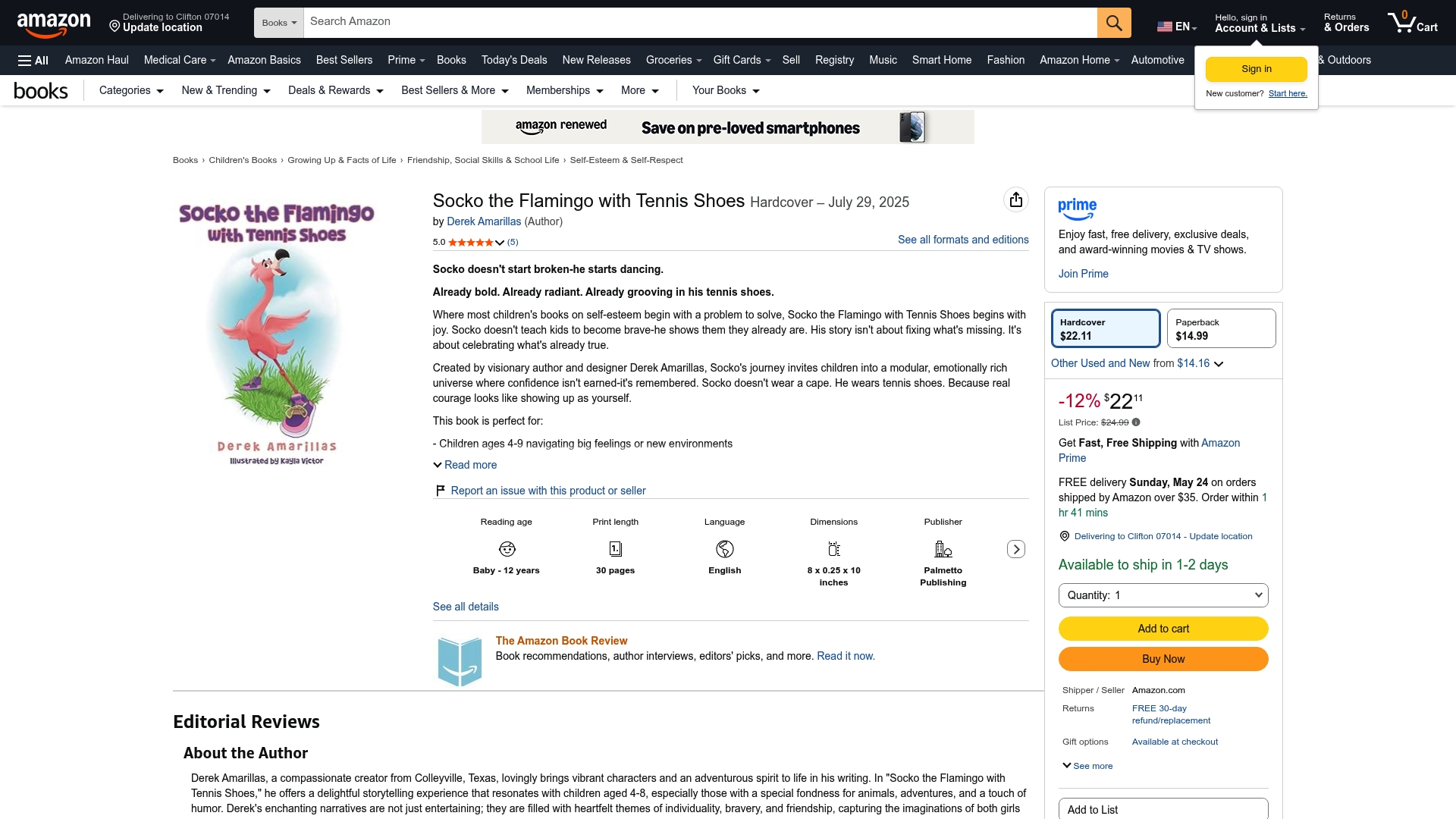
The recommended titles in this article, including Have You Filled a Bucket Today?, the Get Ready for School wipe-off workbook, and the Grumpy Monkey series, are available through Amazon's SEL collection. You will find both classic titles and new 2026 releases, along with bundled curriculum options that offer better value than buying individual books. Searching by age range and SEL competency on the platform makes it easy to narrow down the right pick for your specific classroom or child.
FAQ
What makes a book count as an SEL book for kids?
An SEL book teaches at least one of the five core social-emotional competencies: self-awareness, self-management, social awareness, relationship skills, or responsible decision-making. The best children's books for SEL embed these skills in a story rather than lecturing about them directly.
What age are SEL books best suited for?
SEL books work across all early childhood ages, but the format matters. Picture books with concrete metaphors suit ages 3 to 6, while workbook-style resources and structured curricula are more effective for ages 6 to 8 when children can write and reflect independently.
How many SEL books does a classroom need?
A classroom does not need a large library. One strong picture book per SEL competency, paired with a reusable workbook, covers the core curriculum. KinderSocialSkills alone provides 75 lessons, which is enough structured content for a full school year in Pre-K or kindergarten.
Are wipe-off SEL workbooks worth buying?
Yes. Reusable workbooks built around five SEL skill areas allow children to practice emotion recognition and decision-making repeatedly without consuming paper or requiring reprinting. The dry-erase format also makes the activity feel more like play than a worksheet.
Can SEL books replace a formal SEL curriculum?
Picture books alone cannot replace a structured SEL curriculum, but they are a strong supplement. Resources like KinderSocialSkills provide the lesson sequencing and differentiated materials that picture books lack. Using both together produces the strongest outcomes for early elementary learners.