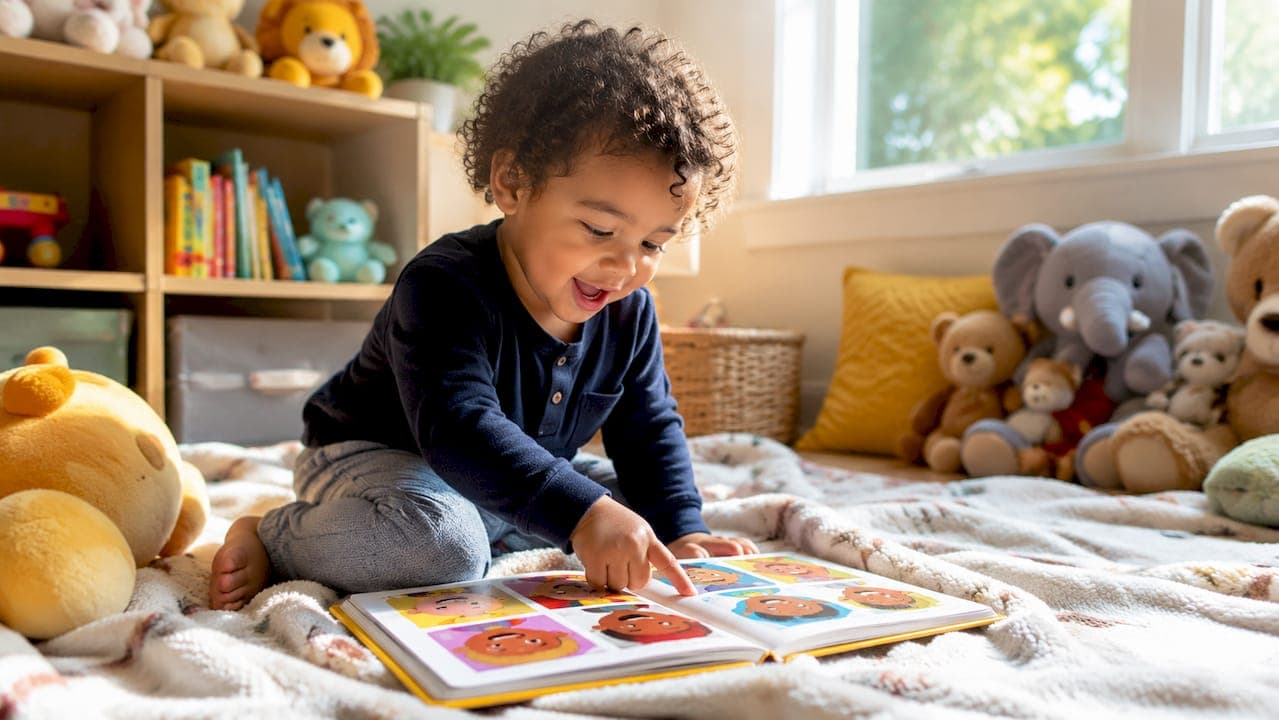
Big feelings books for toddlers are specially designed picture books that help children recognize, label, and manage their emotions through simple stories and vivid visuals. Early emotional literacy, the ability to name and understand feelings, is one of the strongest predictors of a child's social success. Books like The Color Monster and In My Heart give toddlers a shared language for emotions before they have the words to ask for help. This curated big feelings books toddlers list pairs each title with practical reading tips so you get the most out of every storytime session.
1. What are the best big feelings books for toddlers?
The titles below are selected for age appropriateness, emotional range, and the kind of parent-child dialogue they spark. Each one uses rhythm, repetition, or interactive features proven to hold toddler attention.
The Color Monster by Anna Llenas
The Color Monster uses colors to help toddlers visually sort mixed feelings, making it one of the most effective tools for emotional vocabulary building for ages 2–5. Yellow is happiness, blue is sadness, red is anger. That concrete visual system gives toddlers a framework they can use outside the book too. Ask your child, "What color are you feeling right now?" after each reading.
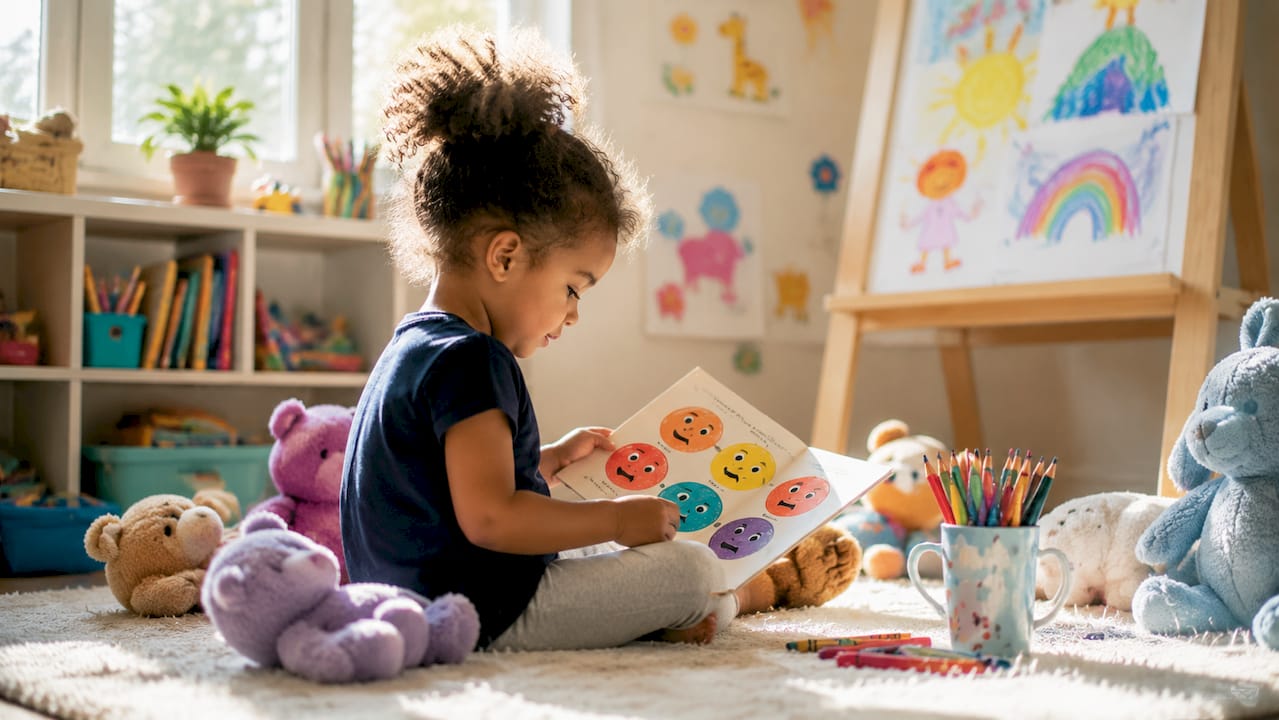
In My Heart by Jo Witek
In My Heart describes emotions as physical sensations inside the body. Happiness makes your heart feel "like it could burst." Anger makes it feel "like a volcano." This body-based approach helps toddlers connect abstract feelings to something they can actually feel, which is a critical step in self-awareness.
Llama Llama Mad at Mama by Anna Dewdney
Llama Llama Mad at Mama tackles frustration and anger in a grocery store setting every toddler recognizes. The rhyming text moves fast enough to hold short attention spans. The story ends with repair and connection, which models healthy emotional resolution rather than just naming the feeling.
Little Monkey Calms Down by Michael Dahl
Little Monkey Calms Down models calming strategies through simple language and examples, including deep breaths, quiet songs, and comfort objects. Reading it during calm moments, not just meltdowns, teaches toddlers the tools before they need them. That proactive approach is what separates this book from reactive parenting.
The Kids on the Bus (spin-the-wheel board book)
The Kids on the Bus is an interactive board book that uses a classic song format and a spin-the-wheel feature to teach emotion recognition through multisensory engagement. Toddlers spin the wheel to reveal a new feeling, then act it out. Physical interaction like this dramatically increases retention compared to passive listening.
When Sophie Gets Angry by Molly Bang
When Sophie Gets Angry is a Caldecott Honor book that follows a child through a full anger cycle, from explosion to calm. The illustrations shift from jagged red shapes to soft greens as Sophie settles down. That visual arc teaches toddlers that big emotions pass, which is one of the hardest concepts for this age group to grasp.
Grumpy Monkey by Suzanne Lang
Grumpy Monkey takes a refreshing angle: it is okay to feel grumpy without a reason. Jim the chimpanzee resists everyone's attempts to cheer him up, and the book validates that experience. This title is especially useful for toddlers who feel pressured to perform happiness.
Today I Feel Silly by Jamie Lee Curtis
Today I Feel Silly covers a wide emotional range across a single week, showing a child who feels silly, angry, confused, and happy. The book includes a mood wheel on the back cover that children can spin and point to. That tactile element extends the reading session into a real conversation about the child's current mood.
Hands Are Not for Hitting by Martine Agassi
Hands Are Not for Hitting directly addresses physical aggression, a common toddler behavior. It reframes hands as tools for hugging, drawing, and helping rather than hurting. This book works best when read before conflicts arise, not as a consequence after hitting occurs.
The Invisible String by Patrice Karst
The Invisible String focuses on separation anxiety, one of the most intense big feelings toddlers experience. It tells children that love connects them to caregivers even when apart. Parents report this book significantly reduces distress at daycare drop-off when read consistently at home.
Pro Tip: Read each book at least three times before moving to a new title. Toddlers process stories through repetition, and the emotional vocabulary sticks better on the third or fourth reading than the first.
2. How to choose the right big feelings book for your toddler
Choosing the right book starts with your child's developmental stage. Toddlers ages 1–2 need board books with minimal text and bold illustrations. Ages 2–4 can handle slightly longer stories with simple sentences and rhyme.
- Match the emotion to what your child is experiencing. If your toddler is struggling with separation anxiety, start with The Invisible String. If anger is the current challenge, Llama Llama Mad at Mama or When Sophie Gets Angry fits better.
- Prioritize rhythm and repetition. Toddlers learn best through books featuring rhyme, rhythm, and repetition in sessions of 4–5 minutes. A book that sounds good read aloud will hold attention longer.
- Look for interactive features. Lift-the-flap books, spin wheels, and touch-and-feel elements boost engagement and retention during reading sessions. These features turn passive listening into active participation.
- Check the illustration style. Bold, expressive faces help toddlers read emotional cues. Abstract or busy illustrations can confuse rather than clarify.
- Build a small rotating library. Keep three to five emotional books in rotation rather than introducing a new one every week. Familiarity builds confidence and vocabulary.
Pro Tip: Visit your local library before buying. Let your toddler pick up and handle the books. The one they reach for twice is usually the one that will hold their attention at home.
3. What are effective ways to read big feelings books with toddlers?
Reading technique matters as much as book selection. Passive storytime produces far less emotional learning than interactive reading.
- Pause every 2–3 pages. Using feeling prompts every few pages increases toddler engagement and emotional literacy. Ask questions like, "How does their face look?" or "Have you ever felt that way?"
- Name the emotion out loud. When a character looks sad, say "That's sadness. Their eyes are drooping and their mouth is turned down." Labeling emotions in context builds vocabulary faster than abstract explanation.
- Connect the story to real life. After reading about Sophie's anger, ask, "Remember when you felt really angry at the park? What did that feel like?" This connection is where emotional intelligence develops, not just during the book but in the conversation around it.
- Use movement and sound. For books like The Kids on the Bus, sing along and act out the emotions. Toddlers who move while learning retain more.
- Keep sessions short. Four to five minutes is the realistic attention window for most toddlers under three. End while they are still engaged rather than pushing through to the last page.
Pausing to ask open-ended questions converts passive storytime into an active emotional literacy session, fostering deeper understanding. The goal is dialogue, not performance.
4. Comparison of popular big feelings books for toddlers
| Book | Primary emotion | Best age | Interactive feature | Parent prompt |
|---|---|---|---|---|
| The Color Monster | Mixed emotions | 2–5 | Color sorting activity | "What color are you today?" |
| In My Heart | Full emotional range | 3–6 | Die-cut pages | "Where do you feel that in your body?" |
| Llama Llama Mad at Mama | Anger, frustration | 2–4 | Rhyming text | "What made Llama feel better?" |
| Little Monkey Calms Down | Overwhelm, anger | 2–4 | Simple text repetition | "What helps you calm down?" |
| The Kids on the Bus | General emotions | 1–4 | Spin-the-wheel board | "Can you make that face?" |
| The Invisible String | Separation anxiety | 3–6 | Discussion prompts | "Who are you connected to?" |
| Grumpy Monkey | Grumpiness, validation | 3–5 | Humor and character voice | "Is it okay to feel grumpy?" |
5. When and why to use big feelings books regularly with toddlers
The biggest mistake parents make with emotional books is saving them for crisis moments. Regular calm-time reading of emotional books builds vocabulary and resilience before toddlers encounter stressful situations. A child who already knows the word "frustrated" and has a story to attach it to is far better equipped when frustration hits at the playground.
Daily or near-daily reading is the standard recommendation from early childhood educators. That does not mean a formal sit-down session every night. Reading Grumpy Monkey at breakfast or Little Monkey Calms Down before nap time counts. The routine matters more than the setting.
"Regular use of big feelings books builds vocabulary and emotional resilience even before toddlers encounter stressful moments." — Dynamic Learning Alliance
Emotional books also give toddlers a reference point during hard moments. A child who has read When Sophie Gets Angry multiple times can hear "Remember what Sophie did when she felt that way?" and access a calming strategy they already know. That is the long-term payoff of consistent toddler feelings literature.
Key takeaways
The most effective approach to emotional literacy for toddlers combines the right books, interactive reading habits, and consistent daily practice before emotional challenges arise.
| Point | Details |
|---|---|
| Start with the right emotion | Match the book to the feeling your toddler is currently experiencing for faster connection. |
| Prioritize rhythm and interaction | Books with rhyme, repetition, and tactile features hold toddler attention and improve retention. |
| Read proactively, not reactively | Use emotional books during calm routines, not only during meltdowns, to build vocabulary in advance. |
| Make it a dialogue | Pause every 2–3 pages and ask open-ended questions to turn storytime into active emotional learning. |
| Repeat before rotating | Read each book at least three times before introducing a new title so the vocabulary sticks. |
What I have learned from years of reading big feelings books with toddlers
Most parents I talk to reach for emotional books only when something has already gone wrong. A tantrum hits, a sibling conflict erupts, and suddenly they are flipping to page one of The Color Monster hoping for a quick fix. That approach rarely works. Toddlers in distress cannot absorb new vocabulary. They need the words before the storm, not during it.
What actually works is treating these books like any other part of the daily routine. Breakfast, outdoor time, storytime, nap. When Little Monkey Calms Down is as familiar as a favorite song, a toddler can access that calming framework on their own. I have watched children as young as two take a deliberate breath during a hard moment because a book taught them that was an option.
The other thing most parents underestimate is how much the conversation around the book matters. The book is the starting point, not the lesson. A child who hears "That's sadness. Have you ever felt that?" and gets to answer is building emotional intelligence in real time. A child who sits quietly while a parent reads to the end is just hearing a story.
My honest recommendation: pick two or three titles from this list, read them until your toddler can finish the sentences, and then add one new title per month. That slow, repetitive approach builds a genuine emotional vocabulary. It is less exciting than buying ten books at once, but it is what actually works.
— Derek
A great place to find these books for your toddler
A, the brand behind Socko the Flamingo with Tennis Shoes, is built on the belief that the right book at the right moment can change how a child sees their own feelings. Socko teaches emotional literacy, belonging, and self-acceptance through humor and imagination, exactly the qualities that make toddlers lean in and listen.
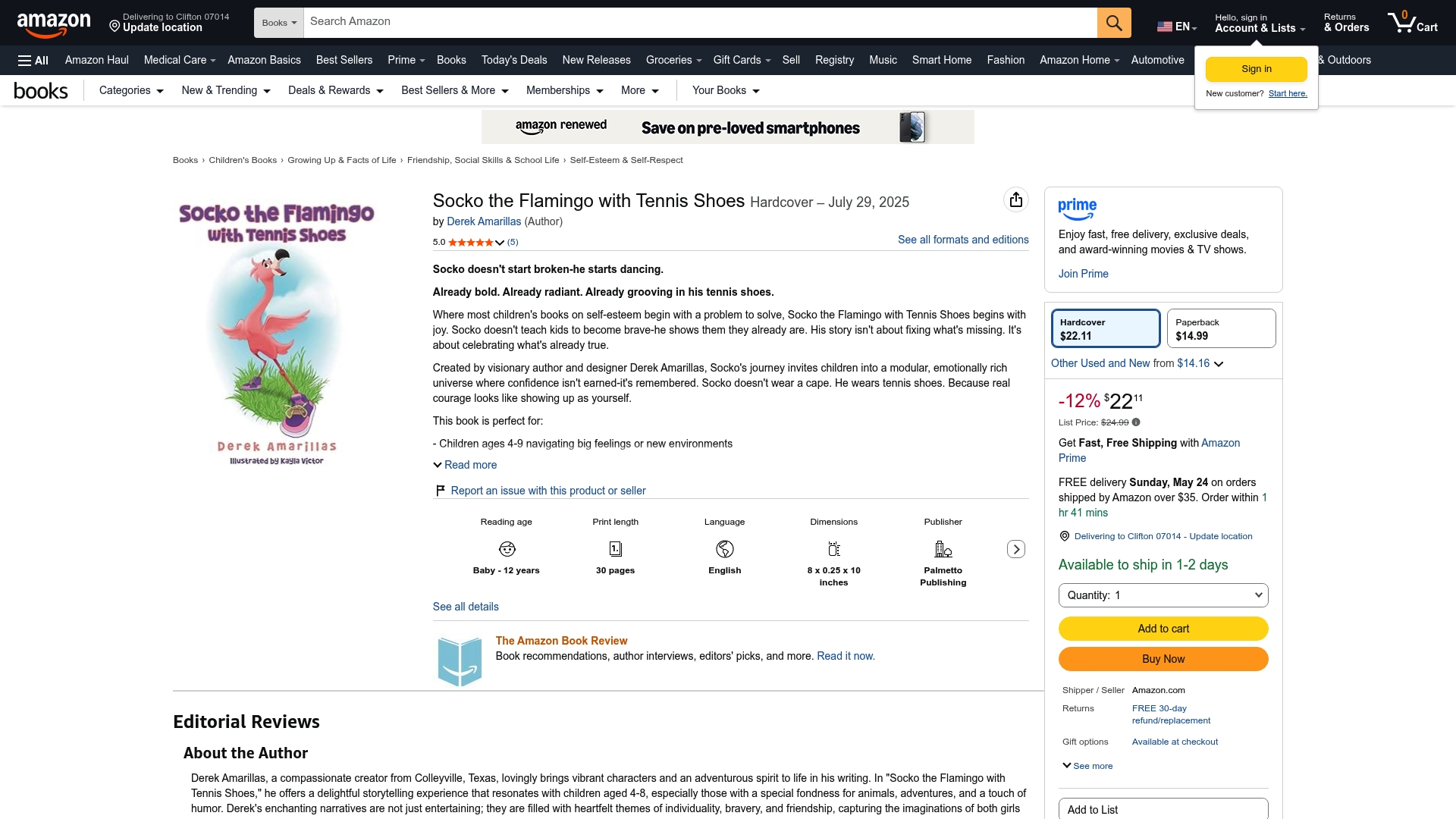
Parents looking to build a strong emotional book collection can find many of the titles on this list, including board books, interactive editions, and bundles, through Amazon's children's books section. The selection covers every emotion and age range discussed here, and most titles ship quickly so you can start reading this week.
FAQ
What age are big feelings books best for?
Most emotional picture books are designed for toddlers ages 2–5, though board book versions like The Kids on the Bus work well from age 1. Match the format to your child's current attention span and vocabulary level.
How often should I read emotional books with my toddler?
Daily reading is the standard recommendation from early childhood educators. Even a single 4–5 minute session builds emotional vocabulary over time when done consistently.
Do big feelings books actually reduce tantrums?
They do not eliminate tantrums, but regular reading gives toddlers vocabulary and calming strategies they can access during emotional moments. The effect builds gradually over weeks of consistent reading.
What is the best book for toddler anger?
Llama Llama Mad at Mama and When Sophie Gets Angry are the strongest options for anger. Both follow a full emotional arc from trigger to resolution and use age-appropriate language toddlers recognize.
Should I read these books during a meltdown?
Reading during a meltdown is rarely effective. Use emotional books during calm, routine moments so toddlers absorb the vocabulary and strategies before they need them.