
Book awards are authoritative quality markers that identify children's books with strong social and emotional learning (SEL) content. The role of book awards in SEL quality goes beyond sales recognition. Awards signal editorial rigor, emotional depth, and developmental appropriateness to educators, parents, and caregivers navigating a crowded marketplace. Programs like the National Book Awards apply structured evaluation criteria that directly filter for the kind of empathetic, identity-affirming storytelling that SEL requires. Understanding how these awards work gives you a reliable shortcut to books that genuinely support children's emotional growth.
How do book awards function as quality signals for SEL literature?
Book awards function as structured filters that evaluate children's books against defined standards before recommending them to educators and caregivers. The evaluation process matters as much as the award itself.
Rigorous awards assess several dimensions of quality that align directly with SEL goals:
- Emotional authenticity: Does the story portray feelings, conflict, and resolution in ways children recognize as real?
- Character development: Do protagonists model self-awareness, empathy, and healthy relationships?
- Narrative clarity: Is the language and pacing appropriate for the target age group?
- Production quality: Do illustration, design, and layout support emotional engagement rather than distract from it?
- Cultural representation: Does the book reflect diverse identities and experiences without stereotyping?
Professional assessment programs set measurable thresholds to protect these standards. The Awesome Indies Book Awards, for example, require a minimum 4-star editorial rating and can take up to 12 months to complete evaluation. That timeline reflects genuine scrutiny, not a rubber stamp. A book that clears those benchmarks has survived a process designed to catch weak writing, poor editing, and shallow emotional content.
Jury reputation is the other critical variable. Transparent juries and merit-based evaluation are what separate credible awards from pay-to-play programs that offer minimal real value. When a jury includes educators, child development specialists, and experienced librarians, their collective judgment carries weight that a single reviewer cannot replicate.

Pro Tip: Before trusting an award label, look up the jury composition and evaluation criteria on the award's official website. Awards that publish this information openly are the ones worth using as SEL selection guides.
What impact do book awards have on educators' and caregivers' book choices?
Award recognition changes how educators and caregivers approach book selection in three concrete ways.
1. Awards reduce decision fatigue. Thousands of new children's titles publish each year. Awards act as filters in crowded book markets, giving educators a pre-vetted shortlist instead of an overwhelming catalog. A teacher building a classroom library on a limited budget cannot read every candidate title. An award designation cuts that list to a manageable set of proven options.
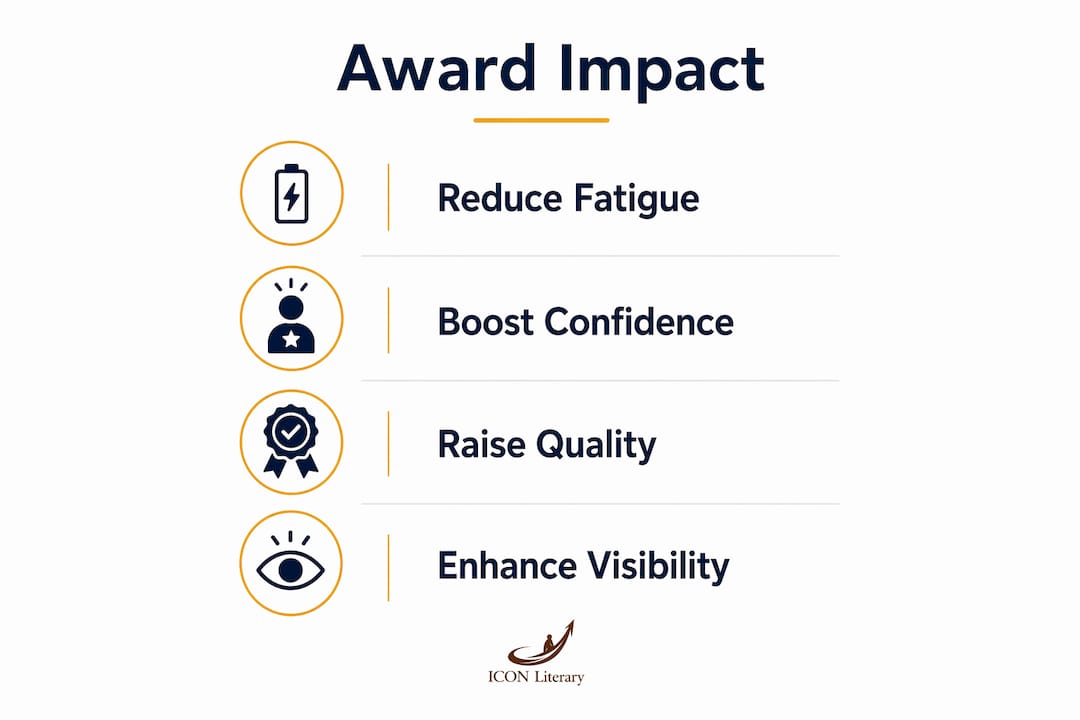
2. Awards increase institutional confidence. Schools and libraries operate under accountability pressures that individual households do not. Award recognition drives institutional placements in libraries and schools rather than direct consumer impulse purchases. A librarian recommending an award-winning SEL title to a principal has a credible, defensible rationale for that choice.
3. Awards reinforce culturally engaged reading habits. Research shows that awards increase library borrowing most strongly among readers with high cultural capital. That finding has a practical implication: awards work best when combined with active community outreach, not as a standalone discovery tool.
Here is a practical sequence for using awards effectively in book selection:
- Identify two or three awards with transparent jury processes and explicit SEL or emotional literacy criteria.
- Pull the current and past year's winners and finalists from each award's official list.
- Cross-reference those titles with age-appropriate developmental guidelines for your classroom or household.
- Read at least one review from a child development or education publication before purchasing.
- After reading with children, note which titles sparked conversation and which fell flat. Build your own track record alongside the award signals.
Pro Tip: The American Library Association maintains publicly accessible award lists, including the Caldecott Medal and Coretta Scott King Award, both of which regularly recognize books with strong SEL themes. These lists are free and updated annually.
How do awards improve the overall quality of SEL children's books?
Awards improve children's literature quality by creating financial and reputational incentives that push writers, editors, and publishers to work at a higher standard. The effect is systemic, not just individual.
The Nigeria Prize for Literature offers the clearest documented example. Valued at $100,000 USD, the prize has led to measurably fewer editorial errors and better production aesthetics across Nigerian children's literature submissions. That outcome matters because it shows awards do not just reward quality after the fact. They raise the floor of quality across an entire publishing ecosystem by setting a standard that authors and publishers actively work toward.
The same incentive logic applies to SEL content specifically. When award criteria explicitly require emotional authenticity, cultural sensitivity, and age-appropriate complexity, publishers invest in developmental editors and sensitivity readers to meet those criteria. Those investments show up in the final book.
| Award characteristic | Effect on SEL quality |
|---|---|
| Explicit SEL criteria in judging rubric | Publishers commission content that meets emotional literacy benchmarks |
| Large cash prize | Attracts higher-quality submissions and motivates editorial investment |
| Transparent jury with child development expertise | Ensures emotional depth is evaluated, not just prose style |
| Long evaluation timeline | Filters out rushed or underdeveloped manuscripts |
Awards encourage writers and publishers to maintain and enhance production and content quality, which indirectly raises the SEL value children receive. The long-term effect is a higher baseline across the industry, not just a handful of exceptional titles.
The Pulitzer Prize for Fiction demonstrates the visibility side of this equation. Pulitzer recognition historically adds 50,000 to 200,000 incremental copies sold. That scale of readership means SEL themes embedded in award-winning books reach far more children than they would otherwise.
Are there limitations in using book awards as SEL quality indicators?
Book awards are reliable signals, not guarantees. Educators and caregivers who treat award status as the final word on a book's SEL value will occasionally be disappointed.
The core limitation is the gap between critical standards and individual emotional experience. Award status signals editorial rigor but does not ensure resonance with individual readers. A book that earns high marks for narrative structure and cultural representation may still fail to connect with a specific child's lived experience. SEL is inherently personal. A story about belonging that resonates deeply with one child may feel distant to another.
"Awards help manage information overload by curating selections, but they should be combined with personal assessment and community recommendations for the best SEL outcomes. No award replaces the conversation you have with a child after reading a book together."
Additional limitations worth recognizing:
- Prestige gaps: Not all awards carry equal weight. An award from a jury of credentialed educators and librarians signals more than a self-nominated prize with a paid entry fee.
- Cultural reinforcement: Awards strengthen existing reading habits among culturally engaged readers, which can leave underrepresented communities underserved if award juries lack diverse representation.
- Ideological consistency: Some awards reflect the values of a particular literary or academic community. That consistency is useful for filtering, but it can also create blind spots around books that approach SEL themes in unconventional ways.
- Lag time: Award cycles run annually. A genuinely excellent SEL book published in october may not receive recognition until the following year, meaning educators miss it during the current school year.
The practical takeaway is straightforward. Use awards as a starting point, not a finish line. Combining awards with personal recommendations and reviews produces better SEL outcomes than relying on any single signal.
Key Takeaways
Book awards are the most reliable starting point for identifying high-quality SEL children's literature, but they work best when combined with community recommendations and direct observation of how children respond.
| Point | Details |
|---|---|
| Awards signal editorial rigor | Credible awards apply structured criteria that filter for emotional depth and production quality. |
| Institutional trust drives adoption | Award recognition is what gets SEL books into school libraries and classroom collections. |
| Incentives raise industry standards | Prize money and prestige push publishers to invest in better editing and SEL-aligned content. |
| Awards have real limitations | Critical acclaim does not guarantee emotional resonance for every individual child. |
| Combine signals for best results | Pair award lists with educator reviews and child feedback to make the strongest SEL selections. |
Why I think educators underestimate how awards actually work
Most educators I talk to treat book awards as a sales tool or a marketing badge. That framing misses the more important function. Award recognition is vital for institutional trust and long-term adoption in educational settings, which is exactly where SEL literature needs to land.
The awards that matter most for SEL are not the ones with the biggest media profiles. They are the ones with the most rigorous jury processes and the most explicit emotional literacy criteria. A smaller, specialized award judged by school counselors and child psychologists will often surface better SEL material than a general literary prize judged primarily by literary critics.
My honest advice: stop using award status as a shortcut and start using it as a starting question. When you see an award label, ask who judged it, what criteria they used, and whether emotional development was an explicit factor. That 30-second check will tell you more than the award name itself.
The books that consistently work best in classroom SEL conversations are the ones that combine award-level production quality with stories children actually recognize as their own. A Socko the Flamingo with Tennis Shoes title earns its place in that conversation not because of a badge, but because it was built around emotional literacy from the first draft. Awards confirm quality. They do not create it.
— Derek
Where to find award-quality SEL books for children
Educators and caregivers who want to act on award signals without spending hours cross-referencing lists need a reliable starting point.
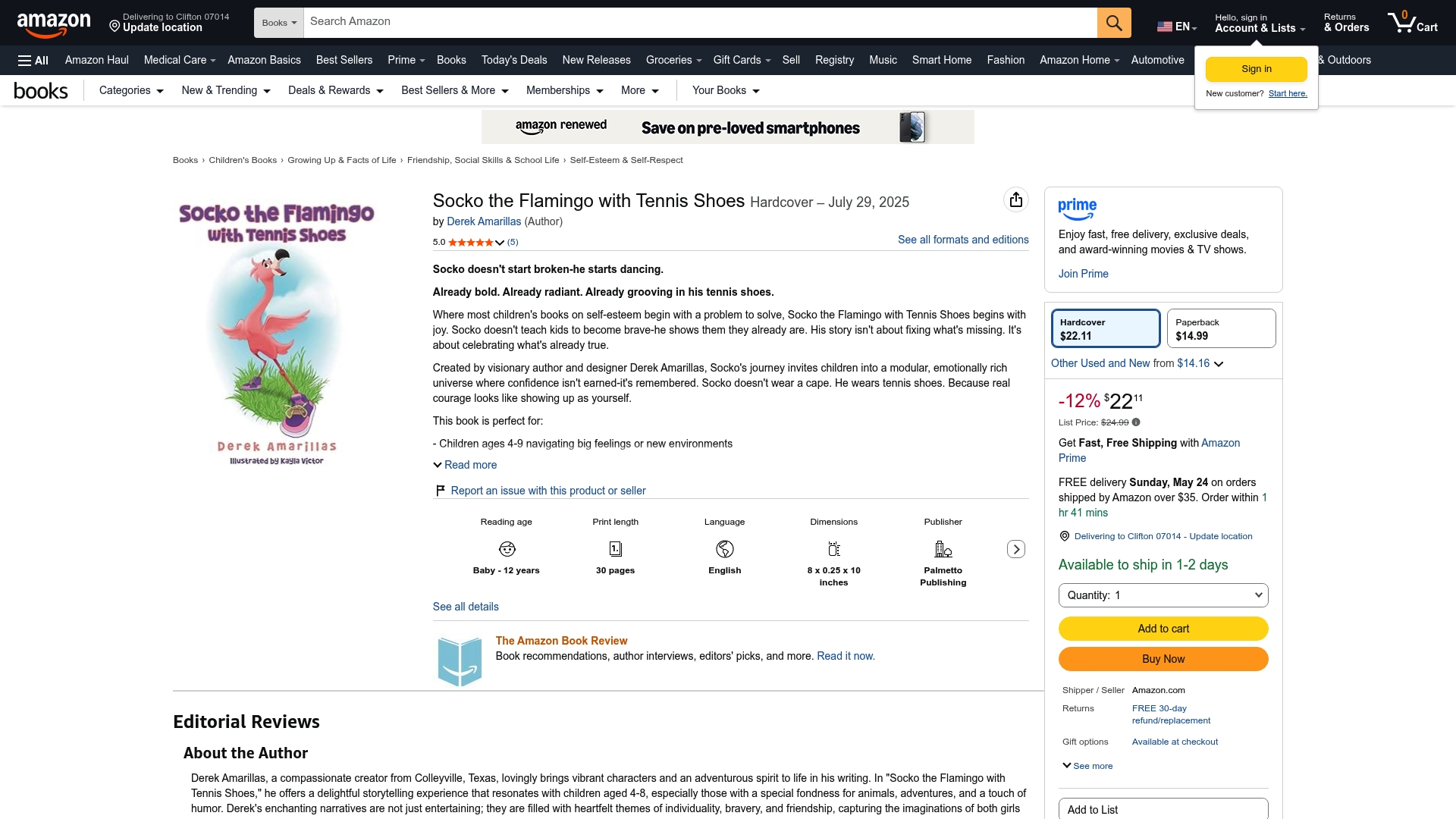
Socko the Flamingo with Tennis Shoes brings together the qualities that credible SEL awards look for: emotional authenticity, age-appropriate language, humor that disarms rather than distracts, and stories that spark real conversations about belonging and identity. You can find the full Socko collection in one place, making it easy to add award-quality SEL literature to your classroom or home library without the guesswork. Each title is built to support the conversations children need most.
FAQ
What is the role of book awards in SEL quality?
Book awards function as quality filters that identify children's books meeting high standards for emotional authenticity, character development, and age-appropriate complexity. They give educators and caregivers a pre-vetted shortlist of titles with strong SEL value.
Do book awards guarantee a book will resonate with every child?
No. Award status signals editorial rigor but does not ensure emotional resonance for individual readers. Personal recommendations and direct observation of children's responses remain necessary alongside award signals.
How do book awards influence library and school book selection?
Awards primarily drive institutional placements in schools and libraries rather than direct consumer purchases. Institutional adoption increases a book's long-term visibility and accessibility for children who may not encounter it through retail channels.
What makes a book award credible for SEL purposes?
Credibility depends on transparent jury composition, merit-based criteria, and explicit evaluation of emotional and developmental content. Awards that publish their judging rubrics and include child development professionals carry the most weight for SEL selection.
How should educators combine awards with other selection tools?
Use award lists as a starting shortlist, then cross-reference with reviews from education and child development publications. After reading with children, track which titles generate conversation and which do not. That feedback loop improves your selections over time.