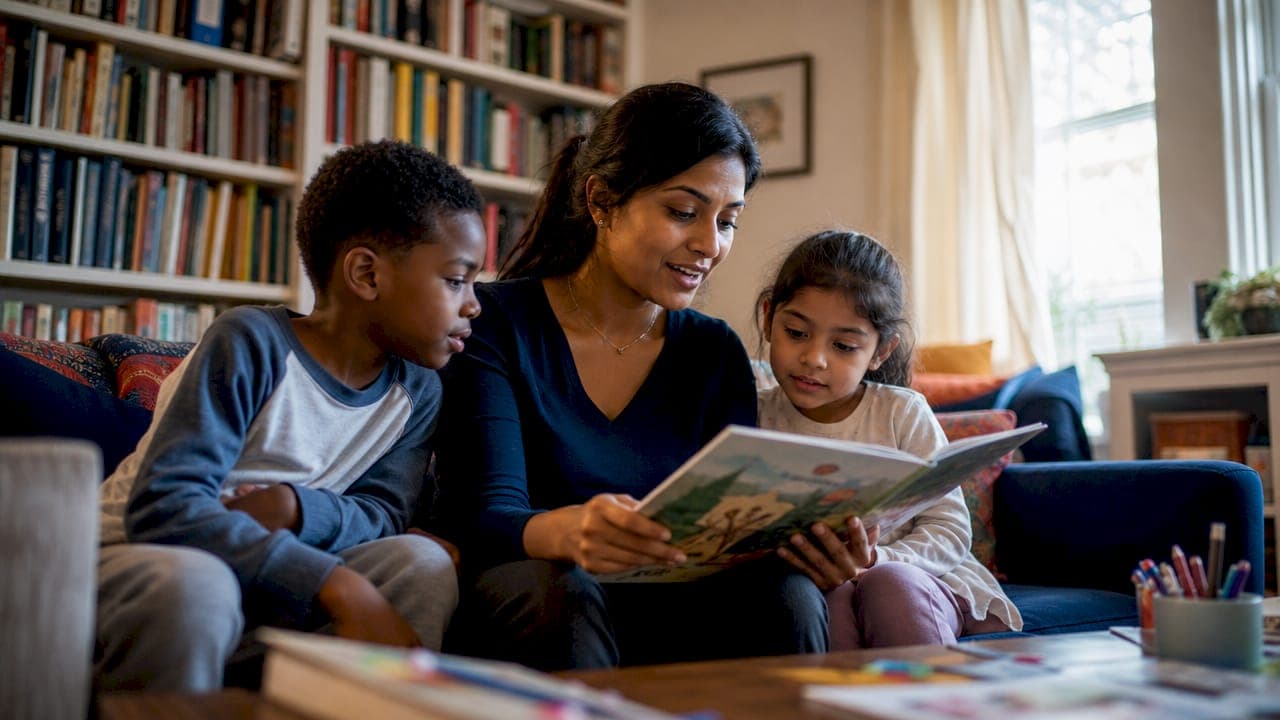
A diverse home book library is a purposeful, curated collection of children's books that reflects multiple identities, experiences, and emotions to support emotional literacy and inclusivity from the earliest years. Parents, teachers, and caregivers who build diverse home book libraries give children ages 3–8 a powerful tool: the ability to see themselves in stories and understand others. The Mirrors, Windows, and Sliding Doors framework is the industry standard for this work. Intentional selection, not sheer volume, is what makes a collection genuinely inclusive rather than tokenistic.
How to build a diverse home book library using Mirrors, Windows, and Sliding Doors
The Mirrors, Windows, and Sliding Doors framework is the most reliable guide for creating a personal library that builds both identity and empathy in young children. Developed for early literacy, it gives you a clear lens for every book you pick up. Each category serves a distinct developmental purpose.
Here is what each category means in practice:
- Mirrors are books where a child sees their own life reflected. A child from a bilingual household finds a story where two languages appear naturally on the page. A child with a physical disability sees a main character who uses a wheelchair and goes on adventures. These books tell children: your life is worth a story.
- Windows are books that show children a life different from their own. A child from a suburban family reads about a child living in a fishing village. A child with two parents reads about a child raised by grandparents. Windows build empathy by making other lives feel real and relatable.
- Sliding Doors are books so immersive that a child steps fully into another world. The story pulls them in completely, and the diversity is woven into the fabric of the narrative rather than announced. These are the books children re-read until the spine cracks.
The balance of all three is what early literacy standards point to as critical. A library heavy on Mirrors, but light on Windows, produces self-awareness without empathy. A library full of Windows but missing Mirrors leaves some children feeling invisible. Aim for a rough balance across all three categories when you assess your shelves.
Pro Tip: When you pick up a new book, ask yourself: "Is this a Mirror, a Window, or a Sliding Door for this specific child?" That single question cuts through indecision faster than any checklist.
What is a gap audit and why does your collection need one?
A gap audit is a structured review of your book collection to identify which voices, identities, and experiences are missing or underrepresented. Regular audits every few months keep a collection genuinely representative rather than accidentally skewed toward one dominant culture or experience. Without audits, even well-intentioned libraries drift.
Here is a simple process for conducting one:
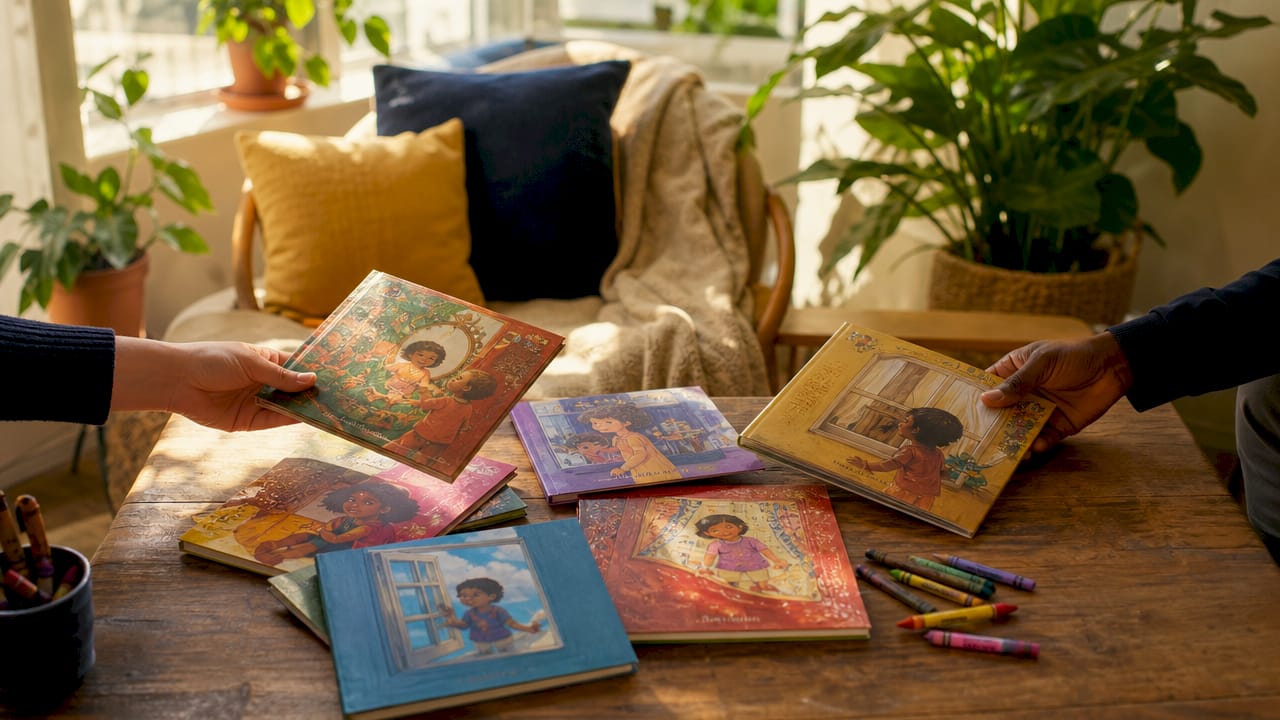
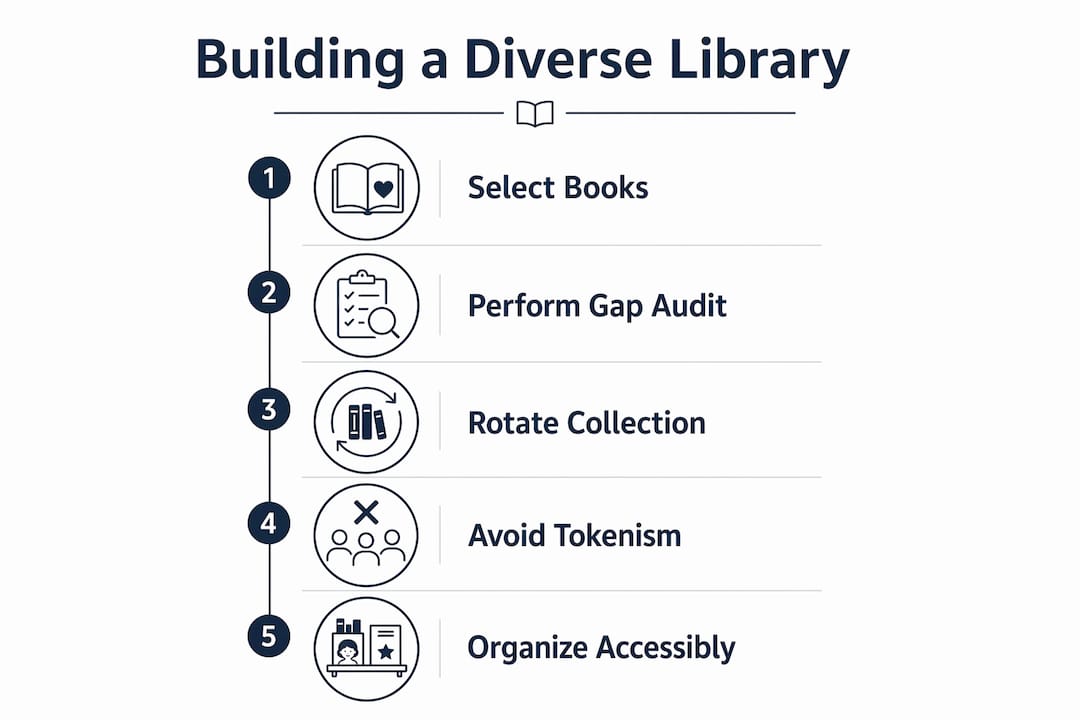
- Pull every book off the shelf. Lay them out so you can see the full collection at once. Patterns become obvious when books are spread out rather than spine-out on a shelf.
- Sort by representation category. Group books by the identities and experiences they center: race and ethnicity, family structure, language, disability and neurodiversity, body size, socioeconomic background, and gender expression.
- Count the gaps. Note which categories have three or more books and which have none. A gap is not a failure. It is a shopping list.
- Add intentionally. Use the gap list to guide your next purchase or library visit. One or two targeted additions per audit cycle keeps the process manageable.
- Retire redundant books. If you have six books about the same narrow experience and none about another, rotate some out. One-in, one-out rotation keeps the collection fresh and prevents didactic over-curation.
Experts at Indiana University's early literacy program emphasize that diversity as the default across the whole library reinforces inclusivity as normal for children, not as a special topic. That means spreading diverse books throughout the shelves rather than grouping them on a single "diversity shelf."
Pro Tip: Set a calendar reminder every three months labeled "book audit." Fifteen minutes twice a year is enough to keep a small collection balanced and evolving.
How do you choose diverse books that avoid tokenism?
Authentic diverse books are defined by one clear test: the story works without its diversity "lesson." Effective diverse libraries feature characters with full agency in everyday stories rather than only special-topic books built around identity struggles. A book about a Black child who loves dinosaurs is a diverse book. A book about a Black child whose entire plot is about experiencing racism is a different kind of book. Both have value, but a library needs far more of the first type than the second.
When curating an inclusive book selection, look for these qualities:
- Own Voices authorship. Own Voices books are written by creators who share the lived identity of their characters. They deliver more authentic narratives and avoid the unintentional stereotypes that appear in well-meaning but outsider-written stories.
- Ordinary life as the plot. The best books for varied tastes show diverse characters doing everyday things: going to school, arguing with a sibling, learning to ride a bike. Identity is present but not the crisis.
- Full emotional range. Characters should feel joy, frustration, curiosity, and fear. A character who only exists to be brave in the face of prejudice is a symbol, not a person.
- Natural language and cultural detail. Look for books where cultural specifics appear without explanation or apology. A grandmother who speaks in her native language without a translation footnote signals confidence in the reader.
- Illustrations that match the text. Diverse representation in words but not in images sends a mixed message to young readers. Check that the visual world of the book matches its written world.
A library built on these qualities teaches empathy naturally. Children absorb inclusion as a standard part of life rather than a lesson being delivered to them.
How should you organize and maintain a home book library for young children?
A well-organized home library for children ages 3–8 works best as a living collection, not a permanent archive. Capping accessible books at 15–25 titles for young children keeps engagement high and prevents the paralysis that comes from too many choices. Quarterly rotation makes "forgotten" books feel new again without spending a dollar.
Organizing by access, not just topic
Place books at the child's eye level and within reach. Front-facing shelves show covers rather than spines and dramatically increase the chance a child picks up a book independently. Group books loosely by mood or energy level rather than strict topic: calm bedtime books in one basket, adventure stories on the main shelf, funny books in a spot near the reading chair.
Cataloging tools that actually save time
Smartphone barcode scanners paired with free cataloging apps can process a large collection far faster than manual entry. Scanning a book's barcode pulls in the title, author, and cover automatically. A searchable digital catalog makes gap audits faster and helps you avoid buying duplicates at library sales.
| Strategy | Best for | Key benefit |
|---|---|---|
| Front-facing shelves | Ages 3–5 | Children self-select more often |
| Rotating baskets | Ages 4–8 | Keeps interest high with limited titles |
| Barcode scanning app | Any collection size | Builds a searchable catalog quickly |
| One-in, one-out rule | Growing collections | Prevents clutter and redundancy |
| Quarterly audit cycle | All libraries | Maintains representation over time |
Building a home library on a budget is entirely possible. Library sales, school book fairs, and community swap events regularly surface high-quality picture books for under a dollar. Prioritize spending on Own Voices titles that are harder to find secondhand, and fill the rest of the collection from free or low-cost sources.
Key takeaways
A diverse home book library built on the Mirrors, Windows, and Sliding Doors framework, regular gap audits, and a rotating collection of 15–25 books gives children ages 3–8 the strongest foundation for emotional literacy and genuine inclusivity.
| Point | Details |
|---|---|
| Use the MWS framework | Balance Mirrors, Windows, and Sliding Doors to build both identity and empathy. |
| Audit every few months | Track representation gaps across race, language, family structure, and disability. |
| Prioritize Own Voices | Choose books by creators who share their characters' lived identities for authentic stories. |
| Cap and rotate titles | Keep 15–25 books accessible at a time and rotate quarterly to sustain engagement. |
| Spread diversity throughout | Place diverse books across all shelves, not on a single dedicated section. |
What I've learned from building diverse libraries that actually get read
The most common mistake I see is confusing accumulation with intention. Parents buy 200 books and call it a library. Teachers add a "multicultural shelf" and consider the job done. Neither approach works. Children read what is in front of them, and a shelf stuffed with books is just visual noise to a five-year-old.
The rotation strategy changed everything for me. When I started treating a children's collection like a subscription service, pulling out 20 books at a time and storing the rest, children's engagement with individual titles went up noticeably. A book that had been ignored for months became a favorite after a rotation. That is not magic. That is just how attention works at this age.
The Own Voices principle also matters more than most guides admit. I have watched children from underrepresented backgrounds physically lean forward when they find a book where the main character looks like them and is simply having a good day. Not overcoming adversity. Not teaching a lesson. Just living. That moment of recognition is what emotional literacy is built on, and you cannot manufacture it with a book that was written from the outside looking in.
The hardest part of curating an inclusive book selection is resisting the urge to over-explain diversity to children. The best books do not explain anything. They just show a full human life. When you find those books, buy two copies.
— Derek
Where to find curated diverse books for your home library
Starting small and being intentional beats buying in bulk every time. A collection of 20 carefully chosen books outperforms a shelf of 100 random ones for children ages 3–8. Library sales, community swaps, and school book fairs are excellent sources for affordable titles.
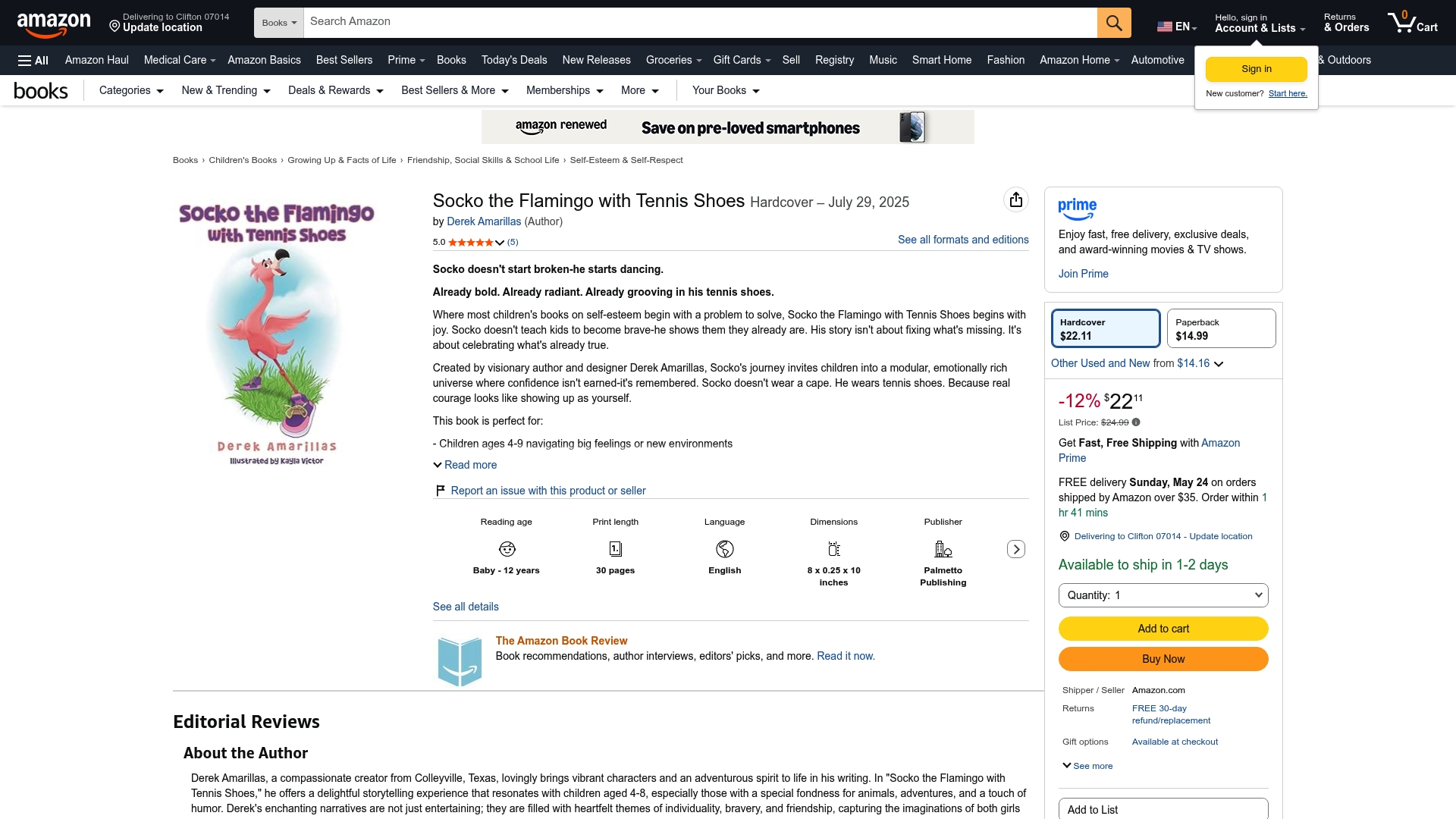
For parents, teachers, and caregivers ready to add high-quality titles right now, A's curated book collection brings together diverse children's books built around emotional literacy, belonging, and self-acceptance. Socko the Flamingo with Tennis Shoes models exactly the kind of full-character, humor-driven storytelling that makes diverse books stick with children long after the last page. These titles work as Mirrors, Windows, and Sliding Doors depending on the child holding them.
FAQ
What does a diverse home book library include?
A diverse home book library includes books that represent varied races, ethnicities, family structures, languages, disabilities, and emotional experiences. The goal is a collection where every child finds a Mirror and every child gains a Window into another life.
How many books should a young child have accessible at once?
Children ages 3–8 engage most with a rotating selection of 15–25 books at a time. Keeping the accessible collection small and refreshing it quarterly sustains interest and prevents choice paralysis.
What are Own Voices books?
Own Voices books are written by authors who share the lived identity of their main characters. They deliver more authentic, nuanced narratives and are less likely to rely on stereotypes or trauma-centered plots.
How often should I audit my child's book collection?
A gap audit every two to three months is enough for most home libraries. Each audit takes about 15 minutes and identifies which identities or experiences need more representation in the next round of additions.
How do I avoid tokenism when choosing diverse books?
Choose books where diverse characters lead full, ordinary lives rather than books where identity is the entire plot. A story that works without its diversity "lesson" is a story that teaches inclusion naturally.