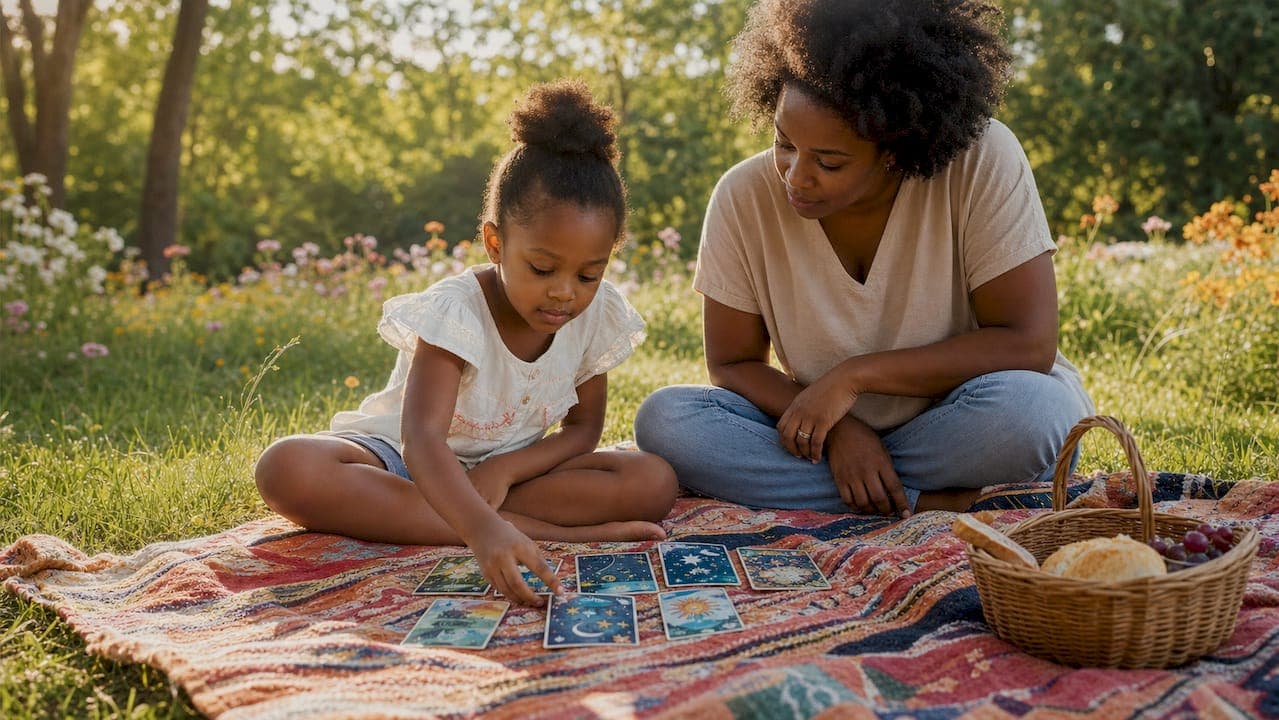
Dream cards are specialized card decks that use evocative imagery and symbolic prompts to help children explore emotions, process experiences, and spark imaginative play. Unlike flash cards or learning games, these decks work through open-ended pictures and feeling-based prompts that invite personal interpretation. Parents and educators use them to open conversations about big feelings, nighttime experiences, and inner life. A, the brand behind Socko the Flamingo with Tennis Shoes, understands exactly why tools like dream cards matter: children need safe, playful ways to name what they feel before they can talk about it.
What are dream cards and how do they work?
Dream cards are card-based tools designed to prompt emotional expression and imaginative thinking through symbolic imagery. Each card typically features an evocative illustration, a word or phrase, or a simple question that invites the child to respond in their own way. The child does not need to be "right." The card simply opens a door.
Most decks contain between 46 and 60 cards, a range that gives enough variety to stay fresh without overwhelming a young user. That size also fits naturally into short sessions, which is ideal for children with limited attention spans. Some decks include a guidebook with prompts and suggested activities, while others rely entirely on the imagery to do the work.
The key design principle behind quality dream cards is abstraction. Abstract imagery avoids cognitive shortcuts and encourages deeper personal associations rather than fixed meanings. A picture of a floating door means something different to every child, and that difference is the point. Psychologist-artist teams often collaborate on these decks to make sure the images feel archetypal without being prescriptive.
Children's dream card decks differ from adult versions in one important way: they prioritize playful exploration over therapy or divination. Creators advocate using dream cards as playful tools for emotional expression and imagination, not as predictive or diagnostic instruments. That distinction matters for parents and educators who want to use them responsibly.
Common formats and features
- Deck size: Most children's decks contain 46–60 cards, offering enough variety for repeated use.
- Imagery style: Open-ended, symbolic illustrations that avoid literal depictions of specific events.
- Guidebooks: Some decks include simple prompt guides; others use keywords printed directly on the cards.
- Card material: Durable, child-friendly card stock that holds up to repeated handling.
- Themes: Common themes include nature, animals, weather, color, and abstract shapes tied to emotional states.
| Feature | Children's decks | Adult decks |
|---|---|---|
| Imagery style | Playful, open, symbolic | Complex, archetypal, detailed |
| Guidebook depth | Simple prompts or keywords | Extensive psychological context |
| Primary purpose | Emotional play and expression | Self-reflection and personal growth |
| Session length | Short, flexible | Longer, structured |
Pro Tip: Start with a deck that uses simple, colorful imagery rather than dense symbolic art. Children engage faster when the pictures feel friendly and familiar.
How can parents and educators use dream cards with children?
Dream cards work best when adults treat them as conversation starters, not assignments. The goal is to create a low-pressure moment where a child feels safe to say what the card brings up for them. Here is a practical sequence that works well in both home and classroom settings.
- Set the scene. Choose a quiet, comfortable space. Dim lighting, a soft blanket, or a cozy corner signals that this is a calm, special time. Children respond to environment more than adults realize.
- Let the child pick a card. Giving the child control over selection builds trust and investment. Ask them to choose the card that "feels interesting" or "looks like something from a dream."
- Ask open questions. "What do you see?" and "How does this make you feel?" work better than "What does this mean?" Meaning-focused questions can make children feel tested.
- Use the card as a story prompt. Ask the child to make up a short story about the image. Storytelling is one of the most natural ways children process emotion, and dream cards bridge subconscious content with conscious emotional choices.
- Connect to real feelings. After the story, gently ask if anything in it reminds them of real life. This step is optional and should never be forced.
- Close with something grounding. End the session with a simple ritual: a deep breath, a drawing of the card, or writing one word in a dream journal. Rituals signal safety and closure.
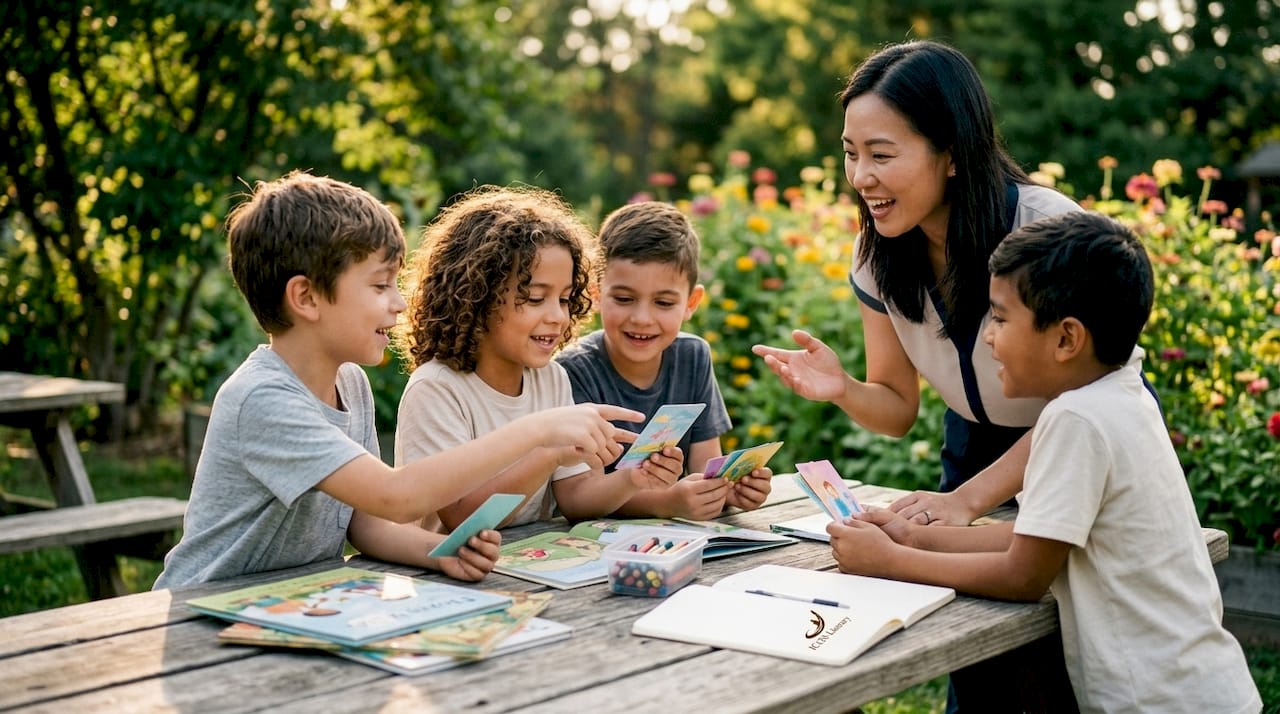
For classroom use, educators can adapt this sequence into small group activities. Pairs of students can each draw a card and build a collaborative story. The teacher acts as a facilitator, not an interpreter. Dream oracle cards facilitate connections between the unconscious mind and daily emotional experience, which makes them natural tools for social-emotional learning programs.
Dream journaling pairs especially well with card sessions. After a child picks a card and shares a story, invite them to draw or write about it. Over time, the journal becomes a record of their emotional world, one that they own completely.
Pro Tip: In a classroom, introduce dream cards during morning meeting or circle time. The ritual of picking one card and sharing one word about it takes under five minutes and builds emotional vocabulary across the whole group.
What psychological and developmental benefits do dream cards offer children?
Dream cards support several areas of child development at once, which is why educators and child psychologists increasingly recommend them as supplementary tools.
- Emotional labeling: Children who struggle to name feelings find it easier to point to an image and say "this one feels like me today." Naming emotions is the first step toward regulating them.
- Symbolic thinking: Working with abstract imagery builds the cognitive skill of symbolic reasoning, which supports reading comprehension, math, and creative writing.
- Dream recall: Teaching cards on dream recall techniques and healthy sleep routines help children engage with their dream life in a structured, positive way.
- Mindfulness: Sitting quietly with a card, noticing what it brings up, and sharing it with an adult is a simple mindfulness practice that children can repeat independently.
- Resilience: Children who can express difficult feelings through imagery and story build emotional resilience faster than those who suppress or avoid them.
Dream cards designed with evocative imagery promote open-ended imaginative associations that are critical in developmental tools for children. That openness is what separates a good dream card deck from a standard feelings chart.
"Dream cards serve as tools for emotional awareness by engaging the unconscious, helping children connect inner experience to outer expression. Their value lies not in prediction, but in the personal meaning each child brings to the image."
The benefit that surprises most parents is how quickly children begin to use card language outside of sessions. A child who spent ten minutes with a "storm cloud" card on Monday may say "I feel like a storm cloud today" on Thursday without any prompting. That transfer of emotional vocabulary into daily life is the real payoff.
What best practices help dream cards work well with children?
The most common mistake adults make with dream cards is over-interpreting. When a child picks a card showing a dark forest, the adult's instinct may be to probe for hidden fears. That instinct can shut the conversation down fast.
- Follow the child's lead. Let them decide how deep to go. Some sessions will be light and playful. Others will go somewhere meaningful. Both outcomes are valid.
- Avoid fixed meanings. Dream decks with evocative imagery are designed to prevent fixed interpretations. Resist the urge to explain what a symbol "really means."
- Watch for discomfort. If a child becomes quiet, withdrawn, or upset, gently redirect. Say "Let's pick a different card" and move on without pressure.
- Keep sessions short. Ten to fifteen minutes is enough for most children. Longer sessions can feel like work rather than play.
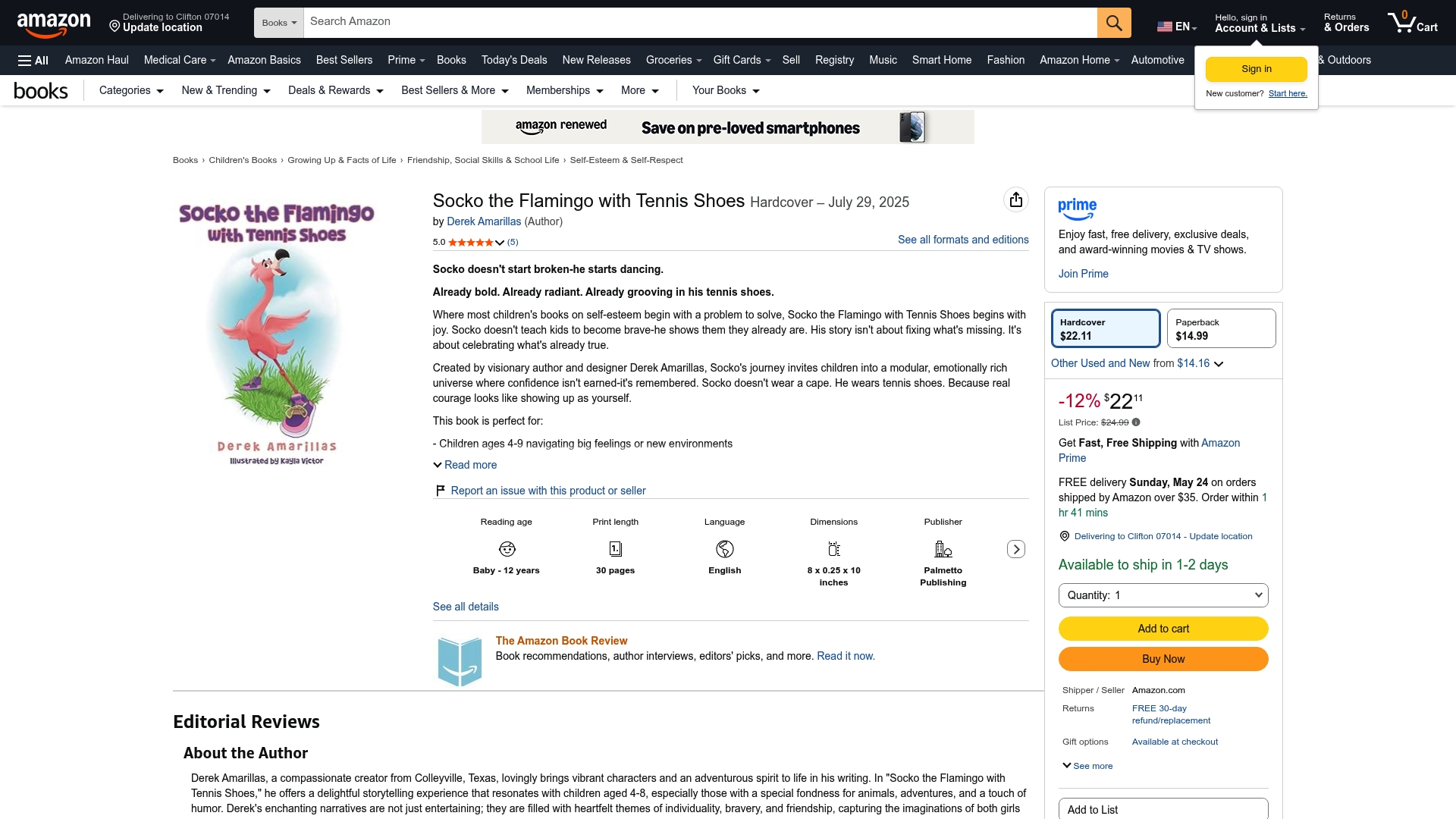
- Integrate with other tools. Dream cards work well alongside picture books, art activities, and emotional literacy programs. A, for example, pairs naturally with card sessions because Socko the Flamingo models the same kind of open, curious approach to big feelings.
Pro Tip: Keep the deck in a special box or pouch that the child can access independently. Giving them ownership of the deck makes them more likely to return to it on their own.
Key Takeaways
Dream cards are most effective when adults use them as open-ended conversation tools rather than structured exercises, letting children lead the pace and meaning.
| Point | Details |
|---|---|
| Deck size matters | Most quality decks contain 46–60 cards, offering variety without overwhelming young users. |
| Abstract imagery is intentional | Open-ended illustrations prevent fixed meanings and encourage personal, creative responses. |
| Playful use beats structured therapy | Children's decks work best as imaginative play tools, not diagnostic or predictive instruments. |
| Emotional vocabulary transfers | Children who use dream cards regularly begin applying emotional language outside of sessions. |
| Adult restraint is key | Over-interpreting or directing sessions reduces engagement and can shut down honest expression. |
Why dream cards changed how I think about emotional literacy
I spent years watching children struggle to answer the question "How are you feeling?" Not because they lacked feelings, but because they lacked a way in. Dream cards gave them that way in.
What struck me most was not the emotional depth children reached in sessions. It was the speed. A child who had never once said the word "anxious" picked up a card showing a tangled knot and said, "This is what my stomach feels like before school." That happened in the first five minutes of a first session. No warm-up, no coaxing.
The conventional wisdom says emotional literacy takes years of consistent work. That is true for deep, lasting change. But the entry point can be immediate when the tool meets the child where they are. Dream cards do that better than almost anything else I have seen, including many structured curricula that cost far more and require far more training.
My honest recommendation: do not wait until a child is struggling to introduce these cards. Use them when things are calm. Build the habit before the hard moments arrive. A child who already knows how to use a card to express a feeling will reach for that skill when they really need it.
— Derek
A dream card deck worth exploring
A offers a 60-card dream card deck built specifically for children, with vivid, open-ended illustrations and a full guide delivered via QR code so parents and educators always have support at hand.
The cards are printed on durable stock that holds up to classroom use, and the imagery was designed to spark imagination without leading children toward fixed interpretations. Whether you use them during morning circle, bedtime wind-down, or one-on-one check-ins, the deck fits naturally into routines you already have. Visit the product page on Amazon to see the full deck, read how other parents and educators are using it, and bring it into your home or classroom.
FAQ
What are dream cards used for with children?
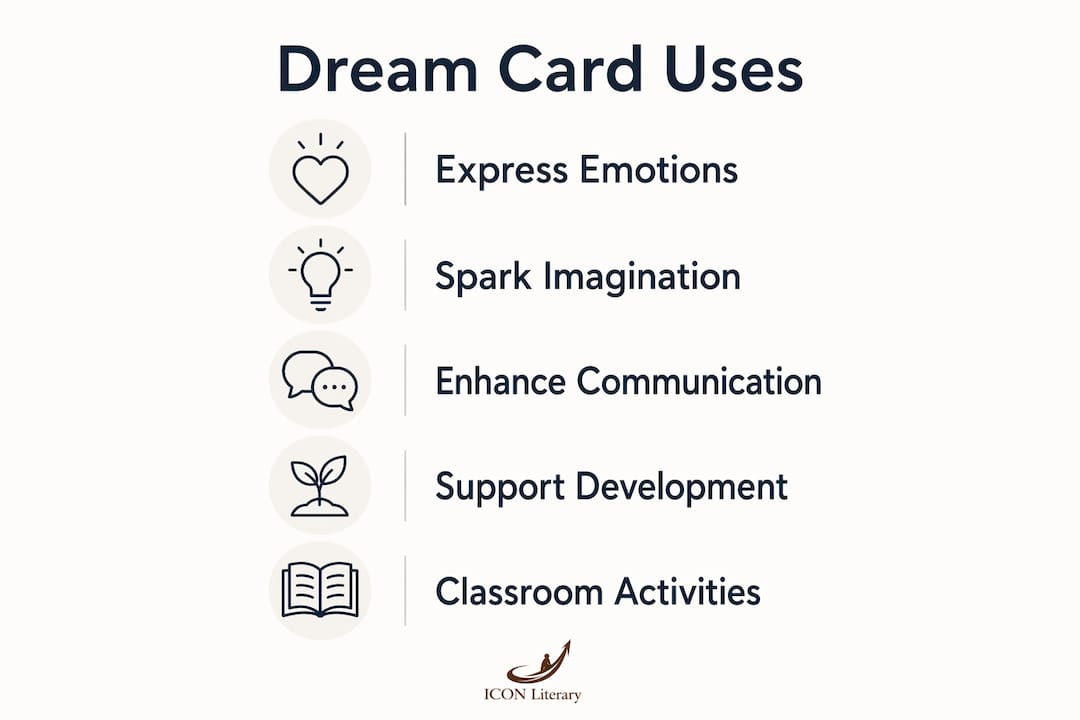
Dream cards are used to help children express emotions, build imaginative thinking, and open conversations about feelings and inner experiences. They work as playful prompts rather than structured exercises.
How many cards are in a typical dream card deck?
Most dream card decks contain 46 to 60 cards, often paired with a guidebook or printed keywords to support interpretation.
Are dream cards the same as tarot cards for dreaming?
Dream cards differ from tarot cards in that they focus on personal emotional exploration rather than divination or fortune-telling. Dream oracle cards engage the unconscious for emotional awareness, not prediction.
What age are dream cards appropriate for?
Most children's dream card decks work well for ages 5 and up, though younger children benefit most from adult facilitation. Older children can use them more independently as their emotional vocabulary grows.
How do I introduce dream cards in a classroom?
Start with a brief group session during morning meeting, letting each child pick one card and share one word about it. This low-pressure format builds comfort and emotional vocabulary across the whole class.