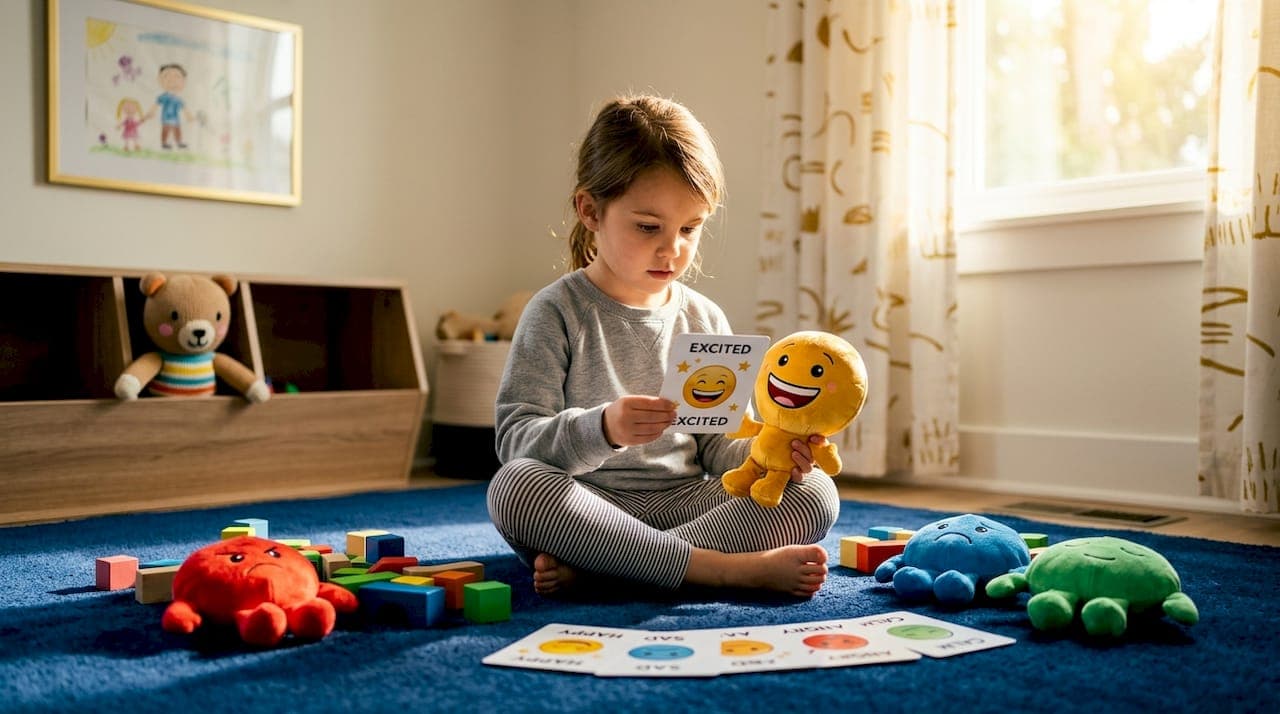
Gifts supporting child emotional growth are toys, books, and tools that build emotional vocabulary, self-regulation, and empathy through repeated, caregiver-guided play. Research confirms that children aged 3 to 8 develop emotional intelligence most effectively through face-to-face interaction and consistent practice, not passive screen time. The best emotional development gifts combine playful engagement with opportunities for naming feelings, solving problems, and connecting with caregivers. This article breaks down eight evidence-backed gift categories, explains what makes each one work, and helps you choose the right fit for your child.
1. Gifts supporting child emotional growth through emotion labeling
Naming feelings is more than a communication skill. A 2026 systematic review of 32 studies found that affect labeling reduces skin conductance and amygdala activation in children with high emotional reactivity. That means teaching a child to say "I feel frustrated" can physically calm their nervous system, not just describe their mood.
The most effective emotion labeling gifts go beyond simple happy and sad. A 2026 Scientific Reports study with preschoolers found that semantic depth of emotion vocabulary predicts better emotion regulation outcomes more than sheer word count. Children who understand the difference between "annoyed" and "furious" regulate their feelings more successfully than those who only know basic labels.
Specific gifts that build this skill include:
- PlanToys My Mood Memo ($35.99): 24 wooden tiles representing 12 emotions with a color wheel, designed for matching, categorizing, and grouping feelings
- Emotion card decks: Visual prompt sets that spark caregiver-child conversations about specific feelings
- Feelings bingo and memory games: Repeated exposure to nuanced emotion words through structured play
Pro Tip: Choose gifts that prompt back-and-forth conversation between you and your child. Caregiver-guided labeling during play doubles the emotional learning compared to solo play.
2. Self-regulation toolkits and coping strategy gifts
Self-regulation is the ability to manage emotional responses, and it is a skill children practice, not a trait they are born with. The Feeling Buddies Self-Regulation Toolkit from Conscious Discipline includes a 176-page curriculum with posters, books, and music designed for PreK through 2nd grade. It teaches a five-step process: recognize the feeling, name it, accept it, regulate the body, and choose a response.
What makes this category of gift powerful is the built-in repetition. A 2026 Springer Nature study showed that 12-week emotional literacy training produces measurable social and emotional skill gains, while single exposures do not. Gifts that include multiple components, such as plush characters, activity cards, and guided scripts, give caregivers the tools to practice daily.
Look for gifts in this category that include:
- Plush or puppet characters that represent different emotional states
- Guided breathing or body-scan prompts built into the toy design
- Caregiver instruction cards that explain how to use the tool in real moments
- Story-based scenarios that model coping strategies in context
Pro Tip: Tie self-regulation gifts to a consistent daily moment, like after school or before bed. Repeated use in the same context builds the neural habit faster than occasional play.
3. Cooperative games that build empathy and communication
Cooperative board games require children to work toward a shared goal rather than compete against each other. This structure mirrors real emotional and social challenges: reading a partner's frustration, adjusting your strategy, and celebrating together. A 2025 UAB pediatric guidance report confirmed that face-to-face, back-and-forth play with simple toys supports emotional growth and problem-solving far more effectively than high-tech alternatives.
Games like Peaceable Kingdom's Hoot Owl Hoot and Outfoxed require players to communicate and coordinate, which directly practices the emotional skills children need in friendships and classrooms. Puppets, dolls, and play kitchens also belong in this category because they create open-ended scenarios where children can rehearse emotional conversations in a safe, imaginative space.
The key is shared engagement. Toys alone rarely deliver emotional learning. The UAB report emphasized that caregiver modeling during play is what transforms a game into an emotional literacy lesson. When you narrate your own feelings during play ("I feel nervous we might not finish in time!"), you model the exact vocabulary and self-awareness you want your child to develop.
4. Calming gifts for emotional regulation
Calming gifts like weighted blankets and deep-pressure tools serve as sensory supports for children who struggle with emotional arousal. A 2026 MDPI mixed-methods study found that weighted blankets improved sleep and family well-being for children with ADHD at a 16-week follow-up, based on parent reports. The evidence is promising but not universal. These tools work for some children and not others, and results take weeks to observe.
Weighted blankets, lap pads, and compression vests are not emotional regulation programs on their own. They reduce physical arousal, which creates a window for emotional skills work. Think of them as the calm before the conversation, not the conversation itself. Connecticut Children's OT gift guide recommends sensory regulation gifts based on a child's developmental stage and sensory profile, not just age.
Pro Tip: Before purchasing a weighted blanket, consult your child's pediatrician or occupational therapist. Monitor your child's response over several weeks and combine the tool with active emotional coaching for the best results.
5. Books and storybooks for emotional intelligence
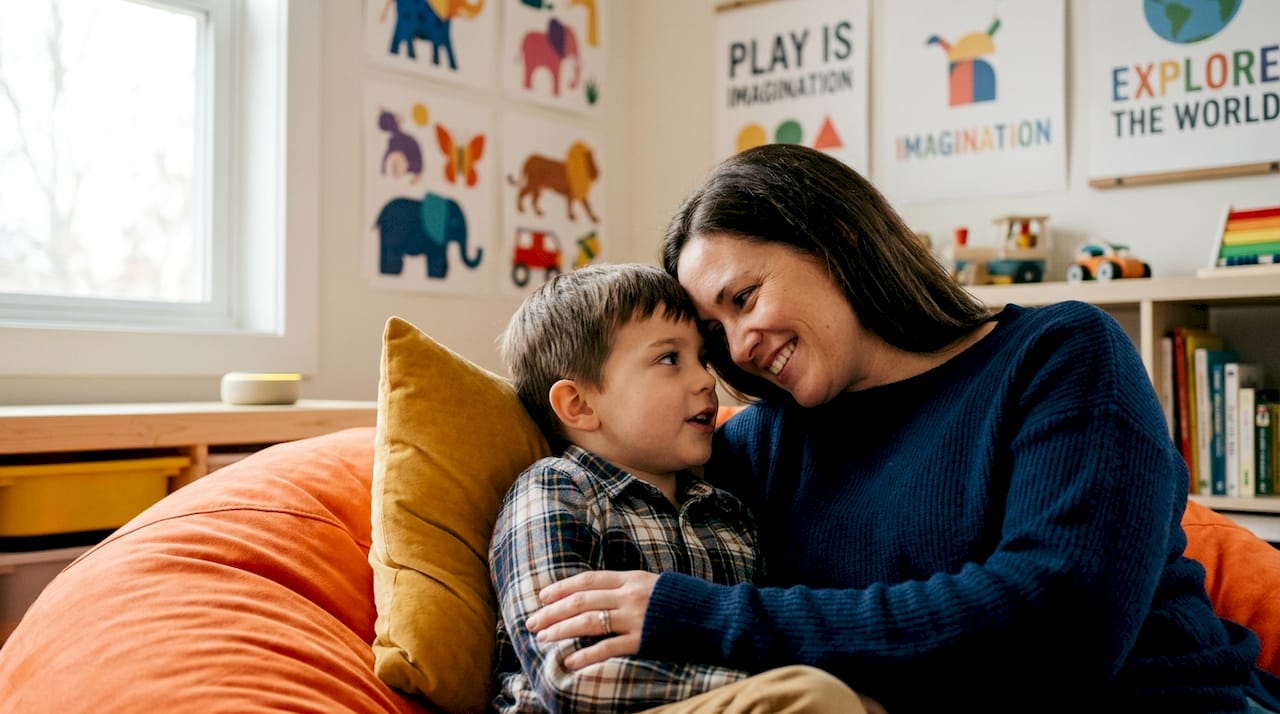
Books that center on characters navigating big feelings give children a safe distance to explore emotions they recognize in themselves. When a caregiver reads aloud and pauses to ask "How do you think she feels right now?" the book becomes an interactive emotional literacy tool. That caregiver-child dialogue is where the real learning happens.
A, the brand behind Socko the Flamingo with Tennis Shoes, builds this exact dynamic into its picture books. Socko is a character who teaches emotional literacy, belonging, and self-acceptance through humor and imagination, giving caregivers natural conversation starters about big feelings and identity. Books like these work because they combine narrative engagement with emotional modeling in a format children return to repeatedly.
Strong books for this age group share a few features:
- A relatable character who experiences and names specific emotions
- A problem that requires emotional problem-solving, not just external rescue
- Illustrations that show facial expressions and body language clearly
- An ending that models acceptance or resolution without dismissing the feeling
Pro Tip: Read the same book multiple times. Repeated readings let children anticipate emotional moments, which builds their ability to recognize and name those feelings in real life.
6. Journals and expressive activity gifts
Journals, drawing pads, and art kits give children a nonverbal outlet for emotional expression. For children aged 5 to 8 who are developing writing skills, a prompted feelings journal with sentence starters like "Today I felt ___ because ___" builds both emotional vocabulary and reflective thinking. For younger children aged 3 to 5, a blank drawing pad with emotion prompt cards serves the same purpose through images instead of words.
The value of expressive activities lies in the processing, not the product. A child who draws their anger is practicing emotional awareness even if the drawing looks like a red scribble. Caregivers who sit alongside and ask open questions ("Tell me about this part") turn a solo activity into a shared emotional conversation.
Audio story devices like the Yoto Player or Tonies also belong in this category. They deliver screen-free storytelling that children control independently, which builds emotional engagement without passive consumption. The best use of these devices pairs listening with a follow-up conversation about the story's emotional content.
7. Role-playing toys and dramatic play sets
Dramatic play is one of the most research-supported activities for emotional development in children aged 3 to 8. When children use puppets, dollhouses, or play kitchens to act out scenarios, they practice perspective-taking, conflict resolution, and emotional expression in a consequence-free environment. The self-discovery aspect of role play mirrors what structured curricula achieve in classroom settings.
Puppet sets are particularly effective because they give children a character to project feelings onto. A child who struggles to say "I am angry" will often say "The puppet is angry" without hesitation. That projection is not avoidance. It is a developmentally appropriate first step toward owning the feeling directly.
Play kitchens and family dollhouses create scenarios around meals, bedtime, and conflict, which are the exact emotional flashpoints children experience daily. When caregivers play alongside and introduce emotional language naturally ("The doll looks sad that dinner is over"), they are doing real emotional coaching inside a game.
8. How to choose the right emotional development gift
Choosing the best gift depends on three factors: the child's developmental stage, their sensory profile, and how much caregiver involvement is realistic. Connecticut Children's OT guide recommends matching gifts to developmental needs rather than defaulting to age labels on packaging.
| Gift type | Age range | Caregiver involvement | Key benefit |
|---|---|---|---|
| Emotion card decks | 3 to 6 | High | Builds nuanced vocabulary |
| Self-regulation toolkits | 4 to 8 | High | Teaches coping steps |
| Cooperative board games | 5 to 8 | Medium | Practices empathy and communication |
| Weighted blankets | 4 to 8 | Low to medium | Reduces sensory arousal |
| Storybooks and journals | 3 to 8 | Medium to high | Models and processes emotions |
For neurodivergent children or those with sensory sensitivities, prioritize comfort and predictability over novelty. Ask parents directly about the child's current emotional challenges before selecting a gift. A child working on anger regulation needs different tools than one working on social anxiety.
Pro Tip: The single most effective gift strategy is choosing one tool and using it consistently for 12 weeks. Depth of practice beats variety of gifts every time.
Key takeaways
The most effective gifts supporting child emotional growth combine vocabulary building, coping practice, and caregiver-guided interaction over weeks, not a single play session.
| Point | Details |
|---|---|
| Vocabulary depth matters | Choose gifts that teach nuanced emotion words, not just happy and sad. |
| Repetition drives results | A 12-week consistent practice with one gift outperforms multiple one-time toys. |
| Caregiver involvement is non-negotiable | Toys alone rarely build emotional skills without adult modeling and dialogue. |
| Match gifts to the child | Consider developmental stage and sensory needs, especially for neurodivergent children. |
| Calming tools need context | Weighted blankets and sensory aids work best alongside active emotional coaching. |
What I've learned about gifts and emotional growth
Here is the honest truth most gift guides skip: the gift is almost never the variable that matters. I have watched families invest in beautifully designed emotion toolkits that sat in a closet after week two. I have also seen a $12 set of emotion cards transform a family's dinner table conversations for months. The difference was never the product. It was whether the caregiver picked it up every day.
The research backs this up clearly. A 12-week play-based emotional literacy program produces real gains. A single gift event does not. That means your job as a caregiver is to treat the gift as a practice cue, something that reminds you both to have the conversation again today.
I also think most people start with vocabulary that is too complex. Before you introduce "apprehensive" or "melancholy," start with what your child can already see in their body. "Your shoulders are up near your ears. What's happening inside?" That observable, body-first approach works better for most children aged 3 to 6 than jumping straight to nuanced labels.
My honest recommendation is to pick one gift from this list, commit to using it for 90 days, and watch what happens. Combine a storybook with an emotion card deck if you want to layer approaches. But resist the urge to buy five things and rotate them. Depth beats breadth when it comes to emotional literacy.
— Derek
Find the right emotional growth gift for your child
If you are ready to put these ideas into practice, A offers storybooks and resources built around Socko the Flamingo with Tennis Shoes, a character designed specifically to spark conversations about big feelings, belonging, and self-acceptance in children aged 3 to 8.
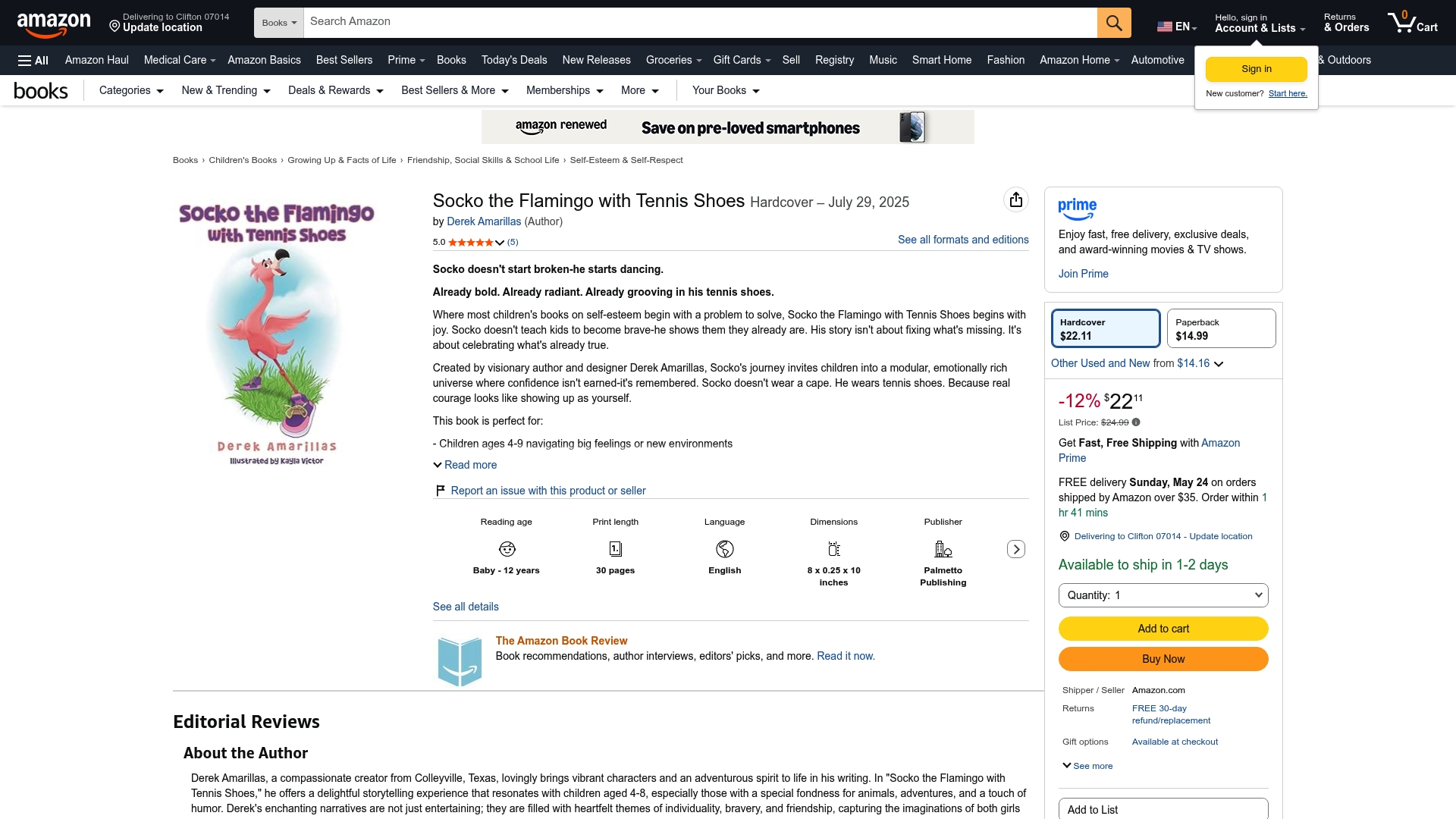
Socko's picture books work as both standalone reads and conversation tools that pair naturally with emotion card decks, journals, and the other gift categories covered in this article. They are written for caregivers who want to do more than hand a child a toy. Browse the full collection on Amazon to find the right starting point for your child's emotional growth journey this season.
FAQ
What age is best for emotion labeling gifts?
Children aged 3 to 6 benefit most from basic emotion labeling gifts like card decks and matching games. By age 7 to 8, children can handle more nuanced vocabulary tools and journaling activities.
Do weighted blankets actually help with emotional regulation?
A 2026 MDPI study found parent-reported improvements in sleep and well-being for children with ADHD using weighted blankets over 16 weeks, but results are not universal. Always consult a pediatrician or occupational therapist before use.
How often should my child use emotional growth gifts?
Daily use over at least 12 weeks produces measurable gains, according to a 2026 Springer Nature study on play-based emotional literacy programs. Occasional use delivers minimal lasting benefit.
Are cooperative games better than solo toys for emotional development?
Yes. UAB pediatric guidance confirms that face-to-face, back-and-forth play with simple toys builds emotional and social skills more effectively than solo or screen-based activities.
What if my child is neurodivergent or highly sensitive?
Connecticut Children's OT gift guide recommends choosing gifts based on the child's developmental stage and sensory profile rather than age. Ask the child's parents or therapist about current emotional challenges before selecting a gift.