
Children's books address separation anxiety in kids by giving young children a repeatable emotional arc: separation, time apart, and safe reunion. That cycle teaches children, at a gut level, that caregivers always come back. For parents of children ages 3–8, this is not a small thing. Separation anxiety is one of the most common emotional challenges in early childhood, and the distress it causes is real for both child and caregiver. Well-chosen literature for anxious children does more than entertain. It names feelings, models coping, and builds the internal sense of safety that makes goodbyes bearable. A, the brand behind Socko the Flamingo with Tennis Shoes, understands that stories spark exactly these conversations about big feelings.
How do books address separation anxiety in kids?
Books work because they create a safe emotional pattern that children can rehearse again and again. Each time a child hears a story where a character says goodbye, waits, and then reunites with a caregiver, the child's nervous system practices tolerating that gap. The story does not eliminate anxiety. It builds a mental model that says: "This has happened before, and it turned out okay."
The key mechanism is narrative repetition. Children ages 3–8 are still developing the prefrontal cortex functions that regulate fear and anticipate future outcomes. A story gives them a concrete script to borrow. When the book's character takes a deep breath at drop-off, the child watching has a move to copy. When the character's parent returns at the end, the child absorbs the message that return is reliable.
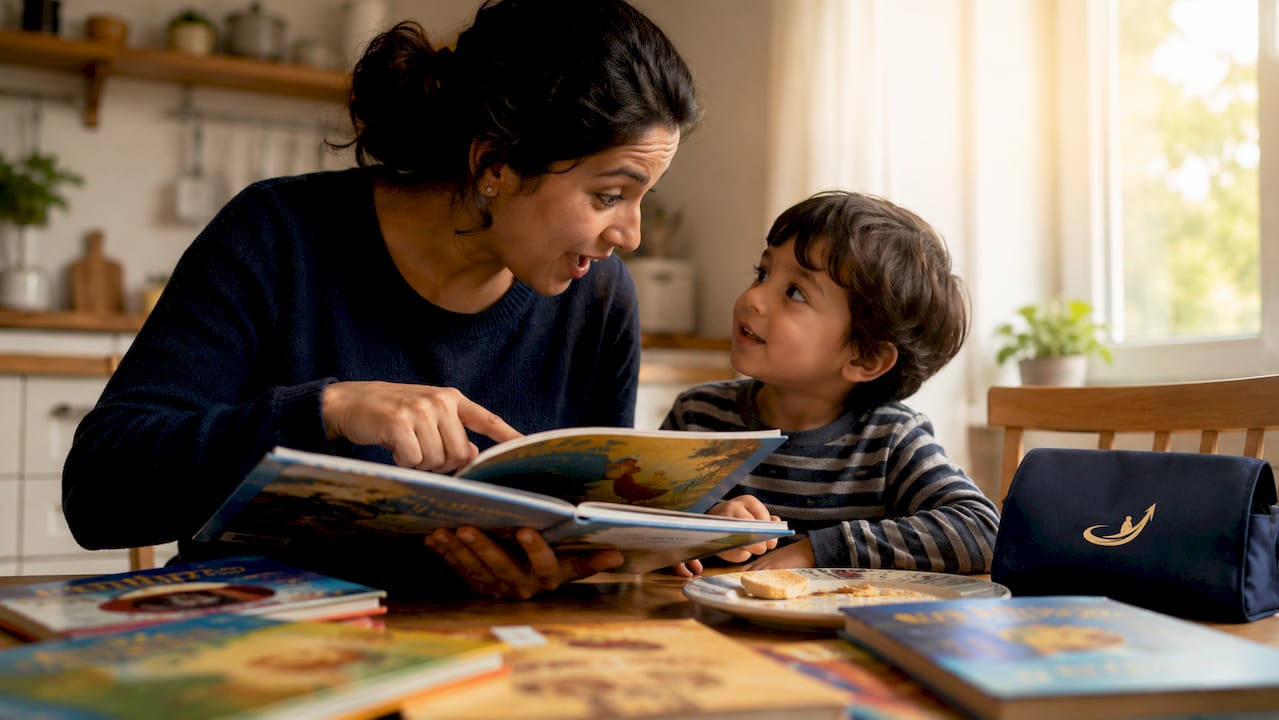
Emotional language is the second mechanism. Young children often feel anxiety as a physical sensation, a tight chest or a stomachache, without knowing what to call it. Books that name those feelings out loud give children vocabulary they can use to ask for help. That shift from wordless distress to named emotion is clinically significant. Naming a feeling reduces its intensity, a principle well established in child psychology.
What emotional needs do anxious children have that books meet?
Children with separation anxiety face two overlapping problems. First, they lack the words to describe what they feel. Second, they believe their fear is unique and shameful. Books solve both problems at once.
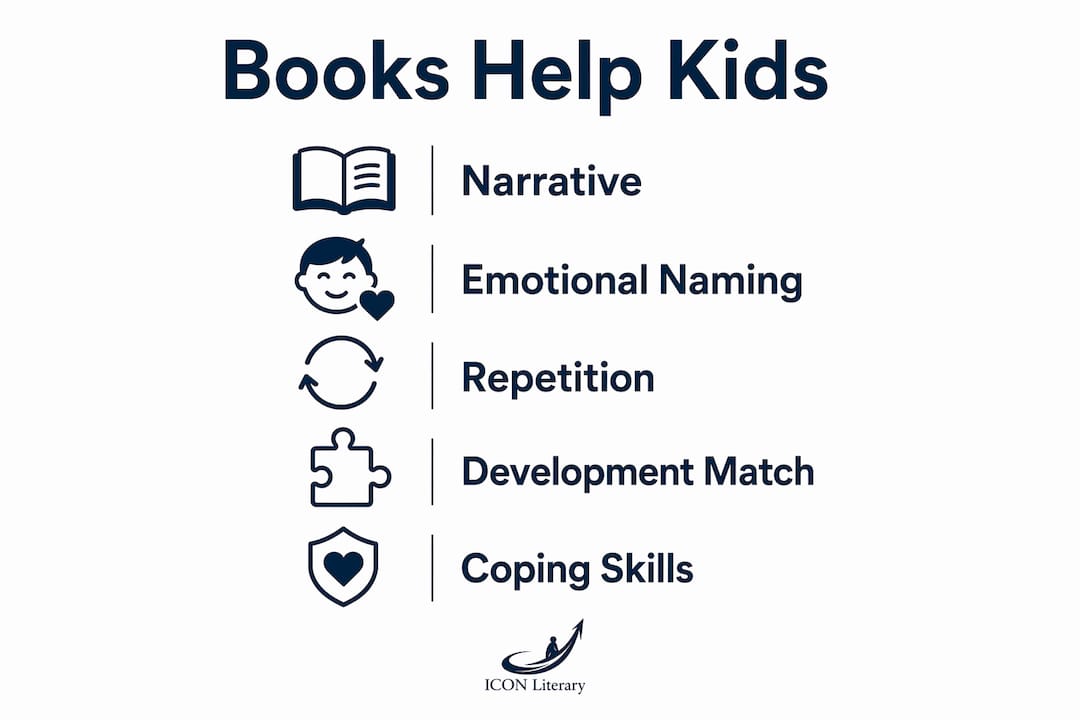
Age-curated books match narrative complexity to developmental stage, so a three-year-old gets simple, bold pictures and short sentences, while a seven-year-old gets a more nuanced plot. That match matters because a book pitched too high feels confusing, and one pitched too low feels dismissive. When the complexity is right, children engage fully and identify with the character.
Identification is where the real work happens. A child who sees a storybook character cry at daycare drop-off feels less alone. That recognition, "this character feels what I feel," reduces the shame that often amplifies anxiety. Books normalize worry as a manageable experience rather than a sign that something is wrong with the child.
Key emotional needs books address:
- Naming feelings: Stories give children words like "worried," "scared," and "lonely" in context, making those feelings less overwhelming.
- Normalizing anxiety: Characters who worry and then cope show children that anxiety is common, not a personal flaw.
- Modeling reunion: Repeated story endings where caregivers return build trust that separation is temporary.
- Reducing shame: Seeing a beloved character struggle removes the stigma from the child's own experience.
Pro Tip: Read the same book multiple times in a row. Repetition is not boredom for young children. It is practice. Each reading deepens the emotional pattern the story is building.
Do children's books use real coping strategies for anxiety?
Modern children's books on anxiety go well beyond comfort. Many now embed cognitive-behavioral strategies directly into the narrative, turning stories into active coping tools rather than passive entertainment. That shift is significant for parents who want more than a hug in book form.
Cognitive-behavioral therapy (CBT) is the gold standard treatment for childhood anxiety. Its core techniques include identifying triggers, reframing anxious thoughts, gradual exposure to feared situations, and practicing calming skills like deep breathing. The best children's books on anxiety translate each of these into story form.
Here is how those techniques appear in practice:
- Identifying triggers: A character notices that the stomachache always comes on Sunday nights before school. The child reader learns to recognize their own patterns.
- Reframing thoughts: The story shows a character replacing "Mom will never come back" with "Mom always comes back after work." That cognitive shift is the heart of CBT for children.
- Gradual exposure: Some books walk characters through increasingly challenging separations, modeling the exposure ladder that therapists use in clinical settings.
- Deep breathing and grounding: Characters who pause, breathe, and count to five give children a concrete physical tool they can use in real separations.
- Humor as a tension release: Books that use gentle humor around worry, such as externalizing anxiety as a "worry character", reduce fear's grip by making it less monstrous. The "worry character" trope gives children a path to cope by treating anxiety as something outside themselves, something they can talk back to.
Pro Tip: After reading, ask your child, "What did the character do when they felt scared?" That one question moves the coping strategy from the story into your child's own toolkit.
How does matching books to a child's situation improve outcomes?
The right book is not just any book about separation. It is a book that mirrors the child's specific reality, whether that is a first day at daycare, a parent traveling for work, or adjusting to two households after a family change. When a child sees their exact situation reflected in a story, the reassurance lands differently. It says: "You are not the only one. You are loved. This is manageable."
Developmental stage shapes which books work best. Children ages 3–6 respond to simple plots, large illustrations, and characters who express feelings through action rather than internal monologue. Children ages 6–8 can handle more complex emotional reasoning, longer narratives, and characters who reflect on why they feel anxious.
| Age group | What to look for in books | Separation scenarios that fit |
|---|---|---|
| Ages 3–6 | Simple text, bold illustrations, clear reunion endings | Daycare, preschool drop-off, brief parental absence |
| Ages 6–8 | Longer plots, internal character reflection, coping strategies shown | School transitions, parental travel, two-household family changes |
Matching scenario to story also builds trust between child and caregiver. When a parent picks a book that says "I see what you are going through," the child feels validated before a single page is turned. That validation is itself a separation anxiety coping strategy. It signals that the caregiver understands, which makes the child feel safer.
Practical ways to use books during separation transitions
Books work best when they are part of a routine, not a crisis response. Introducing stories during calm moments gives children time to absorb the emotional content before they need it. A book read on a relaxed Saturday afternoon builds more emotional preparedness than the same book read in a panicked rush before Monday's drop-off.
Practical strategies for caregivers:
- Create a goodbye ritual from the book's language. If the story uses a special phrase or gesture, adopt it as your family's real goodbye script. Symbolic anchors like these give children a concrete self-soothing tool they can use even when you are not there.
- Read proactively, not reactively. Introduce books about daycare before the first day, not after the first tearful drop-off. Proactive reading builds emotional tools ahead of time.
- Invite your child to retell the story. Ask them to tell you what happened to the character. Children who narrate a story take ownership of its emotional lessons. That retelling is a form of empowerment.
- Model calm yourself. Your child reads your body language as carefully as any book. When you read with a calm, steady voice and relaxed posture, you signal that the story's content is safe to engage with.
- Revisit the same book across weeks. Repeated narrative exposure supports gradual emotional regulation. Each rereading deepens the child's internal model of safety.
Pro Tip: Keep a small, familiar book in your child's backpack or cubby at school. The physical presence of a known story acts as a transitional object, a piece of home that travels with them.
Key Takeaways
Children's books address separation anxiety most effectively when they combine emotional naming, narrative repetition, and age-matched scenarios to build a child's internal sense of safety over time.
| Point | Details |
|---|---|
| Narrative repetition builds safety | Reading the same book multiple times helps children internalize that separation ends in reunion. |
| Emotional naming reduces distress | Books that name feelings give children vocabulary to ask for help instead of shutting down. |
| CBT strategies belong in stories | Deep breathing, reframing, and exposure techniques embedded in narratives become real coping tools. |
| Age and scenario matching matters | Books pitched to the right developmental stage and specific situation validate the child's experience most effectively. |
| Proactive reading outperforms crisis reading | Introducing books during calm periods builds emotional preparedness before stressful separations occur. |
What I have learned from watching stories do the heavy lifting
The most common mistake I see caregivers make is reaching for a book only after a meltdown has already started. By that point, the child's nervous system is flooded, and no story can compete with that level of distress. Books are not emergency tools. They are training tools. The emotional work happens in the quiet readings, the ones that feel almost uneventful, because that is when the child's brain is actually absorbing the pattern.
What surprises most parents is how little they need to say during a reading. The story does the explaining. Your job is to be present, to turn the pages, and to let the child sit with the feelings the narrative stirs up. Resist the urge to narrate over the book or rush to reassure. The discomfort a child feels when a character says goodbye is productive. That is the practice.
I have also noticed that children who engage with books featuring externalized worry characters, the kind where anxiety is a funny little monster or a noisy passenger, tend to talk about their own worries more freely. The character gives them permission. They are not talking about themselves. They are talking about the monster. And then, gradually, they are talking about themselves.
The caregivers who see the most progress are not the ones who find the perfect book. They are the ones who show up consistently, read the same imperfect book forty times, and stay calm when the child cries anyway. Consistency beats perfection every single time.
— Derek
Stories that help: finding the right books for your child
Every child's separation experience is different, and the books that help most are the ones that speak directly to what your child is living through.
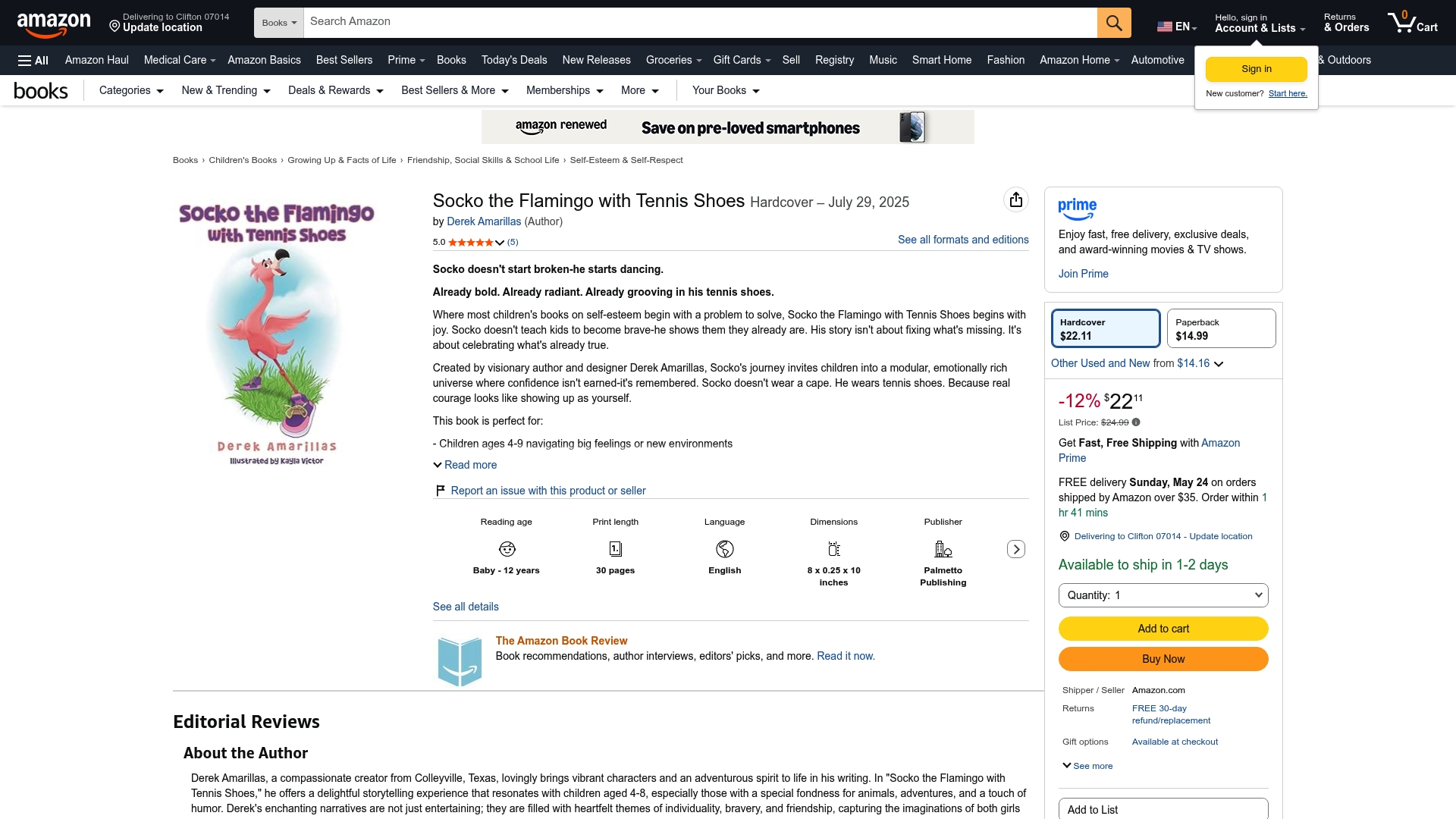
A, the brand behind Socko the Flamingo with Tennis Shoes, creates picture books built around exactly this kind of emotional honesty. Socko's stories use humor, imagination, and relatable situations to open conversations about big feelings, belonging, and self-acceptance. For parents looking for a trusted starting point, Socko's books are available and ready to become part of your family's reading ritual. Whether you are preparing for a first daycare drop-off or navigating a bigger family transition, the right story read at the right moment makes a real difference.
FAQ
What age is separation anxiety most intense in children?
Separation anxiety peaks between ages 10 months and 18 months in infants, then resurfaces commonly between ages 3 and 6 when children begin preschool or daycare. Books designed for this age range directly address the drop-off experience and reunion reassurance children need most.
How do I know if a children's book will actually help with anxiety?
Look for books that name specific feelings, show a character coping rather than simply being rescued, and end with a clear, safe reunion. Books that embed coping strategies like deep breathing or reframing worried thoughts give children tools they can use beyond the story.
When is the best time to read books about separation anxiety?
Read during calm, low-stress moments, not immediately before or during a separation. Proactive reading during relaxed times builds emotional preparedness so children have the coping language ready when they need it.
Can a book replace professional help for severe separation anxiety?
Books are a support tool, not a clinical treatment. For children whose anxiety significantly disrupts daily life, school attendance, or sleep, a licensed child therapist who uses CBT is the appropriate next step. Books work best alongside, not instead of, professional guidance when anxiety is severe.
What makes the "worry character" technique in books so effective?
Externalizing anxiety as a character or creature lets children talk about worry without feeling ashamed of it. When the worry is a funny little figure rather than a personal flaw, children engage with it more openly and feel more capable of managing it.