
Children's books celebrate a child's individuality by placing unique characters at the center of every story, showing young readers that their differences are strengths, not flaws. For children aged 3–8, this matters more than most adults realize. A picture book featuring a flamingo who wears tennis shoes, a child with a different brain, or a kid who speaks two languages tells every reader: you belong exactly as you are. This article explains how stories build that message, how caregivers can deepen it through interactive reading, and how to choose the right books for the children in your life.
How books celebrate child's individuality through character and theme
Children's literature celebrates individuality by building characters who look, think, feel, and move through the world differently from one another. These characters are not side notes. They are the protagonists. That shift in framing tells a child that their own differences are worth centering, not hiding.
The most effective books for unique children represent a wide range of traits. These include:
- Neurodivergence, such as ADHD, autism, and dyslexia, shown as different ways of thinking rather than deficits
- Physical differences, including mobility aids, hearing devices, or facial differences, treated as ordinary parts of life
- Cultural and linguistic backgrounds, where bilingualism or cultural traditions are presented as gifts
- Emotional intensity, where big feelings are named, validated, and worked through rather than suppressed
Picture books addressing these differences are now used with children as young as 3 or 4 to build positive self-image and support classroom inclusion. That early exposure matters because children form core beliefs about themselves before they start school.
The best books also push against conformity as a value. Instead of rewarding the child who fits in, they reward the child who shows up authentically. Themes of self-expression, personal strength, and acceptance over approval run through the strongest titles in children's literature and self-expression today.
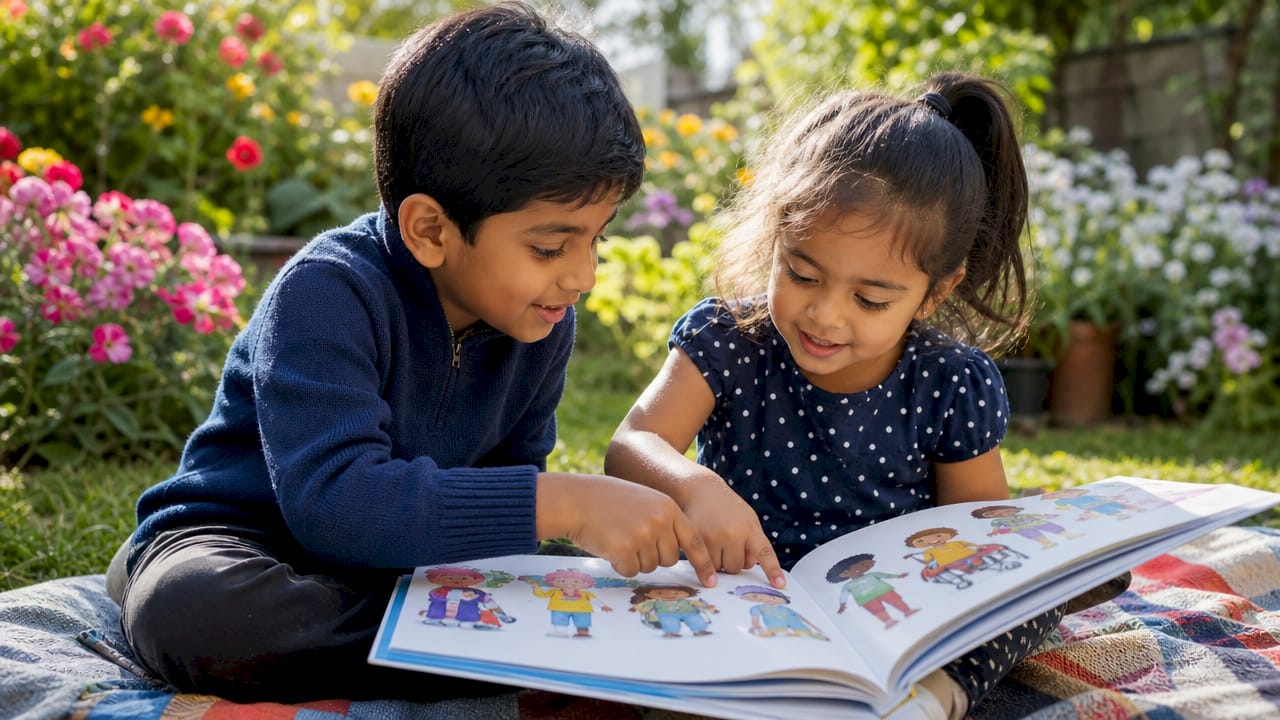
Pro Tip: When selecting books, look for stories where the character's unique trait drives the plot forward. If the difference is only mentioned once and then ignored, the book is not truly celebrating it.
How does interactive reading reinforce a child's sense of self?
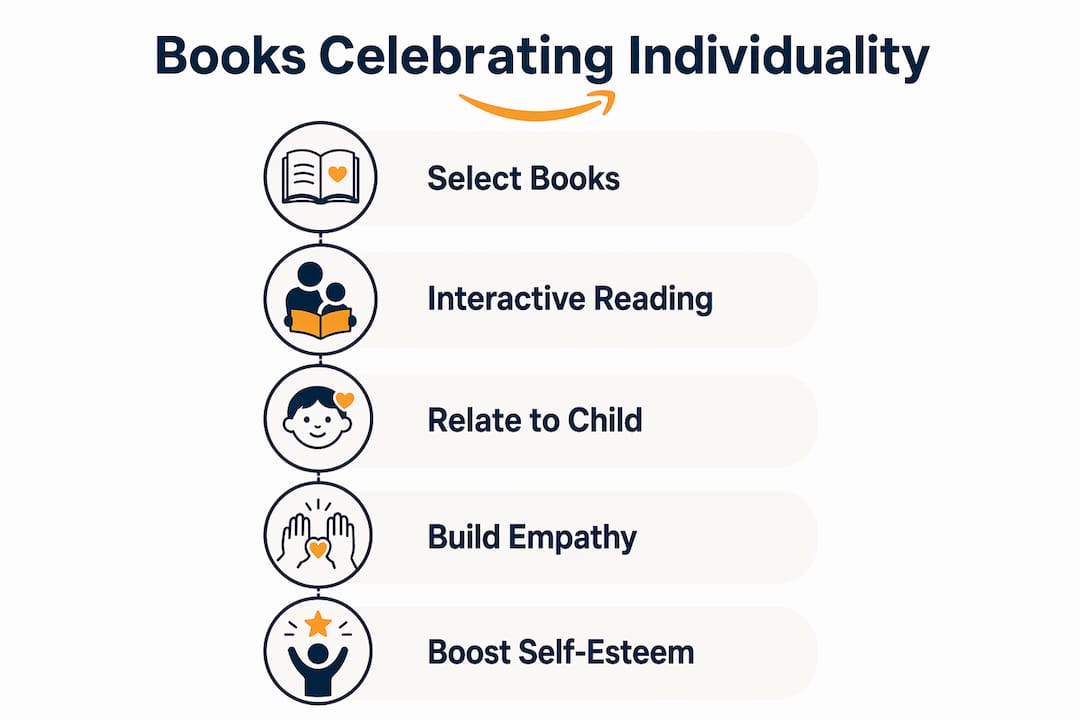
Reading a book to a child is not enough on its own. The conversation around the book is where the real work happens. Interactive reading techniques like reflective questions and pausing for discussion help transfer the lessons from the page into a child's real life and identity.
Here is a practical approach for any read-aloud session:
- Pause at key moments. When a character faces a choice about fitting in or being themselves, stop and ask: "What would you do?" This invites the child to apply the story to their own experience.
- Name the character's unique trait out loud. Say something like: "I love how she figured that out her own way." This models the language of appreciation for difference.
- Connect the story to the child. Ask: "Is there anything about you that feels like this character?" Open-ended questions like this support identity exploration without pressure.
- Share your own story. Tell the child about a time you felt different or out of place, and what helped. Caregivers who normalize non-conformity build resilience and confidence in children who face peer pressure.
- Affirm specific traits after reading. Close the session by naming one real quality you see in the child. "You notice things other people miss" lands differently than "Good job."
Families that use open-ended questions during reading better support a child's identity exploration than those who read passively. The book becomes a starting point, not the whole conversation.
Pro Tip: Keep a short list of three or four go-to questions you use across different books. Consistency helps children learn that every story is an invitation to think about themselves.
Why does celebrating individuality through books matter for self-esteem?
Children who see their traits reflected in stories develop stronger self-worth. This is not a soft claim. Promoting individuality through reading combined with caregiver modeling significantly boosts children's self-confidence and self-acceptance. The mechanism is straightforward: when a child sees a character who shares their trait succeed, struggle, and belong, they update their own story about what is possible for them.
"Children who see adults discussing their unique traits and mistakes develop stronger self-worth." — Center for Early Childhood
Books also shift the source of a child's self-esteem. Most children start out seeking external validation. They want to know if they are good enough compared to others. Stories that celebrate uniqueness redirect that attention inward. Reading about individuality shifts focus from external validation to building internal self-worth based on personal progress and unique learning styles. That shift is one of the most protective things a child can develop before adolescence.
The empathy benefit extends beyond the child who sees themselves in the story. Stories about differences are vital for all children to develop empathy, inclusion, and belonging, not just those with specific diagnoses. A neurotypical child who reads about a character with dyslexia learns that their classmate's brain works differently, not worse. Books about neurodiversity normalize different brain wiring for all children, supporting empathy and reducing anxiety in classrooms and homes. That normalization reduces the social cost of being different, which benefits every child in the room.
Anxiety reduction is a concrete outcome, not a side effect. When children understand that variation in ability, personality, and experience is normal, they worry less about their own differences. The classroom becomes a safer place to be exactly who you are.
Practical tips for choosing and using books that honor uniqueness
Choosing the right book is a skill. Not every book that claims to celebrate differences actually does it well. These guidelines help parents and educators make better choices.
What to look for in books for unique children
- Age-appropriate representation. A book for a 3-year-old should show differences visually and simply. A book for a 7-year-old can explore the emotional complexity of feeling left out or misunderstood.
- Authentic portrayal. The character's unique trait should feel real, not like a lesson wrapped in a thin story. If the book reads like a lecture, children will tune out.
- Resolution through self-acceptance, not conformity. The character should end the story more themselves, not more like everyone else.
- Diverse visual representation. Illustrations matter as much as text for young readers. Children notice who looks like them on the page.
How to use books alongside activities
Pair books with activities that connect to the child's own interests and learning style. A child who loves drawing can illustrate their own version of the story's ending. A child who loves movement can act out the character's choices. Focusing on individual progress and unique learning styles builds internal self-worth better than peer comparisons. The activity reinforces that message by letting the child express themselves in their own way.
Avoiding comparisons with peers or with the child's past self keeps the focus on authentic self-worth. When you discuss a book, praise the child's observations and personality, not their reading speed or comprehension score. "You noticed something I missed" is more powerful than "You read that so fast."
Pro Tip: Build a small rotating library of five to eight books that reflect different kinds of uniqueness. Rotate them monthly so children encounter new representations without feeling overwhelmed by choice.
A character like Socko from A, a flamingo who wears tennis shoes and navigates big feelings with humor, models exactly this kind of authentic self-expression. A uses imagination and comedy to make conversations about identity feel safe and fun rather than heavy or instructional.
Key takeaways
Children's books celebrate individuality most powerfully when diverse characters drive the story, caregivers read interactively, and praise focuses on effort and personality rather than comparison.
| Point | Details |
|---|---|
| Character representation matters | Books where unique traits drive the plot teach children that their differences are strengths, not problems. |
| Interactive reading deepens impact | Open-ended questions during read-alouds help children connect story lessons to their own identity. |
| Self-worth shifts inward | Stories about individuality move children from seeking external approval to valuing their own progress. |
| Empathy grows for all readers | Books about neurodiversity and differences benefit neurotypical children just as much as those with specific traits. |
| Avoid comparison-based praise | Praising effort and personality rather than outcomes keeps the focus on authentic self-worth. |
What I've learned about books and a child's sense of self
Children's books are often treated as entertainment with a moral tacked on at the end. That framing undersells what a well-chosen story actually does. The books that stay with children are the ones where they recognize themselves, not in a tidy, aspirational way, but in a messy, honest, "that's exactly how I feel" way.
The most common mistake I see parents and educators make is choosing books that celebrate uniqueness in theory but resolve the story through the child becoming more acceptable to others. The character learns to fit in better, makes more friends, and earns approval. That arc teaches the opposite of what you intend. Real self-acceptance does not require an audience.
The second mistake is reading the book and then moving on. The conversation after the last page is where the lesson lands. Ask the child what they would have done differently. Ask them what the character got right. Ask them what they are good at that nobody else notices. Those questions do more for a child's self-esteem than any single book ever could.
Caregivers also need to model self-acceptance out loud. When you say "I'm not great at that, but I'm really good at this," you show the child that adults have limits and strengths too. That honesty is more powerful than any perfectly curated reading list. Use the books as a starting point. Let the child take the conversation wherever it needs to go.
— Derek
A character worth reading: Socko the Flamingo
A brings something specific to the conversation about children's identity and belonging. Socko the Flamingo with Tennis Shoes is a picture-book character built around emotional literacy, humor, and the kind of self-acceptance that does not require anyone else's permission.
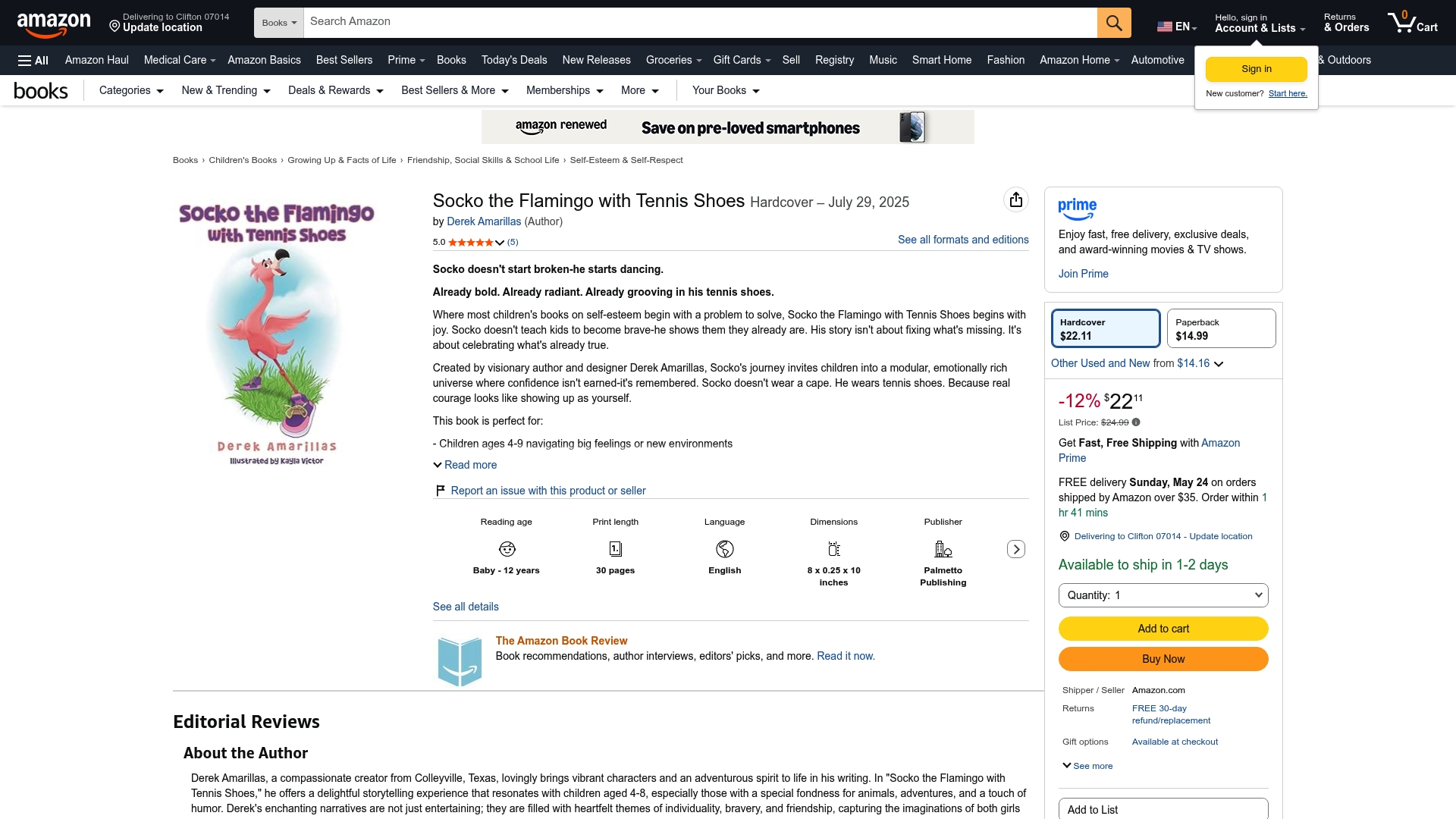
A is designed for parents, teachers, and librarians who want books that spark real conversations, not just read well at bedtime. Socko's stories give children a character who feels out of place and finds his way back to himself through imagination and honesty. If you are looking for a book that makes big feelings approachable and identity feel safe to talk about, Socko's story is worth adding to your shelf.
FAQ
How do books celebrate a child's individuality?
Books celebrate individuality by placing characters with unique traits, backgrounds, and abilities at the center of the story. When children see those characters succeed and belong, they learn that their own differences are strengths.
What age should children start reading books about individuality?
Picture books addressing visible and invisible differences are effective with children as young as 3 or 4. Simple visuals and direct language make these concepts accessible before formal reading begins.
How can caregivers make these books more effective?
Using open-ended questions during reading, connecting the story to the child's own traits, and sharing personal stories of feeling different all deepen the impact of individuality-focused books.
Do books about differences only help children with specific diagnoses?
No. Stories about differences build empathy and a sense of belonging for all children, including neurotypical readers. These books normalize variation in ability and personality across the whole classroom.
What should parents avoid when using books to build self-esteem?
Avoid comparing the child to peers or to their past performance. Focus praise on effort, personality, and unique observations rather than outcomes or speed.