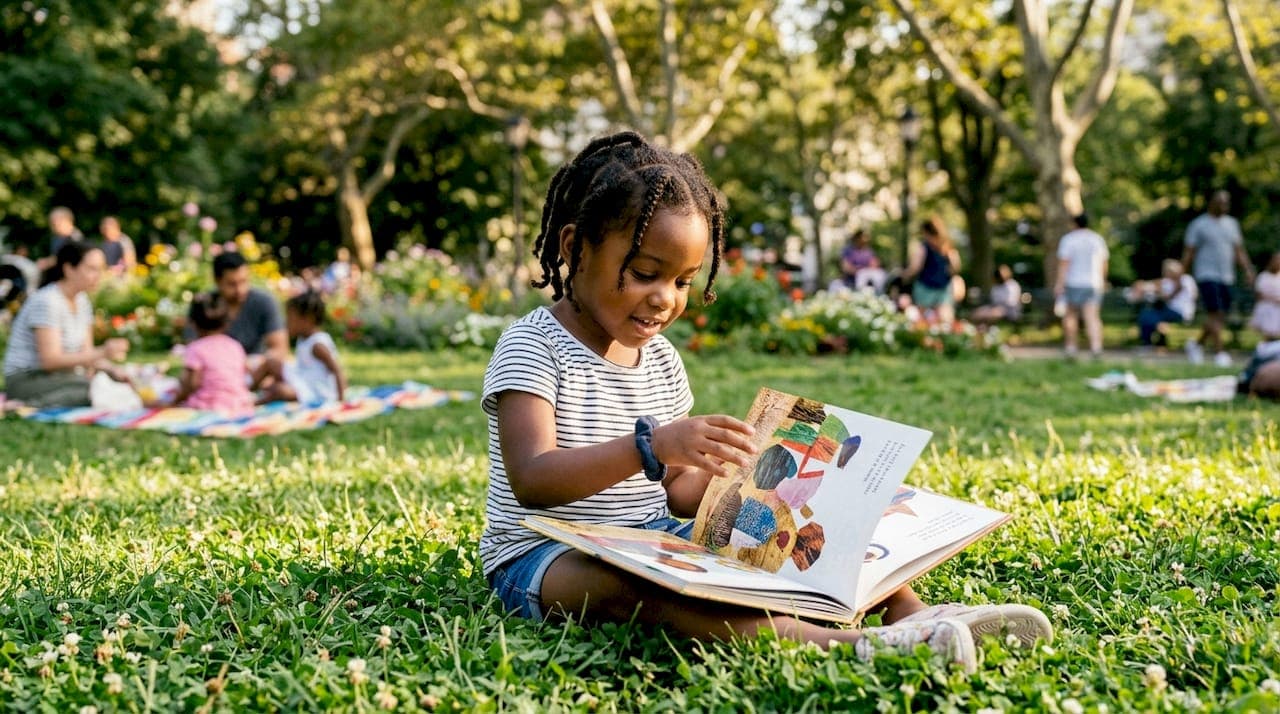
Illustrations are the primary medium through which children ages 3–8 develop language skills and emotional understanding before they can read a single word. The role of illustrations in children's gift books goes far beyond decoration. Visual storytelling is how young children first make sense of narrative, emotion, and the world around them. A meta-analysis of 20 studies involving 2,145 children confirmed that picture books produce a moderate, statistically significant effect on literacy, language, and vocabulary outcomes. That finding means the art inside a gift book is not a bonus. It is the engine.
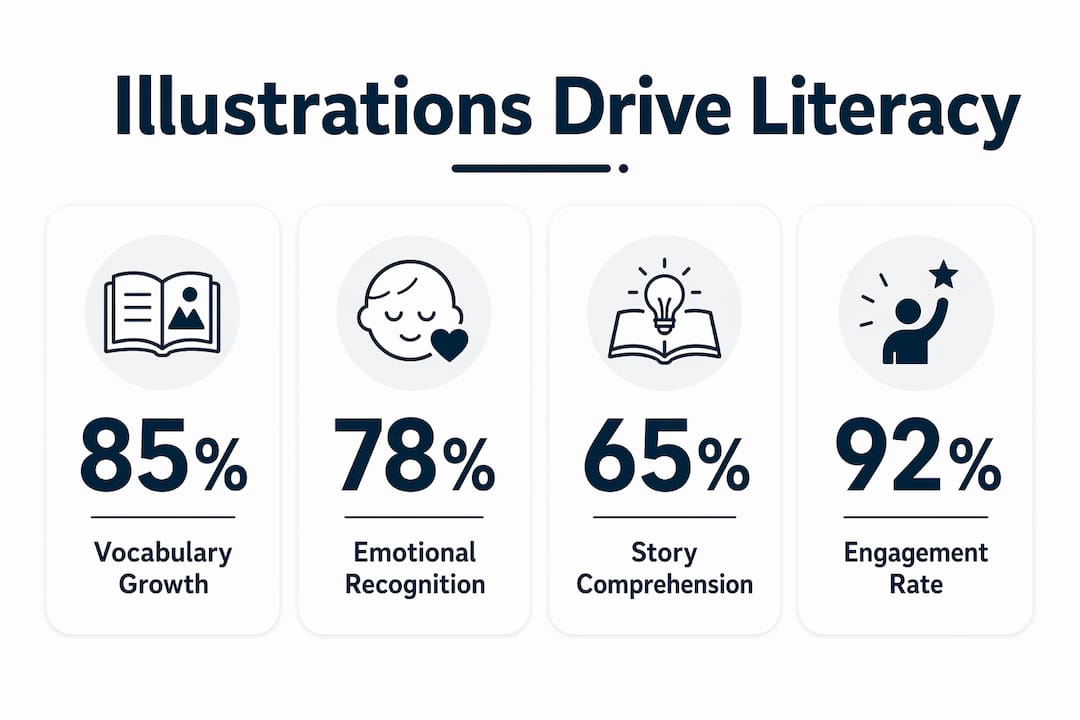
How do illustrations enhance literacy and language in children ages 3–8?
Illustrations act as cognitive anchors. Before a child can decode text, a picture tells them what a word means, what a character feels, and what happens next in the story. This visual scaffolding is how young children build vocabulary without formal instruction.
Picture books function as multimodal narratives, meaning text and images are interdependent. Neither element carries the full story alone. When a child sees a character's slumped shoulders and a gray sky, they understand sadness before the word "melancholy" appears on the page. The image does the heavy lifting.
Research confirms this works at scale. The meta-analytic effect size of Hedges' g = 0.71 places picture books in the moderate-to-strong range for literacy outcomes. That is a meaningful result across a diverse pool of children and classroom settings.
"Illustrations give children a second channel for comprehension. When the text is hard, the picture keeps the story alive."
Multimodal learning also builds critical thinking. The inter-modal gap between what the text says and what the illustration shows prompts children to reconcile two sources of information. That cognitive work builds inference skills, which are foundational to reading comprehension in later grades.
Key ways illustrations support language acquisition:
- Vocabulary expansion: Images give concrete meaning to abstract or unfamiliar words.
- Story sequencing: Visual scene changes help children track narrative progression.
- Concept clarification: Spatial relationships in illustrations explain ideas like "above," "beside," or "through" without requiring text.
- Engagement: Vibrant, detailed art holds attention long enough for repeated reading, which compounds vocabulary gains.
Pro Tip: Read the same picture book three times in a week. Each reading, ask your child what they notice in the illustration first. Children often spot new details that deepen their understanding of the story.
Why do illustrations matter for emotional and social development?
Illustrations are the fastest route to emotional literacy for young children. Facial expressions, body posture, and color choices in a picture communicate feelings that words alone cannot convey at this age. Children decode facial expressions and spatial relationships intuitively, reading emotions like fear, joy, or loneliness before they have the vocabulary to name them.
This matters because emotional literacy, the ability to identify and name feelings, is a skill children must develop before they can regulate their own behavior. Illustrations in gift books give children a safe, low-stakes space to practice reading emotional cues. A character's wide eyes signal surprise. A hunched posture signals shame. A warm yellow background signals safety.
Illustrations provide primary emotional cues through body language and facial expression, helping children learn to identify and process big emotions. That process builds empathy. When a child sees a character crying in a corner of a page, they feel something. That feeling is the beginning of understanding another person's inner world.
Specific visual elements that carry emotional weight in children's books:
- Color palette: Cool blues and grays signal sadness or tension. Warm oranges and yellows signal comfort and joy.
- Character posture: Open, upright posture reads as confident. Closed, curled posture reads as scared or sad.
- Scene composition: A character placed small in a large, empty space communicates loneliness without a single word.
- Facial expression detail: Illustrators who draw nuanced expressions, not just a simple smile or frown, give children more emotional vocabulary to work with.
A is built on exactly this principle. Socko the Flamingo with Tennis Shoes uses humor, color, and expressive illustration to open conversations about belonging, self-acceptance, and big feelings. The art does not just support the story. It is the story.
Pro Tip: After reading a page, cover the text and ask your child to tell you what the character is feeling just from the picture. This builds emotional vocabulary faster than discussing the words alone.
How do illustration styles affect engagement and gifting appeal?
Illustration styles create immediate expectations about tone, genre, and emotional register the moment a child or adult picks up a book. This is not a subtle effect. A child who sees loose, expressive watercolor art expects a gentle, quiet story. A child who sees bold cartoon lines expects humor and action. The style is a promise.
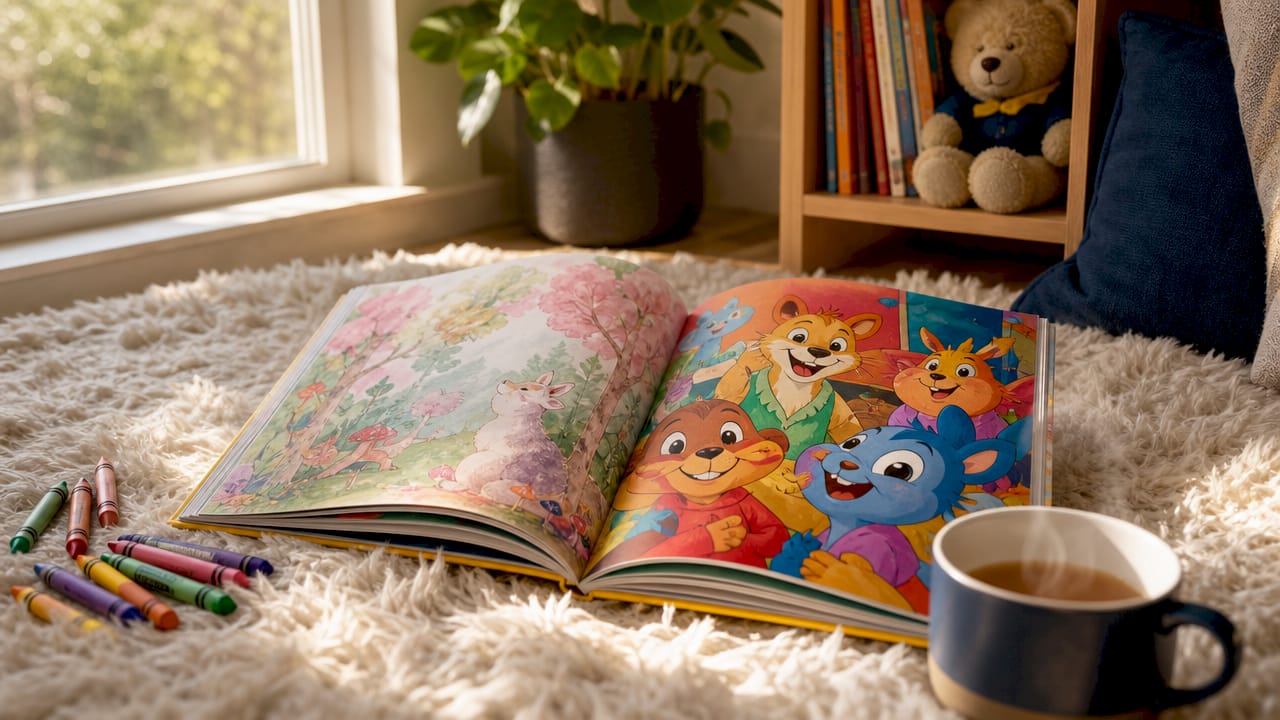
For parents and educators choosing gift books, this matters practically. Different styles suit different developmental stages and emotional goals.
Common illustration styles and what they signal
Watercolor: Soft edges and translucent color layers create a gentle, dreamlike tone. Watercolor works well for stories about feelings, friendship, and quiet discovery. It appeals to adult gift buyers who associate the style with classic picture books.
Textured mixed media: This style combines collage, paint, and digital elements to create a handmade, artisanal look. Textured mixed media is the most popular style in children's publishing for gift books because its handcrafted quality appeals strongly to adult buyers. That appeal drives purchasing decisions, which is why publishers lean into it for premium gift editions.
Cartoon: Clean lines, exaggerated expressions, and bold color blocks signal humor and adventure. Cartoon styles are highly accessible for children ages 3–6 because the visual language is simple and direct.
Realistic: Detailed, painterly illustration signals literary weight. Realistic styles work well for older children in the 6–8 range who can process more visual complexity.
Vector: Flat, geometric shapes with solid colors create a modern, graphic look. Vector illustration is common in educational books because the clarity supports concept comprehension.
Gift book purchasers in 2026 prefer sophisticated or nostalgic styles like textured mixed media, while educational markets favor clear, detailed styles. That split reflects a real tension. The adult buying the book and the child reading it do not always want the same thing from the art.
Pro Tip: When choosing a gift book, flip to a page with no text and ask yourself if the illustration alone tells you something about the story. If it does, the art is doing real narrative work.
How to select gift books based on illustrations for developmental impact
The best children's gift books are ones where text and illustration are genuinely interdependent. True picture books require both channels to deliver the full story. If you can remove the pictures and the story still makes complete sense, the illustrations are decoration. That is a lower-quality book for developmental purposes.
Here is a practical framework for evaluating illustration quality when selecting gift books:
- Check the inter-modal gap. Does the illustration show something the text does not say? That gap is where critical thinking and emotional inference happen.
- Look at facial expressions. Are they nuanced and varied, or generic? Nuanced expressions give children more emotional vocabulary to absorb.
- Assess color intentionality. Does the color palette shift with the story's mood? Intentional color use signals a skilled illustrator who is building emotional context.
- Match style to age. For children ages 3–5, bold shapes and high contrast aid comprehension. For ages 6–8, more visual complexity is appropriate and engaging.
- Read the spreads, not just the pages. A double-page spread that creates a single unified scene shows compositional skill. That skill translates into richer visual storytelling for the child.
Matching illustration style to story tone and target age is the single most important factor for maximizing both child comprehension and gifting appeal. A beautifully illustrated book that is visually too complex for a three-year-old will not hold their attention, no matter how good the art is.
The importance of illustrations in children's books is clearest when you watch a child "read" a book they cannot yet decode. They are not pretending. They are reading the pictures, and that is real literacy work.
Key Takeaways
Illustrations in children's gift books are the primary driver of both literacy development and emotional learning for children ages 3–8, making art quality the most important selection criterion for parents and educators.
| Point | Details |
|---|---|
| Illustrations drive literacy | A meta-analysis of 2,145 children found picture books produce a statistically significant effect on vocabulary and language outcomes. |
| Emotional cues come from art | Children read facial expressions, posture, and color to understand emotions before they can name them in words. |
| Style signals tone | Watercolor suggests gentle stories; cartoon signals humor; textured mixed media appeals to adult gift buyers. |
| Inter-modal gap builds thinking | When text and image tell slightly different parts of the story, children develop inference and critical thinking skills. |
| Match style to age | Bold, high-contrast art suits ages 3–5; more visual complexity works for ages 6–8 and deepens engagement. |
What I've learned from watching children read pictures
I have spent years watching children interact with picture books, and the thing that surprises adults most is how little the text matters in the first few readings. A four-year-old will "read" the same book six times and notice something new in the illustration each time. The art is not background. It is the primary text for that child.
What I find undervalued is the emotional precision that skilled illustrators bring to a page. A character's slightly downturned mouth, a shadow falling at the wrong angle, a color that is just a shade too cool. These choices are not accidents. They are the illustrator doing emotional work that the words cannot do alone. When parents and educators learn to see that, they start choosing books differently.
The gift book market has also shifted noticeably. Adult buyers are drawn to textured, handcrafted illustration styles that feel premium and nostalgic. That is not a bad thing. It often means the art is genuinely sophisticated. But the best gift books are ones where that sophistication also serves the child, not just the adult's aesthetic preference. The books worth giving are the ones where a child can sit with the pictures and feel something real.
— Derek
Children's gift books worth giving
A curates picture books that put illustration and emotional storytelling at the center. Socko the Flamingo with Tennis Shoes is built on the principle that great art opens conversations that words alone cannot start.
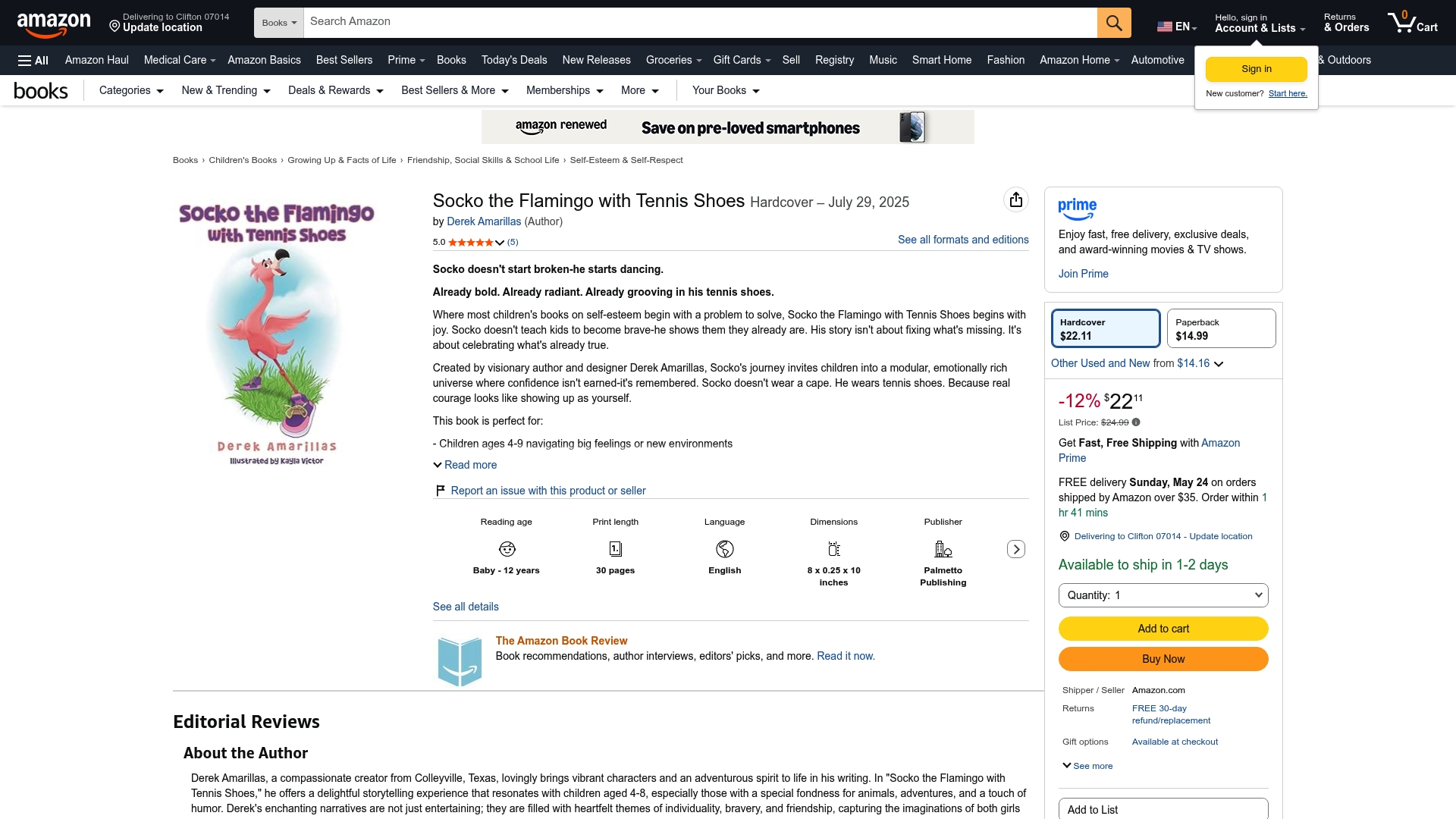
Parents and educators looking for children's books with vibrant illustrations that support emotional literacy and vocabulary growth will find a strong selection available through Amazon's children's books. The platform carries a wide range of picture books across every illustration style discussed here, from watercolor to textured mixed media, making it straightforward to match a book to a child's age and emotional needs.
FAQ
What is the role of illustrations in children's gift books?
Illustrations are the primary storytelling tool in children's gift books, delivering vocabulary, emotional context, and narrative structure through visual cues that children ages 3–8 decode intuitively before they can read text.
How do illustrations support emotional development in young children?
Illustrations show facial expressions, body posture, and color shifts that teach children to identify and name emotions. This visual emotional vocabulary builds empathy and self-awareness in children ages 3–8.
Which illustration style is best for children's gift books?
Textured mixed media is the most popular style for gift books because it appeals to adult buyers, while watercolor suits gentle emotional stories and cartoon styles work best for humor and adventure with younger children.
What is the inter-modal gap in picture books?
The inter-modal gap is the difference between what the text says and what the illustration shows. That gap prompts children to think critically and build inference skills, which are foundational to reading comprehension.
How do I know if a children's book has quality illustrations?
Look for illustrations that show something the text does not say, use color intentionally to reflect mood, and include nuanced facial expressions. These features signal that the art is doing real narrative and emotional work.