Social-emotional learning (SEL) books actively decrease peer conflict by giving children the skills to understand emotions, take another person's perspective, and resolve disagreements without aggression. The Collaborative for Academic, Social, and Emotional Learning (CASEL) defines SEL as the process through which children develop self-awareness, empathy, and responsible decision-making. Research by Durlak et al. confirms that SEL programs reduce conduct problems and delinquency in students. That finding matters because peer conflict is not just a social problem. It disrupts learning, damages friendships, and shapes how children see themselves. Understanding how SEL books reduce peer conflict gives parents and educators a concrete, evidence-based tool to use every single day.
How SEL books reduce peer conflict through social-emotional skills
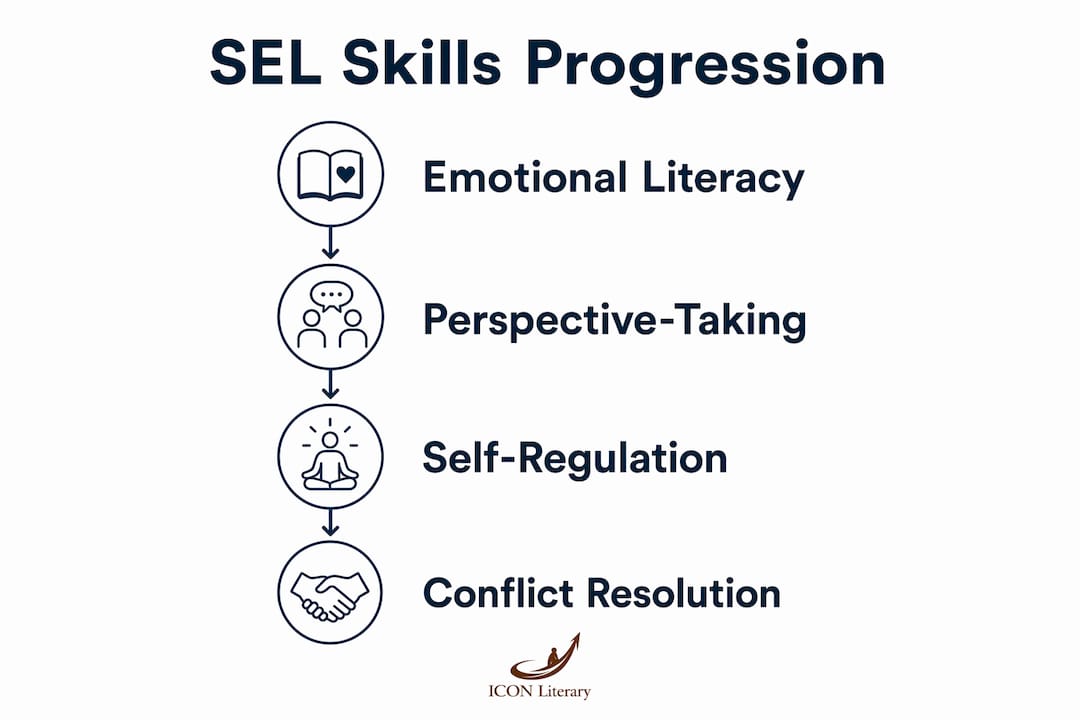
SEL books teach four core skills that directly lower the frequency and intensity of peer conflict. Each skill builds on the last, creating a foundation children carry from the classroom into every relationship.
Emotional literacy is the ability to name and understand feelings. Children who cannot label their emotions tend to act them out physically or verbally. SEL books give children a vocabulary for internal states, which is the first step toward managing those states before they explode into conflict.
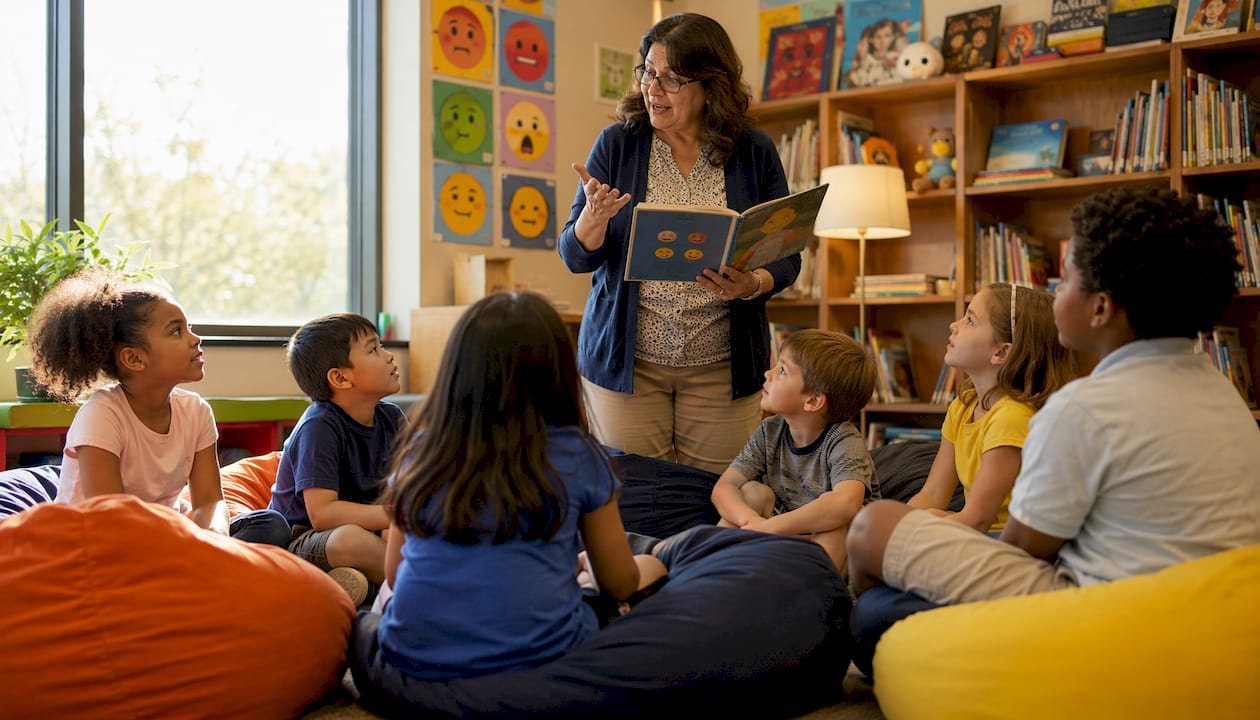
Perspective-taking is the second skill. When a child reads about a character who feels left out, scared, or misunderstood, the child practices seeing the world through someone else's eyes. Narrative persuasion in SEL books helps children temporarily suspend their own rigid viewpoints and interpret peer behavior with more empathy. That shift alone reduces conflict escalation.
Conflict resolution strategies are modeled directly in story plots. Characters argue, make mistakes, and then repair the relationship. Children absorb these scripts and apply them when their own friendships hit friction.
Self-regulation is the fourth skill. Books that show characters pausing, breathing, or asking for help teach children that strong emotions do not require immediate, reactive behavior.
- Emotional literacy: naming feelings before acting on them
- Perspective-taking: reading character motives as stress-driven, not disrespectful
- Conflict resolution: learning repair language from story outcomes
- Self-regulation: practicing pause strategies modeled by characters
Pro Tip: Before reading, ask children to predict how a character might feel. This activates emotional vocabulary before the story even begins, making the lesson stick longer.
What does the evidence say about SEL books and peer conflict?
The research on SEL and peer conflict is consistent and strong. Durlak et al.'s landmark 2011 study found that students receiving systematic SEL instruction showed fewer peer conflicts and less aggression than peers who did not. That study covered hundreds of school-based programs, making it one of the most cited bodies of evidence in education research.
More recent findings reinforce the same conclusion. SEL-trained students report less victimization and show stronger abilities to regulate themselves and take responsibility for their actions. Bullying prevention programs alone show mixed results, but SEL programs show consistent reductions in bullying by improving the underlying social-emotional competencies that drive aggressive behavior.
The Mood Meter, a classroom tool developed to help students track and name their emotional states, shows measurable results. Regular Mood Meter use shifts classrooms from reactive conflict management to proactive emotional regulation. That shift means fewer incidents reach the level of a formal discipline response.
CASEL's May 2026 report adds an unexpected finding: teachers who integrate SEL through storytelling see higher reading and math scores alongside improved social skills. SEL books do not trade academic time for social time. They improve both simultaneously.
"Immersion in stories enables students to view peer actions as stress-driven rather than disrespectful. That reframe is the core mechanism behind conflict reduction in SEL-based reading programs."
| SEL outcome | Evidence source |
|---|---|
| Fewer peer conflicts and less aggression | Durlak et al. 2011 systematic review |
| Reduced bullying and victimization | 2018 SEL program studies |
| Proactive emotional regulation in classrooms | Mood Meter Q1 2026 data |
| Higher reading and math scores alongside social gains | CASEL May 2026 report |
How do culturally responsive SEL books improve conflict resolution?
Culturally responsive SEL books go further than standard social skills stories. They represent multiple cultural perspectives on emotional expression, which matters because children from different backgrounds do not all show or process emotions the same way. A book that treats one emotional style as the norm can accidentally teach children to misread peers from different cultures, which creates conflict rather than reducing it.
Cultural SEL experts recommend focusing on contextualizing character choices rather than moralizing. A character who reacts with silence when upset is not being rude. A character who speaks loudly when excited is not being aggressive. Books that explain these differences widen children's behavioral interpretation and reduce quick, punitive judgments.
Trauma-aware reading is a related strategy. Some children carry stress from home into the classroom, and that stress shapes how they respond to peers. SEL books that show characters acting out because of fear or exhaustion, rather than malice, teach children to ask "what is happening for this person?" before reacting.
- Choose books that show diverse emotional expressions without labeling one style as correct
- Preview books for stereotypes or one-dimensional moral conclusions before reading aloud
- Use character choices as discussion points, not as right-or-wrong verdicts
- Frame reactive behavior in stories as stress-driven to build compassionate interpretation
Pro Tip: After reading a scene where a character reacts badly, ask: "What do you think was happening for them before this moment?" That question builds the habit of contextualizing behavior, which is the foundation of conflict prevention.
What practical techniques make SEL books most effective for reducing conflict?
The most effective approach treats SEL books as case studies, not moral lessons. Using books as case studies allows children to analyze character behavior in context without feeling personally exposed or judged. That safety is what makes the learning transfer to real peer situations.
Create a third space for dialogue
A "third space" discussion focuses on a character's feelings and motives rather than assigning blame to anyone in the room. When a child in your class is struggling with a peer, reading a story about a similar conflict and discussing the character's experience gives everyone a way to talk about the real situation without defensiveness. Third-space dialogue reduces the emotional charge that makes conflict conversations break down.
Use empathy labs and role-play
Empathy labs are structured reflection activities that follow a story reading. Children summarize a character's perspective, practice "curious questions" they could ask a peer, and rehearse repair language. Micro-interventions like these convert abstract empathy into real social skills. Behavioral tests following SEL narrative reflection show improved peer interactions and stronger repair language development.
Here is a practical sequence for any SEL book session:
- Read the story aloud and pause at the conflict moment. Ask: "What is this character feeling right now?"
- After finishing, ask: "What did the character need that they were not getting?"
- Invite children to suggest one thing the character could have said differently.
- Role-play that alternative response with a partner.
- Connect it to real life: "Has anything like this ever happened to you? What could you try next time?"
This sequence moves children from passive listening to active skill practice. The role-play step is the most important. Narrative immersion in SEL books helps children see peer conflicts through a lens of stress rather than disrespect, but role-play is what locks that insight into behavior.
Pro Tip: Keep a short list of "repair phrases" visible in your classroom or at home, drawn from the books you read together. Phrases like "I didn't mean to hurt you" or "Can we start over?" give children ready language when emotions run high.
Key Takeaways
SEL books reduce peer conflict most effectively when used consistently, paired with structured discussion, and selected for cultural responsiveness.
| Point | Details |
|---|---|
| Core skill building | SEL books teach emotional literacy, perspective-taking, self-regulation, and conflict resolution. |
| Strong research base | Durlak et al. and CASEL both confirm SEL programs reduce aggression and bullying consistently. |
| Cultural responsiveness matters | Books representing diverse emotional styles reduce misreading of peer behavior across cultures. |
| Case study over moral lesson | Treating stories as case studies keeps children engaged without triggering defensiveness. |
| Role-play transfers learning | Practicing repair language and curious questions after reading converts empathy into real social skill. |
What I've learned from watching SEL books work in real classrooms
I have watched teachers use SEL books as a one-time lesson and wonder why nothing changed. I have also watched teachers read the same kind of book every week, pause at the hard moments, and ask real questions. The second group sees results. The difference is not the book. It is the consistency and the conversation.
The research backs this up. Consistent SEL integration by educators through books leads to better academic outcomes alongside improved social skills. That finding surprised a lot of people when CASEL published it. It should not have. When children feel emotionally safe and understood, they learn better. SEL books create that safety over time, not overnight.
The part most adults miss is the repair piece. Children need to see characters fix things, not just feel bad about them. Accountability without shame is the goal. Focusing on relationship restoration rather than punishment makes SEL books far more effective in conflict repair. A story where the character apologizes, listens, and tries again gives children a script they can actually use.
My honest advice: pick two or three books that speak directly to the conflicts you see in your classroom or at home. Read them more than once. Ask different questions each time. Let children disagree about what the character should have done. That disagreement is the learning.
— Derek Amarillas
SEL books worth putting in children's hands today
Knowing the research is one thing. Finding the right book for the right moment is another. Icon Literary's Socko the Flamingo with Tennis Shoes was built exactly for this work. Socko teaches emotional literacy, belonging, and self-acceptance through humor and imagination, giving children a character they can root for while absorbing real social-emotional skills.
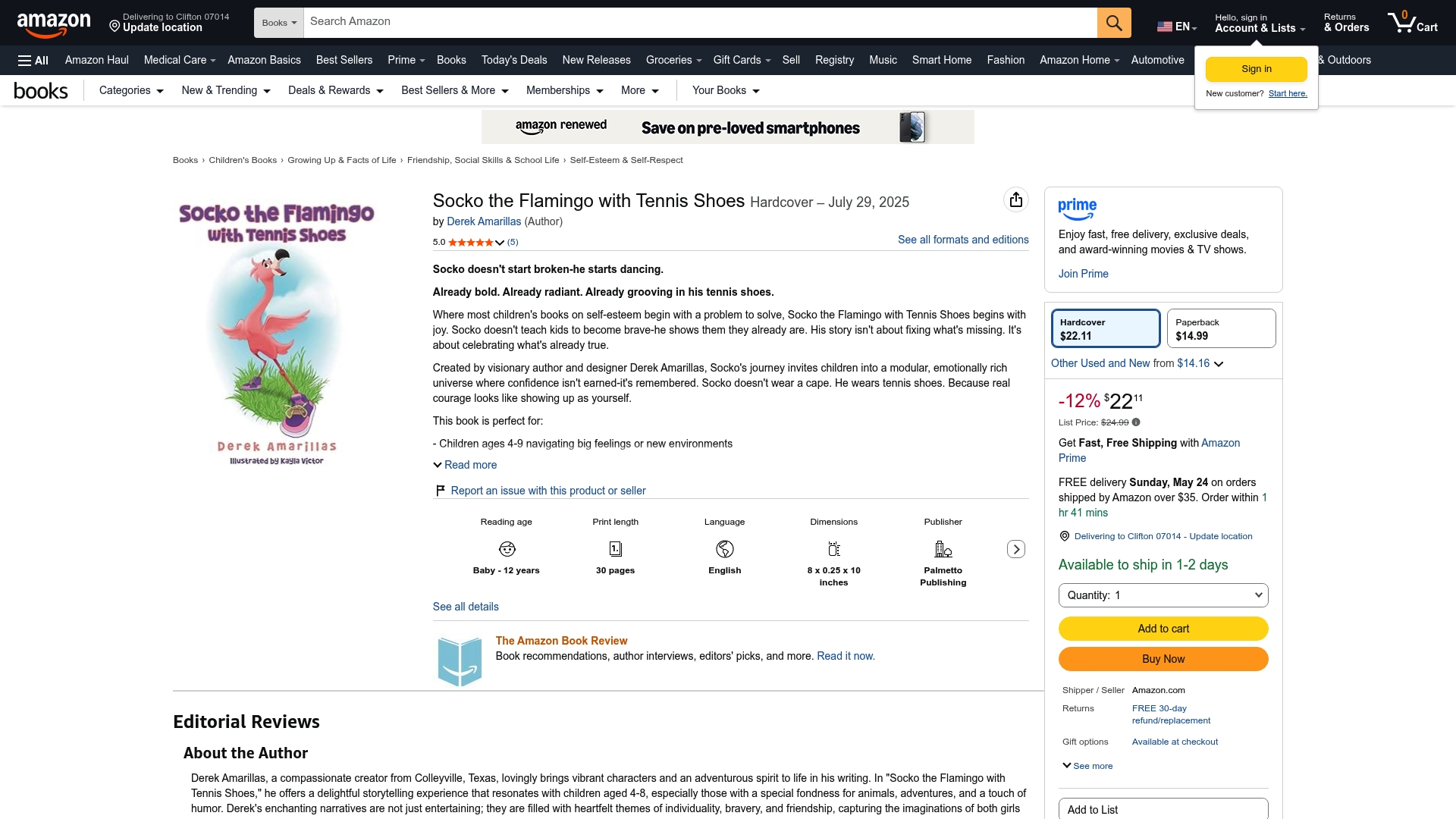
Parents and educators who want a picture book that sparks genuine conversations about big feelings, identity, and peer belonging will find Socko a natural fit for read-aloud sessions and classroom discussions. The book works as a case study, not a lecture. You can get your copy here and start building the kind of consistent SEL practice the research shows actually reduces conflict over time.
FAQ
What skills do SEL books teach to reduce peer conflict?
SEL books build emotional literacy, perspective-taking, self-regulation, and conflict resolution. These four skills directly reduce the frequency and intensity of peer conflicts in children.
How early should children start reading SEL books?
Picture books with SEL themes are appropriate from preschool age onward. Early exposure to emotional vocabulary and empathy-building stories creates habits that carry into later grades.
Do SEL books work for children who already have frequent conflicts?
Yes. Narrative immersion in SEL stories helps children reframe peer behavior as stress-driven rather than intentionally hostile, which reduces reactive responses even in children with established conflict patterns.
How often should parents or educators use SEL books?
Consistent weekly use produces the strongest results. One-time readings have limited impact. Regular reading paired with structured discussion builds the social-emotional habits that reduce conflict over time.
Are SEL books effective for reducing bullying specifically?
SEL programs show consistent reductions in bullying by improving the underlying social-emotional competencies that drive aggressive behavior, making them more effective than standalone bullying prevention programs.