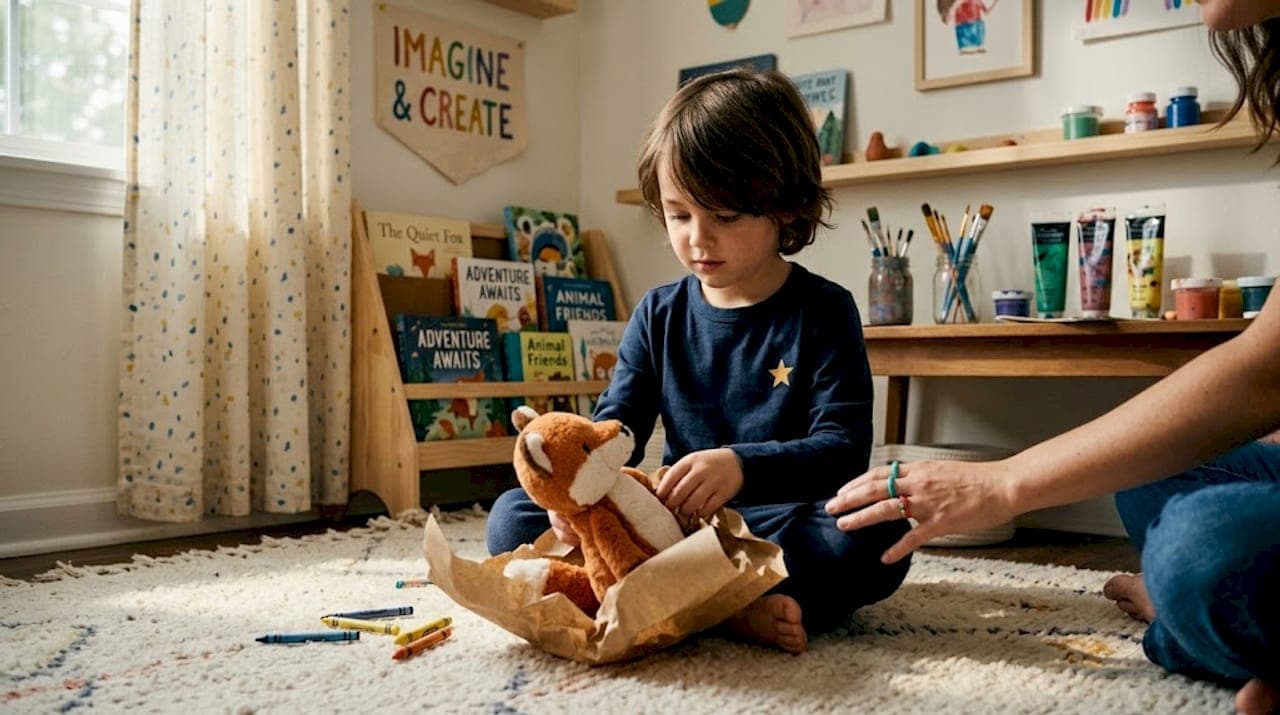
You've stood in a toy aisle, staring at a shelf of flashing, buzzing, light-up everything, and felt completely lost. When you're trying to choose a meaningful gift for a sensitive child, the standard gift-giving playbook falls apart fast. Too loud, too bright, too much social performance required to enjoy it. Sensitive children aged 3 to 8 feel the world more intensely than their peers, and the wrong gift doesn't just go unused. It can trigger overwhelm, withdrawal, or the quiet sadness of a child who feels like nobody really gets them. This guide fixes that.
Table of Contents
- Key Takeaways
- How to choose meaningful gifts for sensitive children starts with understanding them
- Preparing to choose: what to gather before you shop
- Gift categories that actually work for sensitive children
- Verifying success: how to read the child's response
- My honest take on thoughtful gift-giving for sensitive kids
- Where to find the right gifts for sensitive children
- FAQ
Key Takeaways
| Point | Details |
|---|---|
| Know the child before the store | Observe sensory preferences and emotional triggers before selecting any gift. |
| Align gifts with development, not age labels | Match gifts to the child's developmental stage to avoid frustration or boredom. |
| Sensory safety extends beyond the gift | Manage the celebration environment and gift-opening process to reduce overload. |
| Emotional literacy gifts have lasting impact | Books and story-based tools build emotional vocabulary that children use for life. |
| "I see you" is the real gift | The most meaningful presents for kids communicate deep understanding of who they are. |
How to choose meaningful gifts for sensitive children starts with understanding them
Before you can select the right gift, you need to understand what makes a sensitive child tick. Sensitivity in children is not a flaw or a phase. It is a biological trait. Research by psychologist Dr. Elaine Aron describes Highly Sensitive Children (HSC) as processing sensory and emotional information more deeply than roughly 80% of the population. This means they notice subtleties others miss, feel emotions more intensely, and get overwhelmed more quickly by stimulation.
For children aged 3 to 8, this shows up in specific and predictable ways:
- Sensory sensitivities: Certain textures, sounds, smells, or lights can feel physically painful or deeply distressing.
- Emotional intensity: Joy, disappointment, and excitement all hit harder and last longer than in neurotypical peers.
- Preference for depth over novelty: Sensitive children often prefer familiar, meaningful activities over new, flashy experiences.
- Strong connection to special interests: When something clicks, it really clicks. These children become deeply invested in the topics and characters they love.
Understanding these traits changes how you approach gifts for sensitive children entirely. A gift that earns repeated use is one that respects the child's sensory profile while also connecting to something they already find meaningful. Meaningful gifts for sensitive kids communicate "I see you and understand you" rather than "here is something popular."
Pro Tip: Ask the child's teacher or daycare provider what the child gravitates toward during free play. Teachers observe children in low-pressure settings and often know preferences parents don't see at home.
Emotional literacy, the ability to recognize, name, and express feelings, is a key developmental goal for sensitive children. Gifts that support this skill don't just entertain. They build a lifelong emotional toolkit.
Preparing to choose: what to gather before you shop
Preparation is where most gift-givers skip a step. Spending ten minutes thinking through a few specific questions before you buy will save you from returning a gift that causes a meltdown on the child's birthday.
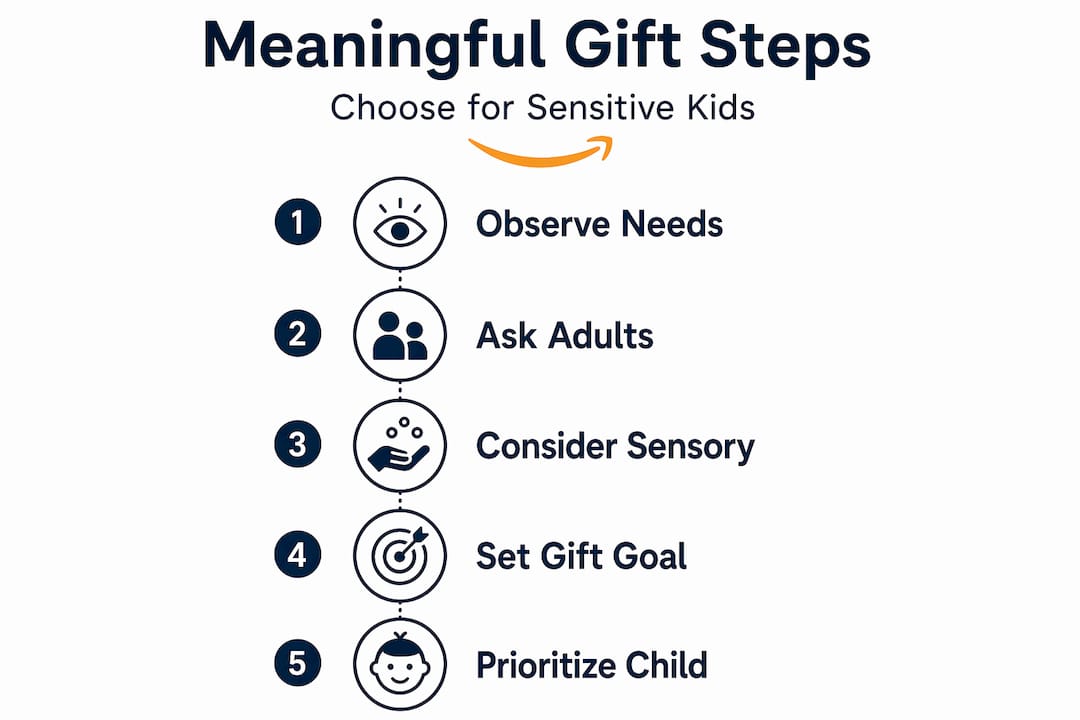
Start by observing sensory preferences. Does the child pull off scratchy clothing? Cover their ears at loud events? Seek out soft textures and quiet spaces? These are data points. Write them down.
Then consider this framework before selecting any gift:
| Category | Questions to ask |
|---|---|
| Sensory profile | Does the child seek or avoid touch, sound, light, or texture? |
| Special interests | What characters, topics, or activities does the child currently love? |
| Developmental stage | Where is the child emotionally and cognitively, regardless of age? |
| Regulatory goals | Does the child need calming support, emotional vocabulary, or confidence building? |
| Social comfort | Does the child prefer solo play, one-on-one time, or small group interaction? |
Gather input from the people who know the child best: parents, caregivers, siblings, and teachers. When selecting meaningful birthday gifts for sensitive children, you're essentially building a sensory-safe, emotionally resonant profile of who this child is right now.
Experts advise prioritizing the child's developmental needs over age labels on the box. A five-year-old who is emotionally younger in certain areas may flourish with a gift designed for age three. That is not a setback. That is meeting the child where they are.
Pro Tip: If you have a chance to speak with the child directly, ask open-ended questions like "What makes you feel cozy?" or "What do you love doing when you're alone?" Kids will tell you exactly what they need if you ask the right way.
One more thing to set before you shop: a goal. Are you hoping the gift will help with anxiety? Build vocabulary for big feelings? Support quiet, focused play? Knowing your goal narrows your options fast.
Gift categories that actually work for sensitive children
Now for the part you came for. The best gifts for emotional children are not random. They fall into clear categories, each serving a specific need.
Weighted sensory companions
Weighted companions around 4 lbs provide grounding pressure that helps children aged 3 to 8 calm anxiety, improve focus, and ease through meltdowns. They work on the same principle as weighted blankets: deep pressure stimulation lowers stress hormones and signals the nervous system to settle. Unlike a blanket, a weighted stuffed animal is portable, comforting, and feels like a friend rather than a therapeutic device.
Products like Lil' Hugsters are designed specifically for this age group. They are soft, machine-washable, and heavy enough to be effective without being awkward for small hands.
Books that build emotional vocabulary
Story-based books act as mirrors for sensitive children. When a child sees a character who feels deeply, gets overwhelmed at parties, or needs quiet time to recover, they feel less alone. These books do something no toy can do: they give children words for experiences they couldn't previously describe.
Look for books that name specific emotions, show characters working through big feelings, and avoid tidy "just calm down" resolutions. Characters who struggle and find their own way through are far more useful to a sensitive child than characters who are effortlessly cheerful.
A is built on exactly this principle. Socko the Flamingo with Tennis Shoes is a character who teaches emotional literacy, belonging, and self-acceptance through humor and imagination, giving children a relatable, funny, deeply feeling character to grow with.
Sensory-friendly clothing
This one surprises people. Clothing sounds mundane, but tag-free, seamless garments are genuinely meaningful gifts for sensitive children who struggle daily with textures that cause real distress. Standard clothes often go unworn entirely because the sensory experience is unbearable. A soft, tagless hoodie in the child's favorite color can become the item they wear every single day.

When gifting clothing, focus on fabric feel over visual design, and choose items without internal seams at the toes in socks or rough tags at the collar.
Autonomy-supporting gifts
Gift cards, presented thoughtfully, are a genuinely respectful option for sensory-sensitive children. They allow the child to choose something that fits their unique preferences without the risk of distress from an unsuitable gift. The key word is "thoughtfully." Pair a gift card with a card explaining that you wanted them to choose something that feels exactly right for them. That framing turns a transactional gesture into one that says "your preferences matter."
Open-ended, relationship-friendly play gifts
Gifts that support shared play without requiring a child to perform or compete are gold for sensitive children. Think building sets, art supplies, simple card games with no time pressure, or sensory play kits with kinetic sand or beeswax. These gifts invite connection rather than demanding it.
Pro Tip: Avoid gifts that require immediate, enthusiastic response to be "fun." Sensitive children often need time to warm up to a new toy. Choose gifts that reward slow, curious exploration.
Here is a quick comparison to guide your selection:
| Gift type | Best for | Avoid if |
|---|---|---|
| Weighted companion | Anxiety, meltdowns, sleep struggles | Child dislikes pressure or touch |
| Emotional literacy book | Vocabulary building, self-understanding | Child is not yet in a book-loving stage |
| Sensory-friendly clothing | Daily comfort, texture sensitivity | You're unsure of their specific sensory profile |
| Open-ended art or building kit | Creative expression, solo or shared play | Child is overwhelmed by too many options |
| Gift card with a note | Strong opinions, hard-to-predict preferences | Child is very young and needs guided selection |
Verifying success: how to read the child's response
You've given the gift. Now comes the part most guides skip entirely: reading the response and adapting.
Signs a gift is working for a sensitive child include:
- The child returns to it independently, without prompting
- It becomes part of a calming or comfort routine
- The child uses new emotional vocabulary or references the book's characters when describing their own feelings
- The child asks to play with it during quiet time rather than only when entertaining guests
Signs the gift needs adjusting:
- The child avoids it or shows distress when it's near
- It stays in the box after the first week
- The child seems to perform enjoyment rather than genuinely feel it
Managing gift opening itself is just as important as the gift choice. The sensory experience of tearing paper, hearing cheers, and performing gratitude in front of a crowd can trigger real overwhelm. Consider allowing the child to open gifts in a quiet room with one trusted adult, or pre-opening some items before the main celebration so they can experience them without performance pressure.
Avoiding loud singing, bright lights, and chaotic activities during the celebration itself also reduces stress and helps the child actually enjoy what they've been given.
Pro Tip: Create a simple "gift check-in" one week after the birthday. Ask the child what their favorite part of their new gift is. This opens a conversation and also tells you whether the gift is landing the way you hoped.
"The gift that a sensitive child carries with them into adulthood is not the toy. It's the memory of being truly understood by someone who loved them enough to pay attention."
My honest take on thoughtful gift-giving for sensitive kids
I've watched parents arrive at birthday parties with beautifully wrapped, totally wrong gifts. And I've watched their faces fall when the child quietly puts it aside. What I've learned is that the failure is almost never about the gift itself. It's about skipping the preparation.
In my experience, the most powerful shift happens when caregivers stop thinking about what a child "should" like and start thinking about what that specific child actually needs right now. A four-year-old who is working through anxiety does not need more stimulation. She needs something that communicates calm and belonging.
What I've also found is that unique gifts for shy children or emotionally intense kids don't need to be expensive or elaborate. A paperback book with a character who cries and then laughs. A weighted animal that travels in the backpack to school. A gift card with a handwritten note that says "I wanted you to choose." These are the gifts children remember.
The uncomfortable truth is that thoughtful gift-giving requires more effort than browsing a bestseller list. But when you get it right, you're not just giving a present. You're telling a child that their inner world is worth understanding.
— Derek
Where to find the right gifts for sensitive children
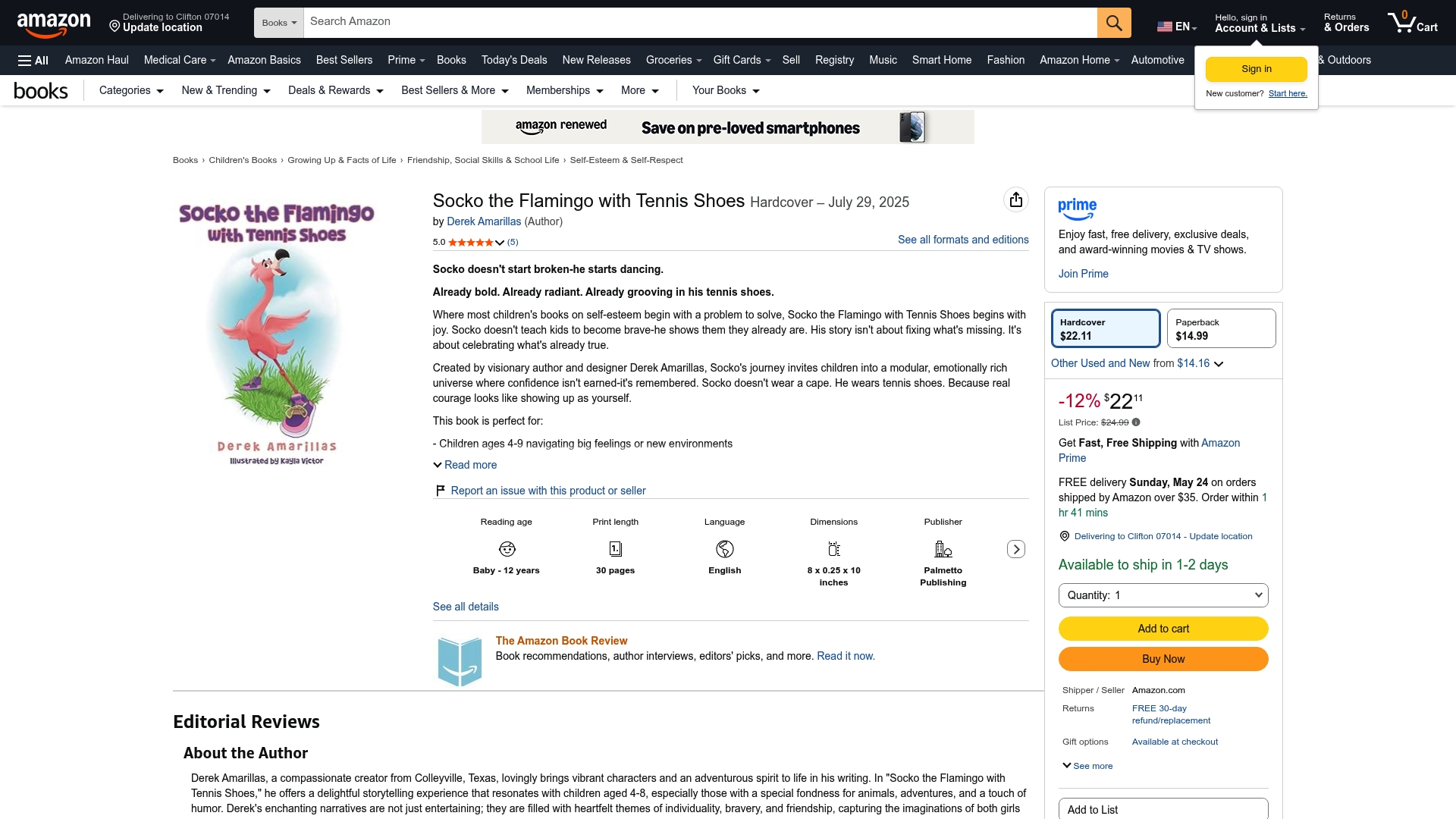
Finding genuinely thoughtful gifts for sensitive children does not require hours of searching. A carries a wide selection of weighted companions, sensory-friendly toys, and emotional literacy books, all in one place, with real reviews from parents who understand exactly what you're looking for. Whether you're shopping for a birthday, a holiday, or just a hard week that deserves something kind, you'll find curated options for sensitive kids that respect sensory needs and support emotional growth. Browse the full collection and find the gift that says "I see you" in the most personal way possible.
FAQ
What makes a gift "meaningful" for a sensitive child?
A meaningful gift reflects the child's specific sensory preferences, emotional needs, and special interests rather than just their age. The best gifts communicate "I understand you" and support emotional regulation or self-expression.
Are weighted stuffed animals safe for children ages 3 to 8?
Yes, when designed for the age group. Weighted companions around 4 lbs are safe for children 3 and older and provide calming deep pressure without restriction or risk.
How do I handle gift opening if it overwhelms my child?
Allow the child to open gifts privately with one trusted adult, or pre-open some items before the party. Managing wrapping noise and social pressure significantly reduces overload and makes the experience more enjoyable.
What books are good emotional literacy gifts for sensitive kids?
Look for books featuring characters who feel deeply, struggle genuinely, and find their own path through big emotions. Story-based books recommended for highly sensitive children build emotional vocabulary in a natural, low-pressure way.
Can a gift card be a thoughtful gift for a sensitive child?
Absolutely. A gift card paired with a personal note empowers the child to choose something that fits their sensory needs exactly, which is often more meaningful than any pre-selected item.