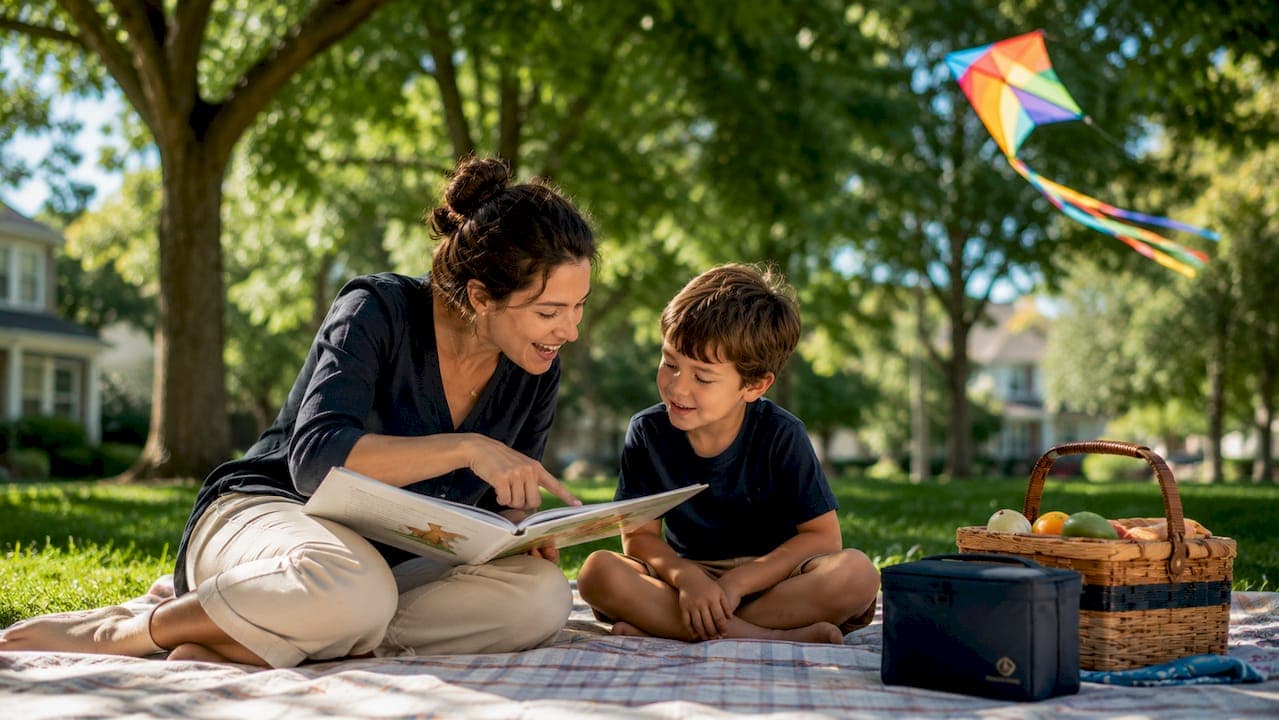
Choosing the right children's books on identity and belonging themes means selecting stories that match where a child is developmentally and give them safe emotional frameworks to explore big questions. Books on identity and belonging do more than entertain. They help children ages 3–8 build self-acceptance, recognize their place in a family and community, and develop empathy for others who look or live differently. Organizations like BookTrust and Love Without Labels have identified key criteria for selecting these books well, and the research is clear: the right book at the right stage makes a lasting difference.
How to choose books on identity and belonging themes by developmental stage
The single most effective strategy when you choose books on identity and belonging themes is matching the book to the child's current developmental stage. A three-year-old and a seven-year-old ask fundamentally different questions about who they are and where they fit.
Younger children, roughly ages 3–5, are working out practical belonging. They want to understand their family structure, their home, and their daily routines. Books at this stage should center on family and belonging rather than abstract cultural identity. Simple, warm stories about who loves them and where they belong work best here.
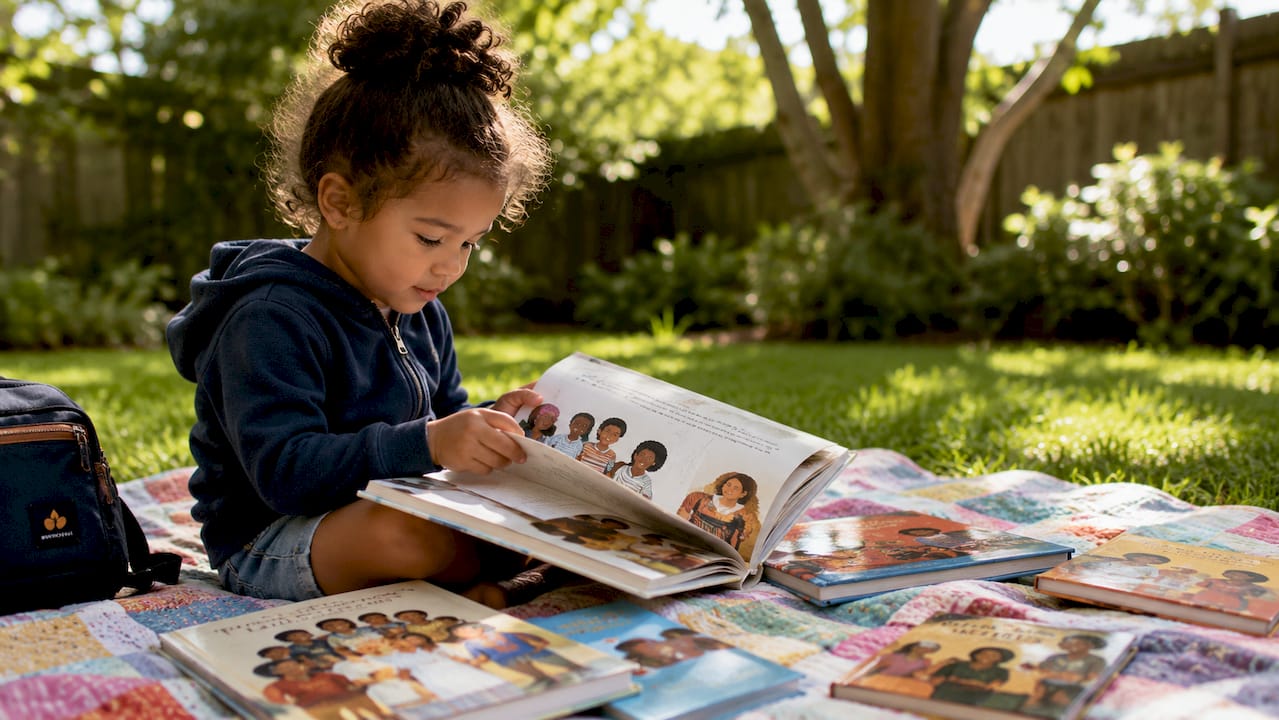
Children ages 5–8 are ready for more. They notice differences in appearance, family structure, and cultural background. They ask why their family looks different from a friend's, or why they celebrate different holidays. At this stage, books that explore diverse appearances and culture become genuinely engaging rather than confusing.
Key markers to watch for as you select books:
- Does the child ask questions about why families look different?
- Are they comparing themselves to peers at school or in books?
- Do they express discomfort or curiosity about their own appearance or background?
- Are they showing early signs of empathy or asking about others' feelings?
Pro Tip: Pay attention to the questions your child asks after reading. Those questions tell you exactly which theme to explore next. A child asking "Why does that family have two moms?" is ready for books that go deeper into family diversity.
What key themes should you look for in identity books?
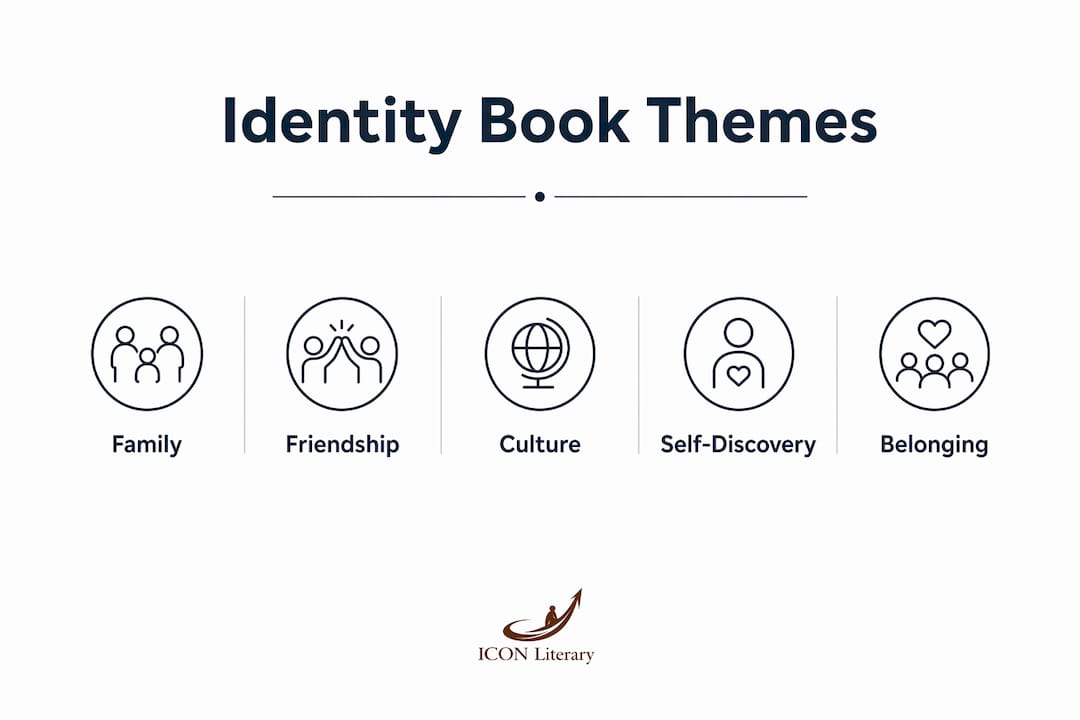
Strong children's books about identity and belonging rarely focus on a single theme. BookTrust identifies family structure, cultural heritage, friendship, and the value of being true to oneself as the core themes that give these books their emotional depth. The best books weave several of these together naturally.
The most powerful theme across all age groups is uniqueness as strength. Books that show a character's difference as the source of their value, rather than a problem to overcome, teach children that identity is something to celebrate. This is the opposite of a "fix-it" narrative, and children feel the difference.
Core themes worth prioritizing:
- Family structure: Stories showing varied family configurations normalize belonging across different home environments.
- Cultural heritage: Books that honor specific traditions, foods, and languages help children connect personal history to identity.
- Friendship and community: Stories about finding your people teach children that belonging extends beyond family.
- Individuality: Characters who are quirky, different, or unexpected model self-acceptance without lecturing.
- Emotional challenges: Books that address anger, sadness, or fear tied to identity give children language for their own feelings.
Identity and self-discovery are enduring themes in children's literature, often paired with family or friendship to maintain engagement. That pairing is not accidental. It reflects how children actually develop their sense of self, through relationships rather than in isolation.
How does visual storytelling help children grasp identity and belonging?
Picture books use visual storytelling as their primary teaching tool, and this is exactly right for ages 3–8. Abstract concepts like identity and self-acceptance become concrete when a child can see them in a character's face, posture, or surroundings.
Effective picture books use pictures and allegories to encourage children to discover themes themselves rather than receive direct explanations. That discovery process is where real understanding happens. A child who figures out that the flamingo feels different because of his tennis shoes has internalized the theme far more deeply than one who was told "it's okay to be different."
Four narrative techniques that work especially well:
- Visual clues before text: Illustrations that hint at a character's emotional state before the words confirm it teach children to read emotional signals.
- Allegorical characters: Animals, monsters, or fantastical creatures let children engage with identity themes without the self-consciousness that realistic human characters can trigger.
- Repeated visual motifs: A recurring color, object, or gesture that signals belonging or exclusion gives young readers a visual anchor for the theme.
- Open endings: Stories that don't resolve neatly invite conversation, which is where the real emotional work happens.
Pro Tip: After reading, ask your child what they noticed in the pictures before you discuss the words. Children often spot emotional details in illustrations that adults miss entirely.
The tone of a book matters as much as its content. Overly didactic stories that turn children into symbols or messengers alienate young readers. The most effective books feel child-centered, letting children internalize themes at their own pace.
How do you build a diverse and balanced bookshelf for belonging?
A balanced bookshelf requires two types of books working together. "Mirror" books reflect the child's own experience back to them. "Window" books show them lives, families, and cultures different from their own. Both are necessary. A shelf with only mirrors limits a child's understanding of who belongs in the world. A shelf with only windows can leave a child feeling unseen.
A homogeneous bookshelf sends narrow signals about who belongs, limiting inclusive understanding. Children notice when every family in their books looks like theirs, and they draw conclusions from that pattern.
Building this shelf does not need to happen all at once. Starting with a few warm, well-written books suited to the child's current stage is more effective than overwhelming them with a large collection. Add titles gradually as the child's questions evolve.
| Bookshelf goal | What to look for |
|---|---|
| Mirror books | Stories reflecting the child's own family, culture, or appearance |
| Window books | Stories featuring families, cultures, or experiences different from the child's |
| Emotional range | Books covering joy, confusion, sadness, and pride tied to identity |
| Age progression | Titles that grow with the child from practical belonging to cultural identity |
| Conversation starters | Books with open endings or questions that invite discussion |
Update the collection at least once a year. A book that resonated at age four may feel too simple at age seven, and new questions deserve new stories.
Common mistakes when selecting identity and belonging books
The most common mistake parents and educators make is choosing books that are too on-the-nose. A story that announces its lesson in the first paragraph will lose a child by page three. Young readers are perceptive. They resist being taught at and respond to being invited in.
Avoid books that turn children into symbols or messengers. The best identity books feel like stories first and lessons never. A child who finishes a book thinking "that was a great story" has learned more than one who finishes thinking "I was supposed to learn something."
A second mistake is expecting one book to answer all of a child's questions about identity. A single book cannot cover all complex identity questions. A gradually built library with diverse perspectives works far better than any single title, no matter how good.
Watch for these pitfalls:
- Selecting books based on adult approval rather than child engagement
- Avoiding books that show emotional difficulty or conflict, since those are often the most useful
- Choosing only books that match the child's own background and missing the window function entirely
- Treating a book as a one-time fix rather than a starting point for ongoing conversation
Books about belonging work best when they facilitate conversation, not just reading. The book opens the door. The conversation is where children actually process what they feel.
Key Takeaways
Selecting children's books on identity and belonging requires matching developmental stage, theme depth, and visual storytelling to the child's current emotional needs.
| Point | Details |
|---|---|
| Match stage to theme | Toddlers need family belonging stories; ages 5–8 are ready for cultural and diverse identity themes. |
| Prioritize child-centered tone | Books that avoid preaching let children internalize identity themes naturally and more deeply. |
| Balance mirrors and windows | A shelf needs both books that reflect the child's experience and books that show different lives. |
| Build gradually | Start with a few well-matched titles and add new ones as the child's questions evolve. |
| Use books as conversation tools | The most impact comes from talking after reading, not from the reading alone. |
What I've learned from watching children respond to identity books
I've spent years watching children interact with picture books about identity, and the pattern that surprises adults most is this: children almost always respond more strongly to subtle books than to direct ones. A story about a flamingo who wears tennis shoes and feels out of place will generate more genuine conversation than a book titled "It's Okay to Be Different." The indirect approach gives children room to project their own feelings onto the character without feeling exposed.
The second thing I've noticed is that parents often underestimate how early children start forming identity questions. A four-year-old who asks why their skin is a different color than their friend's is not asking a political question. They are doing the same developmental work that identity books are designed to support. The right book at that moment is not a lecture. It is a story that says, quietly, "you are not the only one who has wondered about this."
I also think the mirror-and-window framework is the most underused tool in children's reading. Most parents default to books that reflect their child's experience, which is natural. But the window books are where empathy gets built. A child who has read stories about families different from their own enters kindergarten with a wider sense of who belongs in the world. That is not a small thing.
Use books as tools for connection, not correction. Read together, ask open questions, and let the child lead the conversation. The book is just the beginning.
— Derek
Where to start building your child's identity bookshelf
Building a bookshelf that supports identity and belonging does not require a long reading list. It requires a few well-chosen books that fit your child right now.
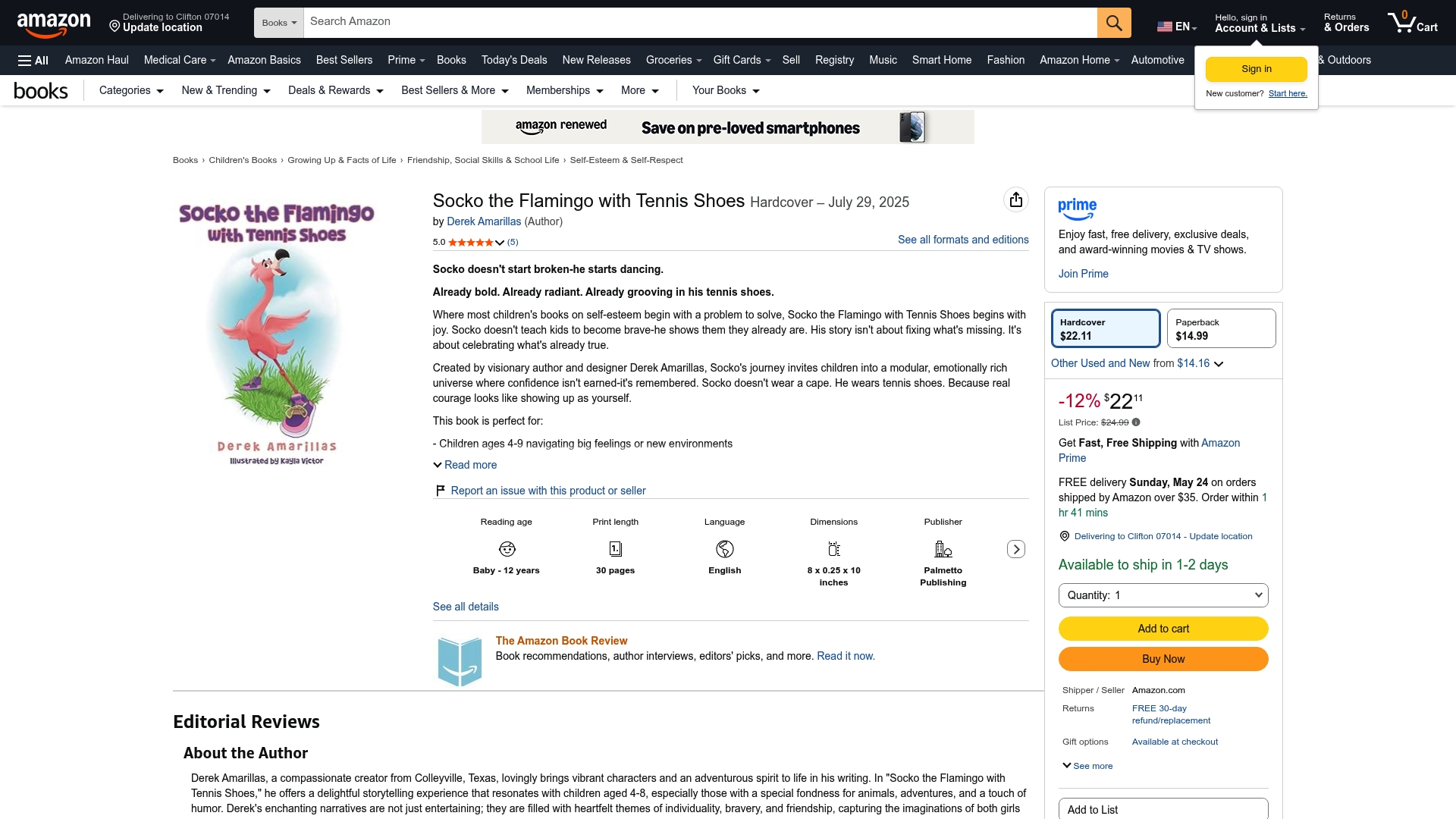
A is built around exactly this idea. Socko the Flamingo with Tennis Shoes is a picture-book character who teaches emotional literacy, belonging, and self-acceptance through humor and imagination, not through lectures. The stories give parents and educators a natural way to open conversations about big feelings and identity with children ages 3–8. If you are ready to add a warm, child-centered starting point to your shelf, Socko's story is a strong first choice. Frequent reading and family conversation around these books build the emotional vocabulary children carry with them for life.
FAQ
What does "identity and belonging" mean in children's books?
Identity and belonging themes in children's books explore how characters understand who they are through family, culture, friendship, and community. These themes help children ages 3–8 develop self-acceptance and empathy.
How do I know if a book is right for my child's age?
Children ages 3–5 benefit most from books about family and practical belonging, while children ages 5–8 are ready for stories about cultural heritage and diverse identities. Match the book's complexity to the questions your child is already asking.
Why are allegorical characters like animals effective in identity books?
Allegorical characters let children engage with identity themes without self-consciousness. A child finds it easier to explore feelings of difference through a flamingo or a monster than through a realistic human character who mirrors them too directly.
Can one book teach my child about identity and belonging?
No single book covers all of a child's identity questions. A gradually built library with both mirror books and window books is far more effective than any single title.
How often should I update my child's identity and belonging bookshelf?
Updating the collection at least once a year keeps pace with a child's growing questions. A book that resonated at age four may feel too simple by age seven, and new developmental stages call for new stories.