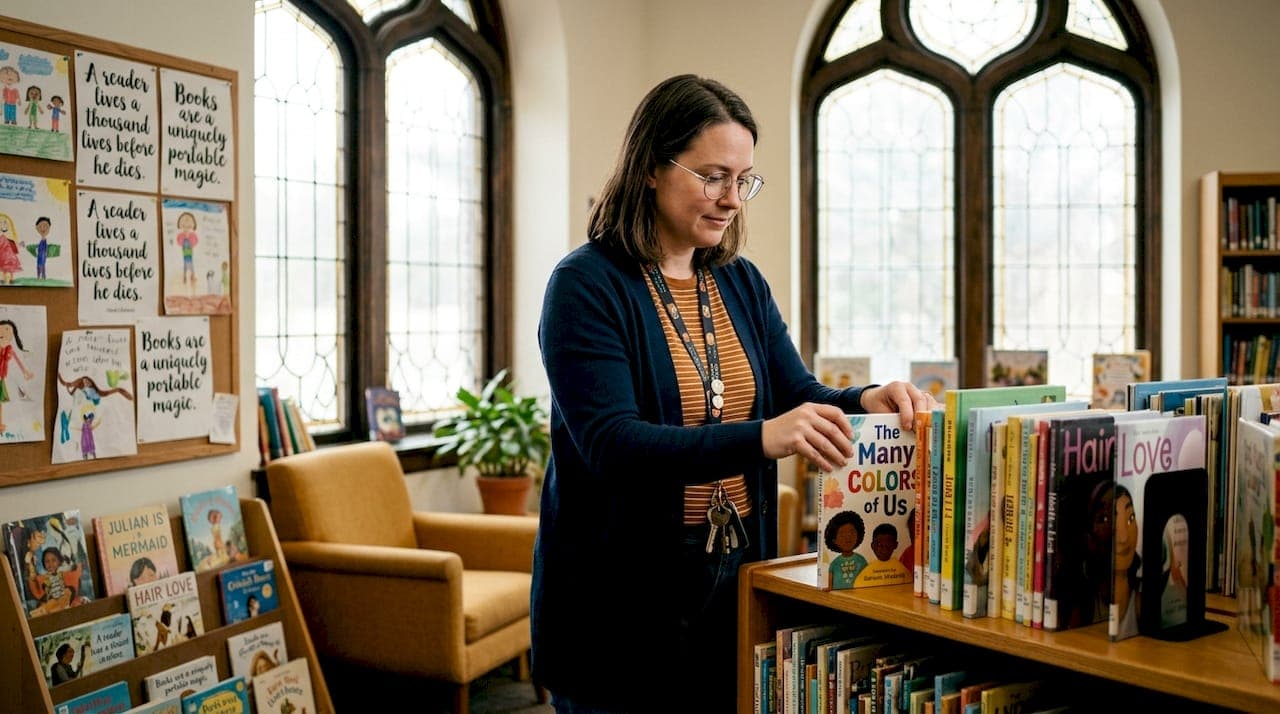
When educators, parents, and librarians set out to select inclusive books for library shelves, they often hit the same wall: knowing that representation matters but not knowing where to start. Children who see themselves in books develop stronger identities and greater empathy for others. Yet most collections still reflect a narrow slice of human experience, not because anyone intends that result, but because selection without a system defaults to habit. This guide gives you that system, from auditing what you already own to sourcing titles that authentically reflect the children who walk through your doors.
Table of Contents
- Key takeaways
- What you need before selecting inclusive books
- How to curate an inclusive children's book collection
- Common mistakes when curating inclusive shelves
- How to measure whether your selection is working
- My honest take on building inclusive library shelves
- Start building your inclusive collection today
- FAQ
Key takeaways
| Point | Details |
|---|---|
| Audit before you add | Run a diversity audit on your existing collection before purchasing new titles to identify real gaps. |
| Use vetted sourcing tools | Resources like the We Are Kid Lit lists and ALA bibliographies remove guesswork from inclusive book selection. |
| Integrate, don't isolate | Shelve diverse titles throughout your collection, not in a separate "diversity section," to maximize discovery. |
| Build a defensible policy | Document your selection criteria so your collection can withstand censorship challenges backed by data. |
| Treat it as ongoing work | Inclusive library shelves require recurring audits and community feedback, not a single purchase order. |
What you need before selecting inclusive books
Most collection problems start before a single book is ordered. Without preparation, inclusive book selection becomes reactive: you buy a title here, add one there, and end up with a collection that looks diverse on paper but still fails whole communities of readers.
Tools and bibliographies worth bookmarking
Start by gathering your sourcing materials. The Massachusetts Library System's LibGuide offers a practical audit workflow, evaluation guidance, and access to an IMLS-funded diverse book finder tool that makes gap analysis far less overwhelming. The South Carolina State Library's inclusion guide recommends auditing a representative portion of your collection and provides tools along with webinar support for librarians working through this for the first time. The We Are Kid Lit Collective's 2026 Summer Reading List is committee-vetted and spans multiple age groups, giving you ready-to-use recommendations by and about BIPOC authors.
Key resources to gather before you begin:
- Diverse Book Finder (IMLS-funded, searchable by identity category and age range)
- We Are Kid Lit Collective annual lists
- ALA Rainbow Round Table bibliographies
- Your state library system's inclusion or equity LibGuide
- Publishers Weekly and School Library Journal diversity roundups
Understanding your community's actual needs
No sourcing list replaces knowing your community. Pull your school or library's demographic data and compare it against what your shelves currently offer. If 40% of your students speak Spanish at home and fewer than 5% of your picture books feature bilingual or Spanish-language content, that gap is your first priority. Talk to families, survey students, and ask your staff what questions children are asking that current books don't answer.

Pro Tip: Create a simple one-page "community snapshot" that maps your demographics against collection categories. Update it annually and use it as the first document in every selection meeting.
Document your selection criteria in writing before you buy a single title. A written policy accomplishes two things: it keeps your purchases aligned with real community needs, and it gives you a defensible record if selections are ever challenged.
How to curate an inclusive children's book collection
With your tools in hand and your community snapshot ready, you can move through selection systematically. This process works for classroom libraries, school media centers, and public library branches alike.
-
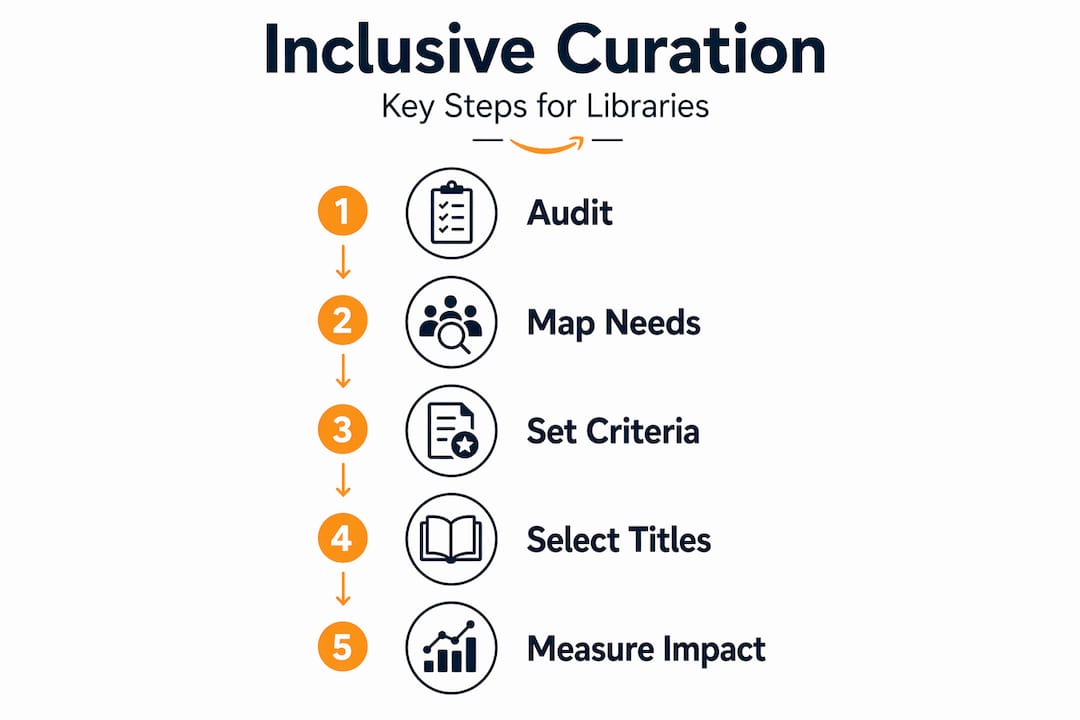
Run a diversity audit on a representative sample. You do not need to catalog every book at once. The South Carolina State Library recommends auditing a meaningful portion of your collection to measure current representation. Pull 100 to 200 titles from your most circulated section and categorize them by the identities they feature: race, ethnicity, disability, family structure, gender identity, socioeconomic background, and religion. Note not just whether an identity appears but whether it is portrayed authentically and with depth.
-
Map your gaps against community need. Compare your audit results to your community snapshot. Prioritize the identities that are underrepresented relative to the children you serve. This step separates targeted selection from random diversity shopping.
-
Source titles that authenticate lived experience. Books written or illustrated by members of the communities they depict carry a quality of authenticity that outsider portrayals often miss. The We Are Kid Lit vetted list applies exactly this standard and saves you hours of individual title research.
-
Balance literary merit with inclusivity. Representation alone does not make a great book. Evaluate each title for writing quality, age appropriateness, and whether the story serves the character's identity or reduces it to a lesson. Children's books on diversity work best when the character happens to be diverse, not when diversity is the entire plot.
-
Schedule recurring updates. The Massachusetts Library System emphasizes iterative evaluation rather than one-time curation. Build a calendar reminder every six months to review circulation data, check new title releases, and retire outdated books that no longer reflect accurate or respectful portrayals.
Pro Tip: Set a dedicated line item in your budget labeled "diversity refresh" so ongoing collection updates don't compete with standard purchasing. Even $200 per semester adds up to a meaningfully stronger collection over three years.
This process creates a library diversity collection that grows with your community rather than aging against it.
Common mistakes when curating inclusive shelves
Knowing what not to do is just as useful as knowing what to do. These are the mistakes that undermine even well-intentioned inclusive book selection efforts.
-
Tokenism through segregation. Pulling all diverse titles into a single labeled section, "Multicultural Corner" or similar, signals to children that these books are not part of the main collection. Segregated shelving reduces visibility and lowers circulation. Integrate titles for diverse readers throughout your existing categories so every child encounters them naturally.
-
Ignoring circulation data. Buying diverse titles is meaningless if those books sit on the shelf. Track whether inclusive titles circulate at rates comparable to your overall collection. If they don't, the problem may be placement, display, or staff recommendation habits rather than the titles themselves.
-
Underestimating censorship pressure. The ALA reports 4,235 unique titles challenged in 2025, with 66% of challenged books resulting in removal. The majority of challenges target books representing LGBTQIA+ individuals and people of color. A written collection development policy is your strongest defense.
-
One-and-done purchasing. Communities change. Publishing changes. A collection that was genuinely inclusive three years ago may already show gaps today.
"Book challenges are often motivated by attempts to erase rather than protect children, emphasizing the need for strong collection policies supporting access." — American Library Association, 2026
Recognizing these patterns early saves you from spending budget on titles that never reach the children who need them most.
How to measure whether your selection is working
Buying the books is step one. Knowing whether they are actually reaching readers is where most libraries fall short.
| Metric | What to measure | How often |
|---|---|---|
| Circulation rate | Compare checkout frequency of diverse titles vs. overall collection | Every 3 months |
| Discovery data | Track how patrons find inclusive titles (staff picks, displays, catalog searches) | Every 6 months |
| Community feedback | Surveys or informal input from students, families, and staff | Annually |
| Audit score | Percentage of collection representing underserved identities | Annually |
The Santa Cruz Public Library uses regular audits and data-driven decisions to maintain a collection where over 20% of titles represent diverse identities. That figure exceeds the national average by a significant margin. The key is not that they bought more books. It is that they built recurring audit cycles into their standard workflow so regression doesn't go unnoticed for years.
Involve your community in this measurement. Ask students which books they recommend to friends. Ask teachers which titles prompt the most classroom conversation. Ask families what subjects their children bring home from the library. That qualitative data fills the gaps that circulation numbers alone can't explain.
Pro Tip: Run a "staff picks" display program specifically for inclusive titles and track whether those displayed books circulate faster. If they do, you have proof that visibility, not interest, was the barrier.
My honest take on building inclusive library shelves
I've sat in enough collection development meetings to know that this work rarely feels finished, because it isn't. The most common mistake I see isn't a bad title choice or a mismanaged budget. It is the belief that getting to a "good enough" collection is a finish line.
Santa Cruz Public Library describes diversity work as a project without a finish line, and in my experience, that framing is the most honest one available. Your community evolves. New families arrive with different backgrounds. Children grow into questions that last year's collection wasn't built to answer. Publishing expands to include voices that simply weren't in print five years ago.
What I've learned is that the data-driven approach and the empathetic approach are not in competition. Circulation numbers tell you where books aren't reaching readers. Community conversations tell you why. You need both. The libraries I've seen build genuinely strong collections are the ones where librarians know their audit scores and know their patrons by name.
My take: don't wait until your collection is perfect to start talking about it. Share what you're working on with families and staff. Invite them into the process. The transparency builds trust, and trust makes the hard conversations, including the ones about challenged books, much easier to navigate.
— Derek
Start building your inclusive collection today
If you're ready to put these principles into practice, the right books make all the difference. A's Socko the Flamingo with Tennis Shoes is exactly the kind of title that belongs on an inclusive shelf: it teaches emotional literacy, belonging, and self-acceptance through humor and imagination, the kind of story that works for every child while giving children who feel different a mirror they rarely find.
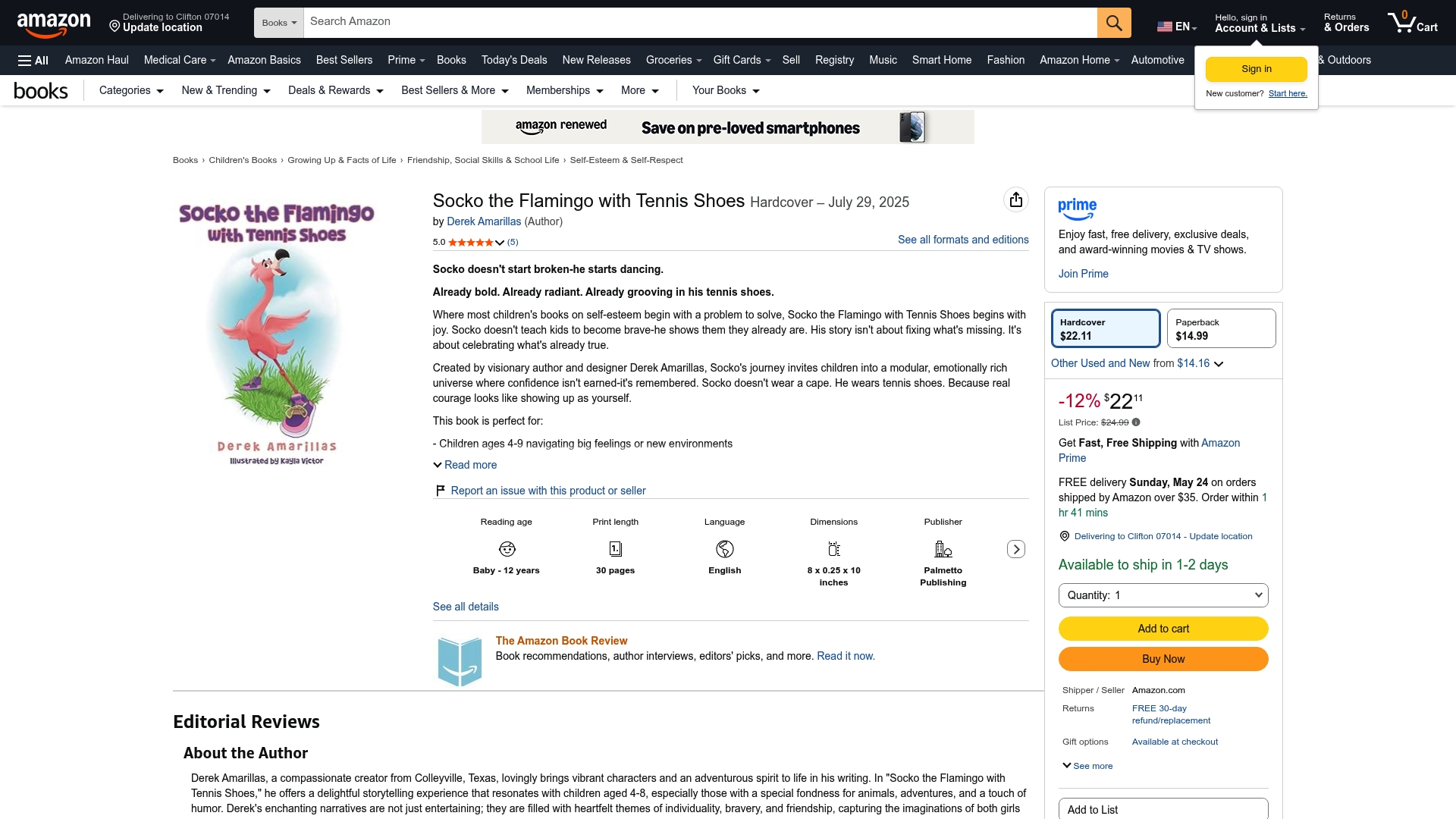
Whether you are refreshing a classroom library, building out a school media center, or curating a public library section for young readers, adding titles that spark real conversation about big feelings and identity is where inclusive collection building pays off most. You can find Socko the Flamingo with Tennis Shoes and add it to your collection today. Start with one title that your readers haven't seen before. That first choice sets the direction for everything that follows.
FAQ
What does it mean to select inclusive books for library shelves?
Selecting inclusive books for library shelves means intentionally choosing titles that represent a wide range of identities, experiences, and backgrounds so every child can find themselves in your collection. It involves auditing existing holdings, sourcing vetted titles, and integrating diverse books throughout the collection rather than isolating them.
How do I start a diversity audit on my library collection?
Begin by pulling a sample of 100 to 200 of your most-circulated titles and categorizing them by the identities they represent. Tools like the IMLS-funded Diverse Book Finder and the Massachusetts Library System's LibGuide provide structured workflows and evaluation criteria to guide your audit.
How can librarians defend inclusive titles against censorship challenges?
A written collection development policy that documents your selection criteria is your strongest protection. The ALA notes that 4,235 titles were challenged in 2025, with 66% resulting in removal, making a clear, policy-backed rationale for each title an operational necessity.
How often should I update an inclusive children's book collection?
The Massachusetts Library System recommends iterative evaluation rather than one-time curation. A practical schedule is a light circulation review every three months and a full diversity audit once per year to catch gaps before they compound.
What makes a children's book authentically inclusive?
Authentic inclusive children's books portray identity with depth and accuracy, often because the author or illustrator shares the lived experience they depict. The story should serve the character as a full human being, not reduce them to a lesson or a symbol of their identity group.