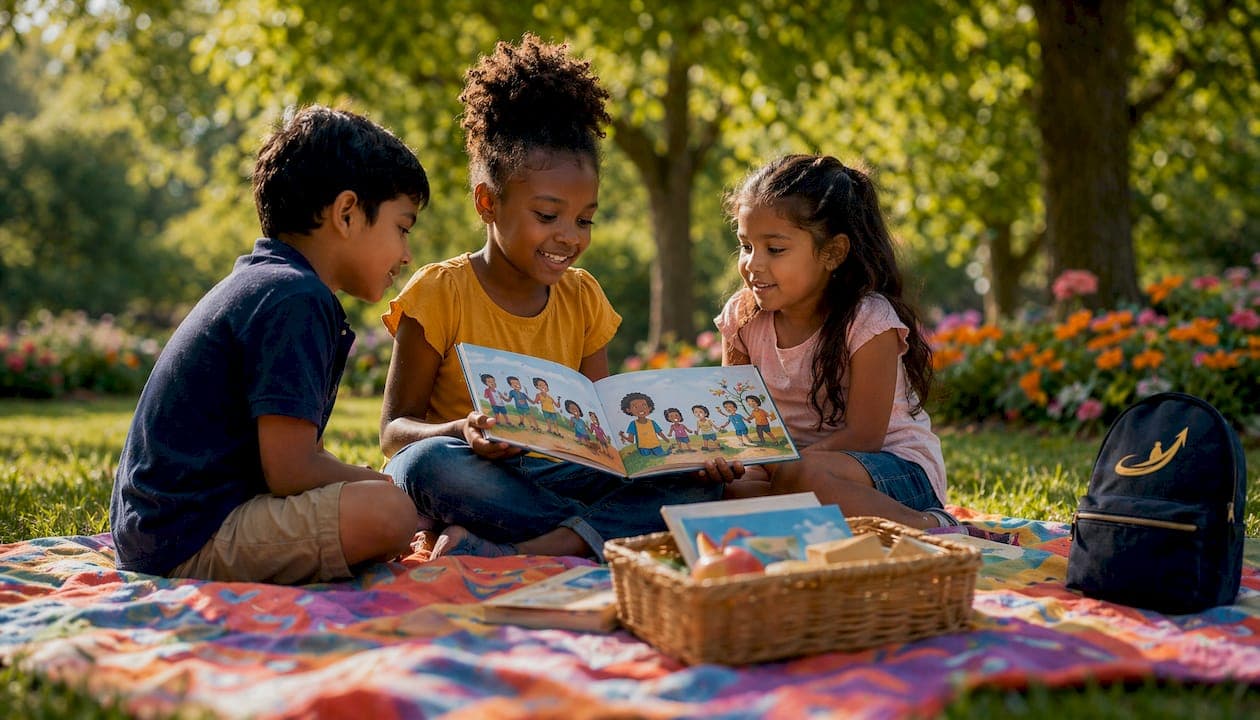
Inclusive picture books are defined as children's stories that authentically represent diverse identities, including race, disability, family structure, and neurodiversity, to help young readers see themselves and others more fully. The best of these books do more than reflect reality. They open conversations that children aged 3–8 are ready to have but rarely get the chance to start. Only 33% of children's books received by the Cooperative Children's Book Center in 2025 featured at least one BIPOC character. That gap makes intentional book selection one of the most direct ways parents, educators, and caregivers can spark inclusion talk through picture books and build empathy from the earliest years.
What makes picture books spark inclusion talks effectively?
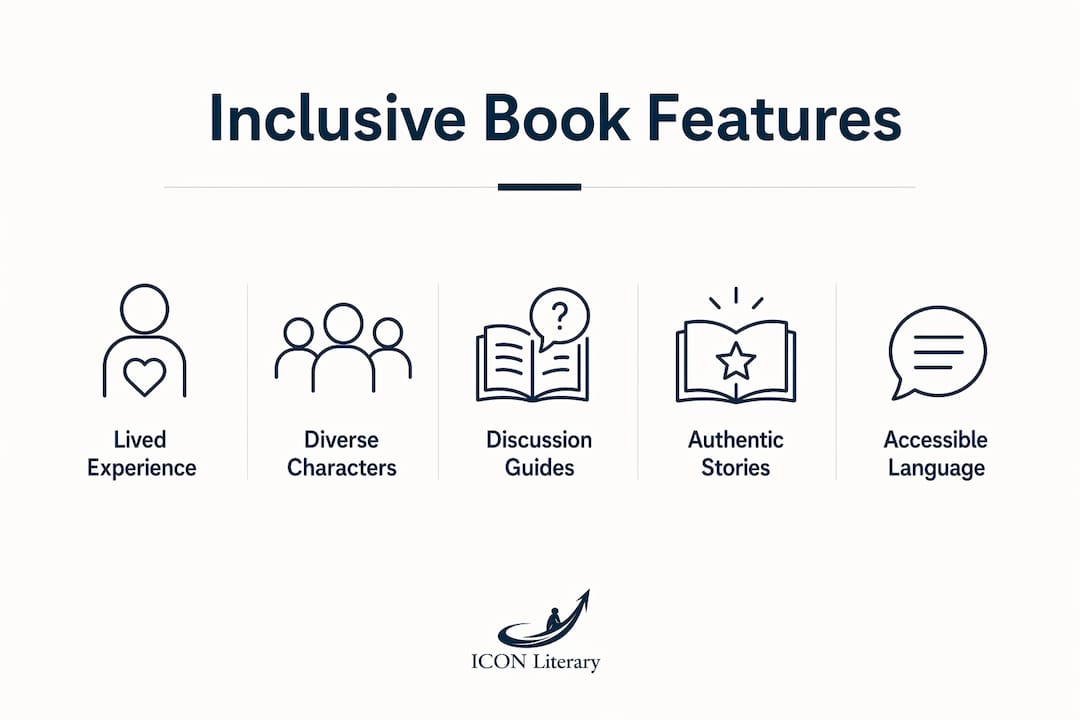
The most effective inclusive picture books share a set of identifiable features. Knowing what to look for saves time and produces better conversations with children.
Authentic authorship matters most. Books authored by individuals with lived experience of disabilities or specific cultural backgrounds reduce stereotypes and deliver richer, more honest narratives. A child who reads a story written by someone who actually lived that experience encounters nuance, not caricature.

Representation should be wide and specific. Strong inclusive picture books cover BIPOC characters, children with disabilities, varied family structures, and neurodiverse experiences. Broad representation matters because diverse literature challenges the "single story" by widening children's understanding of humanity. This benefit applies to all children, not only those from marginalized groups.
Look for these features when selecting titles:
- Discussion guides and caregiver prompts printed in the back matter. These tools help adults navigate complex topics with confidence.
- Glossaries that introduce vocabulary children can use to name what they feel or observe.
- Multi-dimensional characters who have full lives beyond their identity markers.
- Joyful, everyday settings rather than stories that frame difference only as a problem to overcome.
- Avoidance of tokenism, meaning the diverse character drives the story rather than existing as a background detail.
The Inclusive Books for Children database offers a curated collection of over 1,000 titles updated as of june 2026. It is one of the fastest ways to find quality books without sorting through hundreds of options yourself.
Pro Tip: Check the back matter before you buy. Inclusive books that include discussion guides and glossaries give you a ready-made framework for the conversation after the last page.
How do you use picture books to talk about inclusion with young children?
Reading the book is only the first step. The conversation that follows is where the real learning happens. Here is a practical sequence that works for children aged 3–8 in both home and classroom settings.
-
Read aloud without interruption first. Let children experience the story as a whole before you pause to discuss. This respects the narrative and lets emotions land naturally.
-
Ask open-ended questions immediately after. Try "What did you notice?" or "How do you think that character felt?" These questions invite children to process rather than recite. Avoid yes-or-no questions, which close the conversation down.
-
Name emotions using the book's vocabulary. If the story introduces words like "frustrated," "proud," or "left out," use those exact words in your follow-up. Emotion vocabulary from books transfers directly into children's real-life language.
-
Connect the story to the child's experience. Ask "Has anything like that ever happened to you?" or "Do you know anyone who uses a wheelchair like the character does?" Personal connection deepens empathy and makes abstract ideas concrete.
-
Return to the same book more than once. Repeated reading in daily routines normalizes inclusive messages and makes children more comfortable raising the topics on their own over time.
Classroom educators can build inclusion talks into morning meeting read-alouds or center time. At home, bedtime reading works well because children are relaxed and more likely to share feelings. The goal is to make diversity conversations feel as ordinary as any other topic, not as a special lesson reserved for specific occasions.
Pro Tip: Keep a short list of three or four open-ended questions tucked inside the book cover. You will not always have time to prepare, and a ready prompt prevents the conversation from stalling after "The End."
What are the common pitfalls when using picture books for inclusion talks?
Even well-intentioned readers make mistakes that undermine the conversation. Recognizing these pitfalls ahead of time prevents them.
-
Reading passively without discussion. A book placed in a child's hands without follow-up conversation delivers far less impact. The story creates an opening. The adult has to walk through it.
-
Selecting books that reinforce stereotypes. Not every book marketed as "diverse" delivers authentic representation. Experts warn against tokenism and single-story narratives that reduce characters to one defining trait. Read reviews from educators and community members before purchasing.
-
Avoiding children's questions about difference. When a child asks why a character uses a hearing aid or has two moms, a deflecting answer teaches them that the topic is off-limits. A simple, honest response at their level is always better than silence.
-
Misjudging developmental readiness. A three-year-old and a seven-year-old need different language and different levels of complexity. Choose books and frame questions to match the child's stage, not the topic's full scope.
-
Skipping diverse voices entirely. Some caregivers default to familiar titles and never expand the library. This is the most common mistake. Rudine Sims Bishop's "windows and mirrors" theory establishes that children need books that both reflect their own lives and show them lives unlike their own. Both functions require intentional selection.
-
Treating inclusion as a one-time lesson. A single read-through of one diverse title does not build lasting empathy. Consistent exposure across many books and many conversations does.
Key features of inclusive picture books and how they spark conversations
The table below maps the most important features of inclusive picture books to the specific outcomes they produce in children aged 3–8.
| Feature | What it does for children |
|---|---|
| Lived-experience authorship | Delivers authentic detail that children sense as real, reducing skepticism and deepening engagement |
| Discussion prompts in back matter | Gives caregivers specific questions so conversations start confidently and stay on track |
| Joyful, everyday diversity | Normalizes difference as part of ordinary life rather than framing it as a problem or lesson |
| Multi-dimensional characters | Prevents children from reducing identity to a single trait and builds fuller empathy |
| Emotion vocabulary | Expands the words children use to describe their own feelings and the feelings of others |
| Disability representation | Helps children with disabilities feel seen and valued while building awareness in all readers |
Books that combine several of these features produce the richest conversations. A title with lived-experience authorship, a discussion guide, and joyful representation covers empathy, vocabulary, and normalization in a single read.
Key Takeaways
Inclusive picture books are the most direct tool parents and educators have for building empathy, emotional vocabulary, and diversity awareness in children aged 3–8.
| Point | Details |
|---|---|
| Representation gap is real | Only 33% of children's books in 2025 featured a BIPOC character, making intentional selection necessary. |
| Authorship signals authenticity | Books written by authors with lived experience deliver richer, more honest narratives for children. |
| Back matter accelerates conversations | Discussion guides and glossaries give caregivers the language to navigate complex topics confidently. |
| Repetition builds comfort | Returning to the same inclusive book multiple times normalizes the topic and encourages children to ask questions on their own. |
| Passive reading is not enough | The conversation after the story is where empathy actually develops. Open-ended questions are the key tool. |
What I have learned from watching kids respond to inclusive stories
I have spent years watching children encounter stories that look like their lives for the first time. The reaction is almost always the same: a pause, a point at the page, and then a flood of words. That moment does not happen with every book. It happens specifically with books that get the details right, the ones written by people who actually lived the experience they are describing.
What surprises most caregivers is that the children who benefit most from inclusive storytelling are often not the ones who see themselves in the story. The child who has never met someone who uses a wheelchair, who has never had a classmate with autism, who has never known a family that looks different from their own. That child is the one who asks the most questions. And those questions are exactly where empathy starts.
The diversity landscape in children's literature has improved, but the gap in BIPOC representation shows the work is not finished. Caregivers cannot wait for the publishing industry to catch up. They have to build the library themselves, title by title, with intention. The good news is that the tools to do that, curated databases, back-matter guides, and characters like Socko the Flamingo from A, exist right now. Use them.
— Derek
A picture book that starts the conversation for you
Finding the right book to open an inclusion talk does not have to be a research project. A's character Socko the Flamingo with Tennis Shoes was built specifically to give children aged 3–8 a way into conversations about big feelings, belonging, and being exactly who they are.
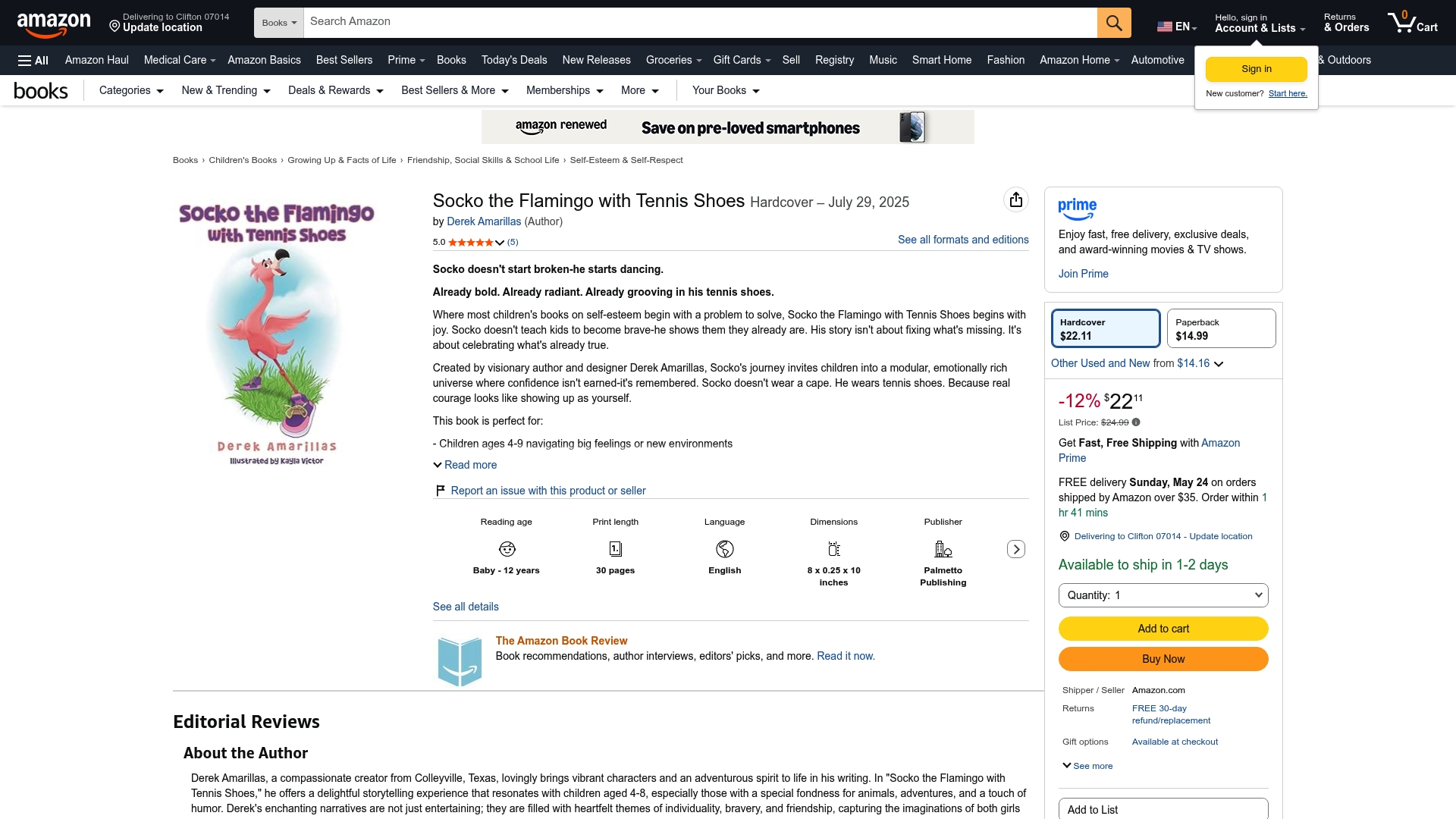
Socko uses humor and imagination to make emotional literacy feel natural rather than instructional. Parents and teachers report that children ask to hear the story again, which is exactly the kind of repetition that makes inclusion messages stick. You can find Socko the Flamingo on Amazon and add it to your home or classroom library today. It is the kind of book that earns its place on the shelf by starting conversations you did not know how to begin.
FAQ
What are inclusive picture books?
Inclusive picture books are children's stories that authentically represent diverse identities, including race, disability, family structure, and neurodiversity. They function as both mirrors for children who see themselves and windows for children who encounter lives unlike their own.
Why does representation in children's books matter?
Only 33% of children's books received by the Cooperative Children's Book Center in 2025 featured a BIPOC character. Limited representation means many children never see their lives reflected in stories, which affects their sense of belonging and their understanding of others.
How do I start an inclusion talk after reading a picture book?
Ask open-ended questions immediately after reading, such as "What did you notice?" or "How do you think that character felt?" Connecting the story to the child's own experience deepens the conversation and builds lasting empathy.
What should I look for when choosing inclusive picture books?
Prioritize books written by authors with lived experience, titles that include discussion guides or glossaries in the back matter, and stories that portray diversity as part of joyful, everyday life rather than as a problem to solve.
How often should children read inclusive books?
Repeated reading across many titles and many conversations builds the most lasting empathy and inclusion awareness. A single diverse book is a starting point, not a complete program.