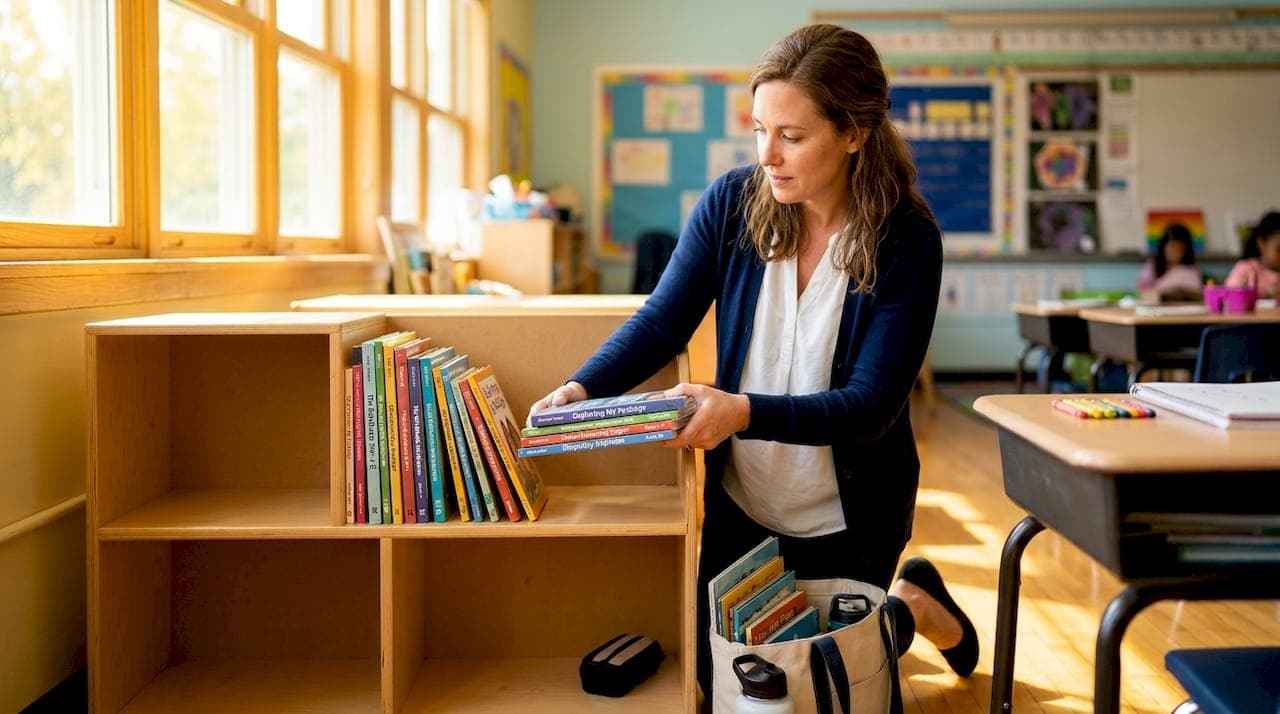
Parents and educators often treat social emotional learning books like a single category, grabbing whatever looks colorful off the shelf. But what are recommended age ranges for SEL books is a real question with real answers, and getting it wrong means children either disengage from stories that feel too babyish or shut down when themes hit harder than they are ready for. Children between 3 and 8 are moving through dramatically different emotional and cognitive stages. A book that perfectly opens up a conversation about anxiety with a seven-year-old might land as total noise with a three-year-old. This guide gives you the framework to choose the right book at the right time.
Table of Contents
- Key Takeaways
- What are recommended age ranges for SEL books
- Book formats and reading levels by age
- How to select and use SEL books effectively
- SEL books worth knowing by age group
- Common pitfalls when choosing by age
- My honest take on age ranges and SEL books
- Find the right SEL books for your child or classroom
- FAQ
Key Takeaways
| Point | Details |
|---|---|
| Age ranges are starting points | Publisher age labels are guidelines; match books to emotional readiness, not just a number on the cover. |
| Format matters as much as theme | Picture books with simple text suit ages 3-5; early readers and short chapter books work better for ages 6-8. |
| Adults unlock the SEL value | Any book becomes an SEL tool when adults ask children to reflect on characters' feelings and connect them to real life. |
| Mirror and window strategy works | Choose some books that reflect a child's own experience and others that introduce unfamiliar perspectives. |
| Discussion deepens learning | Preview themes beforehand, ask open questions during reading, and follow up with role-play or journaling afterward. |
What are recommended age ranges for SEL books
The phrase "social emotional learning books" covers a huge range of material. A board book about naming emotions and a chapter book about navigating middle school friendships are both technically SEL books. Lumping them together the way some book lists do creates a problem: children get books that miss them emotionally.
Children ages 3 to 5 are in a stage dominated by learning to name feelings, managing impulse control, and understanding that other people have different internal states than they do. Their brains are still building the prefrontal connections that regulate emotion. A picture book that shows a character feeling angry and then taking three deep breaths is developmentally perfect for this group. It matches what they are actually working on.
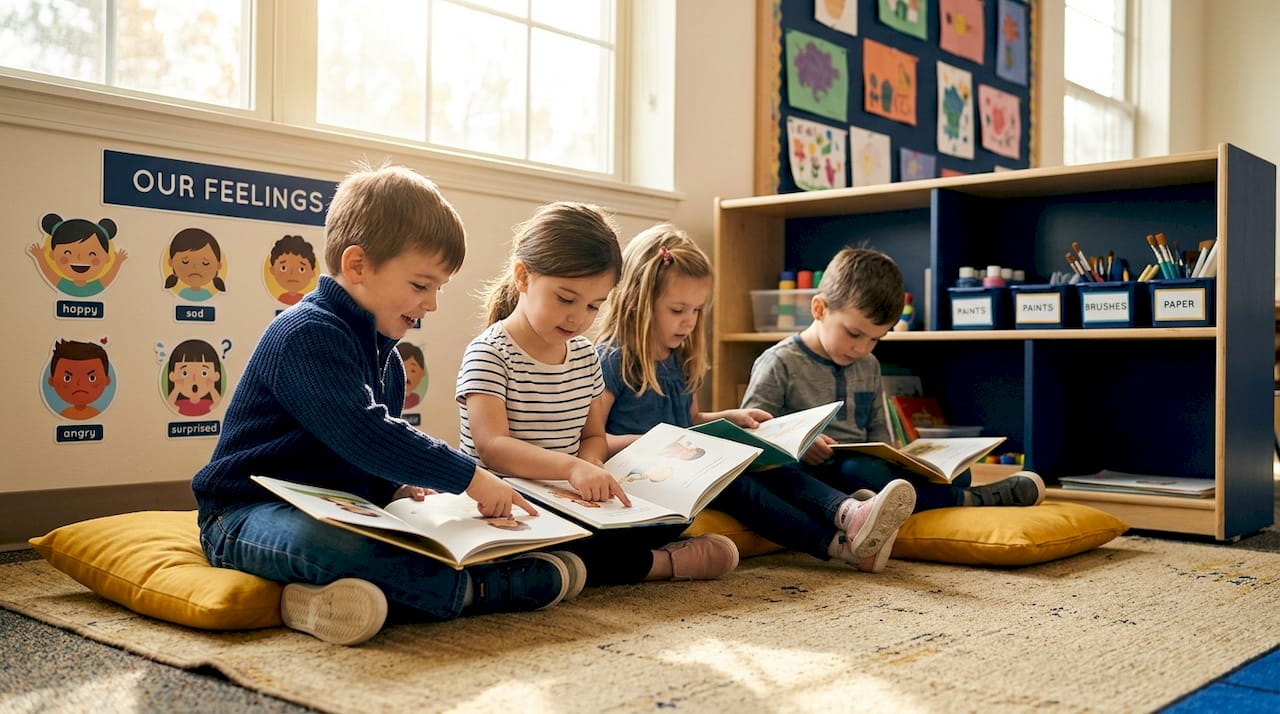
Children ages 6 to 8 have moved into more complex social territory. They navigate friendships, experience peer rejection, wrestle with fairness, and begin forming a clearer sense of identity. SEL books for this group can carry moral dilemmas, nuanced characters with conflicting emotions, and storylines that do not resolve neatly. Ages 6-8 benefit from narratives with emotional complexity and layered perspective-taking that would simply overwhelm a preschooler.
The split at age 5 or 6 is not arbitrary. It roughly tracks when children shift from egocentric thinking toward perspective-taking, a change that opens the door to books about empathy, belonging, and identity in a much richer way.
What each stage actually looks like in practice
- Ages 3-4: Can identify happy, sad, angry, and scared. Still learning that feelings are temporary. Benefit from books with clear visual emotional cues and repetitive language.
- Ages 4-5: Starting to understand that actions cause feelings in others. Ready for stories showing cause-and-effect emotional sequences.
- Ages 6-7: Can hold two conflicting feelings at once ("I was excited but also scared"). Benefit from books where characters make hard choices and face real consequences.
- Ages 7-8: Beginning to understand unspoken social rules, friendship loyalty, and group belonging. Ready for stories about identity, difference, and self-acceptance.
Pro Tip: If a child picks up a book aimed at a younger age group, do not take it away. Children often return to simpler books for emotional comfort. The age on the cover tells you about complexity, not about what a child needs in that moment.
Book formats and reading levels by age
The format of an SEL book matters as much as its theme. Picture books with simple, repetitive text are not just for children who cannot read yet. Simple picture books are sophisticated tools for teaching empathy and emotional literacy because they strip away distracting complexity, letting a child focus entirely on feelings and relationships. For ages 3 to 5, that simplicity is doing real emotional work.
For ages 6 to 8, reading ability starts to vary widely. Lexile levels for K-2 books range from below 160L all the way to 795L, which means developmental appropriateness is driven more by thematic complexity than reading difficulty when you are choosing an SEL book. A fluent seven-year-old reader can decode words far beyond their emotional processing capacity. Matching both decoding level and emotional theme is the real skill.
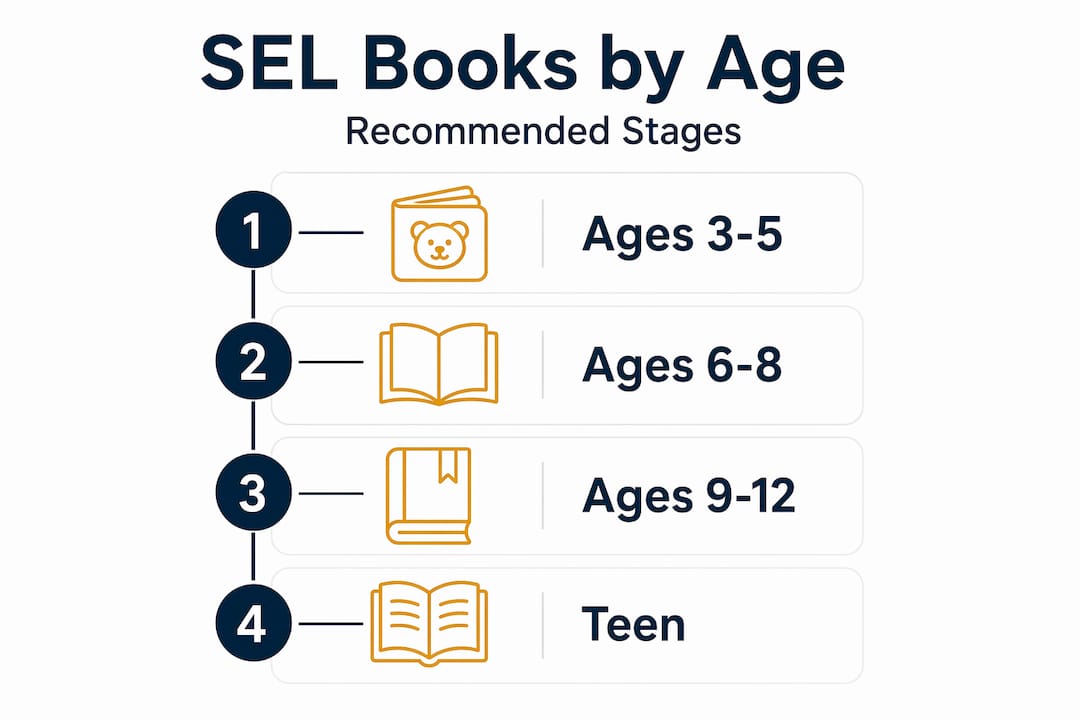
| Book format | Best age range | SEL themes it handles well |
|---|---|---|
| Board books and simple picture books | Ages 3-4 | Naming emotions, basic comfort and fear |
| Illustrated picture books | Ages 4-6 | Empathy, friendship, managing big feelings |
| Early readers (leveled) | Ages 5-7 | Belonging, fairness, simple conflict resolution |
| Short chapter books | Ages 7-8 | Identity, moral dilemmas, complex friendships |
Integrating emotional competence with reading practice creates a positive feedback loop: children who feel emotionally engaged read more, and reading more builds both literacy and emotional vocabulary simultaneously. For K-3 children in particular, SEL books leveled by phonics allow teachers and parents to slot reading development and emotional growth into a single activity.
Fifty percent of K-2 teachers prioritize assigning 20 or more shorter books, including SEL picture books, to build literacy and emotional foundations. By grades 3 to 5, the focus shifts toward fewer but longer books with more complex SEL themes. This teacher behavior reflects exactly the developmental reality described above: shorter, simpler, and more frequent for younger kids; longer, deeper, and more demanding for older ones.
How to select and use SEL books effectively
Knowing the age ranges is step one. Using books well is what actually produces emotional growth. Here is a practical process that works across the 3 to 8 range.
-
Assess emotional readiness first. A recommended age range is a starting point. Before choosing a book, think about what the child is navigating right now. A five-year-old going through a family transition may be ready for themes usually suited to seven-year-olds, because those themes are live in their world.
-
Use the mirror and window strategy. The mirror and window strategy means choosing some books that reflect a child's own experience (mirrors) and others that introduce perspectives very different from their own (windows). Both matter. Mirrors validate. Windows build empathy.
-
Preview the book yourself. Read it before sharing it with a child. Some SEL books for ages 6 to 8 tackle grief, family separation, or exclusion with more emotional weight than you might expect. A brief preview lets you decide whether the timing is right and helps you prepare for the conversation that will follow.
-
Ask open questions during reading. Pause and ask: "What do you think that character is feeling right now?" or "Has anything like that ever happened to you?" These questions are not comprehension checks. They are doorways into the child's own emotional life.
-
Follow up after reading. Post-reading activities like journaling, drawing a character's face, or role-playing a different ending deepen the emotional learning. Discussion framework and follow-up activities like these consistently deepen emotional comprehension regardless of the book's complexity.
-
Revisit books over time. A book read at age four lands differently at age six. Rereading is not repetition for its own sake. It is a chance to see how much the child has grown.
Pro Tip: When a child resists a book because "it's for babies," try reading it aloud together and asking what they would tell the book's character if they could talk to them. Suddenly even a simple picture book becomes a platform for sophisticated emotional thinking.
SEL books worth knowing by age group
There are thousands of social emotional learning books published. The challenge is not finding them. It is filtering by age group and emotional purpose. Here are some titles educators and parents consistently return to, organized by developmental stage.
Ages 3 to 5: Picture books focused on naming emotions and empathy
- The Invisible String by Patrice Karst. Tackles separation anxiety with a concrete, comforting image that young children can hold onto.
- In My Heart by Jo Witek. Takes children through a range of emotions with poetic, simple language. Each feeling gets its own physical description, which is exactly how young children process emotion.
- When Sophie Gets Really, Really Mad... by Molly Bang. A clear, honest look at anger that does not moralize, which makes it more effective, not less.
- Socko the Flamingo with Tennis Shoes from A. A picture book character designed specifically to help young children talk about belonging, self-acceptance, and identity through humor and imagination. Perfect for 4 to 6-year-olds navigating the question of why they feel different from the crowd.
Ages 6 to 8: Early readers and short chapter books with complex themes
- Each Kindness by Jacqueline Woodson. Deals with regret and the consequences of unkindness in a way that lands with children old enough to understand that some chances do not come back.
- Wonder by R.J. Palacio. Works best at age 8 and above, but the companion picture book We're All Wonders bridges the content for younger readers.
- The Name Jar by Yangsook Choi. A strong choice for ages 6 to 7 navigating identity, cultural belonging, and peer acceptance.
| Title | Age range | Core SEL theme |
|---|---|---|
| The Invisible String | Ages 3-5 | Managing separation and anxiety |
| In My Heart | Ages 3-5 | Emotional vocabulary and self-awareness |
| Each Kindness | Ages 6-8 | Empathy, regret, consequences of exclusion |
| The Name Jar | Ages 6-7 | Identity and cultural belonging |
| Socko the Flamingo with Tennis Shoes | Ages 4-6 | Belonging and self-acceptance |
Common pitfalls when choosing by age
Publisher age recommendations are not wrong. They are just incomplete. Treating them as strict rules is where things go sideways. Here is what to watch for.
Publisher age ranges can be misleading; a simple picture book can generate a deeply sophisticated emotional conversation with a nine-year-old when an adult guides that discussion well. Conversely, a book labeled ages 6 to 8 that deals with loss or family instability may be too emotionally intense for a sensitive five-year-old, even if they can read every word.
A few specific traps to avoid:
- Choosing books based solely on reading level without considering the emotional weight of the themes.
- Skipping the preview step, especially for books addressing grief, exclusion, or family separation.
- Using SEL books as a passive activity where the child reads alone without any adult-facilitated discussion afterward.
- Abandoning a book that sparks big emotions. That reaction is the SEL moment, not a sign to stop.
"Any book can become an SEL tool if adults prompt children to reflect on characters' feelings and relate those feelings to their own experiences." — Publishers Weekly
The adult in the room matters more than the age label on the cover. A thoughtful conversation about a board book can go deeper than a silent read-through of a chapter book aimed at exactly the right age.
My honest take on age ranges and SEL books
I have spent years watching parents and teachers approach SEL books the same way they approach a vitamin label: follow the recommended dosage and trust the outcome. In my experience, that approach misses most of the value.
What I have found is that the real magic happens in the gap between a book's reading level and the conversation happening around it. I have seen a picture book with twelve words per page spark a thirty-minute conversation about grief with a seven-year-old. I have also seen a perfectly age-matched chapter book close down a conversation entirely because no adult followed up.
The age range question is worth asking. It is a useful filter. But I would frame it differently: instead of asking "is this book right for their age?" ask "is this book right for what they are carrying right now?" That shift changes everything. A four-year-old whose family just moved needs a book about belonging more than a book about managing anger, regardless of the shelf placement.
The other thing I would push back on is the tendency to move children quickly toward more complex books as a sign of progress. Simplicity in picture books is not a limitation. It is a feature. It forces focus onto the emotional content. Some of the richest SEL conversations I have witnessed came from the thinnest books.
— Derek
Find the right SEL books for your child or classroom
If you are ready to build out your SEL book collection by age group, the good news is that well-curated options are more accessible than ever.
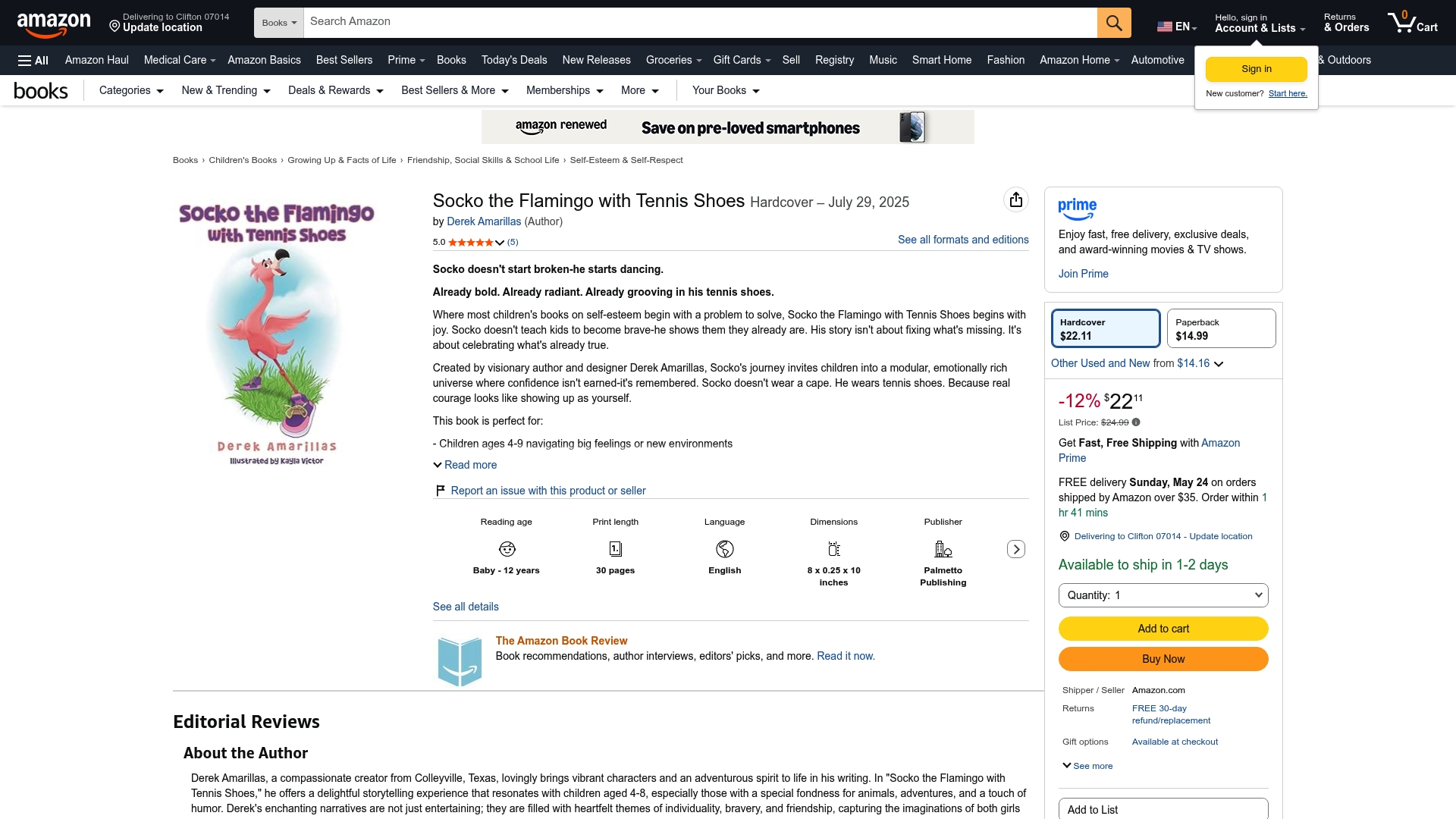
A's Socko the Flamingo with Tennis Shoes is a strong starting point for any parent or educator working with children in the 4 to 6 range. It tackles belonging, self-acceptance, and the courage to be different, all wrapped in humor and imagination that makes children lean in rather than tune out. For a broader selection of age-appropriate SEL books across the 3 to 8 range, a curated search on Amazon surfaces options organized by theme, reading level, and age group, so you can match the right book to what your child is navigating right now.
Building an SEL library takes time. Start with one book in each age band, read it yourself first, and let the conversation do the work.
FAQ
What age should children start reading SEL books?
Children can benefit from social emotional learning books as early as age 3, starting with simple picture books that name and show basic emotions. The key is matching the book's emotional themes to what the child is developmentally ready to process.
Are picture books too simple for kids ages 6-8?
Not at all. Simple picture books are sophisticated tools for emotional learning at any age when adults facilitate meaningful discussion around them. A picture book can generate rich SEL conversations with older children when the adult asks the right questions.
How do I know if an SEL book is right for my child's age?
Start with the publisher's recommended age range as a baseline, then assess your child's current emotional readiness and what themes are relevant to their life right now. Publisher age ranges are guidelines, not strict rules, and individual emotional readiness matters more than a number on the cover.
What is the mirror and window strategy for SEL books?
The mirror and window strategy means choosing books that reflect a child's own experience (mirrors, which validate) alongside books that show perspectives different from their own (windows, which build empathy). Both types support emotional growth across all age ranges.
Do SEL books work without adult-led discussion?
Children gain something from SEL books on their own, but the real learning happens through conversation. Asking children to reflect on what a character is feeling and whether they have felt the same way transforms a story into a genuine emotional learning experience.