
If you need competitor benchmarking and market-level traffic estimates, start with SEMrush, Ahrefs, or SE Ranking. If you need accurate, cookieless data about your own site visitors, go with Plausible Analytics, Cloudflare Web Analytics, Simple Analytics, or Pivlu Analytics. Those are two different jobs, and most teams benefit from both rather than trying to force one tool to do everything.
The core tradeoff: external market-intelligence tools estimate competitor traffic from panels and ISP data. They are useful for spotting trends and benchmarking, but the numbers are approximations. Internal analytics tools measure your actual visitors with precision, especially when they skip cookies entirely. For a small creator selling children's books or activity kits on Shopify or Gumroad, that accuracy gap matters more than it does for a large agency.
Quick decision guide:
- Budget under $50/month + need competitor data: SE Ranking
- Deeper SEO and backlink research: Ahrefs
- Full marketing suite with ad intelligence: SEMrush
- Free, accurate internal metrics with no consent banner: Cloudflare Web Analytics
- Lightweight paid internal analytics: Plausible Analytics or Simple Analytics
- Privacy-first with self-hosting: Pivlu Analytics
- Need to fix checkout drop-offs: add Hotjar, FullStory, or Amplitude
Table of Contents
- Which SimilarWeb.com alternatives fit your use case?
- Which market-intelligence tool should you use instead of SimilarWeb?
- How do cookieless analytics tools protect your visitors and your data?
- When should you add behavior analytics to your stack?
- Icon Literary offers a different kind of creative resource
- Key Takeaways
Which SimilarWeb.com alternatives fit your use case?
The table below maps all eleven tools to the dimensions that matter most for small DTC sellers. One canonical comparison follows, then the detail.
| Tool | Best for | Data type | Privacy / cookieless | Key features | Pricing | Setup ease | Data freshness |
|---|---|---|---|---|---|---|---|
| Plausible Analytics | Small sites, creators | Internal | ✓ Cookieless, GDPR | Traffic, goals, funnels | From ~$9/mo | Very easy | Real-time |
| Cloudflare Web Analytics | Sites on Cloudflare | Internal | ✓ No cookies, edge | Traffic, referrers | Free | Very easy | Real-time |
| Simple Analytics | Minimal setup, creators | Internal | ✓ Cookieless | Traffic, UTM, events | From ~$9/mo | Very easy | Real-time |
| Pivlu Analytics | Compliance-focused orgs | Internal | ✓ Cookieless, GDPR | Funnels, goals, UTM, real-time | Paid tiers | Easy | Real-time |
| SEMrush | Agencies, marketers | External (market intel) | ✗ | Keyword, traffic, ads, content | From ~$140/mo | Moderate | Weekly/monthly |
| Ahrefs | Organic SEO, content | External | ✗ | Backlinks, keywords, site audit | — | Moderate | Frequent crawls |
| SE Ranking | Budget SEO teams | External | ✗ | Rank tracking, audit, competitor | — | Easy | Regular |
| SpyFu | PPC advertisers | External | ✗ | Competitor ad history, keywords | From ~$39/mo | Easy | Regular |
| Hotjar | E-commerce UX | Internal (behavior) | Partial | Heatmaps, recordings, polls | Free tier; paid for add-ons | Easy | Real-time |
| FullStory | Conversion debugging | Internal (behavior) | Partial | Session replay, event tracking | Paid; free trial | Moderate | Real-time |
| Amplitude | Product analytics | Internal (behavior) | Partial | Funnels, cohorts, retention | Free tier; paid plans | Moderate | Real-time |
Pro Tip: If you sell on Shopify or Gumroad, prioritize tools with native integrations or simple script installs. Plausible and Simple Analytics both embed with a single line of code, which means no developer needed and no consent banner slowing down your checkout page.
Simple Analytics warns that cookie-based tools like Google Analytics can miss up to 60% of traffic when visitors decline consent. For a children's book shop where parents are privacy-conscious, that gap is not theoretical.
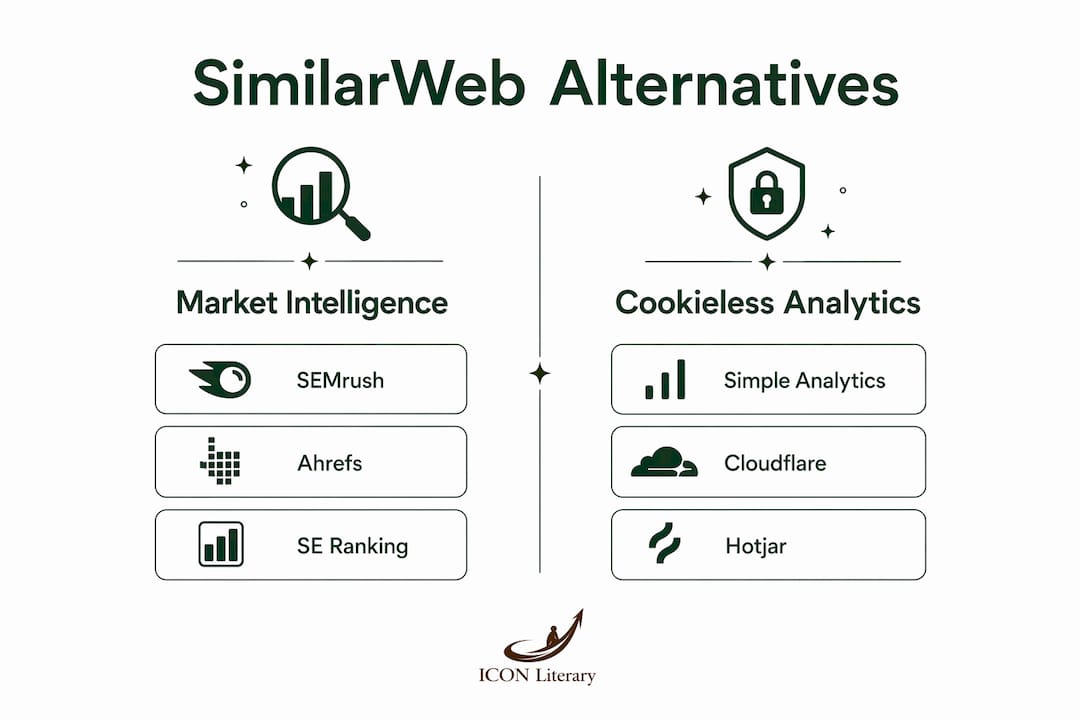
Which market-intelligence tool should you use instead of SimilarWeb?
For pure competitor research, SEMrush is the most complete replacement. It covers keyword gaps, traffic estimates, ad spend signals, and content benchmarking in one platform. That said, it starts around $140/month, which is steep for a solo creator with a small catalog.
Ahrefs is the better pick if organic search and backlink analysis drive your growth. Its dataset for keyword difficulty and content gaps is deep, and Backlinko's testing confirms it holds up well for content-driven strategies. The tradeoff is that Ahrefs has less ad intelligence than SEMrush.

SE Ranking sits in the middle: solid rank tracking, competitor visibility, and site audits at a lower entry price. SE Ranking recommends matching your tool to whether you prioritize high-level market intelligence or hands-on SEO performance, which is honest advice. For a small children's brand trying to understand which keywords competitors rank for, SE Ranking covers the essentials without the enterprise price tag.
SpyFu is the specialist. If you run paid search campaigns and want to see exactly which keywords a competitor has been bidding on for years, SpyFu's historical PPC data is genuinely hard to replicate elsewhere. It starts around $39/month and is worth it for advertisers, less so for purely organic sellers.
A few questions worth asking any market-intelligence vendor before you commit:
- How often is the traffic data refreshed, and what is the panel methodology?
- Can you export data to Google Sheets or CSV without a premium tier?
- Is there a free trial or demo with real data, not sample data?
- Does the platform have any e-commerce category filters for children's products?
"Most businesses need both internal analytics for accurate site metrics and external competitive intelligence for market context. Neither fully replaces the other." — Backlinko
Pro Tip: Before paying for SEMrush or Ahrefs, run a free trial and pull keyword data for your top three competitors. If the results look thin for your niche (children's books, SEL kits), the tool's panel may not have enough data at your traffic scale. SE Ranking or SpyFu may give more usable signal at lower cost.
How do cookieless analytics tools protect your visitors and your data?
For measuring your own site, the four privacy-first options work differently from SimilarWeb-style tools. They track real visits without cookies, which means no consent banner, no data loss when visitors decline, and cleaner numbers overall.
Plausible Analytics advocates that removing consent banners improves both data quality and user experience, since cookieless tools capture visits that cookie-based trackers lose. For a parent browsing an emotional-literacy book shop, that frictionless experience matters.
Key feature comparison across the four tools:
- Plausible Analytics: EU-hosted, open-source option available, no cookies, simple dashboard, Shopify-compatible via script. Starts around $9/month.
- Cloudflare Web Analytics: Completely free, no cookies, can collect data at the network edge without any JavaScript at all. Best if you already use Cloudflare.
- Simple Analytics: Cookieless, minimal interface, strong on data completeness, straightforward UTM and event tracking. Similar pricing to Plausible.
- Pivlu Analytics: Cookieless, no fingerprinting, GDPR-compliant by default, includes funnels, goals, and UTM tracking. Self-hosting available for teams that need full data ownership.
Cloudflare is the obvious starting point if cost is the constraint. It is free, accurate, and requires almost no setup. Plausible and Simple Analytics are worth the small monthly fee when you want goal tracking and cleaner reporting. Pivlu is the right call when your organization needs self-hosted infrastructure or more granular compliance controls.
Pro Tip: Pair one lightweight internal analytics tool with a low-cost session tool like Hotjar's free tier. You get accurate visit counts from the cookieless layer and visual behavior data from the session layer, without paying for an enterprise platform.
When should you add behavior analytics to your stack?
Raw traffic numbers tell you how many people visited your product page. They do not tell you why half of them left before clicking "Add to Cart." That is where behavior tools earn their place.
Session replays and funnels provide more conversion insight than pageview counts alone, which is why adding one behavior tool to a cookieless analytics setup is often the highest-leverage move for a small DTC seller.
- Hotjar: Heatmaps and session recordings show exactly where visitors scroll, click, and stop. The free tier covers small sites. Best for spotting friction on a single product page or a short checkout flow.
- FullStory: Higher-fidelity session replay with precise event instrumentation. Better for diagnosing specific bugs or drop-off points in a multi-step checkout. Requires slightly more setup than Hotjar.
- Amplitude: Built for product analytics, funnels, and cohort analysis. Overkill for a single-product shop, but powerful if you run experiments or want to track retention across a catalog of books and kits.
One privacy note: session replay tools capture on-screen interactions, which can include sensitive input on children's product pages. Before enabling FullStory or Hotjar on any page where parents enter personal data, confirm that PII masking is active and that default retention settings match your privacy policy.
A short adoption checklist for a toy or book shop:
- Install your cookieless analytics tool first and confirm baseline visit counts.
- Add Hotjar's free heatmap on your top product page for two weeks.
- Track three events: page view, "Add to Cart" click, and checkout start.
- Compare drop-off rates before and after any page changes.
- Export both datasets monthly to a shared Google Sheet for attribution review.
Icon Literary offers a different kind of creative resource
The tools above help you measure and research. Icon Literary does something different: it creates the content itself.
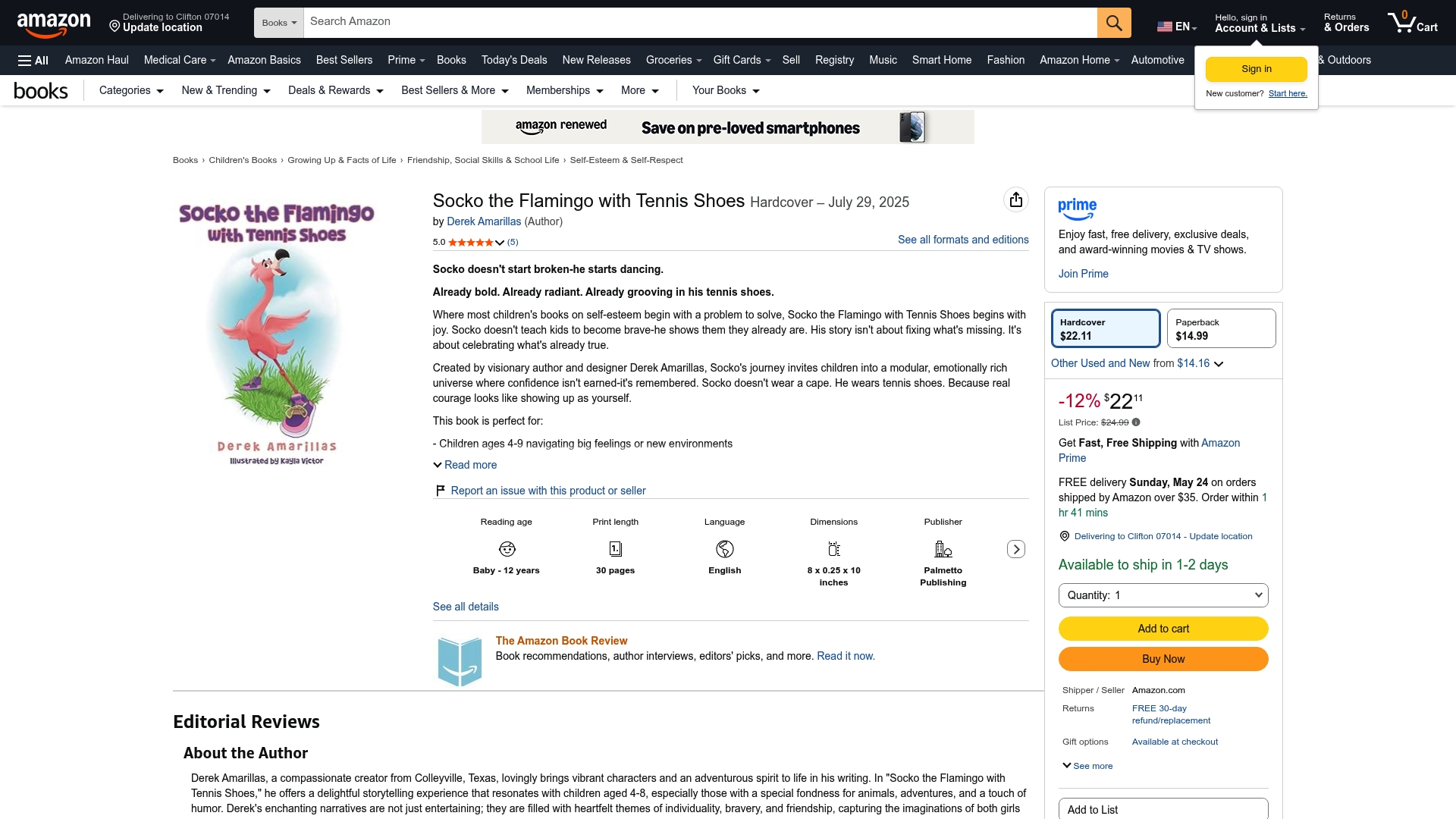
Icon Literary is a boutique creative studio that produces children's emotional-literacy picture books, graphic narratives, activity kits, and themed card decks for ages 3–8. Where analytics tools tell you what your audience is searching for, Icon Literary gives you ready-made, emotionally resonant stories and collectibles to put in front of them. The full catalog includes SEL-focused narratives, diverse characters, and immersive world-building across physical books, digital downloads, and printable kits. If you are a parent, educator, or gift-giver looking for emotional-literacy resources that are already designed, illustrated, and ready to use, visit Icon Literary to browse the current collection.
Key Takeaways
The most effective approach to replacing SimilarWeb is pairing one external market-intelligence tool with one cookieless internal analytics tool, then adding behavior analytics only when you need to fix a specific conversion problem.
| Point | Details |
|---|---|
| Match tool to job | Use SEMrush, Ahrefs, or SE Ranking for competitor research; use Plausible, Cloudflare, or Simple Analytics for your own site metrics. |
| Cookieless tools capture more | Cookie-based analytics can miss up to 60% of traffic when visitors decline consent, per Simple Analytics. |
| Free options exist | Cloudflare Web Analytics is completely free and cookieless, making it the lowest-barrier starting point. |
| Behavior tools add conversion insight | Session replays and funnels from Hotjar, FullStory, or Amplitude reveal why visitors leave, not just that they did. |
| Icon Literary | For ready-made SEL books, activity kits, and card decks for ages 3–8, Icon Literary's catalog is the creative resource to explore. |