
Children's books are the most reliable tools parents have for opening emotional dialogue with kids aged 3–8. The ways books spark family conversations go far beyond plot recaps. Research from The Hanen Centre, Education Next, and relational reading experts confirms that shared reading builds empathy, emotional intelligence, and trust between caregivers and young children. The key is shifting from quiz-style questions to open, curiosity-driven exchanges that treat a child's ideas as worth exploring. This listicle gives you nine concrete methods to make that shift starting tonight.
1. Ways books spark family conversations through open-ended questions
Open-ended questions are the single most effective tool for turning a picture book into a real conversation. Prompts like "Tell me what you noticed" or "What do you think that felt like?" invite multiple valid answers rather than one correct response. That distinction matters enormously for children aged 3–8, who are still learning that their perspective has value.
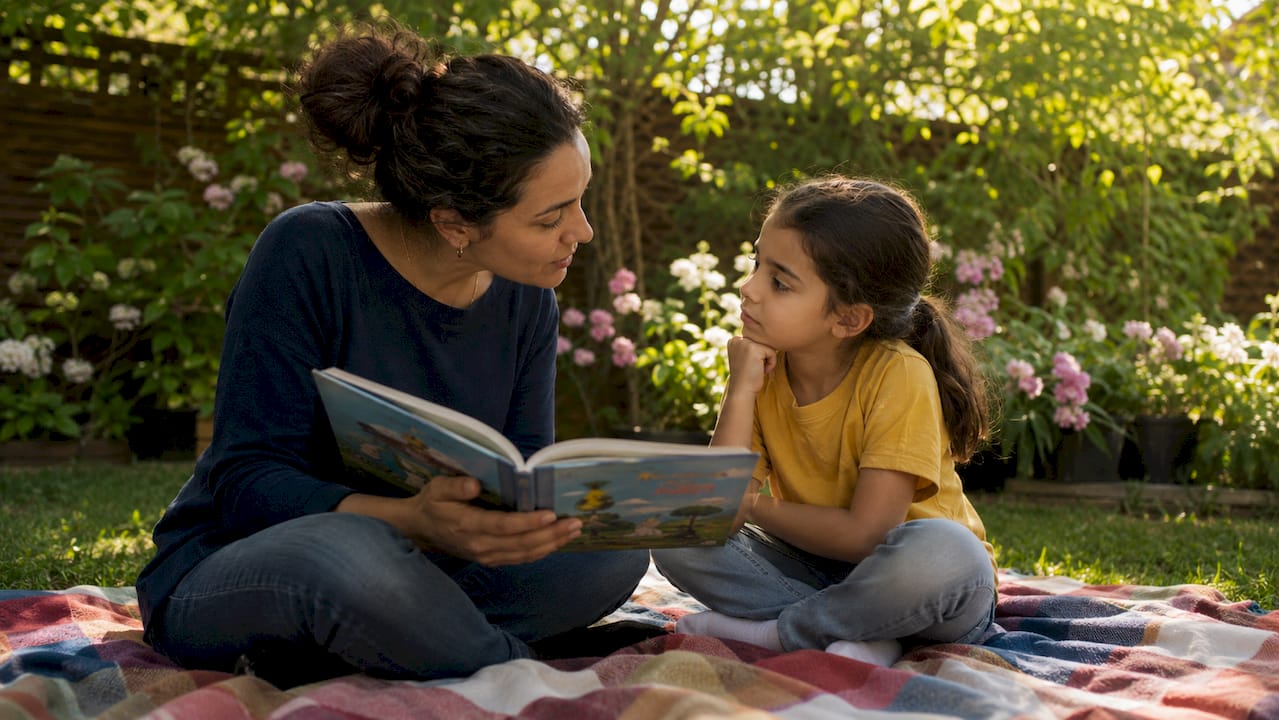
Close-ended questions ("What color was the hat?") train kids to perform for approval. Open-ended questions train them to think and share. The difference shows up quickly. Children who are asked relational questions during reading become more willing to name their own feelings and connect story events to their real lives.
Try these prompts with any picture book:
- "What part surprised you the most?"
- "If you were that character, what would you do?"
- "Does anything in this story remind you of something that happened to you?"
- "What do you think happens after the last page?"
Pro Tip: After asking an open-ended question, wait at least five full seconds before speaking again. Silence feels uncomfortable to adults but gives children the processing time they genuinely need.
2. Shift from teacher to explorer-partner
The most common mistake caregivers make during book conversations is talking too much. If you speak more than your child during a reading session, the dynamic has shifted from shared exploration to instruction. That shift shuts children down.
The explorer-partner model means you position yourself as someone who is also figuring out the story. Say things like "I wonder why she did that" or "I'm not sure what I think about that ending." Your child sees that uncertainty is acceptable and that thinking out loud is the goal, not arriving at the right answer.
This approach works especially well with books that have ambiguous endings or morally complex characters. Stories where the "right" choice is not obvious give both of you something genuine to explore together.
3. Use body language to signal that you are listening
Children read caregivers constantly. Your posture, eye contact, and facial expressions tell a child whether their words matter before you say a single word back. The Hanen Centre identifies face-to-face communication during reading as essential for helping kids aged 3–8 process emotions safely.
Put the book down occasionally and make direct eye contact when your child says something meaningful. Nod. Smile. Lean in slightly. These physical signals confirm that you are present and that what they said was worth saying.
Here is a quick reference for body language dos and don'ts:
Do:
- Maintain eye contact when your child speaks
- Nod and smile to affirm their ideas
- Sit at their physical level, not above them
Don't:
- Check your phone during pauses
- Interrupt to correct or redirect
- Rush to fill every silence with your own interpretation
Pro Tip: Try reading side by side on the floor instead of in a chair. The physical equality of that position signals partnership, not performance.
4. Choose books that naturally invite dialogue
Not every picture book is equally useful for family discussions. The best books for family discussions feature characters who face real emotional dilemmas, stories where feelings are shown rather than explained, and endings that leave room for interpretation. Books about belonging, fear, friendship, and identity consistently generate the richest conversations with children aged 3–8.
Reading sessions serve as a buffer that allows children to explore complex emotions at a safe distance. A story about a character who feels left out gives a child permission to talk about their own experience of exclusion without feeling exposed. That protective distance is one of the most powerful features of fiction.
When selecting books, look for these qualities:
| Feature | Why it works |
|---|---|
| Emotionally complex characters | Gives children real feelings to discuss and compare to their own |
| Unresolved or open endings | Invites speculation and personal interpretation |
| Themes of belonging or identity | Connects directly to children's developmental concerns |
| Humor alongside difficulty | Lowers defenses and makes hard topics approachable |
| Minimal text, rich illustrations | Encourages children to "read" the pictures and narrate freely |
Revisiting favorite books also deepens conversation. A story your child loved at age four will generate entirely different responses at age six. Returning to the same book over time shows children that meaning grows and changes, which is itself a valuable lesson.
5. Let children lead the reading
Children aged 3–8 benefit most when they are allowed to read books in their own way, including skipping pages, inventing dialogue, or narrating from the pictures. This is not a failure of literacy. It is a sign of active engagement. When you allow it, you signal that imagination matters more than performance.
Let your child take the book and "tell" you the story. Ask questions about what they are inventing. This approach generates more spontaneous conversation than a cover-to-cover read-aloud ever will. It also reveals what themes and images your child is drawn to, which gives you natural entry points for deeper discussion.
6. Handle disagreement and big emotions with curiosity
Children will sometimes say things during book conversations that surprise or concern you. A child who says "I think the villain was right" is not endorsing bad behavior. They are testing an idea in a safe space. Relational reading transforms conversations from assessments into invitations, and that includes invitations to explore uncomfortable ideas.
Respond to unexpected statements with curiosity rather than correction. "That's interesting. Tell me more about why you think that." This keeps the conversation open and teaches your child that complex thinking is welcome in your family. It also builds the kind of trust that makes children more likely to come to you with real-life concerns as they grow older.
Parents report that book-based conversations provide comfortable ways to discuss sensitive topics like bullying or friendship. The story creates a shared reference point that removes the pressure of direct personal disclosure.
7. Integrate book discussions into daily routines
The best book conversations rarely happen immediately after reading. Conversations often happen sideways during chores, car rides, or snack times, long after the book has been put away. Forcing a structured discussion right after reading can feel like homework and stifle genuine response.
Here are five routine moments where book conversations naturally emerge:
- Car rides. The side-by-side seating removes eye contact pressure and makes children more willing to share.
- Snack time. A relaxed, low-stakes setting invites casual reflection on stories from earlier in the day.
- Bath time. Water play reduces anxiety and loosens up conversation about feelings.
- Grocery shopping. Spotting a fruit or animal from a recent book triggers natural recall and discussion.
- Bedtime. The quiet, close physical space of bedtime is ideal for returning to unresolved story questions.
When your child brings up a book character days after reading, treat it as a gift. That delayed return shows the story is still working in their mind.
8. Build a family book canon over time
A family book canon is a shared collection of stories that both you and your child know well and return to repeatedly. A family book canon enriches intellectual community and keeps connection alive even as children grow and become less forthcoming. When a child hits a hard moment at school, you can reference a character they already love and trust.
Building this canon takes nothing more than intention. Keep a short list of books your family has read together. Return to them at different ages. Notice how your child's interpretation changes. Those shifts in perspective are themselves worth discussing and celebrating.
For families looking to expand their reading list, pairing books with family-friendly activities that connect to story themes deepens both comprehension and emotional engagement.
9. Wonder aloud and sit with unresolved ideas
The most powerful thing a caregiver can model during a book conversation is comfort with not knowing. Wondering aloud and patiently sitting with unresolved ideas teaches children that emotional complexity is normal and manageable. It also shows them that adults do not have all the answers, which is both honest and reassuring.
Say things like "I keep thinking about that part where she walked away. I'm still not sure how I feel about it." This models reflective thinking and gives your child permission to hold open questions without anxiety. Over time, this practice builds the emotional vocabulary and tolerance for ambiguity that children need to navigate real-life relationships.
Family reading is a critical tool for developing non-cognitive skills such as empathy, ethics, and emotional intelligence. These are not side effects of reading together. They are the primary outcome when you read relationally.
Key takeaways
Books become conversation tools when caregivers prioritize curiosity, active listening, and open-ended questions over comprehension checks and correct answers.
| Point | Details |
|---|---|
| Open-ended questions work best | Prompts like "tell me what you noticed" invite reflection rather than recall. |
| Explorer-partner dynamic matters | Let your child speak more than you do to deepen engagement. |
| Book selection shapes dialogue | Choose stories with emotional complexity, identity themes, and open endings. |
| Sideways conversations are valid | The best discussions often happen during car rides or snack time, not right after reading. |
| Wondering aloud builds trust | Modeling comfort with unresolved ideas teaches children that complexity is safe. |
What I have learned from reading with young children
Reading with young children changed how I listen. I came into it thinking the goal was comprehension. I left most sessions realizing the goal was connection. The moment I stopped asking "What happened next?" and started asking "What did you think about that?" the conversations became completely different. Children who had barely spoken during read-alouds suddenly had opinions, comparisons, and questions of their own.
The hardest part is resisting the urge to teach. When a child says something factually wrong about a story, the instinct is to correct. But correction closes the conversation. Curiosity keeps it open. I have watched children work through genuine fears, friendship conflicts, and questions about fairness entirely through the lens of a picture book character. That only happens when the adult in the room stays quiet long enough to let it.
The other thing I have noticed is that the books that generate the most conversation are rarely the ones with the clearest moral lessons. Stories that leave something unresolved, stories where the character makes a choice you could argue either way, those are the ones children return to. A picture book about a flamingo who wears tennis shoes and does not quite fit in will spark more real talk about belonging than a story that wraps everything up neatly. The mess is the point.
— Derek
Start building your family's reading conversation practice
The nine methods above work best when you have books worth talking about. A is built around exactly that idea. Socko the Flamingo with Tennis Shoes is a picture book character designed to open conversations about big feelings, belonging, and self-acceptance with children aged 3–8. Every page is built to invite the kind of open-ended, relational dialogue this article describes.

If you want a book that gives your family something real to discuss, explore Socko's story and see how humor and imagination can turn a single read-aloud into an ongoing conversation about identity and belonging. Pair it with the techniques above and you have everything you need to make reading the most connected part of your family's day.
FAQ
How do open-ended questions improve book conversations?
Open-ended questions avoid the pressure of a single correct answer, which encourages children to share personal interpretations and feelings rather than just recalling plot details.
What makes a book good for family discussions?
The best books for family discussions feature emotionally complex characters, themes of belonging or identity, and endings that leave room for interpretation, giving children something genuine to reflect on and discuss.
When is the best time to discuss a book with young children?
Conversations often emerge during informal moments like car rides, snack time, or bath time rather than immediately after reading. Forcing discussion right after a read-aloud can reduce enthusiasm.
How does reading together build emotional intelligence?
Family reading develops non-cognitive skills including empathy and emotional vocabulary by giving children a safe, fictional distance to explore complex feelings before applying them to real-life situations.
What should I do if my child says something unexpected during a book discussion?
Respond with curiosity rather than correction. Saying "Tell me more about why you think that" keeps the conversation open and signals that complex thinking is welcome, which builds long-term trust.