
An effective SEL book is defined by its alignment with CASEL's five core competencies: self-awareness, self-management, social awareness, relationship skills, and responsible decision-making. These competencies are the gold standard for evaluating whether a children's book genuinely supports social-emotional learning or simply tells a feel-good story. What makes an SEL book effective goes beyond a positive message. The best books create authentic emotional contexts, invite reflection, and give children a safe space to process big feelings. Understanding these elements helps parents and educators choose books that produce real, lasting growth.
What core social-emotional competencies should effective SEL books teach?
CASEL's framework identifies five competencies that every strong SEL book should address, at least in part. These are not abstract ideals. They are measurable skills children develop through repeated exposure to stories that model them in action.
| CASEL Competency | What it looks like in an SEL book |
|---|---|
| Self-awareness | A character recognizes and names their own emotions |
| Self-management | A character regulates impulses or manages frustration |
| Social awareness | A character shows empathy or understands another's perspective |
| Relationship skills | Characters navigate conflict, friendship, or belonging |
| Responsible decision-making | A character weighs choices and considers consequences |
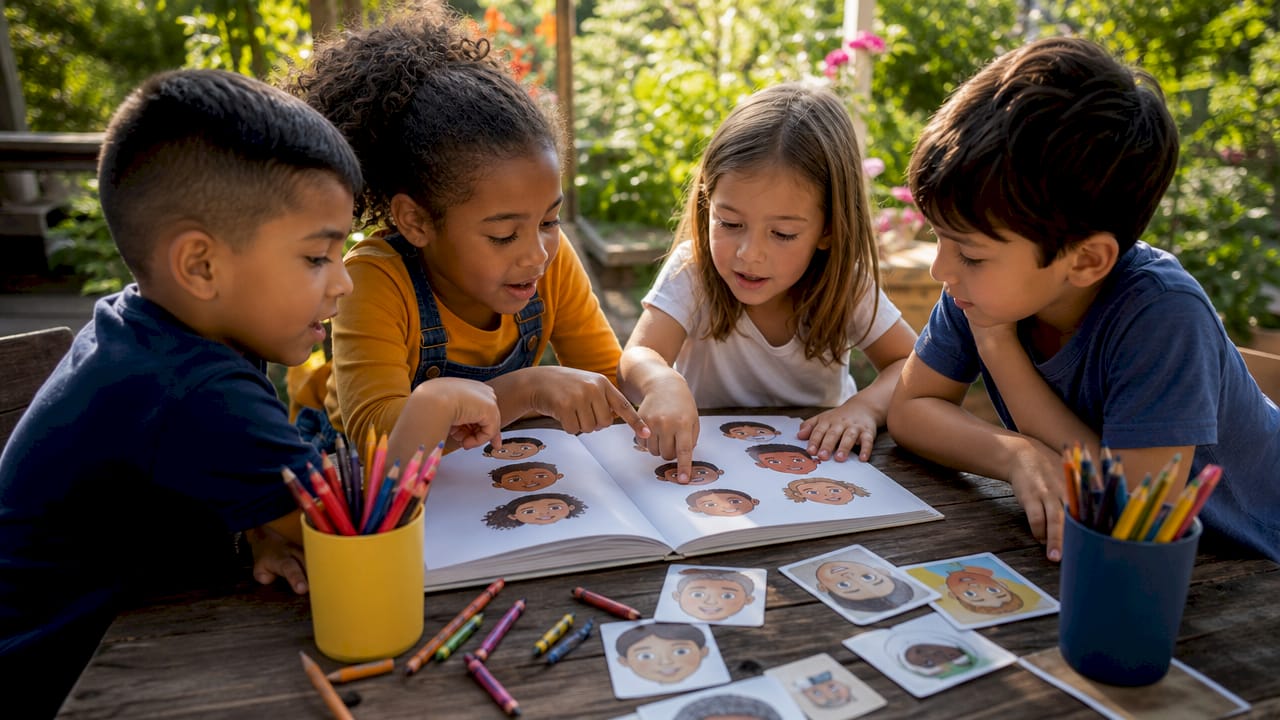
Self-awareness is the entry point. A book that helps a child name what they feel, whether it is jealousy, loneliness, or excitement, gives them vocabulary they can use outside the story. Self-management goes one step further by showing what to do with that feeling. A character who takes a breath, asks for help, or tries again after failure models regulation in a way that abstract instruction never can.
Social awareness and relationship skills are where SEL books become especially powerful for classrooms. A story that shows a child noticing a classmate's sadness, or repairing a friendship after a fight, teaches perspective-taking through narrative rather than lecture. Responsible decision-making rounds out the framework by showing consequences in a low-stakes, fictional context.
Pro Tip: When evaluating a book, check whether it addresses at least two or three CASEL competencies. A book that only teaches one skill in isolation is less likely to produce the layered emotional literacy children need.
How do narrative techniques shape the impact of SEL books?
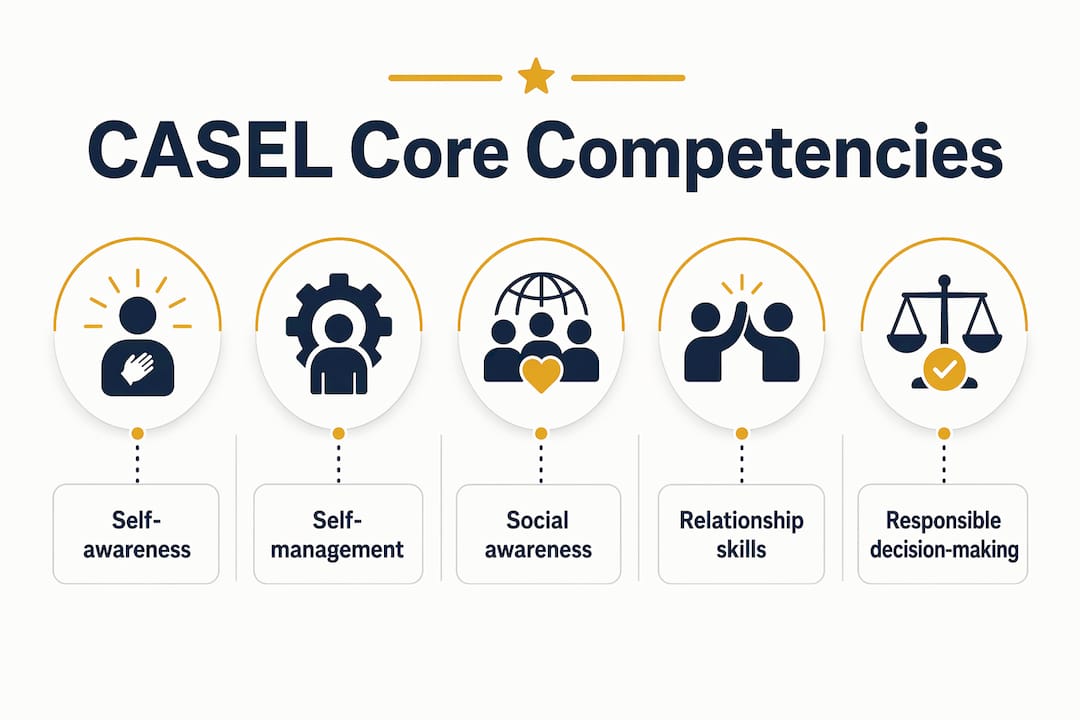
The most effective SEL books do something specific: they create what researchers call a third space for children. This is a fictional distance between the child and the emotional situation on the page. Because the story is happening to a character, not to the reader, children can analyze behavior, feel empathy, and consider choices without feeling personally targeted or defensive.
This third space is why picture books work so well for difficult topics. A child who struggles with belonging can watch a flamingo in tennis shoes navigate the same feeling without the vulnerability of admitting their own experience. That protective layer lowers emotional defenses and opens the door to genuine reflection.
Culturally responsive storytelling is the second major narrative factor. Books that reflect a child's own background, family structure, or community signal that their experience is valid and worth telling. Books that represent experiences different from the child's build empathy and widen their understanding of the world. Both functions matter. The key is that representation must be authentic, not tokenistic. Stereotypes in SEL books actively undermine the trust and safety the story is trying to build.
Trauma-informed storytelling does not mean avoiding hard topics. It means preparing adults to support strong emotional responses when they arise. A book about loss, family change, or exclusion can be deeply effective when the adult reading it is ready to hold space for the feelings it surfaces.
Pro Tip: Choose books that balance challenge with hope. A story that names a hard emotion but ends with resilience gives children both validation and a model for moving forward.
What are the proven benefits of using SEL books regularly?
SEL integration boosts reading achievement through emotional regulation, motivation, peer support, and long-term academic habits. A systematic review of 31 studies confirmed these multi-channel benefits. That finding matters because it shows SEL books are not a detour from academic goals. They support them directly.
The benefits operate on three levels at once:
- Emotional: Children develop vocabulary for feelings, practice regulation strategies, and build resilience through repeated exposure to characters who face and manage difficulty.
- Cognitive: Stories that require perspective-taking strengthen inference skills, comprehension, and critical thinking. These are the same skills tested in reading assessments.
- Social: Books that model empathy, conflict resolution, and belonging reduce social friction in classrooms and homes, which creates better conditions for learning.
SEL produces an 11 to 1 return on investment by improving academic outcomes and reducing behavioral problems. That figure reflects the compounding effect of emotional skills across a child's development. A child who can regulate frustration stays in their seat longer. A child who can repair a friendship misses less instructional time to conflict.
Deliberately integrating SEL with literacy instruction produces the strongest outcomes. Reading an SEL book once and moving on captures only a fraction of its potential. Returning to the same book at different developmental stages, or pairing it with discussion and writing, multiplies the impact.
Pro Tip: Read the same book at the start of the school year and again mid-year. Children's responses will change as they grow, and revisiting the story deepens emotional literacy in ways a single reading cannot.
Common misconceptions about choosing and using SEL books
The biggest misconception is that more books means more impact. A small, curated set of SEL books revisited multiple times builds emotional literacy more effectively than a long list of one-time reads. Depth beats breadth every time.
Here are the most common mistakes parents and educators make, and what to do instead:
- Treating SEL books as behavior correction tools. Books that widen a child's emotional context produce sustainable growth. Books used to "fix" a specific behavior feel punitive and often backfire. The goal is understanding, not compliance.
- Waiting for a crisis to introduce SEL books. Read SEL books before problems escalate. A story about friendship conflict read during a calm week gives children a framework they can draw on when real conflict arrives.
- Assuming the perfect book exists. Intentionality matters more than perfection in book selection. A consistent lens and thoughtful discussion will do more than any single title.
- Skipping adult preparation. Trauma-informed reading requires adults to anticipate strong emotional responses. Reading a book about loss without preparing for tears or silence is a missed opportunity for connection.
- Abandoning books that feel too simple. Picture books work for older children too. The emotional content of a well-written picture book is rarely as simple as it looks. Revisiting them with older readers often surfaces new layers.
Practical tips for selecting and using SEL books well
Choosing effective SEL books starts with knowing your child or classroom. The most useful books reflect the emotional terrain children are actually navigating, not an idealized version of childhood.
Involve children in selection when possible. A child who picks a book about a character who feels different is telling you something. That choice is itself an opening for conversation. Librarians are an underused resource here. A school or public librarian can recommend titles that match a child's developmental stage and current social challenges.
Once you have a book, the discussion after reading matters as much as the reading itself. Open-ended questions produce richer reflection than yes-or-no prompts. Ask "What do you think the character was feeling when that happened?" rather than "Was the character sad?" The first question requires inference and empathy. The second only requires recognition.
Reading in a way that widens understanding before correction leads to sustainable SEL growth. This means resisting the urge to immediately redirect a child's emotional response toward the "right" lesson. Let the story do its work first. Sit with the feeling before moving to the takeaway.
Resilience-building exercises are most effective when microdosed throughout general curricula alongside language skills. This means short, regular exposure to SEL themes across the week, not a single dedicated lesson. A five-minute read-aloud before a transition, a brief check-in question tied to a story, or a drawing prompt connected to a character's feeling all count.
A is built on exactly this principle. Socko the Flamingo with Tennis Shoes gives children a character who is visibly different, warmly funny, and emotionally honest. That combination creates the third space and the authentic emotional context that effective SEL literature requires.
Key takeaways
Effective SEL books work because they align with CASEL's five competencies, create a safe narrative distance, and are used with intention and consistency rather than volume.
| Point | Details |
|---|---|
| CASEL alignment | Strong SEL books address at least two of the five core competencies in their narrative. |
| Third space narrative | Fiction creates emotional distance that lets children engage with hard feelings safely. |
| Depth over breadth | A small set of books revisited regularly builds more emotional literacy than many one-time reads. |
| Adult preparation | Trauma-informed reading requires adults to be ready to support strong emotional responses. |
| Intentional use | Consistent discussion and open-ended questions multiply the impact of any SEL book. |
What I've learned from watching SEL books actually work
Most conversations about SEL books focus on content checklists. Does it cover empathy? Does it show conflict resolution? Those questions matter, but they miss the variable that determines whether a book actually lands: the adult in the room.
I've watched the same book produce a breakthrough conversation in one classroom and complete silence in another. The difference was never the book. It was whether the adult had thought about what the story might surface and was ready to stay present when it did. A child who starts crying during a story about belonging is not a problem to manage. That child is doing exactly what SEL books are designed to do.
The other thing most guides understate is humor. Children do not open up through solemnity. They open up through laughter and recognition. A character who is funny and a little absurd, like a flamingo wearing tennis shoes, earns a child's trust before the emotional content arrives. That trust is what makes the reflection possible.
My honest advice to parents and educators: stop looking for the perfect book and start looking for a book you can return to. The story you read three times, discuss over breakfast, and reference when something hard happens at school is worth more than a shelf of titles read once and forgotten.
— Derek
A resource worth keeping in your SEL library
Finding SEL books that genuinely check all the right boxes takes time. A has done that work for you.
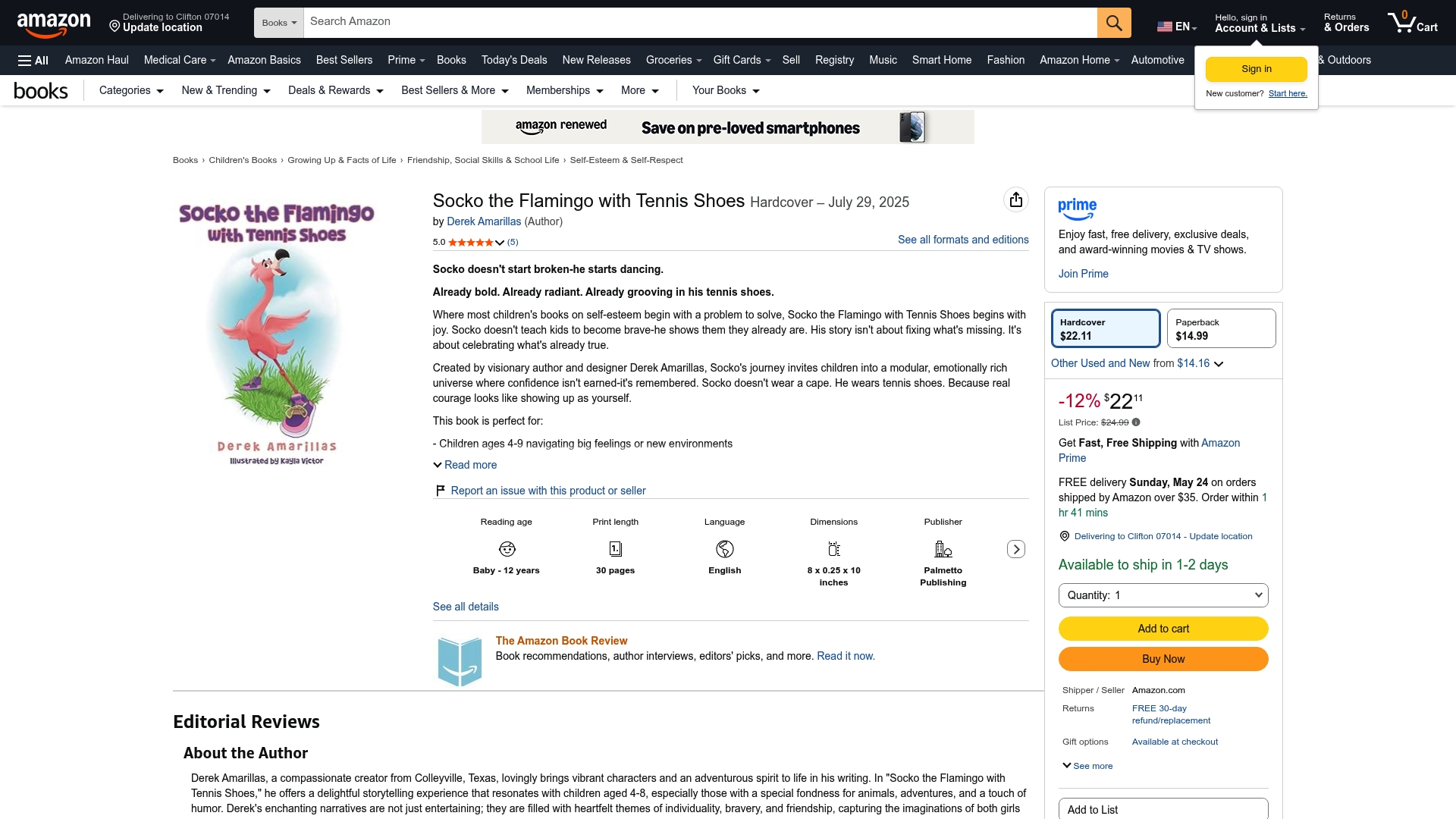
Socko the Flamingo with Tennis Shoes is a picture book built around emotional literacy, belonging, and self-acceptance. It gives children a character they can root for and return to, and it gives adults a natural opening for the kinds of conversations that matter most. Parents, teachers, and librarians who want a curated SEL book collection grounded in real emotional development will find it a reliable starting point. The book is available now and ready to earn its place as one of the titles your children ask to read again.
FAQ
What makes an SEL book effective for young children?
An effective SEL book aligns with CASEL's five core competencies, creates a safe narrative distance for emotional exploration, and is used with intentional discussion. Depth of use matters more than the number of titles.
How many SEL books does a child need?
A small, curated set revisited at different developmental stages builds deeper emotional literacy than a large collection of books read only once. Quality and repetition outperform volume.
Can SEL books help with reading skills too?
Yes. A systematic review of 31 studies found that SEL integration supports reading achievement through emotional regulation, motivation, and stronger peer relationships, all of which create better conditions for literacy development.
What should adults do before reading an SEL book on a hard topic?
Adults should prepare for strong emotional responses by thinking through what the story might surface. Trauma-informed reading means staying present and supportive when a child reacts, not steering away from the feeling.
How do I start a good conversation after reading an SEL book?
Use open-ended questions tied to the character's experience, such as "What do you think they were feeling?" This builds empathy and inference skills without putting the child on the spot about their own emotions.