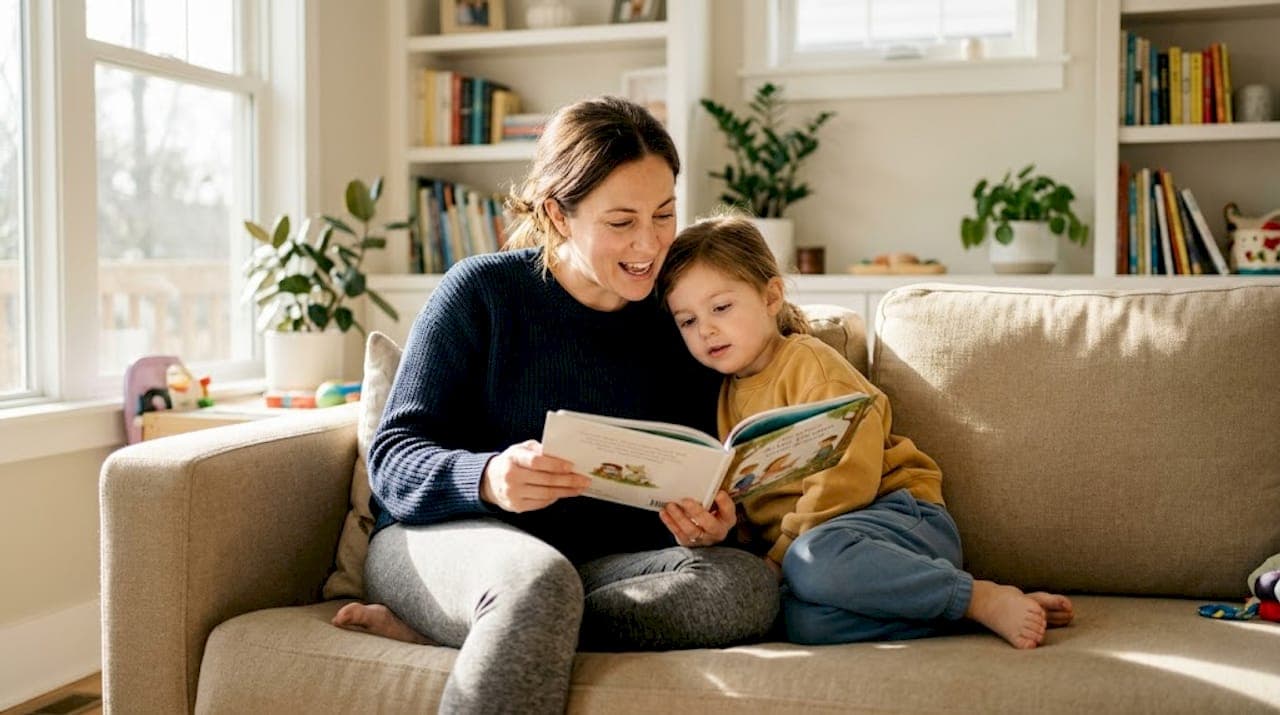
Every parent has been there: a birthday party ends, the toy gets tossed aside within a week, and the living room looks like a plastic recycling facility. The benefits of giving books over toy gifts go far beyond clearing the clutter. Books build language, emotional depth, and empathy in ways that most toys simply cannot match. If you are searching for a gift that keeps working long after the wrapping paper hits the floor, this guide breaks down exactly why books deserve the top spot on your gift list for children ages 3 to 8.
Table of Contents
- Key takeaways
- 1. The real benefits of giving books over toy gifts
- 2. How books build emotional intelligence that toys rarely reach
- 3. Safety and longevity: the practical case for books
- 4. How to choose books that actually deliver these benefits
- 5. Books vs. toys: a direct comparison for parents
- 6. My honest take on why books win for young kids
- Find the right book gift for your child
- FAQ
Key takeaways
| Point | Details |
|---|---|
| Books drive measurable learning | Children with access to books show significantly better literacy outcomes and stay in school longer. |
| Emotional growth is real and documented | Consistent bedtime reading improves empathy scores and emotional regulation in children as young as 3. |
| Books are safer and longer-lasting | Toys send roughly 150,000 children to emergency rooms each year; books carry no such risk. |
| Interactive reading multiplies the benefit | Asking questions during reading, known as dialogic reading, deepens comprehension and empathy beyond passive listening. |
| Choosing the right book matters | Age-appropriate, emotionally rich books paired with a reading routine deliver the strongest developmental gains. |
1. The real benefits of giving books over toy gifts
The case for books is not just anecdotal. Children with roughly 500 books at home stay in school an average of three years longer than peers with few books. Even a home library of just 20 books produces measurable improvements in adult literacy. That is a remarkable return on a gift that costs less than most action figures.
A five-year randomized trial in high-poverty schools found that cumulative book access produced reading gains equivalent to 52 to 65 percent of a full school year's learning. These were not children in special programs. They were simply given books. The effect size of 0.207 is the kind of number that education researchers rarely see from a single intervention.
- Books build vocabulary through repeated exposure to new words in context
- Narrative structure in picture books develops sequencing and comprehension skills
- Shared reading activates the brain regions responsible for language and imagination
- Toys, even "educational" ones, rarely produce literacy gains at this scale
Pro Tip: When gifting a book, tuck a sticky note inside the front cover with two or three open-ended questions the caregiver can ask during reading. This simple addition turns a passive gift into an interactive learning session.
2. How books build emotional intelligence that toys rarely reach
Here is something most gift guides skip entirely. A two-week bedtime reading study found that nightly picture-book reading significantly increased empathy scores and creative fluency in children ages 6 to 8. When caregivers added reflection questions after each session, creativity scores climbed even higher. That is two weeks of bedtime stories producing measurable emotional growth.
The emotional benefits go deeper than empathy. A 12-week program using traditional culture picture books twice per week showed that preschoolers developed higher emotional recognition accuracy and spent less time in negative emotional states. Their attention and working memory also improved. No toy study has produced comparable results across this many developmental dimensions simultaneously.
"Books should be considered a developmental intervention, not just enrichment or entertainment." This framing, supported by the research, changes how you think about gifting. You are not just giving a story. You are giving a tool.
What makes books uniquely powerful for emotional growth is the conversation they invite. A child who sees a character feel left out, scared, or misunderstood has a safe entry point to say, "I feel that way too." Toys can prompt imaginative play, but they rarely open the specific emotional vocabulary that books do.
Pro Tip: Look for books where the main character faces a feeling your child has recently experienced. Relevance is the shortcut to connection.
3. Safety and longevity: the practical case for books
The numbers here are hard to argue with. Approximately 150,000 children are treated for toy-related injuries in emergency rooms every year. Choking hazards, sharp edges, and battery-related incidents make toys a genuine safety consideration, especially for the 3 to 5 age group.
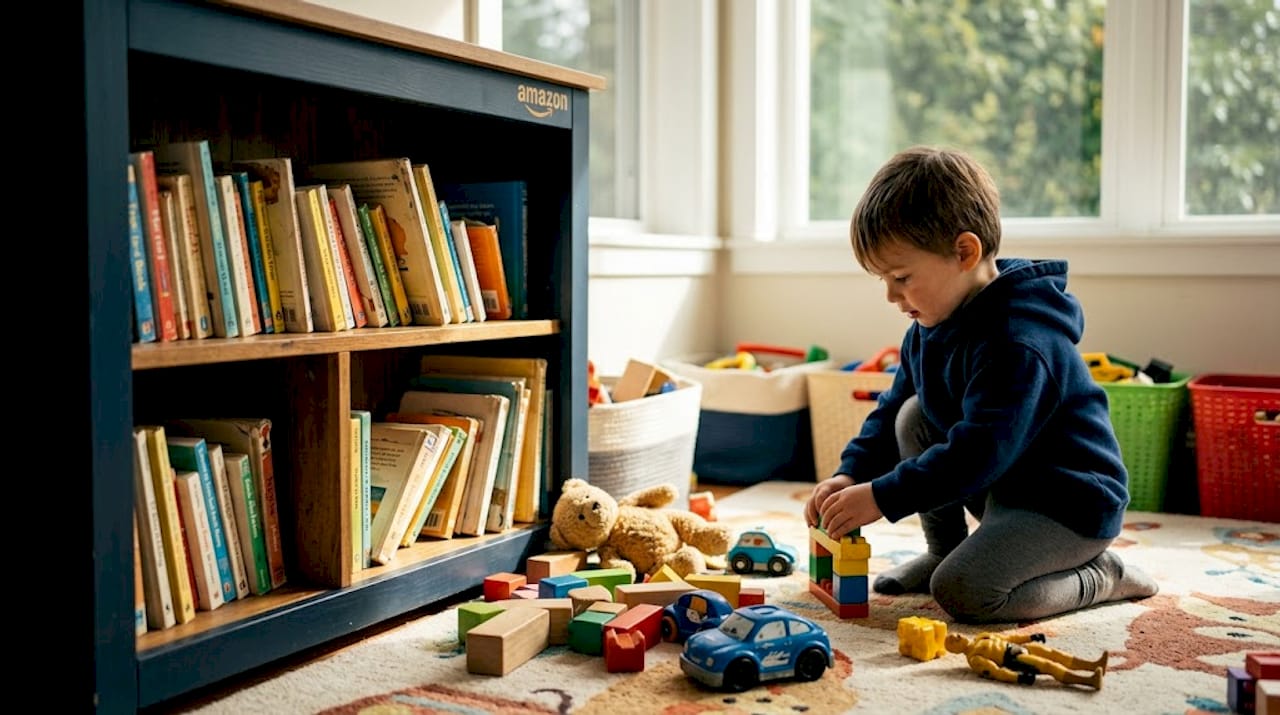
Books carry none of those risks. A board book survives a toddler's best efforts. A picture book can be read dozens of times across multiple years and then passed to a younger sibling. The cost per reading drops to almost nothing over time. Compare that to a toy that breaks in a month or loses its novelty in a week.
From an environmental standpoint, choosing books over plastic toys also reduces household waste. Fewer batteries, fewer broken plastic parts, and fewer items headed to the landfill. For parents who are thinking about the long game, books are simply the more sustainable choice.
4. How to choose books that actually deliver these benefits
Not every book produces the same results. The research points clearly to a few selection criteria that separate high-impact gifts from forgettable ones.
Match the book to the child's emotional world
Pediatric occupational therapists specifically recommend titles like Breathe Like a Bear and Wemberly Worried for children working on emotional regulation skills. These books are not just cute. They are developmentally targeted. Look for books where characters navigate feelings your child recognizes.
Prioritize interactive reading over passive listening
Learning gains improve significantly when caregivers read in person with scaffolding, meaning they pause, ask questions, and connect the story to the child's life. Remote or passive reading reduces these benefits substantially. The book is the vehicle. Your engagement is the engine.
Use dialogic reading techniques
Dialogic reading means asking prepared, open-ended questions before, during, and after reading. Questions like "Why do you think she felt scared?" or "What would you do if that happened to you?" stimulate empathy and deeper comprehension. You do not need a formal program. You just need three questions written on a notecard before you open the book.
- Choose a book with a character facing a relatable emotional challenge
- Read the back cover and write two or three open-ended questions before starting
- Pause at key emotional moments and ask your questions
- After reading, connect the story to something real in your child's life
- Re-read the same book across multiple nights to deepen the impact
Pro Tip: Repeated reading of the same book is not boring. Research shows that structured, repeated storytelling over weeks produces the strongest emotional and cognitive gains. Let your child ask for the same book ten nights in a row.
5. Books vs. toys: a direct comparison for parents
When you line up books and toys side by side across the factors that matter most to parents of 3 to 8 year olds, the picture becomes clear.
| Factor | Books | Toys |
|---|---|---|
| Literacy and language development | Strong, documented gains | Minimal direct impact |
| Emotional regulation and empathy | Measurable improvement with consistent reading | Depends heavily on play type |
| Safety | No injury risk | ~150,000 ER visits annually |
| Longevity | Years of use, re-readable | Often broken or abandoned within weeks |
| Cost per use | Decreases with each reading | Often high relative to lifespan |
| Environmental impact | Low, especially used books | High plastic and battery waste |
This does not mean toys have no place. Unstructured play with blocks, art supplies, or outdoor equipment supports motor skills and creativity in ways that complement reading. The key word is complement. Toys work alongside books. They do not replace the specific cognitive and emotional benefits that books deliver.
The biggest misconception parents encounter is that a toy labeled "educational" carries the same developmental weight as a book. It rarely does. Most educational toys target narrow skills in isolation. Books build vocabulary, narrative thinking, empathy, and emotional vocabulary simultaneously, every single reading session.
6. My honest take on why books win for young kids
I have spent years watching caregivers agonize over gift choices, trying to balance what is fun with what actually helps a child grow. What I have learned is that the most meaningful gifts are the ones that create a ritual, not just a reaction.
A toy produces excitement for a day. A book, read together at bedtime for two weeks, produces a shared language between a caregiver and a child. That is something I have seen transform relationships. A parent who reads Wemberly Worried with their anxious four-year-old now has a shorthand. They can say "Are you feeling a little Wemberly today?" and the child knows exactly what that means.
What I find most underappreciated is that caregiver involvement during reading is what actually unlocks the benefits. The book is not magic on its own. You are the magic. The book just gives you something to do together.
My advice is simple: pick one book that speaks directly to something your child is working through right now, whether that is making friends, handling big feelings, or understanding that being different is a strength. Read it together, ask questions, and watch what opens up.
— Derek
Find the right book gift for your child
If you are ready to move from toys to books but are not sure where to start, A has you covered. The Socko the Flamingo with Tennis Shoes picture book was built specifically for children ages 3 to 8 who are learning to embrace what makes them unique. It tackles belonging, self-acceptance, and big feelings through humor and imagination, exactly the kind of emotionally rich story that research shows produces real developmental gains.
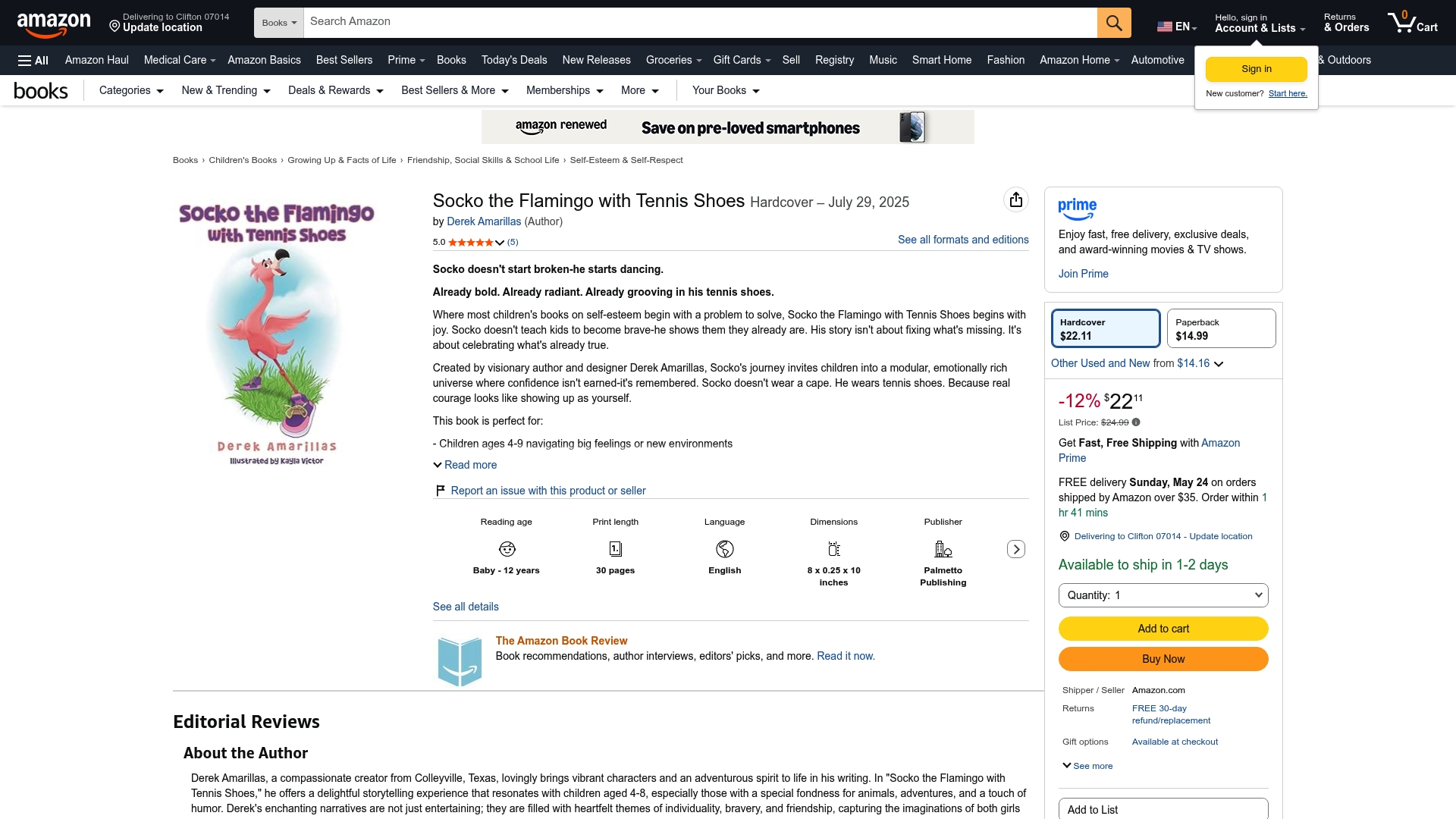
Whether you are shopping for a birthday, a holiday, or just a Tuesday that calls for something meaningful, gifting a book like Socko gives a child a character to grow with and a caregiver a conversation starter that lasts well beyond the first reading. You can find the book and explore curated book recommendations for emotional skill-building at every stage. Pick up your copy of Socko the Flamingo and give a gift that keeps showing up.
FAQ
What are the main benefits of giving books over toy gifts?
Books build literacy, emotional regulation, vocabulary, and empathy through repeated reading, while toys rarely produce gains across all of these areas simultaneously. Research shows even modest access to books produces measurable long-term educational benefits.
Are books really better than toys for kids ages 3 to 8?
For cognitive and emotional development, yes. A five-year randomized trial found that book access produced reading gains equal to more than half a school year's learning. Toys can support motor skills and unstructured play but do not replicate these outcomes.
How do I make a book gift more impactful?
Read the book together using dialogic reading techniques, meaning you ask open-ended questions before and during the story. Interactive shared reading significantly amplifies the cognitive and emotional benefits compared to a child reading alone.
What kinds of books are best for emotional literacy?
Books featuring characters who navigate recognizable emotions work best. Pediatric occupational therapists recommend titles specifically designed to support emotional regulation, and picture books that center on belonging, identity, and big feelings are especially effective for ages 3 to 8.
How many books does a child need to see real benefits?
Even a home library of as few as 20 books shows significant adult literacy benefits. You do not need a large collection. You need consistent, engaged reading with the books you have.