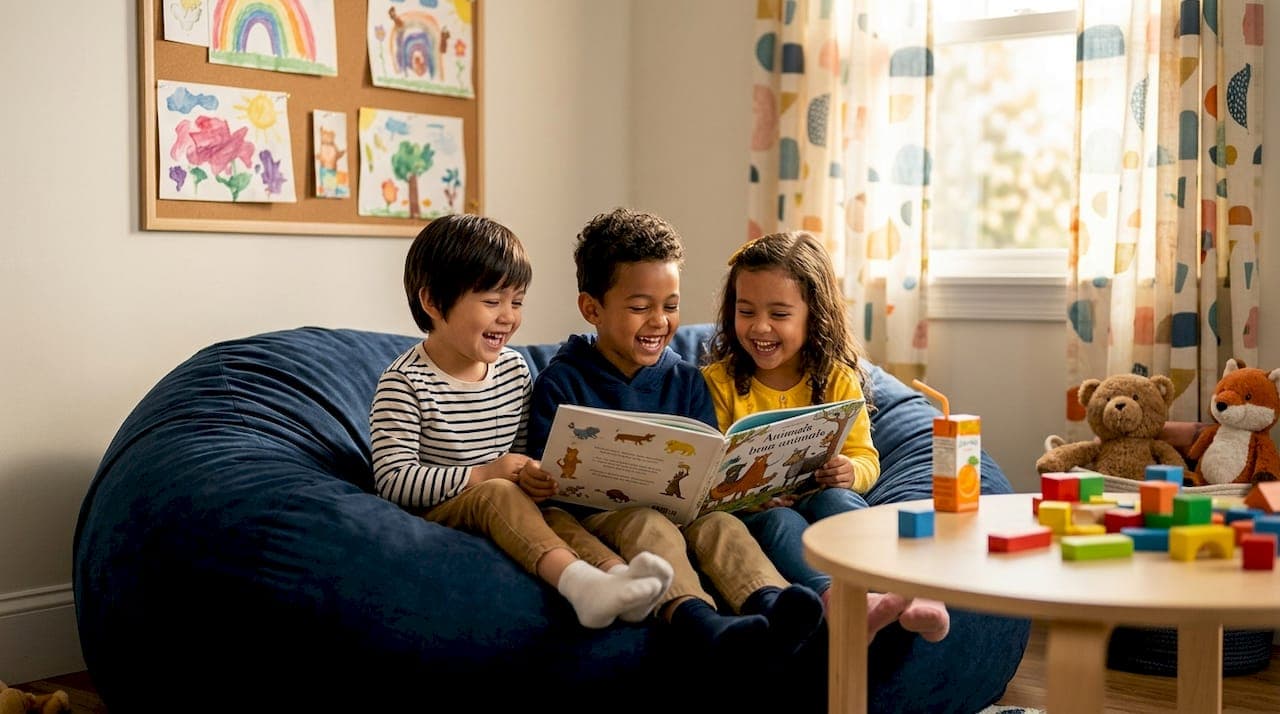
Most people assume the best gift for a child is something educational, something serious, or something that signals good parenting taste. But here's what the research actually shows: why funny books make best children's gifts is rooted in hard science and real child development. Humor activates the brain's dopamine reward system, which is the same pathway responsible for long-term memory and sustained attention. A book that makes a child laugh out loud is not a frivolous choice. It's one of the smartest gifts you can give.
Table of Contents
- Key takeaways
- How humor boosts children's learning and development
- Why kids love funny books so much
- Funny books and emotional literacy
- Choosing the best funny books as gifts
- My take on funny books as children's gifts
- Find the perfect funny book gift
- FAQ
Key takeaways
| Point | Details |
|---|---|
| Humor supercharges memory | Funny books trigger dopamine pathways that help children retain what they read far longer than dry content. |
| Laughter builds emotional literacy | Humorous stories give children a safe, low-pressure way to explore big feelings and recognize emotions in others. |
| Shared laughter bonds families | Reading funny books together creates joyful moments that strengthen the relationship between child and caregiver. |
| Age-appropriate humor matters | Matching the humor style to the child's developmental stage makes the book more engaging and more effective. |
| Funny books inspire lifelong readers | Children who associate reading with joy and laughter are far more likely to keep reading as they grow. |
How humor boosts children's learning and development
When a child giggles at a silly character or a ridiculous plot twist, something real is happening in their brain. Humor stimulates dopamine, the neurotransmitter linked to reward, motivation, and memory consolidation. That means the funny moment a child experiences while reading is actively helping the story stick.
The classroom research backs this up. Kindergarten and first-grade students who engaged with humorous educational content scored higher on comprehension and showed stronger engagement than students who received the same content without humor. This is not a small effect. It reflects a fundamental truth about how children learn: engagement precedes retention.
Here is what the benefits of funny books look like in practice for young readers:
- Memory boost. Funny content creates emotional peaks during reading. Those peaks act as memory anchors, making the story easier to recall days or weeks later.
- Increased focus. Children who are entertained stay present longer. A funny book keeps a distracted 4-year-old at the table far more reliably than a dry one.
- Resilience building. Humor helps children process difficulty with lightness. When a character makes a mistake and laughs it off, children learn that mistakes are survivable.
- Motivation to re-read. Kids ask for their favorite funny books again and again. Each re-read deepens comprehension and vocabulary without feeling like work.
One important nuance: not all humor is equally effective. Research on the impact of humor on children shows that content-related humor, the kind directly tied to the story or concept being taught, produces the strongest learning outcomes. Humor that feels random or disconnected from the narrative does not produce the same results.
Pro Tip: When evaluating a funny book as a gift, flip through a few pages and ask whether the humor connects to the story's theme. If the jokes feel bolted on, the book may entertain without teaching. If they grow naturally from the characters and plot, you have found a genuinely great gift.
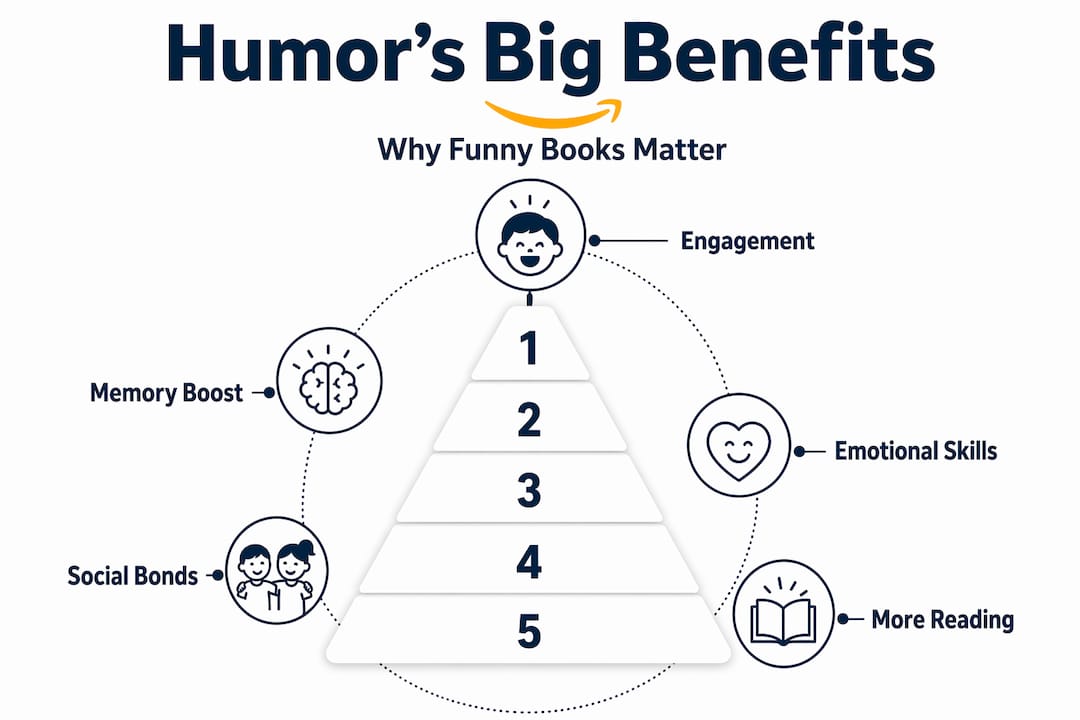
Social-emotional learning research adds another layer. A systematic review found that SEL improves vocabulary, reading comprehension, and metacognitive awareness in young children. Funny books that weave in emotional themes are doing double duty: they teach kids to read and to understand themselves at the same time.
Why kids love funny books so much
Children between the ages of 3 and 8 are in a fascinating developmental window. They are learning to manage emotions, navigate social situations, and make sense of a world that often feels confusing and too big. Humor gives them a tool for all of that.
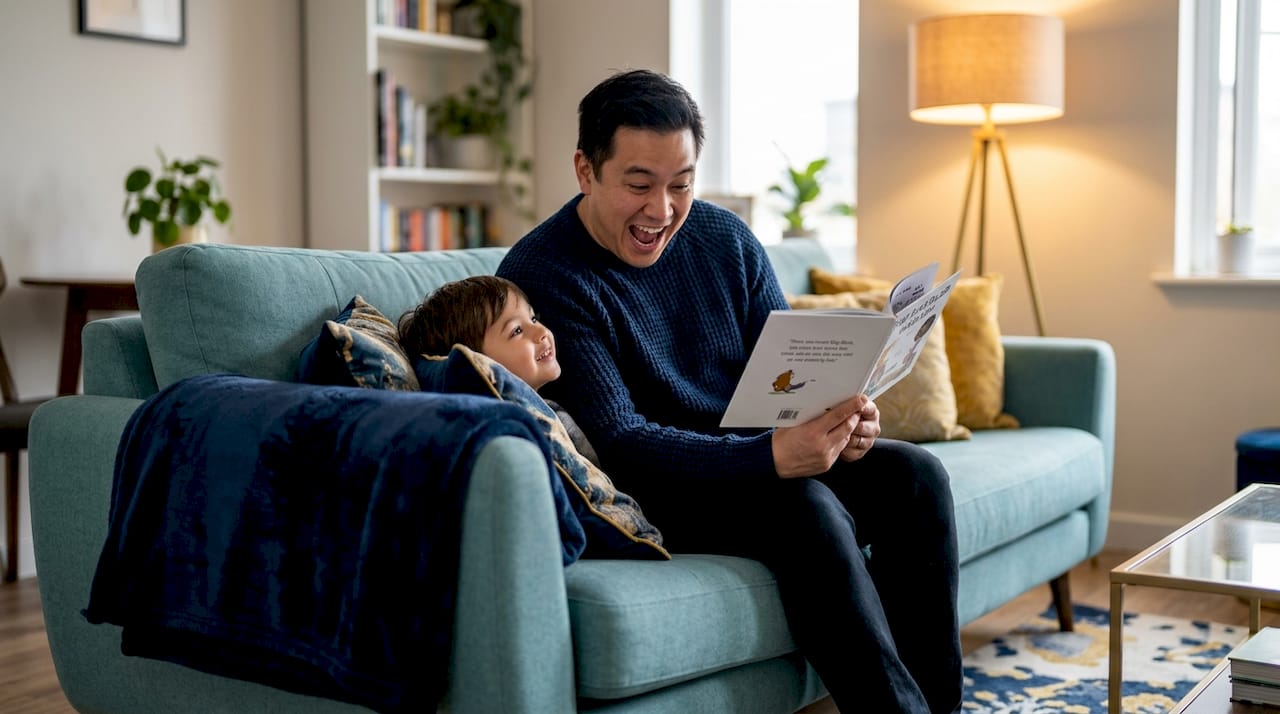
Funny stories provide a safe space for children to try on emotions without real-world stakes. When a character panics over a lost sock or declares war on vegetables, children recognize those feelings. They laugh because they have felt something similar, and the laughter tells them those feelings are normal and manageable.
Here is how humor resonates differently across the 3 to 8 age range:
- Ages 3 to 4 (slapstick and surprise). Toddlers and young preschoolers love physical comedy and unexpected outcomes. A character falling into a puddle or a dog wearing a hat is comedy gold at this age.
- Ages 5 to 6 (silly characters and rule-breaking). Kids this age delight in characters who do the wrong thing on purpose or say things adults would never say. It gives them a vicarious thrill.
- Ages 7 to 8 (wordplay and absurdity). Early readers start appreciating puns, riddles, and situations that are logically absurd. Their growing language skills make wordplay genuinely funny rather than confusing.
Funny characters validate mistakes and encourage self-confidence. When a beloved book character messes up spectacularly and survives, children absorb the message that imperfection is part of life. That is a more powerful lesson than any lecture.
Humor is also inherently social. Shared laughter builds bonds between children and the adults reading with them. A funny book is not just a reading experience. It is a shared event, a memory, and a reason to come back to the same pages together.
Pro Tip: Pay attention to what makes a specific child laugh in everyday life. A kid who loves physical comedy will respond to slapstick picture books. A kid who loves wordplay will appreciate books with puns and riddles. Matching humor style to personality makes the gift feel personal, not generic.
Funny books and emotional literacy
Emotional literacy is the ability to recognize, name, and manage your own feelings while also understanding the feelings of others. It is a skill that takes years to develop, and funny books are one of the most effective tools for building it in children ages 3 to 8.
Humor helps children process complex feelings in a low-pressure way. A child who feels anxious about starting school might not be able to talk about that anxiety directly. But if a funny book character shares the same fear and navigates it with humor, the child can process those feelings through the story without feeling exposed or vulnerable.
Here is how funny storybooks build emotional skills in concrete ways:
- Emotion recognition. Exaggerated facial expressions and body language in funny illustrations teach children to read emotional cues, a foundational social skill.
- Empathy practice. When children laugh with a character rather than at them, they are practicing perspective-taking, one of the core components of empathy.
- Emotional regulation. Humor itself is a regulation strategy. Children who learn to find lightness in frustrating situations are building a coping skill they will use for life.
- Communication. Talking about what made a book funny opens conversations about feelings, values, and experiences that might not come up otherwise.
Compare a traditional lesson-focused book with a funny one:
| Feature | Traditional lesson book | Funny storybook |
|---|---|---|
| Child's engagement | Moderate, often passive | High, often interactive |
| Emotional processing | Direct and prescriptive | Indirect and exploratory |
| Re-read motivation | Low to moderate | High, child-driven |
| Conversation starter | Structured, adult-led | Natural, child-initiated |
| Memory retention | Depends on interest | Strengthened by laughter |
Longitudinal SEL research shows that early emotional skill development leads to sustained reading improvements over time. Children who develop emotional literacy through engaging stories build the persistence and help-seeking habits that make them stronger readers in the long run. Funny books are not a shortcut. They are a genuinely effective path.
Choosing the best funny books as gifts
Knowing that humor books for children are a great gift is one thing. Choosing the right one takes a little more thought. Here is what to look for when you are shopping for fun books for young readers in the 3 to 8 age range.
Match the humor to the child's age and personality. A 4-year-old who loves silly faces needs something different from a 7-year-old who loves absurd logic. Use the age-range breakdown above as your starting guide, and layer in what you know about the specific child.
Look for humor that grows from the story. The best funny storybooks for gifts are ones where the comedy is built into the characters and plot, not sprinkled on top. When a book is genuinely funny, children sense it immediately. When the humor feels forced, they lose interest fast.
Prioritize relatable themes. Books about starting school, making friends, dealing with siblings, or managing big emotions resonate because children recognize their own lives in them. Humor that connects to real experiences lands harder and stays longer.
Check the illustrations. For ages 3 to 6 especially, the pictures carry a huge part of the comedic weight. Expressive characters, unexpected visual details, and funny facial expressions make a book work even before a child can read independently.
Avoid humor that relies on exclusion. Humor that makes one character the butt of the joke in a mean-spirited way teaches the wrong lessons. Look for books where everyone gets to be in on the joke, including the reader.
Humor is not innate but learned, which means the books children grow up with actively shape their sense of humor and their social confidence. Choosing a funny book with warmth and heart is not just picking a gift. It is contributing to how a child learns to see the world.
Pro Tip: If you are shopping for a child you do not know well, look for books that have won awards for humor or have been recommended by librarians and teachers. Those selections have already been tested with real kids and tend to work across a wider range of personalities.
My take on funny books as children's gifts
I have watched a lot of gift-giving moments over the years, and the ones that stick are almost never the most expensive or the most obviously educational. They are the ones that made the child light up.
In my experience, a funny book does something no toy can replicate. It creates a ritual. A child who loves a funny book wants it read again tonight, and again tomorrow, and again next week. That repetition is where the real learning happens, and it happens because the child is choosing it. Nobody is making them re-read it. They want to because it brings them joy.
I have also seen the hesitation gift shoppers feel around humor books. There is a quiet worry that a funny book is not serious enough, not educational enough, not the kind of gift that signals you put real thought into it. I think that worry gets it exactly backward. Choosing a book that makes a child laugh out loud, that helps them process big feelings through a character they love, and that they will ask for every single night? That is one of the most thoughtful gifts you can give.
The challenge is finding books where the humor is genuinely good rather than just loud. Humor used well builds connection and community. Humor used poorly just creates noise. When you find a book that strikes the right balance, hold onto it. Those are the ones that become beloved.
— Derek
Find the perfect funny book gift
If you are ready to find a funny book that will genuinely delight a child ages 3 to 8, A has done the work for you. Socko the Flamingo with Tennis Shoes is a picture book character built around exactly this idea: that humor and heart belong together, and that the best stories make children laugh while helping them understand themselves a little better.
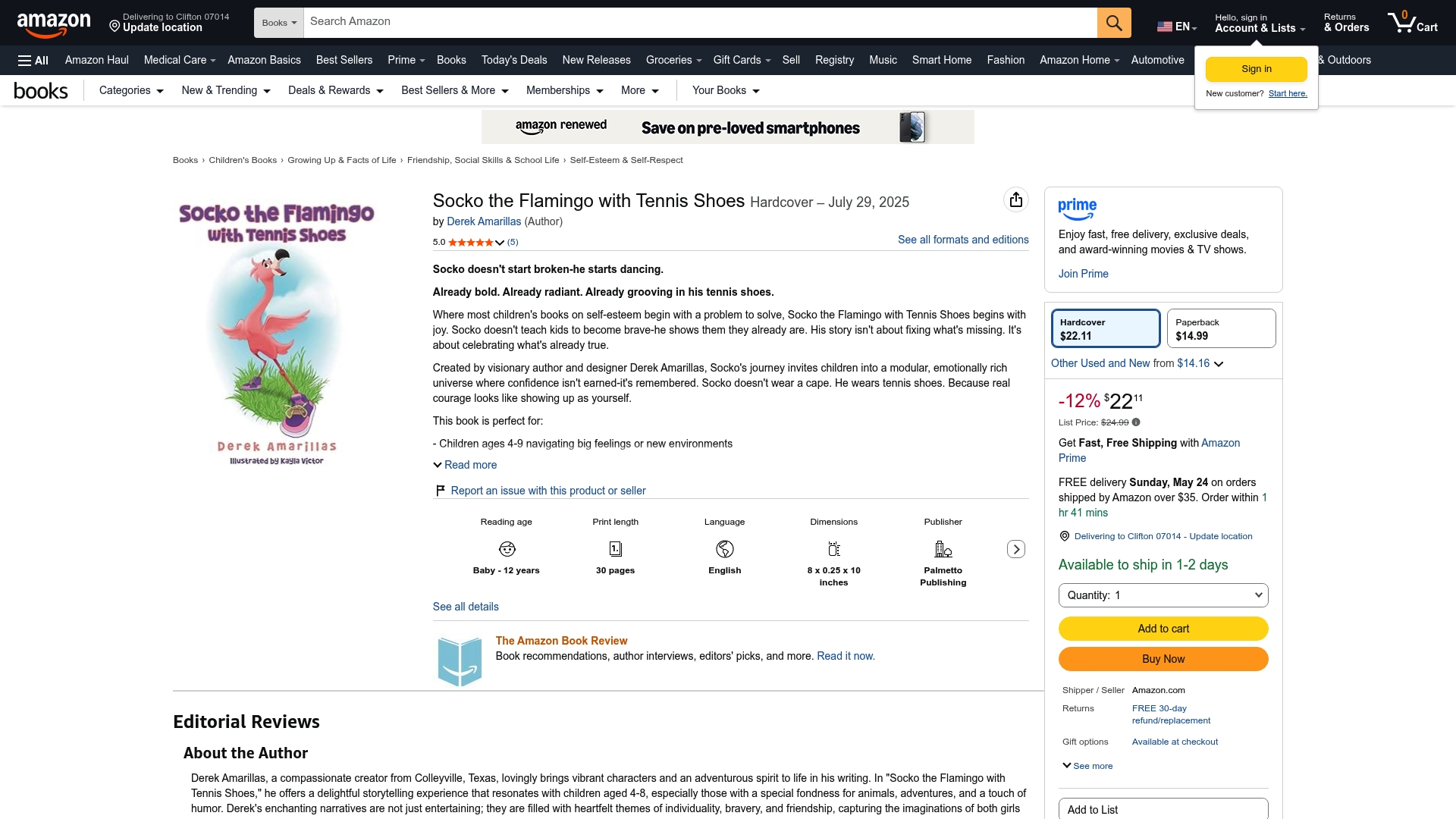
Socko's stories tackle big feelings like belonging, self-acceptance, and identity through a character who is wonderfully, joyfully ridiculous. That combination of laughter and emotional depth is exactly what makes a book a gift worth giving. Whether you are shopping for a birthday, a holiday, or just because, this is the kind of book a child will ask for again and again. Explore Socko's story and find a gift that earns a permanent spot on the nightstand.
FAQ
Why are funny books better gifts than other children's books?
Funny books combine entertainment with emotional and cognitive benefits, making children want to re-read them repeatedly. That repetition deepens comprehension, vocabulary, and emotional literacy in ways that one-time reads rarely achieve.
What age benefits most from humor books for children?
Children ages 3 to 8 are in a developmental window where humor actively supports emotional regulation, social bonding, and early literacy. Each age within this range responds to different humor styles, from slapstick at age 3 to wordplay by age 7.
How do funny books support emotional literacy?
Funny stories let children explore emotions like anxiety, frustration, and embarrassment through characters in low-stakes situations. Research shows this kind of indirect emotional processing builds empathy, regulation skills, and self-confidence.
Do funny books actually help children learn to read?
Yes. Humor increases engagement and focus, two factors that directly improve reading outcomes. Children who enjoy reading practice it more often, and more practice leads to stronger skills across vocabulary, comprehension, and fluency.
What makes a funny book a great children's gift specifically?
A funny book creates a shared experience between the child and the gift-giver every time it is read aloud. Shared laughter strengthens relationships and gives the gift lasting emotional value well beyond the moment of unwrapping.