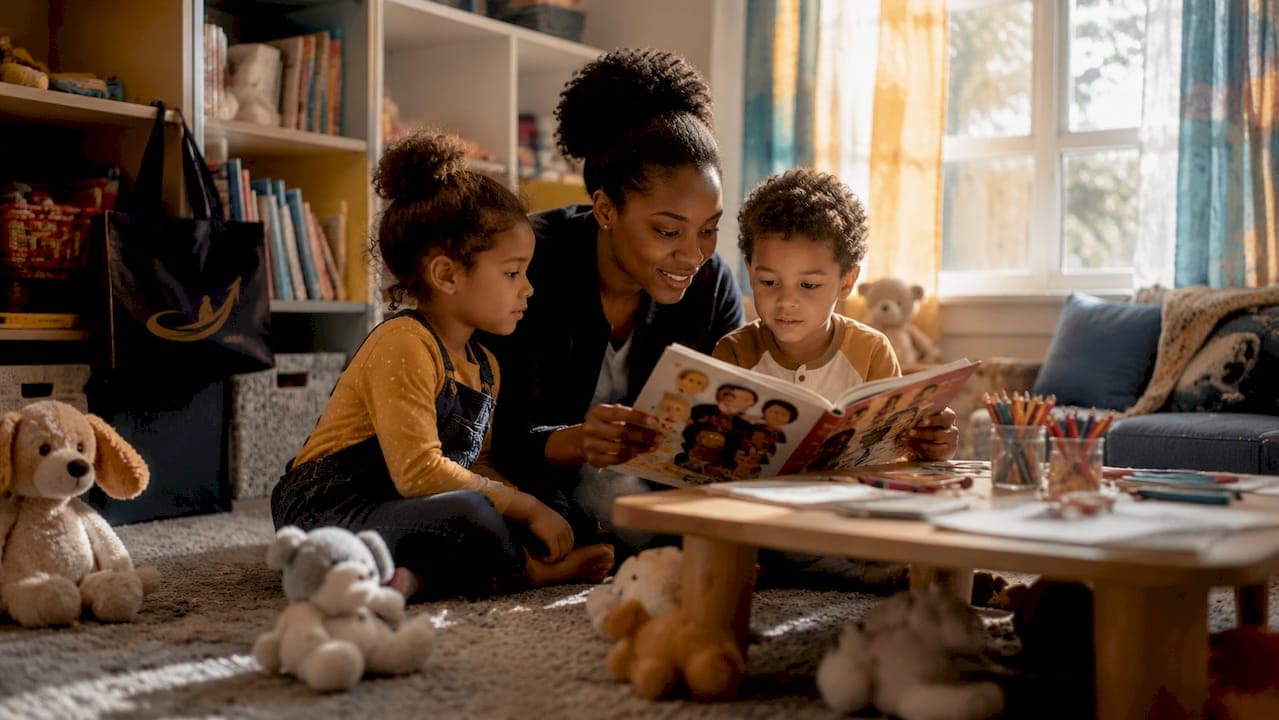
Inclusive books for young children are stories that intentionally represent diverse identities, backgrounds, and abilities to build emotional growth and acceptance. Homeschool families of children aged 3–8 choose these books because they do something no worksheet can: they show a child that their world, their face, and their feelings belong in a story. Research confirms that diverse characters increase reading enjoyment in young children, and that effect compounds when reading happens at home, on a family's own schedule. Understanding why homeschool families choose inclusive books starts with understanding what representation actually does to a child's sense of self.
Why homeschool families choose inclusive books
Homeschool parents choose inclusive literature because representation creates psychological safety. When a child sees a character who looks like them, speaks like them, or navigates the same challenges, they receive a clear message: you belong here. Expert Hannah Wilson frames it directly: inclusive books confirm a child's value by reflecting their reality in the stories they read. That confirmation is not a nice extra. It is the foundation of emotional literacy.
Homeschool families also control their curriculum completely. That freedom means they can fill gaps that traditional school programs often leave. Many popular homeschool spines originated in narrow cultural contexts and unintentionally exclude diverse voices. Choosing inclusive books is how families correct that imbalance without abandoning the methods they love.

The benefits of inclusive books extend beyond identity. A University of Manchester study of 105 children aged 6–7 found measurable increases in reading enjoyment among children who read books with diverse main characters. Higher enjoyment means more reading. More reading means stronger vocabulary, better comprehension, and deeper emotional understanding. The case for diverse books in a homeschool curriculum is both moral and academic.
What benefits do inclusive books offer homeschool children aged 3–8?
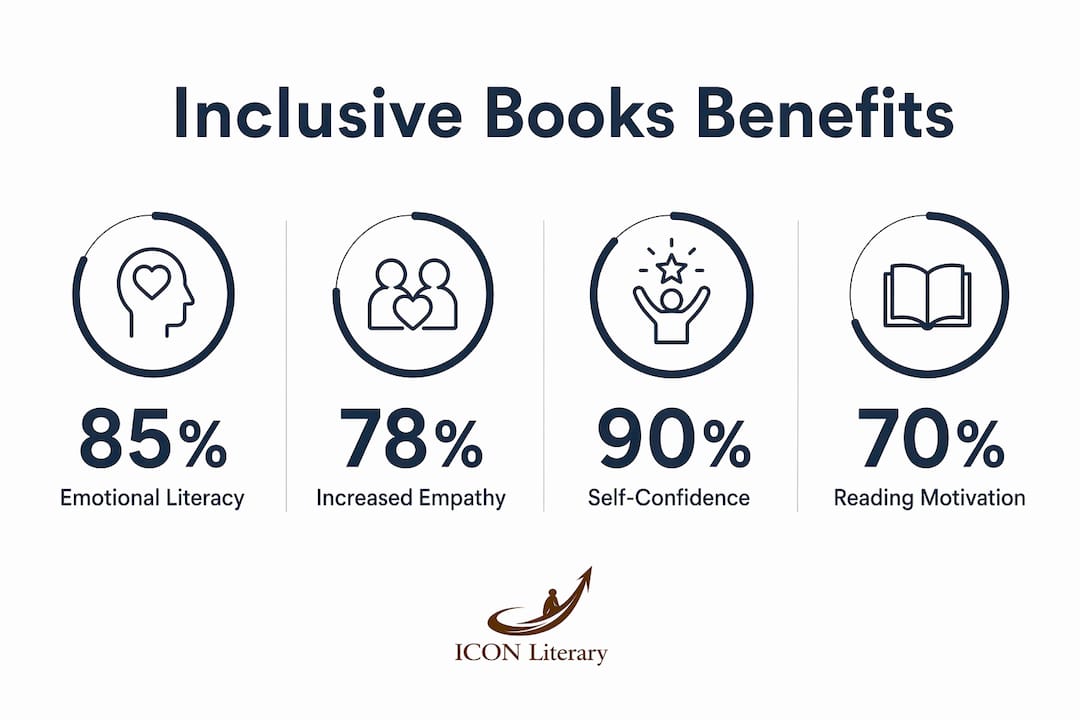
Inclusive literature builds three skills at once: empathy, self-awareness, and emotional vocabulary. Children aged 3–8 are still learning to name their feelings. A story that shows a character feeling left out, nervous about being different, or proud of a unique trait gives children language for their own inner life. That is the core of emotional literacy.
The benefits show up in measurable ways:
- Reading motivation rises when children see themselves in stories. The Manchester study found this effect in children as young as 6.
- Empathy grows when children encounter characters whose lives differ from their own. Structured discussion after reading deepens that growth beyond passive exposure.
- Self-confidence strengthens when a child's identity is treated as normal and worthy in the books they read every day.
- Social-emotional skills develop through literature-based DEI curricula that pair stories with activities, surveys, and discussion questions designed for early learners.
- Family connection deepens when reading becomes a shared conversation rather than a solo task.
Pro Tip: Build a five-minute discussion habit after each read-aloud. Ask your child one question: "How do you think that character felt?" That single question, repeated daily, builds empathy faster than any formal lesson.
Inclusive books also give homeschool parents a natural entry point for conversations about big feelings and identity. A character who is nervous about being different opens the door to talking about your child's own anxieties. A character who celebrates a unique trait invites your child to name what makes them special. These conversations do not require a lesson plan. They require the right book.
How do inclusive books support neurodiverse and differently-abled children?
Representation matters most for children who rarely see themselves in stories at all. Neurodiverse children and children with disabilities often grow up surrounded by books where the hero is always neurotypical, always able-bodied, always fitting a narrow mold. That absence sends a message, even if no one intends it.
Inclusive books rewrite that message. When a child with dyslexia reads about a character who processes words differently and still solves the problem, their struggle becomes a strength. Inclusive stories help neurodiverse children view their differences as assets rather than deficits, which directly increases reading motivation. That shift in self-image is not small. It changes how a child approaches every challenge.
Practical strategies for neurodiverse learners at home include:
- Choose books that frame differences as strengths, not obstacles to overcome. Look for characters whose unique traits drive the story forward.
- Use audio and visual formats alongside print. Inclusive books in audiobook or illustrated formats reach children who struggle with text-heavy pages.
- Follow the child's pace. Educator Rina Madhini's approach centers on pressure-free reading routines that treat reading as shared discovery, not performance.
- Pair books with hands-on activities. A story about a child who communicates differently pairs well with art, movement, or building projects that let your child respond without words.
Pro Tip: If your child resists sitting for a read-aloud, try reading during a calm activity like drawing or building with blocks. Removing the expectation of stillness often removes the resistance to listening.
The Finding My Way DEI curriculum series is one example of a structured approach that features characters with diverse abilities and pairs each story with printable activities. That model works because it treats the book as a starting point, not an endpoint.
How to choose and integrate inclusive books into your homeschool curriculum
Selecting inclusive books requires looking at four dimensions: authorship, characters, cultures, and abilities. A book written by someone from the community it depicts carries a different authenticity than one written from the outside. Check who wrote the book, not just what it is about.
A numbered approach helps families build a genuinely inclusive home library:
- Audit what you already own. Pull every picture book off the shelf and ask: whose faces appear? Whose voices are missing? That audit takes 20 minutes and reveals gaps immediately.
- Diversify authorship first. Seek out books written by authors from underrepresented communities. Authorship shapes authenticity in ways that good intentions alone cannot replicate.
- Check character roles. Diverse characters should drive the story, not appear as background detail or as problems for the main character to solve.
- Include ability representation. Look for books where characters with disabilities, neurodivergence, or chronic illness are portrayed with full personalities, not defined solely by their condition.
- Add discussion and activity layers. Paired book comparisons and structured discussion questions translate reading into social-emotional skill-building. Passive exposure alone is not enough.
Eclectic homeschooling makes this integration natural. The eclectic approach frees parents to combine Charlotte Mason methods, classical reading lists, and inclusive literature without abandoning any of them. A family can read a classical fable on Monday and a multicultural picture book on Tuesday. The two approaches reinforce each other.
Pro Tip: Set a quarterly book audit on your calendar. Every three months, add three new titles that represent a background or ability not yet in your collection. Small, consistent additions build a genuinely diverse library over time without requiring a complete overhaul.
The comparison below shows how two common homeschool reading approaches handle inclusive content:
| Approach | Inclusive content integration |
|---|---|
| Literature-based (single spine) | Requires intentional supplementation; diverse titles added alongside core texts |
| Eclectic (mixed methods) | Naturally accommodates diverse selections; parent curates across multiple sources |
What challenges do homeschool families face when choosing inclusive books?
The biggest challenge is not motivation. Most homeschool parents want diverse books. The challenge is finding titles that are genuinely inclusive rather than superficially diverse. A book with a character of color on the cover but a story that ignores their cultural context does not deliver real representation.
Common obstacles and how to address them:
- Limited availability in mainstream catalogs. Many truly inclusive titles come from independent publishers. Seek out publishers that specialize in multicultural and disability-affirming children's literature.
- Curricula with narrow cultural roots. Traditional homeschool spines often reflect majority-culture assumptions. Recognizing that limitation is the first step. Supplementing with intentional selections is the solution.
- Unintended bias in "diverse" books. Some books feature diverse characters but still center majority-culture values or treat difference as a problem. Read reviews from community members before purchasing.
- Balancing family values with broad representation. Families with specific religious or cultural values sometimes worry that inclusive books conflict with their beliefs. The solution is selection, not avoidance. Representation of different backgrounds does not require endorsing every worldview.
- Keeping the collection current. Children's publishing changes fast. A book that felt inclusive five years ago may now feel dated. Regular audits keep your library relevant.
The goal is not a perfect library built overnight. The goal is a library that grows more reflective of the real world with each intentional addition.
Key Takeaways
Homeschool families choose inclusive books because representation builds emotional literacy, empathy, and self-confidence in children aged 3–8, and research confirms that diverse characters directly increase reading enjoyment and motivation.
| Point | Details |
|---|---|
| Representation builds belonging | Inclusive books confirm a child's value by reflecting their identity in the stories they read. |
| Diverse books increase reading enjoyment | A University of Manchester study found measurable gains in enjoyment among children reading diverse characters. |
| Neurodiverse children benefit most | Stories that frame differences as strengths increase motivation and reshape self-image for neurodiverse learners. |
| Eclectic homeschooling fits inclusive reading | The eclectic approach lets families combine classical methods with diverse titles without conflict. |
| Discussion deepens the impact | Paired activities and discussion questions turn reading into active social-emotional skill-building. |
What I've learned from watching children meet themselves in books
I have watched children light up when a book character shares their experience, and I have watched that same child shut down when every story around them features someone who looks nothing like them. The difference is not subtle. It shows up in posture, in attention, in whether a child asks to read again.
The families I have seen get this right share one habit: they treat book selection as a curriculum decision, not an afterthought. They audit their shelves. They seek out authors from communities they want their children to understand. They read alongside their children and ask questions. That intentionality is what separates a diverse library from a truly inclusive one.
The uncomfortable truth is that most home libraries, even in well-meaning families, skew heavily toward a narrow slice of human experience. That is not a moral failure. It is the result of what gets marketed, what gets stocked in major retailers, and what gets recommended by mainstream homeschool communities. Fixing it requires active choice, not passive good intentions.
Characters like Socko from A model exactly what inclusive literature does at its best: they use humor and imagination to make big feelings approachable, and they show children that being different is not a problem to solve. That is the kind of story that stays with a child long after the book is closed.
— Derek
Books that make belonging feel natural for young readers
Building an inclusive home library does not require a complete overhaul of your current curriculum. It starts with one book that makes your child feel seen, then another, then another.
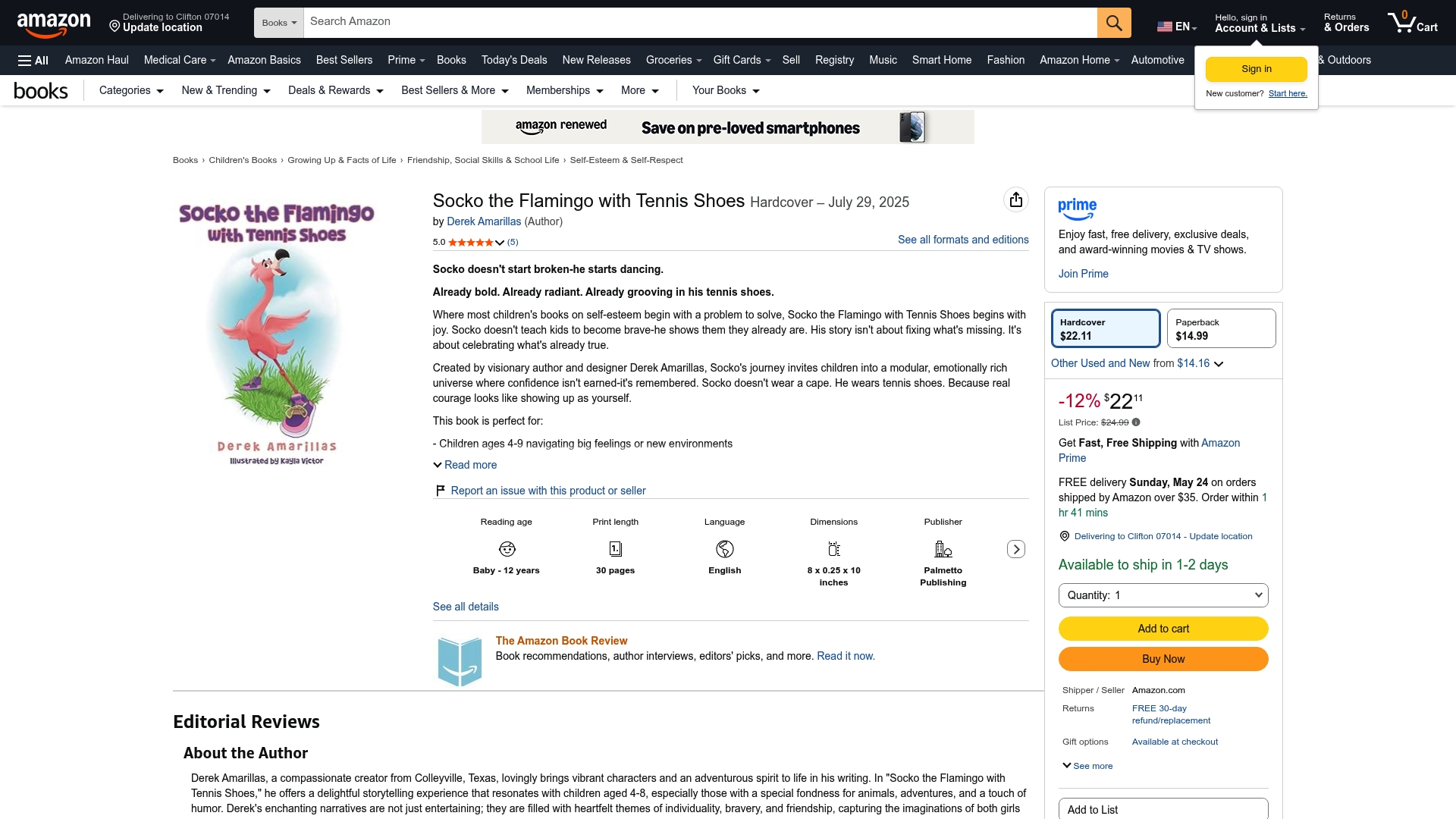
A's Socko the Flamingo with Tennis Shoes is a picture book character built for exactly this purpose: teaching emotional literacy, belonging, and self-acceptance through humor and imagination. Socko gives children aged 3–8 a character who is genuinely different and genuinely proud of it. For homeschool families ready to add a title that sparks real conversation about big feelings and identity, Socko's story is a natural fit for any read-aloud shelf.
FAQ
What makes a book "inclusive" for young children?
An inclusive book intentionally represents diverse identities, backgrounds, and abilities in ways that treat those differences as normal and worthy. The characters drive the story; their diversity is not the problem to be solved.
How do inclusive books help with emotional literacy?
Inclusive books give children language for feelings they cannot yet name by showing characters who experience and navigate those same emotions. That exposure builds emotional vocabulary and empathy simultaneously.
Can inclusive books fit a classical or Charlotte Mason homeschool approach?
Yes. The eclectic homeschool model combines classical methods with diverse literature selections without conflict. Inclusive titles supplement, rather than replace, a family's existing curriculum.
Do inclusive books actually improve reading motivation?
Research confirms they do. A University of Manchester study of 105 children aged 6–7 found that children reading books with diverse main characters showed measurable increases in reading enjoyment compared to a control group.
How often should homeschool families update their book collections?
A quarterly audit works well for most families. Adding three to five new titles every three months builds a genuinely diverse library over time without requiring a large one-time investment.