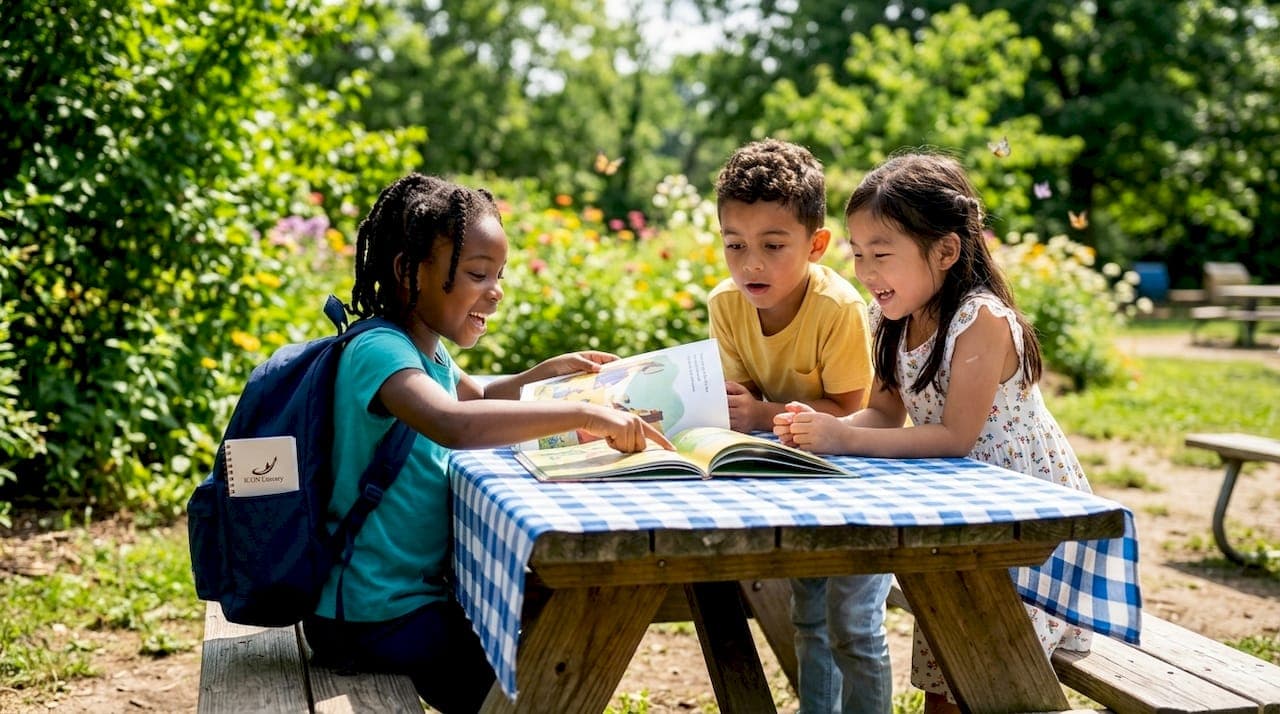
Inclusive books are stories that reflect diverse identities, abilities, cultures, and family structures, giving every child a chance to see themselves and others on the page. Research confirms that inclusive literature for kids builds empathy, strengthens emotional literacy, and improves social acceptance across all age groups. Understanding why inclusive books benefit all children is not just a matter of fairness. It is a matter of brain development, belonging, and the kind of emotional intelligence that shapes how children treat each other for life. A, the brand behind Socko the Flamingo with Tennis Shoes, exists precisely because these conversations start early and they start with stories.
Why inclusive books benefit all children's reading engagement
Representation in books does more than reflect reality. It changes how deeply a child connects with a story. A University of Manchester 2026 study with 105 children aged 6–7 found that exposure to culturally relevant storybooks featuring children's own ethnic backgrounds produced significant improvements in reading enjoyment and engagement. Children who see characters that look like them pay more attention, stay with the story longer, and talk about it more afterward.
This effect is especially strong for children of color. Research by Neuenschwander, Brüniger, and Fellmann (2025) found that dark-skinned children showed higher verbal and behavioral involvement when they were central characters in a story rather than background figures. That distinction matters. Tokenism, placing one diverse character in the margins, does not produce the same result. Authentic representation means the child with the wheelchair steers the adventure. The child with two moms is the hero, not the lesson.
For children who already see themselves in most books, diverse stories work differently. They act as windows into lives unlike their own. Scholar Rudine Sims Bishop described this framework as mirrors, windows, and sliding glass doors. Mirrors show children themselves. Windows show them others. Sliding glass doors invite them to step into another world entirely. All three functions are necessary for a complete reading life.
Here is what authentic representation looks like in practice:
- Characters from underrepresented groups drive the plot, not just appear in it
- Disability, cultural difference, or family structure is shown as ordinary, not as a problem to solve
- Illustrations match the text, showing diverse skin tones, hair textures, and body types accurately
- Stories avoid stereotypes by grounding characters in specific, individual detail
Pro Tip: When choosing books for a child of color, look for stories where the character's identity is central to who they are, not just a visual detail. The difference between a mirror and a decoration is whether the character's experience shapes the story.
How do inclusive books foster empathy in children aged 3–8?
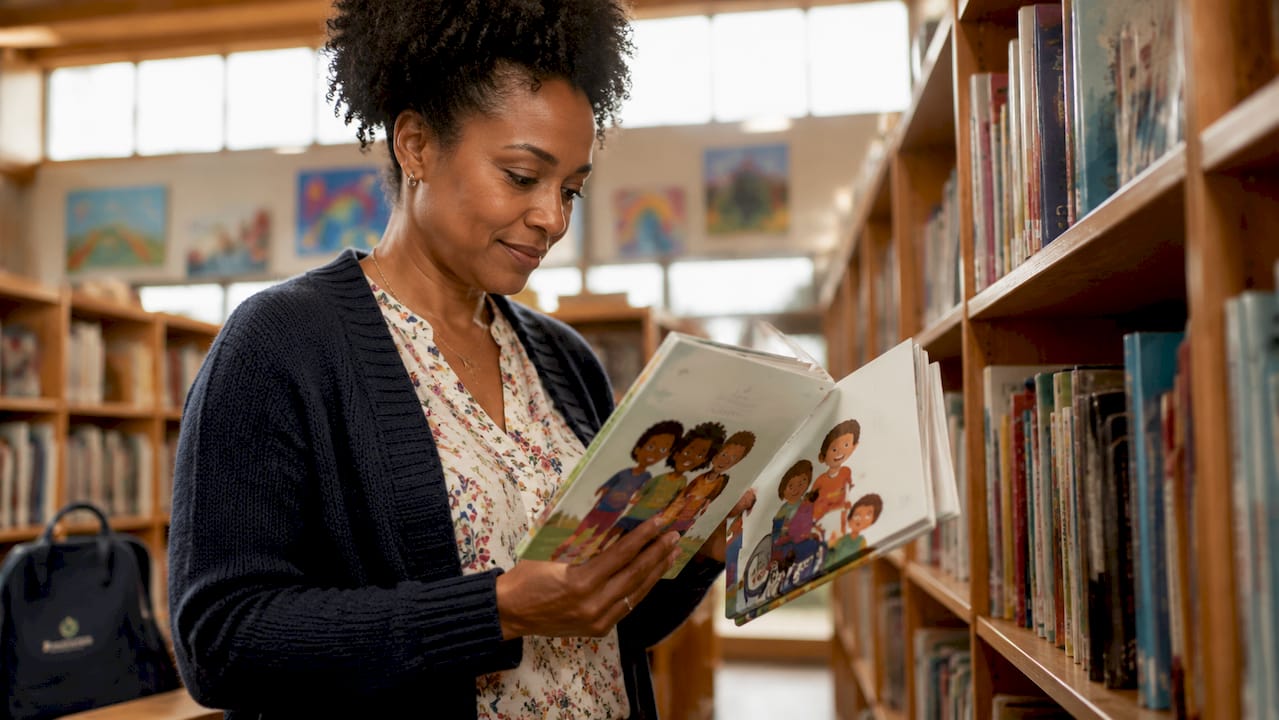
Empathy is a skill, and like any skill, it develops with practice. Inclusive books give children a structured, low-stakes way to practice understanding feelings that are not their own. A February 2026 study found that just 15 minutes of daily reading with social conflict stories improved young children's cognitive and overall empathy within two weeks. Two weeks of bedtime reading produced measurable results. That is a low bar with a high payoff.
The mechanism is perspective-taking. When a child follows a character through a conflict, a loss, or a moment of being left out, they rehearse the emotional experience without living through it themselves. Stories about autism spectrum disorder are a clear example. A 2026 school-based pilot using illustrated children's books depicting autism reduced stereotyping and increased peer support willingness among classmates. Children who read those books were more likely to include, defend, and advocate for peers with ASD. The book changed behavior, not just attitude.
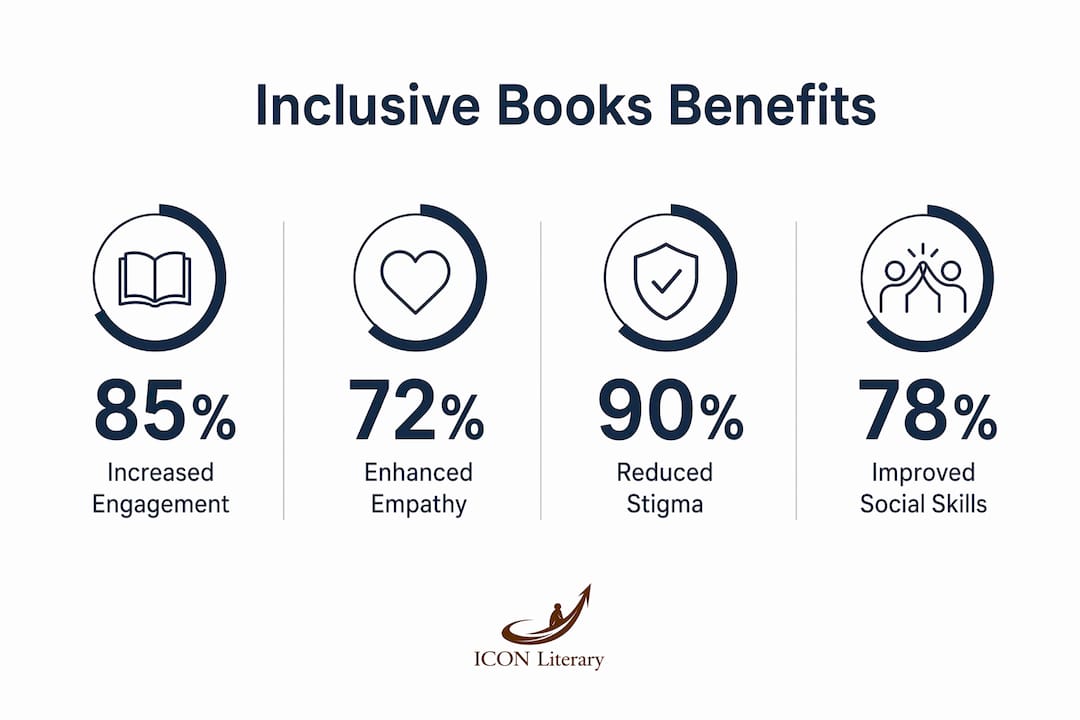
Parents sometimes worry they need to stop and ask reflection questions to make reading "count." The research says otherwise. The 2026 empathy study showed that plain reading alone, without structured questioning, still boosted cognitive and overall empathy in children aged 3–8. Consistency matters more than technique.
The benefits of diverse books for empathy include:
- Reduced fear of difference through repeated, positive exposure to unfamiliar experiences
- Stronger emotional vocabulary as children encounter characters naming complex feelings
- Greater willingness to include peers who look or act differently
- Improved ability to recognize and respond to others' distress
Pro Tip: You do not need a discussion guide or a lesson plan. Reading the same inclusive book three nights in a row is more effective than a single structured session with questions. Repetition lets the story sink in.
Why does depicting diversity as everyday life make books more effective?
The framing of diversity inside a story changes everything. Books that present disability, cultural difference, or non-traditional family structures as extraordinary events teach children that these things are unusual. Books that show them as part of ordinary daily life teach children that they are normal. That distinction has real consequences for how children treat peers who are different from them.
Social Representations Theory explains this directly. When diversity appears incidentally in stories, woven into the background of a character's everyday life, it reduces the sense of "otherness" that drives stigma. A child who regularly sees a character using a wheelchair to get to school, play with friends, and argue with a sibling stops associating wheelchairs with tragedy. The device becomes familiar. Familiarity reduces fear.
The contrast with problem-centered books is sharp. When a book's entire plot is "this child is different and that is hard," it reinforces the idea that difference is a burden. The most effective inclusive literature integrates diversity into the story without making it the story's only point. A character can have a hearing aid and also love soccer and hate broccoli. Both facts matter equally.
Here is how everyday inclusion shows up in strong inclusive books:
- A character uses a mobility device in the first scene, and the story never pauses to explain it
- Two characters speak different languages at home, and that detail appears in passing, not as a conflict
- A family with two dads appears in a classroom scene without the book being "about" that family structure
- A child with sensory sensitivities attends a birthday party, and the story focuses on the fun, not the challenge
"The most powerful inclusive books do not announce their diversity. They simply live it. When a child sees a character with a prosthetic arm building a sandcastle, the message is not 'this child is brave despite disability.' The message is 'this child builds sandcastles.' That shift in framing is where real acceptance begins."
What practical strategies help parents and teachers use inclusive books well?
Choosing the right books is the first step. Using them well is the second. The good news is that the bar for "using them well" is lower than most parents and teachers expect. Consistent reading alone produces significant empathy benefits. No special technique required.
That said, child-led dialogue does deepen the impact when it happens naturally. A 2026 Springer study with 744 fourth and fifth graders found that literature-based programs involving peer dialogue improved intergroup attitudes and classroom inclusion norms. The key word is child-led. When children ask the questions and drive the conversation, they internalize inclusive values more deeply than when adults direct the discussion.
Here is a practical framework for parents and teachers:
- Select with intention. Choose books where diverse characters appear across a range of genres, not just books explicitly "about" diversity. A mystery, an adventure, and a comedy can all feature inclusive representation.
- Read consistently. Fifteen minutes at bedtime, four to five nights a week, is enough to produce measurable empathy gains within two weeks.
- Follow the child's lead. If a child asks "why does that character use a cane?", answer simply and honestly. If they do not ask, do not force the conversation.
- Rotate the bookshelf. Exposure to many different kinds of characters over time is more effective than reading one inclusive book repeatedly.
- Connect books to real life. When a child mentions a classmate who is different in some way, a book they have already read gives you a shared reference point for the conversation.
| Strategy | Best for | Effort level |
|---|---|---|
| Bedtime reading routine | Building empathy over time | Low |
| Child-led discussion | Deepening understanding after reading | Medium |
| Diverse book rotation | Broad exposure to many identities | Low |
| Classroom literary discussion | Improving group inclusion norms | Medium |
| Pairing books with social activities | Reinforcing inclusive behavior | High |
Pro Tip: Build a small rotating library of five to seven inclusive books and swap them out monthly. Children who encounter diverse characters across many different stories develop broader, more flexible empathy than those who read the same book repeatedly.
Key Takeaways
Inclusive books build empathy, increase reading engagement, and reduce stigma when they depict diversity as a natural part of everyday life rather than an exceptional event.
| Point | Details |
|---|---|
| Representation boosts engagement | Children who see themselves in stories show stronger reading enjoyment and deeper involvement. |
| Consistent reading builds empathy | Just 15 minutes of daily reading with social conflict stories improves empathy within two weeks. |
| Everyday framing reduces stigma | Books that show diversity as ordinary life normalize difference and reduce fear in young readers. |
| Child-led dialogue deepens impact | Letting children ask questions after reading produces stronger inclusive attitudes than adult-directed discussion. |
| All children benefit | Mirrors build self-worth; windows build understanding of others. Both outcomes matter for every child. |
What I have learned from watching children meet themselves in books
The most common misconception I encounter is that inclusive books require a special reading approach to work. Parents worry they need to pause, explain, and debrief every page. Teachers feel pressure to turn every diverse story into a lesson. Neither is true, and that pressure often gets in the way.
What I have seen, again and again, is that children do the work themselves when the story is good. A child who meets a character with anxiety, or a character who speaks a different language at home, or a character who uses a communication device, does not need an adult to explain why that matters. They feel it. The story does the teaching.
What does require intention is the selection process. A bookshelf full of books where every main character shares the same background, ability, and family structure sends a message, even if no one says a word. Diversifying that shelf is the most important thing a parent or teacher can do, and it costs less effort than most people think.
I also want to name something that the research confirms but that adults often underestimate: the children who benefit most from inclusive books are not always the ones from underrepresented groups. The child who has never met someone who uses a wheelchair, who has never had a classmate with a different religion, who has never heard a language other than their own at home. That child needs these books just as much. Empathy is not built by living through hard things. It is built by imagining them, safely, through story.
— Derek
Books that help children grow: where to start
A's Socko the Flamingo with Tennis Shoes brings emotional literacy and belonging to life through humor and imagination, making it a natural starting point for any inclusive bookshelf. Socko models self-acceptance and big feelings in ways that children aged 3–8 recognize and respond to immediately.
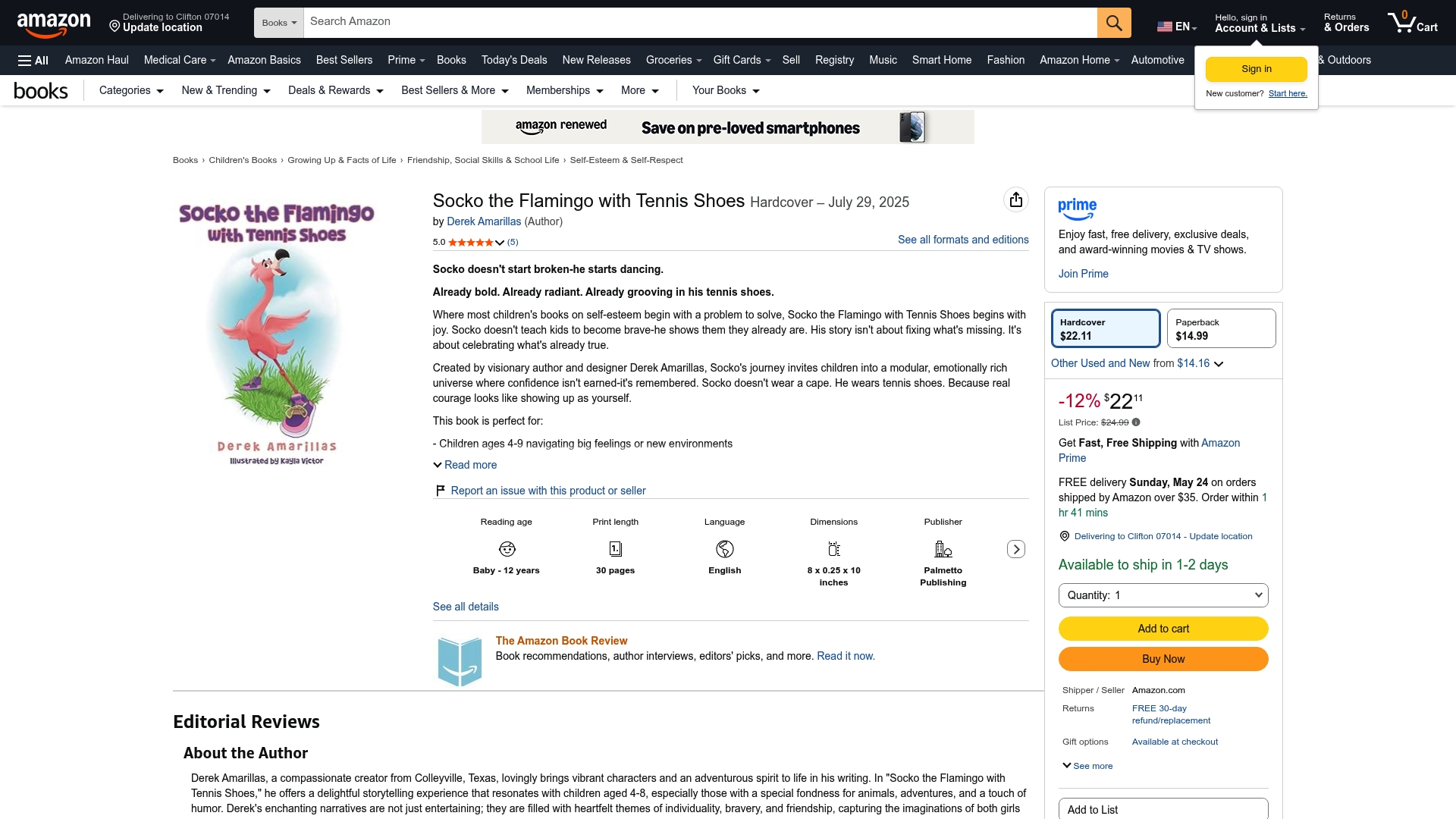
Parents and teachers looking to build a collection of inclusive picture books will find that starting with character-driven stories, where identity and emotion are central, produces the fastest results. A's picture book collection is designed specifically for this age group, with stories that spark conversations about belonging, feelings, and what it means to be exactly who you are. Consistent reading, even just a few nights a week, is enough to make a real difference.
FAQ
What makes a children's book truly inclusive?
An inclusive children's book features characters from diverse backgrounds, abilities, and family structures as central figures, not background details. Authentic representation means the character's identity shapes their experience in the story, not just their appearance.
Do parents need to ask questions while reading to build empathy?
No. A 2026 study confirmed that consistent reading alone improves cognitive and overall empathy in children aged 3–8, even without structured reflection questions.
How quickly do inclusive books improve children's social skills?
Research shows that 15 minutes of daily reading with social conflict stories produces measurable empathy improvements within two weeks. Consistency matters more than duration or technique.
Are inclusive books only beneficial for children from underrepresented groups?
No. All children benefit. Children from underrepresented groups gain self-recognition and belonging. Children from majority groups gain perspective-taking skills and reduced fear of difference, both of which are foundational to empathy.
How do I know if a book depicts disability or diversity well?
Look for books where diversity appears incidentally as part of everyday life, not as the central problem to overcome. Strong inclusive books show characters with disabilities, cultural differences, or non-traditional families living full, specific lives where their identity is one detail among many.