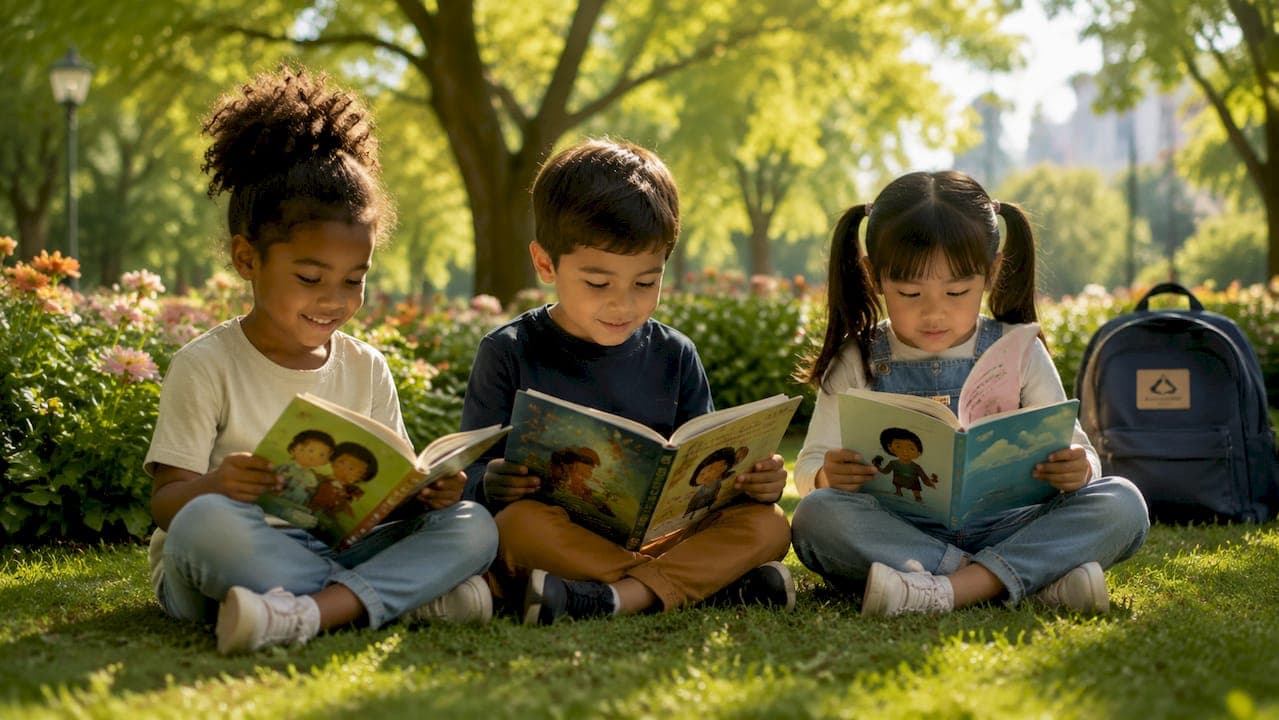
Emotional literacy is defined as the ability to recognize, name, and manage one's own emotions while understanding the feelings of others. Libraries prioritize emotional literacy books because research links these skills directly to academic achievement and lifelong success. This is not a trend. It reflects a deliberate, evidence-based shift in how libraries serve children and the adults who guide them. For educators, parents, and caregivers, understanding why libraries make these choices helps you build stronger reading lists and richer conversations at home and in the classroom.
Why libraries prioritize emotional literacy books for children
Libraries stock emotional literacy books because the skills these books build are foundational. Emotional intelligence, including empathy and social awareness, is a primary driver of both academic performance and life outcomes. That connection makes emotional literacy books a core collection priority, not an optional supplement.
The term "emotional literacy" is the recognized standard in education and library science. You may also see it called social-emotional learning, or SEL. Both terms describe the same cluster of skills: self-awareness, self-regulation, empathy, and responsible decision-making. Libraries use both frameworks when selecting books and designing programs.
Children ages 2–6 are in the most critical window for emotional vocabulary development. A child who cannot name what they feel cannot ask for help, resolve conflict, or self-soothe. Books give children the words before they have the experience to find those words on their own. That is why the importance of emotional literacy shows up so clearly in early childhood collections at every well-resourced library.

How emotional literacy books support children's emotional development
Picture books function as vocabulary bridges. They introduce words like "frustrated," "anxious," or "left out" in a safe, low-stakes context. A child who has heard a character say "I feel scared and I don't know why" has a script to reach for when that feeling arrives in real life.
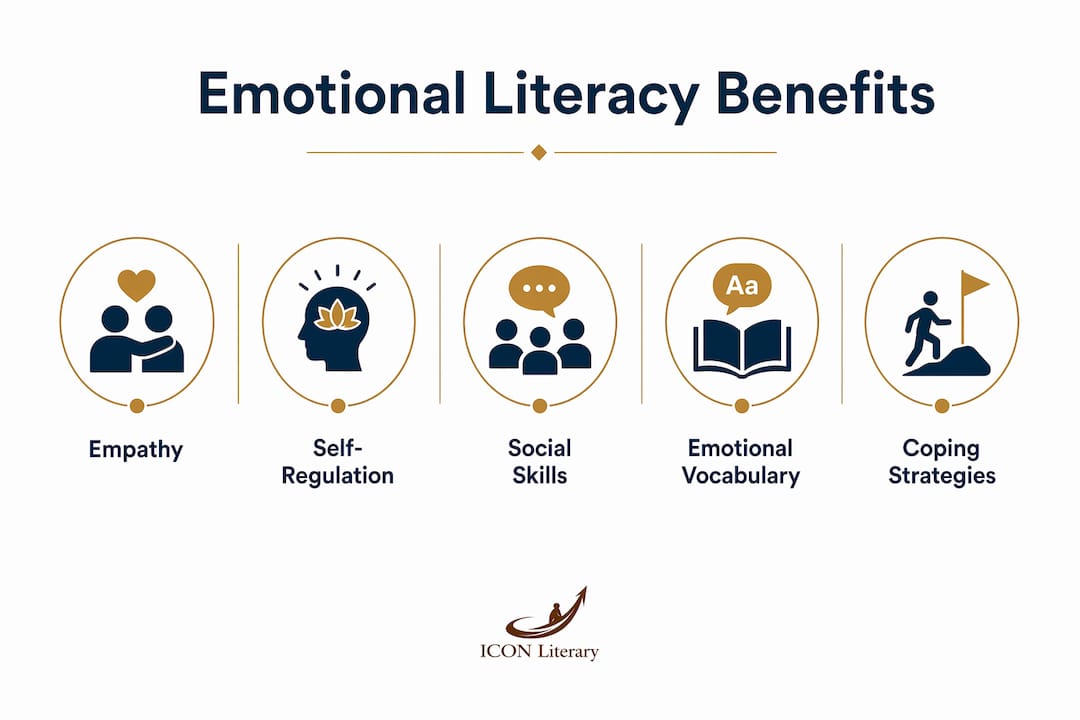
The benefits of emotional literacy books extend well beyond vocabulary. Research shows that exposure to complex emotions in literature builds coping skills children carry into adulthood. A book that shows a character working through rejection or disappointment gives the child a mental model for handling those same experiences.
Curated emotional literacy books also serve as what practitioners call "permission slips." They tell children that big, uncomfortable feelings are normal and survivable. Books for ages 2–6 allow children to safely experience and label complex emotions, which directly strengthens their ability to cope with real-world distress later.
The language comprehension strand of literacy development also benefits. When children engage with emotionally rich narratives, they practice inferring meaning, predicting character behavior, and understanding cause and effect. These are the same skills tested in reading comprehension assessments.
Key benefits educators and caregivers see from a strong emotional literacy reading list include:
- Expanded emotional vocabulary that children use in real conversations
- Improved self-regulation as children recognize feelings before they escalate
- Stronger empathy built by following characters through diverse emotional experiences
- Reduced behavioral incidents in classrooms where SEL reading is consistent
- Greater comfort with discomfort, because children have seen characters survive hard feelings
Pro Tip: When reading aloud, pause after a character experiences a strong emotion and ask, "Have you ever felt like that?" That single question turns a picture book into a conversation.
What criteria do librarians use to evaluate emotional literacy books?
Selection is not random. Librarians apply a clear emotional literacy picture book checklist when building collections. The criteria reflect both developmental science and community needs.
-
Developmental appropriateness. A book about grief written for a 10-year-old uses language and narrative complexity that overwhelms a 4-year-old. Librarians match emotional complexity to the child's developmental stage, not just their reading level.
-
Diverse characters and experiences. Children recognize themselves in books. A collection that reflects only one cultural or family background fails a significant portion of its readers. Inclusive representation is a non-negotiable selection criterion.
-
Narrative-first structure. Practitioners caution against "single-skill" books that reduce emotional literacy to a lesson. Story-first books that provide comfort and connection work better, especially for children who struggle to name their feelings.
-
Range of emotions covered. A collection weighted toward happiness and calm misses the point. Effective libraries pair books about joy with books about fear, frustration, and loneliness. That range gives children practice across the full emotional spectrum.
-
Physical sensation language. Some children cannot identify an emotion by name but can describe a tight chest or a wobbly stomach. Books that connect physical sensations to emotional states reach children that purely narrative books miss.
-
Integration potential. Librarians ask whether a book pairs well with sensory tools, discussion guides, or classroom programs. Pairing books with sensory tools like fidget aids multiplies their effectiveness and transforms the library into a restorative space.
Pro Tip: When building an emotional literacy reading list at home or in a classroom, aim for at least one book per major emotion category: joy, sadness, anger, fear, and embarrassment. That spread gives children a reference point for each feeling.
How libraries integrate emotional literacy books into active programs
Shelving books is the starting point, not the finish line. Libraries that lead in this area use curated shelves and toolkits aligned with developmental milestones to move children from adult-regulated emotions toward independent self-management.
Programs combine books with techniques like mindful breathing exercises and sensory engagement stations. A child who reads about a character taking three deep breaths to calm down, then practices that same technique at a library station, builds a real skill. The book provides the model. The program provides the practice.
Libraries also serve as non-clinical emotional spaces. Librarian Jessica Brownley describes this shift as viewing children's emotional moments as integral parts of library service, not interruptions to it. Staff model patience, validate feelings, and create predictable environments where children feel safe. None of that requires a clinical license. All of it requires intention.
"Libraries function as emotional spaces modeling patience and validation. They are not mental health providers, but they are places where children feel seen and supported through shared reading and consistent, caring routines."
The physical environment matters as much as the collection. Predictable layouts, quiet corners, and clearly labeled emotion sections all reduce anxiety and help children self-select the support they need. A child who can walk to the "big feelings" shelf independently is practicing self-regulation before they even open a book.
Collaboration between librarians, educators, and psychologists creates centralized emotional literacy resources that serve the whole child. When a school psychologist recommends a specific book and the library already stocks it, the system works as designed.
Why books about complex and negative emotions belong in every collection
Positive-only collections are a well-meaning mistake. Academic researchers advocate for books that expose children to difficult emotions because children who lack that exposure have no practice for managing unbearable distress. A child who has only read about happiness has no literary model for surviving a hard day.
Fear, frustration, rejection, and anxiety are real parts of childhood. Books that include these experiences do not traumatize children. They prepare them. The key is emotional safety within the narrative: the character experiences the hard feeling, and the story shows a path through it.
Cultural considerations shape this work too. What counts as an appropriate emotional expression varies across families and communities. Libraries address this by building collections that reflect multiple cultural frameworks for emotion, not a single dominant model.
The table below shows how different emotion categories map to the real-world skills children practice through exposure:
| Emotion category | Real-world skill practiced |
|---|---|
| Fear and anxiety | Tolerating uncertainty and asking for help |
| Frustration and anger | Impulse control and conflict resolution |
| Sadness and grief | Processing loss and accepting comfort |
| Rejection and loneliness | Building resilience and seeking connection |
| Embarrassment and shame | Self-compassion and social repair |
Librarians normalize emotional struggle by placing these books in prominent, accessible locations. A book about anxiety on the front display table sends a clear message: this feeling belongs here, and so do you. That visibility matters as much as the content inside the cover.
Key Takeaways
Libraries prioritize emotional literacy books because these resources build the self-regulation, empathy, and emotional vocabulary that research identifies as core drivers of academic and lifelong success.
| Point | Details |
|---|---|
| Emotional literacy is foundational | Skills like empathy and self-regulation directly predict academic and life outcomes. |
| Books serve as vocabulary bridges | Children ages 2–6 gain emotional language from stories before they can find those words independently. |
| Selection follows clear criteria | Librarians evaluate books for developmental fit, diverse representation, and range of emotions covered. |
| Programs extend beyond the shelf | Effective libraries pair books with sensory tools, breathing techniques, and structured discussion. |
| Negative emotions belong in collections | Exposure to fear, frustration, and sadness in literature builds real coping skills for real distress. |
Libraries are doing more than I expected
I spent years thinking of libraries as quiet places for books. What I have come to understand is that they are doing something much harder and more deliberate than that.
The distinction that changed my thinking is this: libraries are not trying to be therapists. They are trying to be consistent. A child who visits the library every week and finds the same calm environment, the same patient staff, and the same clearly labeled emotion section is receiving something clinically valuable without any clinical intervention. Predictability is therapeutic on its own.
What I find most underappreciated is the role of the collection itself as a signal. When a library stocks books about grief, anxiety, and rejection alongside books about joy, it tells every child who walks in that the full range of human feeling is acceptable. That message does not require a program or a staff member. It just requires intentional selection.
The pitfall I see most often is collections weighted toward resolution. Books where every hard feeling gets fixed by the last page. Real emotional literacy means sitting with discomfort long enough to understand it. The best books for children do exactly that. They do not rush to the happy ending. They stay in the hard part long enough for the child to recognize it.
A character like Socko the Flamingo in A does this well. The humor and imagination make the hard feelings approachable without erasing them. That balance is harder to achieve than it looks, and it is exactly what librarians should be looking for when they build emotional literacy reading lists.
— Derek
A's books belong on your emotional literacy shelf
Building a strong emotional literacy collection starts with books that make children feel seen without making feelings feel scary. A's Socko the Flamingo with Tennis Shoes does exactly that, using humor and imagination to open conversations about belonging, big feelings, and self-acceptance.
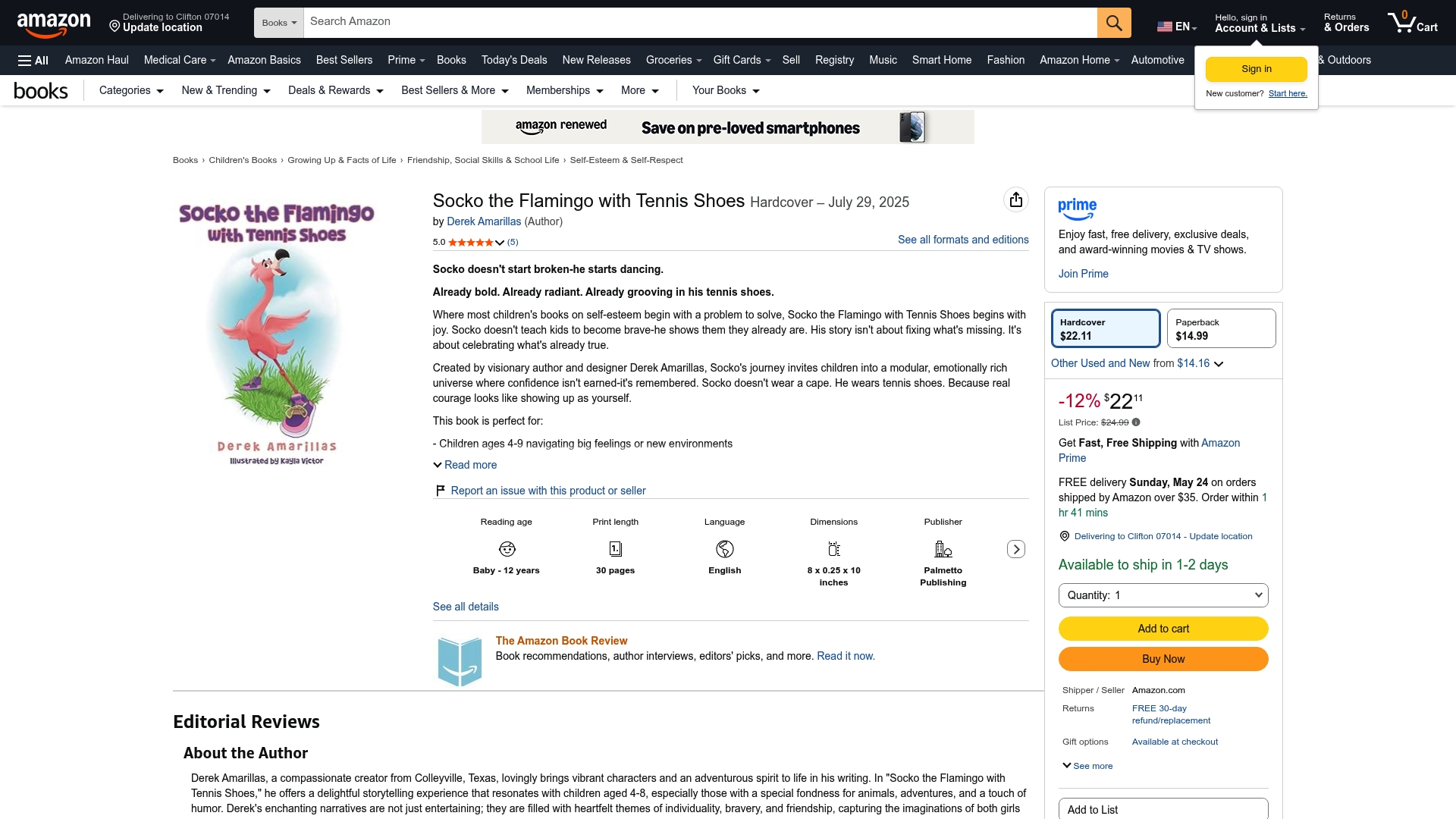
Whether you are a librarian curating a new SEL section, a teacher looking to build an emotional literacy reading list, or a parent searching for the right book for a hard conversation, Socko meets children where they are. The character's warmth and wit make difficult topics feel safe and even fun. You can find Socko the Flamingo and explore the full collection to see how these books fit into your emotional literacy program.
FAQ
Why do libraries prioritize emotional literacy books?
Libraries prioritize emotional literacy books because research links social and emotional skills directly to academic achievement and lifelong success. These books give children vocabulary, coping models, and safe exposure to the full range of human emotion.
What makes a picture book effective for emotional literacy?
Effective emotional literacy picture books use narrative-first storytelling, include diverse characters, cover a range of emotions including difficult ones, and connect physical sensations to emotional states. Books that focus only on a single skill or positive feelings are less effective.
At what age should children start reading emotional literacy books?
Emotional literacy books are appropriate from infancy, with the most critical window falling between ages 2 and 6. During this period, children develop the emotional vocabulary they will rely on throughout childhood and into adulthood.
How do libraries use emotional literacy books beyond just shelving them?
Libraries pair books with sensory tools, mindful breathing exercises, and structured programs aligned with developmental milestones. Staff also model emotional patience and create predictable, safe environments that reinforce the skills children encounter in the books.
Should emotional literacy books include negative emotions like fear and anger?
Yes. Experts advise that children who lack exposure to negative emotions in books have less practice managing real-world distress. Books that include fear, frustration, sadness, and rejection build genuine resilience, not just familiarity with positive feelings.