
Unique characters make memorable gifts because they trigger a biological bonding response in children that generic toys simply cannot replicate. When a child receives a character that reflects their personality, their brain registers it as personal. That recognition activates deeper emotional processing, builds identity, and creates a memory that lasts years beyond the gift itself. Research into why unique characters make memorable gifts points to oxytocin release, brain imaging data, and child development science. Brands like A, which centers Socko the Flamingo with Tennis Shoes as a vehicle for emotional literacy, understand this connection at the product level.
Why unique characters make memorable gifts: the brain science
The emotional power of a character gift starts in the brain, not the toy aisle. fMRI studies show that meaningful, identity-reflecting gifts activate the medial prefrontal cortex, the region tied directly to self-identity. When that region lights up, the child's brain is essentially saying, "This is about me." That response does not happen with a generic stuffed animal or a mass-produced action figure.
Oxytocin release is the second mechanism at work. Oxytocin promotes trust and emotional safety, and it flows when a gift feels chosen with care. That chemical response does not fade when the wrapping paper hits the floor. It extends through every moment the child plays with, sleeps next to, or talks to that character.
"Oxytocin promotes feelings of trust and safety from giving through use and beyond." This means the emotional bond a child forms with a thoughtfully chosen character gift compounds over time rather than diminishing.
Children ages 3–8 use characters as identity mirrors. They project their own feelings onto a character's face, voice, and story. A flamingo who feels out of place but finds belonging gives a shy four-year-old a framework for understanding her own experience. That is emotional literacy in action, and it starts with the character on the page or in the child's hands.
How emotional mirroring works in early childhood

Children in the 3–8 age range are still building the vocabulary for big feelings. Characters give them a proxy. When Socko the Flamingo feels nervous about fitting in, a child who struggles socially does not need a therapist to decode that feeling. The character does the work. This is why A was built around a single, specific character with a distinct personality rather than a generic animal mascot.
What makes A character gift truly memorable?
Not every character gift carries equal emotional weight. The ones that become keepsakes share specific qualities that separate them from disposable toys.
- Emotional recognition: The character should reflect something true about the child. A gift that mirrors a child's quirks, fears, or sense of humor creates an immediate sense of being seen.
- A clear backstory: Narrative connection transforms a toy into an emotional anchor. A character with a story gives the child something to return to, not just something to hold.
- Hand-finished or tactile quality: Hand-touch quality signals intentionality. Children in this age group are highly sensitive to texture and craft. A gift that feels carefully made communicates that the giver cared.
- Interactive features: Sound and motion convert a static character into a companion. That shift from object to companion is where imaginative storytelling begins.
- Emotional specificity: Characters that capture one feeling or personality type clearly are more memorable than those designed to appeal to everyone. Broad appeal is the enemy of deep connection.
Pro Tip: Before buying, ask yourself whether the character has a story the child can retell. If you cannot summarize the character's personality in one sentence, the child probably cannot either.
Unique character gifts vs. generic gifts: what the research shows
The difference between a character gift and a generic gift is not about price. It is about emotional ownership.
| Factor | Unique Character Gift | Generic Gift |
|---|---|---|
| Brain activation | Medial prefrontal cortex (self-identity) | Minimal identity engagement |
| Oxytocin response | Triggered by perceived personalization | Minimal or absent |
| Emotional ownership | Child attaches personal story to the object | Object remains external, replaceable |
| Longevity of bond | Becomes a keepsake or emotional anchor | Often discarded within months |
| Emotional literacy support | Character models feelings and identity | No narrative framework provided |
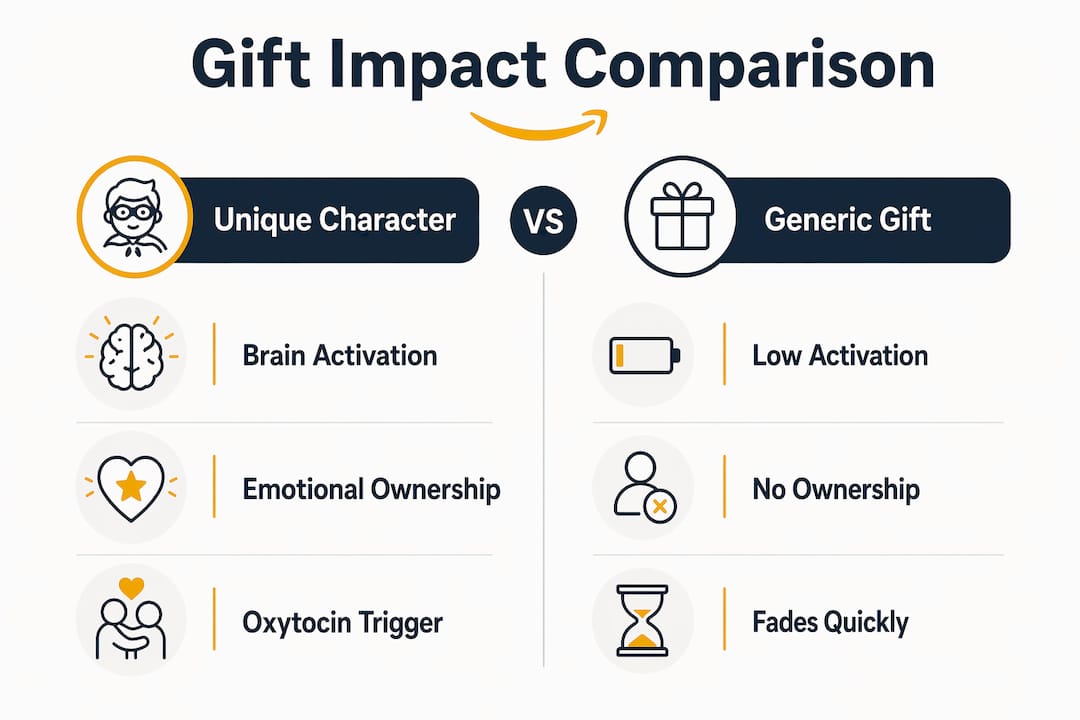
Emotional ownership is the clearest dividing line. When a child forms a personal story around a character, that object stops being a toy. It becomes a touchstone. Generic gifts rarely achieve that status because they carry no identity signal for the child to attach to.
The data reinforces this. Personalized gifts trigger oxytocin not just in the recipient but in the giver. The cognitive effort of choosing a character that fits the child amplifies the bond on both sides of the exchange. That is a dynamic that a gift card or a generic toy set cannot replicate.
Pro Tip: If you are choosing between two character gifts, pick the one with the more specific personality. A character who is "brave and curious" will resonate more than one described as "fun for all kids."
Why generic gifts fade faster
Generic gifts lack the identity signal that makes a gift feel personal. Without that signal, the child's brain does not register the gift as meaningful in the same way. The medial prefrontal cortex stays quiet. Oxytocin does not flow. The toy gets played with for a week and then migrates to the bottom of the toy bin. This is not a failure of the gift giver's intentions. It is a predictable neurological outcome.
How to choose the right character gift for ages 3–8
Selecting a memorable character gift is a skill, not a guessing game. These steps give you a clear framework.
-
Assess the child's emotional world. What does this child struggle with? Shyness, fear of the dark, difficulty making friends? The best character gift speaks directly to that emotional reality. A child who feels different will connect with Socko the Flamingo far more than with a generic superhero.
-
Look for a character with a distinct personality. Vague characters do not create strong bonds. Personality-driven gifts are replacing generic presents precisely because caregivers recognize that specificity creates connection. Choose a character you can describe in three words.
-
Prioritize narrative over novelty. A character with a published story, a picture book, or an established world gives the child something to grow into. The gift becomes a gateway to a larger emotional conversation.
-
Check for sensory or interactive qualities. Texture, sound, and motion extend the life of a character gift. A book character that also exists as a plush toy creates multiple entry points for emotional engagement.
-
Add a personal note. Write one sentence explaining why you chose this character for this child. That sentence becomes part of the gift's story. Cognitive effort in selection amplifies the emotional bond, and naming that effort out loud doubles the effect.
-
Think about emotional anchors during stress. Character gifts serve children best during difficult moments. A character that represents safety, belonging, or humor gives a child a resource to reach for when big feelings arrive.
Matching character traits to the child's needs
The most effective character gifts are not the most popular ones. They are the most fitting ones. A child who is working through feelings of not belonging needs a character who has navigated that same territory and come out the other side. That is the emotional work A does through Socko the Flamingo, a character who is visually distinct, emotionally honest, and ultimately triumphant in finding his place.
Key takeaways
Unique character gifts outperform generic gifts because they activate the brain's identity centers, trigger oxytocin, and give children an emotional framework they can return to for years.
| Point | Details |
|---|---|
| Brain activation matters | Character gifts that reflect identity activate the medial prefrontal cortex, making the gift feel personal. |
| Oxytocin drives lasting bonds | Personalized character gifts trigger oxytocin in both giver and child, deepening emotional connection. |
| Backstory creates keepsakes | Characters with a clear narrative transform from toys into emotional anchors children return to during stress. |
| Specificity beats broad appeal | A character with one clear personality trait resonates more deeply than one designed for every child. |
| Effort signals care | The cognitive effort of choosing a fitting character amplifies the bond beyond the gift's monetary value. |
What i've learned watching kids bond with characters
I have spent years watching children interact with character gifts, and the pattern is consistent. The gifts that get carried everywhere, slept with, and talked about at dinner are never the most expensive ones. They are the ones that made the child feel recognized.
The mistake I see caregivers make most often is choosing a character based on what they think is educational rather than what is emotionally resonant. A gift that teaches the alphabet is useful. A gift that makes a child feel less alone is transformative. Those are not the same thing, and they do not produce the same memory.
What surprises most people is how quickly children assign emotional meaning to a character. Within hours of receiving a character gift that fits, a child will have named it, given it a backstory, and folded it into their play world. That speed is not random. It is the medial prefrontal cortex doing its job, recognizing something that reflects the self and holding on.
The gifts that become keepsakes share one quality: they captured something true about the child at a specific moment in their development. A flamingo in tennis shoes who does not quite fit in but finds his people is not just a funny image. For the right child, it is a mirror. And mirrors, unlike toys, do not get thrown away.
— Derek
Find A character gift that actually sticks
The research is clear, and so is the choice. Generic gifts fade. Character gifts that reflect a child's inner world become part of their story.
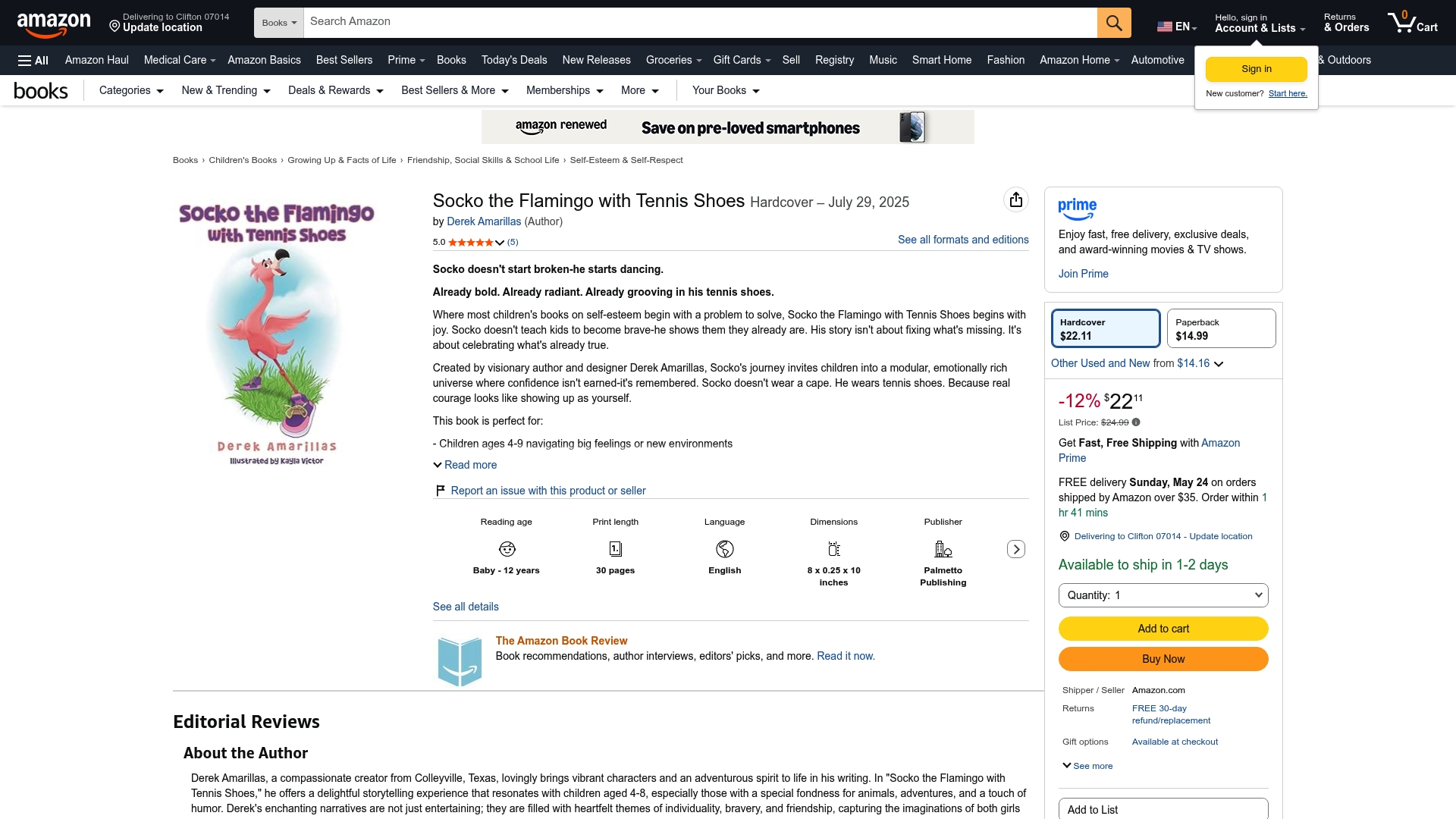
A's Socko the Flamingo with Tennis Shoes was built for exactly this purpose. Socko teaches emotional literacy, belonging, and self-acceptance through humor and a story children can see themselves in. If you are looking for a gift that does more than entertain, one that gives a child language for their biggest feelings, explore the Socko the Flamingo book and see whether it fits the child you have in mind. Thoughtful selection is the whole point.
FAQ
What makes A character gift more memorable than A regular toy?
Character gifts activate the brain's self-identity region, the medial prefrontal cortex, and trigger oxytocin release. Generic toys do not produce the same neurological response, which is why character gifts are more likely to become keepsakes.
What age benefits most from character-based gifts?
Children ages 3–8 benefit most because this is the developmental window when they use characters as identity mirrors to process and externalize emotions. Characters give them a vocabulary for feelings they cannot yet name on their own.
Does the character need to be from A book or licensed property?
A backstory strengthens the emotional connection significantly. Characters with a published story or established narrative give children something to grow into and return to, making the gift more durable as an emotional anchor.
How do i know if A character gift is the right fit for A specific child?
Match the character's core personality or emotional struggle to something real in the child's life. If the character's defining trait speaks to what the child is working through, such as feeling different or finding belonging, the gift will resonate far more than a popular but generic choice.
Does price affect how memorable A character gift is?
Price is not the primary driver of memorability. The cognitive effort invested in choosing a character that fits the child matters more than the cost. A thoughtfully chosen character gift at a modest price will outlast an expensive generic toy in the child's emotional memory.