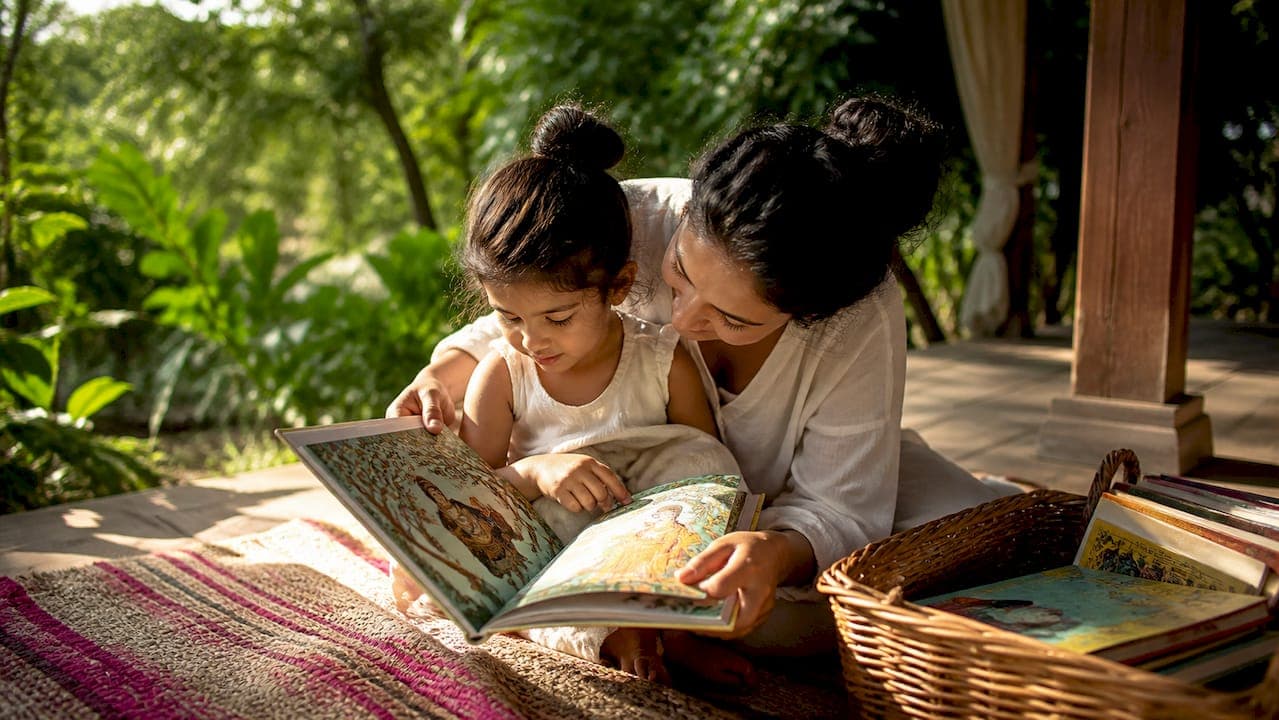
Diverse picture books strengthen children's sense of belonging and build the kind of empathy that holds communities together. That's the short version. The longer version involves decades of classroom research, a framework coined by a scholar named Rudine Sims Bishop, and a persistent gap in publishing that educators and caregivers are still working to close.
Here's what the evidence points to most clearly:
- Children from marginalized groups who see themselves in books show stronger reading engagement and a greater sense of school belonging.
- Children from majority groups who read about lives different from their own develop broader perspective-taking skills, which supports healthier peer relationships.
- Classrooms with intentionally diverse collections tend to produce better cross-cultural understanding, not just in the moment but over time.
- Community-level benefits include reduced stereotyping, more inclusive peer norms, and early groundwork for civic participation.
The organizations doing the most rigorous work on this include the Cooperative Children's Book Center (CCBC), The Conscious Kid, and First Book, whose research is summarized through ReadingRockets. Together, they make a compelling case that the importance of diverse picture books is not a feel-good add-on. It's a structural need.
Key Takeaways
Diverse picture books produce the strongest outcomes when they are integrated intentionally across a collection, paired with guided discussion, and treated as an ongoing practice rather than a one-time addition.
| Point | Details |
|---|---|
| Mirrors and windows framework | Books that reflect children's own lives and open windows onto others' build both belonging and empathy. |
| Publishing gaps are documented | CCBC 2022 data show Indigenous characters appeared in only 2% of 3,450 reviewed titles; intentional curation is necessary. |
| Engagement gains are best supported | A randomized study found culturally relevant books increased reading enjoyment; identity shifts take longer and need sustained exposure. |
| Anti-tokenism requires sets, not singles | Select multiple everyday stories about a group, not one representative title, to avoid reducing a community to a single narrative. |
| Icon Literary offers ready-made resources | Inclusive picture books and SEL kits for ages 3–8, available with discussion guides and creative extensions. |
Table of Contents
- Why picture book diversity matters for children and communities
- How picture books actually build empathy and community connections
- What research actually shows, and where the evidence gets thin
- How to choose and build a genuinely diverse collection
- How to lead read-alouds and scaffold conversations about identity
- Recommended diverse picture books and where to find more
- Why this work requires sustained commitment, not a single purchase
- Icon Literary's picture books and SEL kits for ages 3–8
- Sources
Why picture book diversity matters for children and communities
The framework most educators encounter first is Rudine Sims Bishop's mirrors and windows concept, introduced in 1990. A mirror reflects a child's own life back to them, confirming that their experience is real, valued, and worth telling. A window opens onto someone else's world, building curiosity and empathy across difference. Bishop also described a third function: a sliding glass door, through which a reader can step imaginatively into another life entirely.
That lesson lands early and sticks. For a child who never sees a family like theirs in a picture book, the absence itself communicates something. For a child who only ever sees one kind of family, the absence of others does the same thing in reverse: it narrows what they understand as normal.
The community-level outcomes follow from this. When children develop empathy through books, they carry it into the classroom, the playground, and eventually the neighborhood. Research syntheses suggest that picture books with diverse lived experiences help students develop empathy and can be integrated into curriculum approaches that encourage civic participation. That's a longer arc than a single read-aloud, but it starts there.
Social-emotional learning (SEL) is the mechanism most educators recognize. Books that show characters navigating identity, difference, or belonging give children language and frameworks for their own experiences. They also give educators an entry point for conversations that might otherwise feel too abstract or too charged to start.
How picture books actually build empathy and community connections
The psychological process behind a good read-aloud is more specific than "kids feel things." Three mechanisms are doing most of the work.
Perspective-taking happens when a child follows a character whose life differs from their own and must imagine what that character feels. Picture books are especially effective here because the illustrations carry emotional cues that young readers process before they can articulate them.
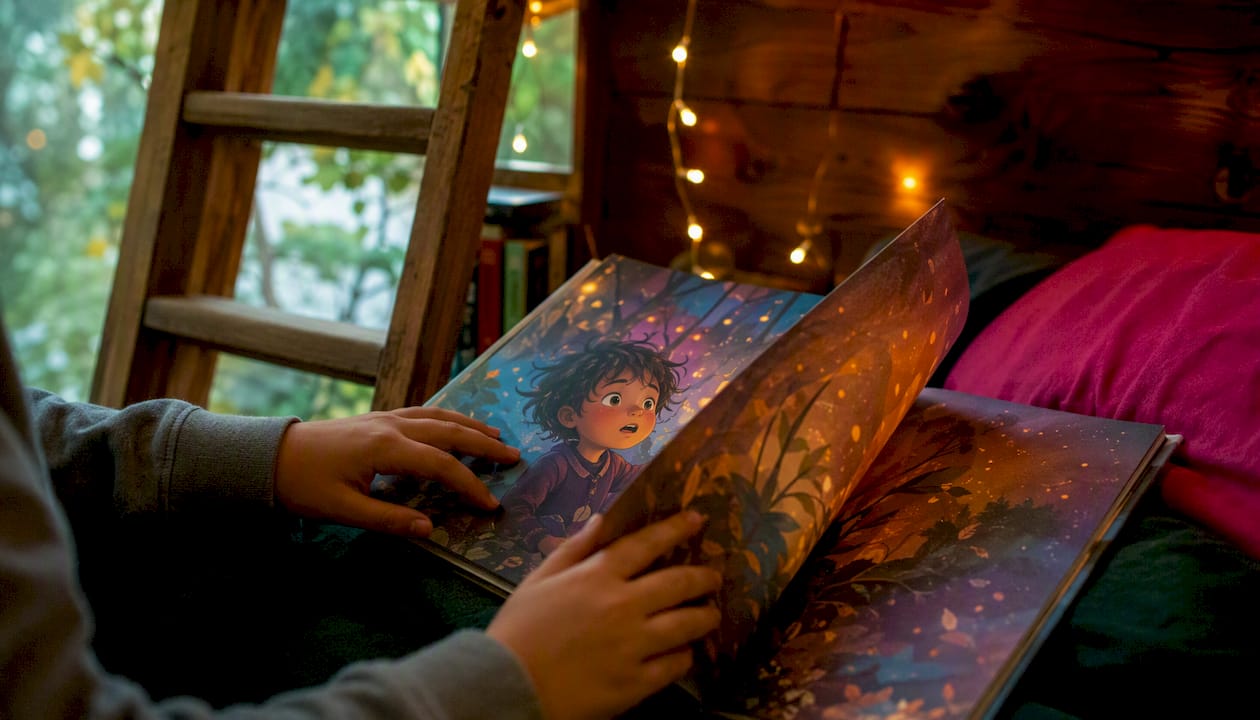
Emotional labeling occurs when a child names what a character is experiencing: "She looks scared," "He's left out." This builds emotional vocabulary, which is foundational to empathy and conflict resolution.
Schema expansion is what happens when a child's mental model of "who belongs" or "what families look like" gets wider. A single book rarely does this alone, but repeated exposure across a collection does.
Here's a practical read-aloud flow that puts all three to work:
- Before reading: Preview the cover and ask, "What do you notice? What do you wonder?" This activates prior knowledge without leading the child toward a predetermined response.
- During reading: Pause at emotionally charged moments. "What do you think she's feeling right now? Have you ever felt that way?" Keep it brief; the story should stay primary.
- After reading: Ask an open-ended question about the character's experience versus the child's own. "What was the same about their day and yours? What was different?"
- Extension: Connect the book to something real: a family interview, a drawing, a short role-play. Classroom interventions that combine book access with teacher facilitation and follow-up activities show larger learning and engagement effects than access alone.
A third-grade classroom in a predominantly white suburban school used this structure with Last Stop on Market Street by Matt de la Peña. After the extension activity, students wrote letters to a local food pantry. The teacher reported that the book opened a conversation about economic difference that she had not known how to start. The book started it for her.
What research actually shows, and where the evidence gets thin
The evidence for diverse picture books is real, but it's worth being precise about what it shows and what it doesn't.
What's supported:
A pilot intervention that increased access to diverse classroom books reported higher reading engagement and reading-score gains, with the largest increases among the lowest-scoring students. A randomized study with 105 Black children ages 6–7 found that reading culturally relevant storybooks increased reading enjoyment. However, that same University of Manchester study did not find significant short-term changes in measured self-concept, which is a useful caution against overclaiming.
The publication gap:
CCBC data from 2022 show persistent underrepresentation across the 3,450 titles reviewed that year:
These figures matter because a collection built from what's most available will reflect these gaps. Intentional curation is not optional; it's the only way to correct for what the market underproduces.
Where evidence is limited:
Long-term causal links between picture-book exposure and civic behavior are not yet established by controlled research. Intersectional representation, meaning books that show characters navigating multiple identities simultaneously, remains understudied. And most intervention studies are small, short-term, and conducted in specific school contexts, which limits how broadly their findings apply.
The honest summary: engagement gains are the most consistently supported outcome. Identity shifts and long-term empathy development are plausible and theoretically grounded, but the research base is still building.
How to choose and build a genuinely diverse collection
A collection audit is the right starting point. Pull every picture book from your classroom shelf or home basket and ask: whose faces appear on the covers? Whose stories are told? Which identities are absent entirely? Book-audit tools and structured collection reviews consistently reveal hidden biases in home and classroom libraries and guide prioritized purchases.
Once you know your gaps, use this checklist when evaluating new titles:
- Author and illustrator identity: Does the creator share lived experience with the community they're depicting? Own-voices books tend to carry more authenticity.
- Everyday representation, not just crisis: Look for books where diverse characters experience joy, play, and ordinary family life, not only trauma or struggle.
- Intersectionality: Does the book show characters with multiple, overlapping identities? A character can be Black and disabled and funny.
- Cultural consultants: Did the publisher involve community members or cultural reviewers in the production process? Some publishers note this in the author's note.
- Language access: Are bilingual or dual-language editions available? Multilingual collections have been shown to increase visibility for heritage languages and improve school community engagement.
- Stereotype check: Does the book reduce a group to a single trait or tradition, or does it show full, complex human beings?
- Age-appropriate complexity: Does the book match the developmental stage of your readers without oversimplifying the identity it depicts?
For collection building on a budget, start with one intentional purchase per month rather than a wholesale overhaul. Partner with your school librarian, who can often access grant funding or bulk-purchase programs. Involve families in title selection to strengthen the school-home connection and surface community-sourced titles you might not find through mainstream channels.
Pro Tip: Before buying a new title, search the CCBC database and Lee & Low's blog for reviews that specifically address authenticity. A beautiful cover is not a substitute for accurate, respectful portrayal.
Avoiding tokenism means selecting sets of books that show multiple, everyday stories about a group rather than a single representative title. One book about a Latine family at Christmas is a start. Five books about Latine families doing different things across different seasons is a collection.
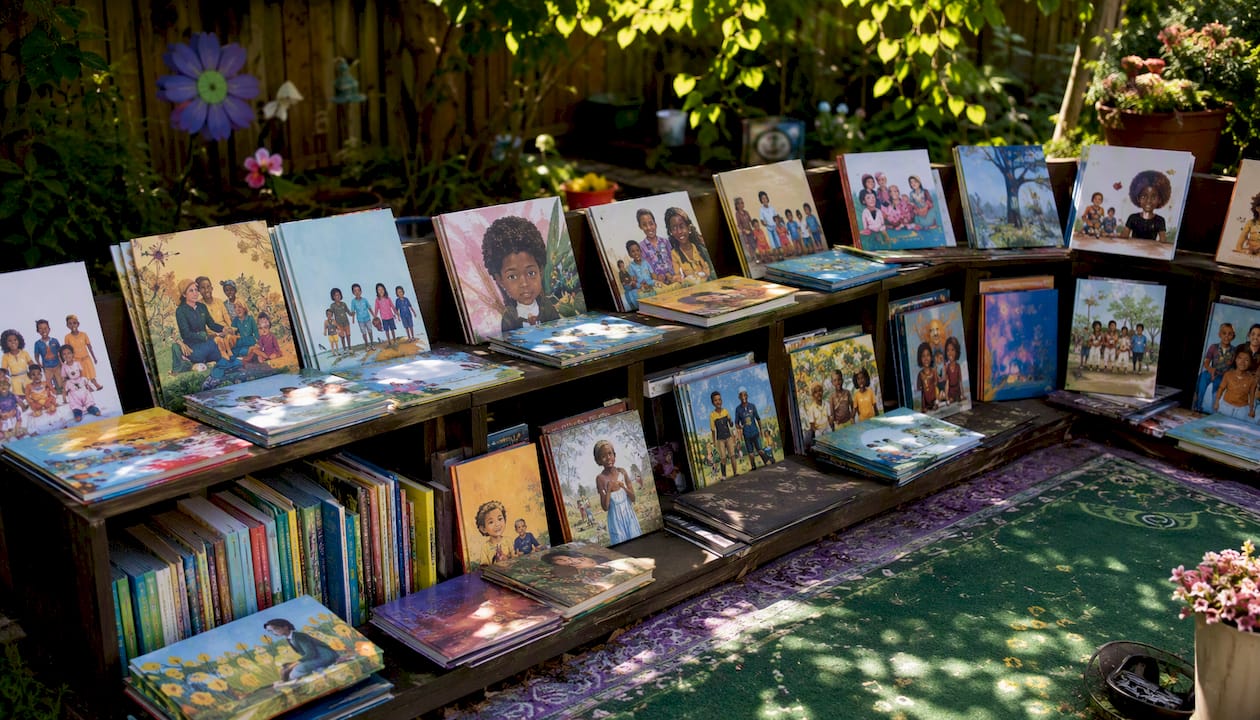
For practical discovery techniques and search tips when building your collection, the process is more systematic than browsing bestseller lists.
How to lead read-alouds and scaffold conversations about identity
The biggest mistake educators and caregivers make is waiting until they feel "ready" to discuss race, disability, or family structure. Children are already noticing difference. Research consistently shows that adult-led dialogue helps children interpret and resist bias rather than absorb it uncritically. Silence doesn't protect children from bias; it just leaves them without tools to process it.
Read-aloud guidance:
Lead with curiosity, not correction. Your job is not to deliver a lesson about diversity; it's to open a conversation the book has already started. Keep your tone warm and matter-of-fact. If a child says something that reflects a stereotype, respond with a question rather than a correction: "That's interesting. What makes you think that? Let's see what the book shows us."
Sample open-ended prompts:
- "What did you notice about how this family is the same as yours? How is it different?"
- "How do you think [character] felt when that happened? What would you have done?"
- "Why do you think the author chose to tell this story?"
- "If you could ask [character] one question, what would it be?"
These prompts work for ages 3–8 with minimal adjustment. For younger children, keep the focus on feelings and observations. For older children in the 6–8 range, you can move toward "why" questions that invite perspective-taking and light analysis.
Three extension activities:
- Draw your window: After reading a book about a life different from their own, ask children to draw one thing they learned about that world. Display the drawings together as a class "window wall."
- Family interview: Send home a simple prompt: "Ask someone in your family about a tradition, food, or story from when they were young." Share responses in a circle the next day.
- Role-play a moment: Choose a scene from the book where a character faces a challenge. Ask children to act out what they would do differently, or the same. This builds both empathy and moral reasoning.
For picture books that spark inclusion conversations with children ages 3–8, pairing the right title with the right prompt makes a measurable difference in how deeply children engage.
Recommended diverse picture books and where to find more
These titles are widely used in classrooms and home libraries for their authentic representation and strong storytelling. Age ranges are approximate.
- Last Stop on Market Street by Matt de la Peña, illustrated by Christian Robinson (ages 4–8): A boy and his grandmother ride the bus through their city after church. Explores economic difference, gratitude, and community without sentimentality.
- The Name Jar by Yangsook Choi (ages 5–8): A Korean girl navigates a new American school and the question of whether to change her name. Directly addresses belonging and cultural identity.
- Each Kindness by Jacqueline Woodson, illustrated by E.B. Lewis (ages 5–8): A rare picture book that sits with regret rather than resolution. Powerful for discussions about exclusion and missed chances.
- Hair Love by Matthew A. Cherry, illustrated by Vashti Harrison (ages 3–7): A Black father learns to style his daughter's natural hair. Celebrates Black family life and natural beauty without making either the "issue."
- Alma and How She Got Her Name by Juana Martinez-Neal (ages 4–8): A girl discovers the stories behind her long name and the ancestors who gave it to her. Strong for identity and family heritage conversations.
- Eyes That Kiss in the Corners by Joanna Ho, illustrated by Dung Ho (ages 4–8): A young Asian girl notices how her eyes differ from her classmates' and finds beauty in that difference through her family.
- When Aidan Became a Brother by Kyle Lukoff, illustrated by Kaylani Juanita (ages 4–8): A transgender boy prepares for a new sibling. Depicts a trans child's everyday family life with warmth and specificity.
- Fry Bread by Kevin Noble Maillard, illustrated by Juana Martinez-Neal (ages 4–8): A lyrical celebration of Indigenous community and food culture, written by a Seminole Nation citizen.
Where to find more:
- CCBC: The CCBC diversity statistics database tracks representation in children's publishing annually and offers curated booklists by identity category.
- Lee & Low Books: Publishes own-voices titles and maintains a blog with authenticity reviews and diversity data.
- We Need Diverse Books: Offers a searchable database, educator guides, and grant programs for classroom libraries.
- The Conscious Kid: Provides curated reading lists organized by identity and age, plus guidance on how to use books in anti-bias conversations.
- NEA (National Education Association): Maintains reading lists and professional development resources for educators building inclusive classrooms.
- Clinton Foundation / Too Small to Fail: Focuses on early literacy and has produced resources connecting diverse books to language development in children under five.
For bilingual and dual-language options, Lee & Low and Cinco Puntos Press are the most reliable sources for Spanish-English titles. For heritage languages beyond Spanish, university library systems and community bookstores often carry titles that mainstream distributors don't stock.
The criteria for selecting inclusive children's books go beyond cover representation. Authenticity, authorial perspective, and the presence of joy alongside challenge are what separate a genuinely inclusive title from a well-meaning but thin one.
Why this work requires sustained commitment, not a single purchase
The research on diverse picture books is clear enough to act on, but the practice of building truly representative collections is harder than it looks. Publishing gaps are real. School librarians report that diverse collections are critical but that high-quality, authentic portrayals are not always easy to find. That's not a reason to stop looking. It's a reason to use better tools and be more deliberate.
What I find most underestimated in conversations about representation is the difference between access and integration. Putting a diverse book on a shelf is access. Reading it aloud, discussing it, connecting it to children's real lives, and returning to it across the year is integration. The evidence consistently shows that integration is where the outcomes live.
There's also a tendency to treat this as a project with a finish line: "We've added diverse books, we're done." Collections need ongoing audits. Children's identities evolve. New titles get published. Community demographics shift. The educators and caregivers who do this well treat it as a practice, not a project.
For storytellers and creators, the stakes are equally high. Representation in picture books is not just a market consideration. It's a decision about whose imagination gets validated and whose gets ignored. At Icon Literary, the commitment to inclusive storytelling runs through every character, every world, and every design choice. That's not a brand position. It's a creative conviction.
Icon Literary's picture books and SEL kits for ages 3–8
Icon Literary creates picture books and social-emotional learning kits built around original characters, immersive story worlds, and authentic representation for children ages 3–8. Every title is designed to function as both a mirror and a window: characters who reflect real children's lives alongside worlds that expand what children understand as possible.
The SEL activity kits pair directly with the books, giving educators and caregivers structured prompts, discussion guides, and creative extensions that match the read-aloud strategies covered in this article. Physical books, digital downloads, and collectible card decks are available through the Icon Literary storefront, with options suited to classroom libraries, home collections, and gift-giving. If you're ready to add intentionally designed, inclusive titles to your collection, that's the place to start.
Sources
These organizations and databases are the most reliable starting points for educators and caregivers building diverse collections: