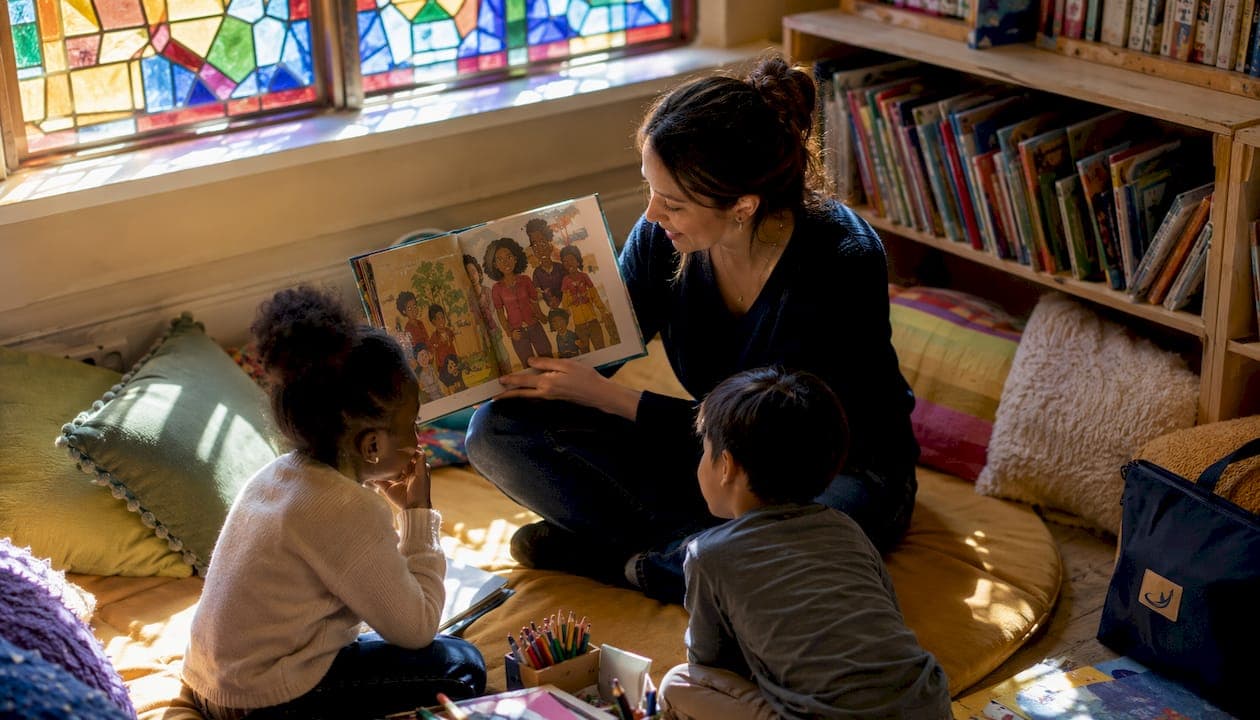
What makes a children's book truly inclusive?
The core criteria for inclusive children's book selection come down to four pillars: illustrations free from stereotypes, authentic author and illustrator perspective, language that includes rather than excludes, and storylines that empower children across all backgrounds. Get those four right, and you have a book worth adding to any collection. Miss them, and even a well-intentioned title can do quiet harm.
Teaching for Change frames this as an active, anti-bias process, not a passive one. You are not just looking for books that avoid obvious offense. You are building a collection that reflects the full range of children's lives, including their families, abilities, identities, and communities.
Here is what that looks like in practice:
- Respectful, stereotype-free illustrations that depict individuals as real, distinct people rather than visual shorthand for a group
- Authentic author and illustrator perspective, ideally from creators with lived experience of the identities they portray
- Inclusive, non-loaded language that is age-appropriate and affirms positive self-identity
- Empowering, diverse storylines where characters of all backgrounds take active, leadership roles rather than supporting ones
- Balanced representation that avoids both invisibility (certain groups never appearing) and tokenism (one character standing in for an entire community)
- Inclusive family structures, including single-parent households, same-sex parents, multigenerational families, and adoptive families
- Representation of ability, disability, and socioeconomic diversity alongside race, ethnicity, and gender
- A message that affirms children's identities and broadens their view of others
Organizations like We Need Diverse Books and Teaching for Change have shaped how educators and librarians approach this work, pushing the field toward collections that reflect multicultural reality rather than a narrow mainstream.
How to evaluate illustrations and storylines for anti-bias representation
Illustrations are the first thing a child encounters in a picture book, and they carry as much meaning as the text. The standard set by the Anti-Discrimination League's assessment guide is clear: diverse populations should be depicted realistically, with genuine individuality rather than group-level visual clichés. That means checking whether characters have distinctive features, whether cultural dress or settings are accurate rather than decorative, and whether disability is shown with dignity.

Spotting harmful stereotypes requires a deliberate eye. Ask whether all members of a cultural group are drawn identically, whether women and girls appear only in passive roles, or whether characters with disabilities are shown as objects of pity. The Teaching for Change guide offers a useful prompt: do images depict people as genuine individuals with distinctive features, or as stand-ins for a category?
Storylines deserve the same scrutiny. Watch for who drives the plot and who resolves problems. A book where a child of color must exhibit extraordinary qualities to gain acceptance, or where a girl's achievement depends on her looks rather than her intelligence, is reinforcing the very hierarchies inclusive literature should challenge. Look instead for stories where diverse characters are central to the action, not decorative additions.
Intersectionality matters here too. A character can be Black and disabled, or Latina and from a low-income family. Books that portray only one dimension of identity at a time miss the complexity of real children's lives. The I AM NOT THE DISABILITY acronym, developed as a classroom tool for evaluating picture books featuring characters with disabilities, gives educators a memorable framework for checking whether disability is treated as one facet of a whole person rather than the character's defining trait.
Signs of tokenism vs. genuine diversity:
- A single character of color among many white characters, with no narrative weight of their own
- One book about a disability in a collection of dozens that never address it
- Characters from marginalized groups who appear only to teach the protagonist a lesson
- Cultural elements used as costume or backdrop rather than lived experience
Signs of genuine, active representation:
- Multiple books per demographic, showing range within a group rather than a single "representative" story
- Characters with diverse backgrounds in leadership, problem-solving, and decision-making roles
- Storylines where conflict and resolution involve people of all identities as full participants
- Contemporary settings that reflect how diverse families actually live today
Pro Tip: When reviewing a picture book, cover the text and study the illustrations alone first. If the images alone communicate stereotypes or hierarchy, the text rarely corrects them.
Does the author's background shape a book's authenticity?
Short answer: yes, and it shows on the page. Books written by authors who share identity with the characters they portray tend to carry cultural nuance that outsider perspectives often miss. Research on culturally appropriate book selection describes this as the difference between an insider perspective, where the author brings lived experience, and an outsider perspective, which frequently defaults to tropes or treats culture as costume.

That does not mean every outsider-authored book fails. It means the bar for scrutiny is higher. When an author writes about a community they did not grow up in, look closely at whether the details ring true: the food, the family dynamics, the way characters speak to each other, the values that drive their choices. Superficial accuracy, getting the clothing right but missing the emotional texture, is a common tell.
Language is the other half of this criterion. Loaded language, coded phrases, or terminology that was once acceptable but has since been recognized as marginalizing, can undercut an otherwise well-intentioned book. Watch for:
- Outdated or clinical terms for disability that center limitation rather than personhood
- Racial or ethnic descriptors used as adjectives in ways that "other" characters
- Gender language that defaults to male as the norm
- Socioeconomic framing that implies poverty is a character flaw or an obstacle to be escaped rather than a structural condition
- Jargon or idiom that excludes children who are English language learners or from non-dominant cultural backgrounds
Language that promotes positive self-identity does the opposite. It names identities with the terms communities use for themselves, treats difference as ordinary rather than exceptional, and gives children vocabulary to understand their own lives. A book where a child with two moms simply has two moms, without the narrative making it a lesson, models the kind of matter-of-fact inclusion that children internalize most deeply.
Author background also shapes how cultural settings are rendered. An insider author writing about a specific neighborhood, religious practice, or family tradition brings specificity that makes a story feel true. That specificity is what allows a child who shares that background to see themselves, and what allows a child who does not to learn something real rather than a generalization.
Why publication date matters more than you might think
A book published in the 1970s about a Native American family, or a 1990s picture book about a child with Down syndrome, may carry language and imagery that reflected the best intentions of their era but now read as dated or harmful. Reviewing publication dates is not about discarding older books wholesale. It is about reading them with appropriate critical attention and being honest about whether they belong in a primary collection or a supplementary, critically framed one.
Newer publications tend to reflect updated community-led terminology, more nuanced portrayals of identity, and contemporary family structures that older books simply did not include. A book from 2010 may not address gender nonconformity; one from 2022 might do so with the vocabulary and sensitivity that today's children need.
Checklist for timeliness and appeal:
- Does the book reflect how diverse families actually live now, not how they were imagined to live decades ago?
- Is the language current and affirming, using terms that communities use for themselves?
- Are the illustrations clear, colorful, and recognizable to young children rather than abstract or stylistically dated?
- Does the story hold a child's attention on its own merits, not just because of its representational value?
- Would a child want to read this book again, or does it feel didactic and flat?
- Does the setting reflect contemporary life, including urban, suburban, and rural realities?
- Has the book been reviewed or recommended by educators or community members with relevant lived experience?
Appeal is not a secondary concern. A book that checks every representational box but bores children will sit on the shelf. Teaching for Change makes this point directly: if children find the story or illustrations boring, the book will not hold their attention even if it adds a specific kind of diversity you need. The goal is books that children return to, that spark conversation, and that feel like stories first and lessons second.
Which awards and curated resources help you find vetted inclusive books?
Award lists do a significant portion of the vetting work for you. The organizations behind these awards evaluate both literary quality and the authenticity of representation, which means a title on one of these lists has already cleared a meaningful bar.
Major diversity-focused awards in the US:
| Award | Focus | Administered by |
|---|---|---|
| Schneider Family Book Award | Disability experience in children's and teen literature | American Library Association |
| Sydney Taylor Book Award | Jewish culture and experience | Association of Jewish Libraries |
| American Indian Youth Literature Award | American Indian and Alaska Native peoples | American Indian Library Association |
| Asian/Pacific American Award for Literature | Asian/Pacific American culture and experience | Asian/Pacific American Librarians Association |
Each of these awards ensures literary quality alongside authentic, respectful representation. They are updated on annual or biennial cycles, which means consulting them regularly keeps your collection current.
Beyond awards, several nonprofit organizations publish curated lists that go deeper than a single award category:
- We Need Diverse Books publishes booklists, supports marginalized creators, and runs a Books Save Lives initiative that provides grants to educators in communities affected by book bans.
- Social Justice Books offers thematic lists organized by topic, identity, and age range, with an explicit anti-bias framework.
- Teaching for Change provides both curated lists and the selection criteria framework that underlies much of the field's best practice.
- The American Library Association maintains inclusive booklists covering racial diversity, gender identity, immigration, and more, compiled by librarians with subject expertise.
Practical tips for using these resources:
- Schedule a collection audit at least once a year and cross-reference your holdings against updated award lists
- Use thematic lists from Social Justice Books when building around a specific unit or conversation topic
- Check We Need Diverse Books for titles by marginalized creators, not just titles about marginalized communities
- When a book appears on multiple lists from different organizations, treat that as a strong signal of quality
- Share award lists with parents and caregivers so home libraries can complement what children encounter at school
For building a diverse home library, these curated resources remove the guesswork and give families a starting point that has already been evaluated by people with relevant expertise.
How to apply inclusive criteria when auditing your collection
Applying these criteria in practice means treating book selection as an ongoing process, not a one-time purchase decision. The ADL's assessment framework puts it plainly: no book can be perfect, and the goal is a collection that reflects multicultural reality as a whole. That means evaluating individual titles and the collection together.
A working checklist for each book:
- Illustrations: Do they depict diverse populations realistically and free from stereotypes? Is there diversity within cultural groups, not just between them?
- Language: Is the terminology current, affirming, and age-appropriate? Does it avoid coded or exclusionary phrasing?
- Author/illustrator background: Is there evidence of insider perspective or demonstrated expertise with the community portrayed?
- Storyline: Do characters from diverse backgrounds take active, empowered roles? Is conflict resolved in ways that affirm rather than diminish marginalized identities?
- Intersectionality: Does the book acknowledge that characters can hold multiple identities simultaneously?
- Appeal: Will children actually want to read this? Does the story work on its own terms?
- Publication date: Is the language and framing current enough to avoid outdated stereotypes?
Auditing your existing collection:
Start by mapping what you have. Which groups are represented? Which are invisible? Where does one book carry the entire weight of representing a community, creating the tokenism that Teaching for Change warns against? A collection with a single book about a child with a disability, or one book featuring a Latino family, teaches children that those groups are exceptions rather than part of everyday life.
Involve your community. Educators, librarians, and parents each bring different knowledge to this process. A parent from a specific cultural background will catch authenticity gaps that a well-meaning outside reviewer might miss. Community recommendations and educator reviews are not supplementary to the selection process; they are part of it.
Common pitfalls to watch for:
- Overrepresentation of one type of diversity (race, for example) while other dimensions (disability, LGBTQ+ identity, socioeconomic status) remain invisible
- Older titles that have not been critically reviewed since acquisition
- Books where diverse characters appear in illustrations but not in meaningful narrative roles
- Collections that reflect the demographics of the majority student population but not the full range of children who will use them
For SEL book selection criteria, the same principles apply: the criteria are not a checklist to complete once but a lens to apply continuously as collections grow and communities change.
How inclusive books build emotional literacy and a sense of belonging
The most durable argument for diverse children's literature is not representational. It is developmental. Books function as what education professor Dr. Rudine Sims Bishop called mirrors, windows, and sliding glass doors: mirrors that reflect a child's own identity back to them, windows that offer a view into lives different from their own, and sliding glass doors that invite them to imaginatively step inside another experience entirely.
Children who never see themselves in books absorb a quiet message about who stories are for. Children who only ever see themselves miss the empathy-building that comes from encountering lives unlike their own. Both losses are real, and both are preventable through deliberate collection building.
Inclusive books also give adults a concrete entry point for conversations that can otherwise feel difficult to start. A picture book about a child with two dads, or a story featuring a character who uses a wheelchair and plays soccer, normalizes those realities before a child has formed the associations that make them feel charged. That is the window function at work: low-stakes, imaginative exposure that builds the cognitive and emotional groundwork for genuine understanding.
Practical tips for guiding inclusion conversations sparked by books:
- Read the book together before discussing it, letting children respond to the story on its own terms first
- Ask open questions: "What did you notice about this family?" rather than "Did you see that they had two moms?"
- When a child asks a question the book raises, answer it directly and age-appropriately rather than deflecting
- Return to the same book across different ages; children extract different meaning as they grow
- Pair books that offer different perspectives on the same identity or experience to show range rather than a single "representative" story
Icon Literary's Socko the Flamingo with Tennis Shoes embodies this approach. Socko is a character built around emotional literacy, belonging, and self-acceptance, using humor and imagination to open conversations about big feelings and identity. The character works precisely because the story comes first: Socko is funny and relatable before being instructive. That sequence, story before lesson, is what makes inclusive literature stick.
For educators and parents looking to spark inclusion talks with children ages 3–8, the most effective books are the ones children ask to hear again. Repetition is how young children process meaning, and a book that earns a second and third reading is doing more emotional literacy work than one that gets shelved after a single classroom session.
Key Takeaways
Selecting inclusive children's books requires evaluating illustrations, author perspective, language, and storylines together as a system, not as separate checkboxes.
| Point | Details |
|---|---|
| Four core pillars | Respectful illustrations, authentic author perspective, inclusive language, and empowering storylines form the foundation of any inclusive selection. |
| Avoid tokenism and invisibility | Collect multiple titles per demographic group so no single book carries the weight of representing an entire community. |
| Use award lists and curated resources | The Schneider Family Book Award, Sydney Taylor Book Award, We Need Diverse Books, and Social Justice Books provide vetted, high-quality starting points. |
| Treat selection as ongoing | Audit collections regularly, involve community voices, and update holdings as language and cultural understanding evolve. |
| Story quality drives impact | A book that children return to willingly does more for emotional literacy and empathy than one that checks every criterion but fails to engage. |