The simplest effective approach pairs an age-appropriate scaffold, beginning, middle, end, moving to story maps, then plot maps, with short repeated activities. At your next read-aloud, pause and ask, "What happened first? What problem came up? How did it get fixed?" This starter works well from preschool through grade 2.
TL;DR:
- For kindergarten through grade 2, use oral retells and three box picture sequences; keep lessons to 10 to 15 minutes.
- Grades 3 and 4 can use labeled story maps for problems and solutions; grade 5 and older students can map plot through climax and resolution.
- A 10 to 12 minute daily read aloud with two discussion pauses, plus weekly small group dictation and acting, balances practice with classroom time.
- During story dictation, transcribe the child’s exact words before modeling expanded vocabulary, then have classmates act it out to practice sequence and narrative roles.
Table of Contents
- What story structure means for kids
- Age-scaled scaffolding: what to teach and when
- Step-by-step activities that build story structure skills
- Graphic organizers and visual supports worth using
- Research-backed practices worth prioritizing
- Why playful story worlds help kids find their narrative voice
- Bring story structure to life with ready-made classroom decks
- FAQ
- Sources
What story structure means for kids
Story structure is simply how events and characters are arranged in order inside a story. Once children can name that order, they read with more understanding and write with more confidence.
For classroom charts and discussions, we recommend five simplified labels young learners can hold onto:
- Characters: who the story is about
- Setting: where and when it happens
- Problem: what goes wrong or what the character wants
- Events: what happens to solve or change the problem
- Resolution: how things get settled at the end
Teaching these five pieces gives children a lens for comprehension when they read and a plan when they write. Instruction on narrative structure can start as early as kindergarten, as long as the language stays simple: "beginning, middle, end" and "problem and solution" cover the same ground without overwhelming new readers.
Age-scaled scaffolding: what to teach and when
Complexity should grow with the student, not arrive all at once.
- Kindergarten through grade 2: beginning, middle, end language, oral retelling, and picture sequencing cards. Lessons run short, 10 to 15 minutes, and the expected product is an oral retell or a three-box picture sequence.
- Grades 3 to 4: problem and solution thinking, paired with story maps that have labeled prompt boxes. Students move toward short written retells.
- Grade 5 and up: the plot map or story mountain, rising action building to a climax, then falling action and resolution. This model fits narrative writing instruction that scales in complexity as students mature, and the expected product becomes a multi-paragraph summary or an original short story.
A classroom routine that holds up well across grades combines a 10 to 12 minute daily read-aloud with two stop-and-talk prompts, one weekly small-group dictation session, and a rotating sequencing center. This rhythm, recommended in REL/IES writing guidance, balances exposure, guided practice, and independent production without crowding the rest of your day.
Step-by-step activities that build story structure skills
These routines need little prep and can run in any classroom this week.
- Run a read-aloud with pause prompts. Stop twice during the story to ask "What just happened?" and "What do you think happens next?" then add student answers to a co-constructed anchor chart.
- Give students sentence starters for retelling. Phrases like "First," "Then," and "In the end" keep oral retells organized without extra scaffolding.
- Set up a sequencing center. Picture strips, sentence strips, and ordering cards let children physically arrange events; a tactile sequence rope works well for kinesthetic learners and English language learners.
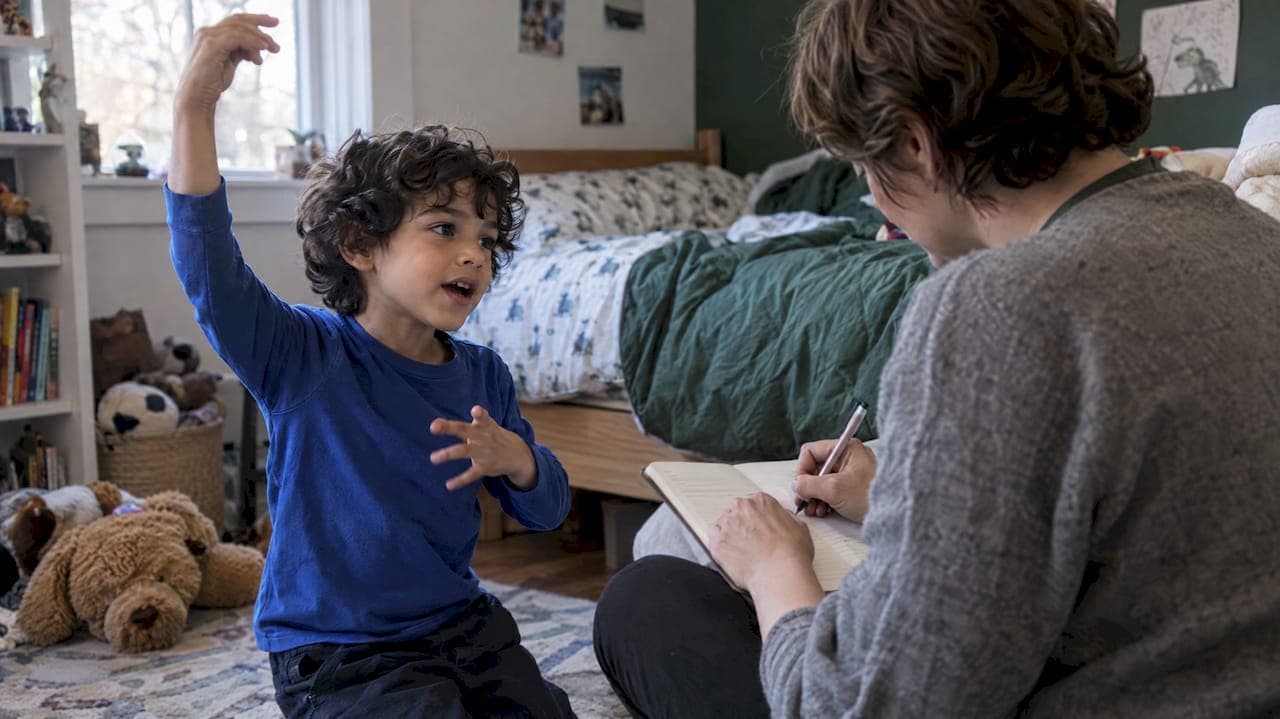
- Try story dictation and acting. Invite one child to tell a short story aloud while you transcribe it word for word. Assign classmates simple roles, then act it out with no props needed, just movement and voice.
- Rotate paired activities for early finishers. Partner retelling or a quick storyboard sketch keeps the routine fresh for students who move faster.
Pro Tip: When transcribing a child's dictated story, write down their exact words first and model any vocabulary expansion only after the story has been acted out.
Graphic organizers and visual supports worth using
The right organizer matches the grade band and does double duty as a formative check.
- Beginning, middle, end charts work for young learners, with prompt-box language like "What happened first?" built right into the template.
- Plot maps, story pyramids, and 5-W frames (who, what, when, where, why) give older students more structure for longer narratives.
- Low-tech tactile materials, story chains made from paper links, sequence sticks, or storyboard pockets, give hands-on practice without a printer.
- Using an organizer during a retell, rather than only after, lets you catch gaps in understanding before a student starts writing independently.
The story map templates from Reading Rockets can be adapted from a simple three-box beginning, middle, end form into a more detailed character-and-plot organizer as students advance.
Research-backed practices worth prioritizing

Daily, short writing practice embedded in regular instruction helps students carry structure skills from reading into their own writing, a finding central to REL/IES toolkit recommendations. Writing for a real audience, rather than for a worksheet, strengthens that transfer further.
One technique worth building into any weekly plan is story dictation paired with acting, a Paley-inspired method described in NAEYC's classroom research. Children tell a story aloud, a teacher transcribes it, and classmates act it out immediately.
Pairing story dictation with acting gives children a developmentally attuned way to practice sequence and narrative roles, and it increases engagement compared to worksheet-based retelling.
NAEYC, Still on Stage! Engaging Children in Telling and Acting Out Stories to Impact Learning
A simple weekly schedule: several short daily read-aloud sessions with pause prompts, plus a weekly dictation and acting session involving a few volunteer storytellers.
Why playful story worlds help kids find their narrative voice
We think the best story structure lessons happen when children feel safe to be a little chaotic with their ideas before we ask them to organize those ideas. A character-driven world with room for humor and surprise invites a child to talk about feelings indirectly, through plot, which tends to open up richer retells than a direct prompt ever does. Teachers can adapt these prompts freely; the goal is always a stronger storyteller, not a scripted answer.
— Derek Amarillas
Bring story structure to life with ready-made classroom decks
Lesson plans go faster when the prompts are already written for you. We offer ready-to-use cards for read-aloud discussion starters, retelling centers, and SEL conversation openers, built around original characters kids ages 3 to 8 connect with quickly.

Each card can slot directly into the routines above: pull one for your pause-prompt discussion, hand a few to a sequencing center, or use them as dictation story starters during your Friday acting session. For a wider set of printable kits and books that pair with story-structure lessons, browse the Anansi stories books curated for classrooms or explore the full Socko's Universe catalog for activity kits and downloadable resources sized for early elementary classrooms.
FAQ
What are the five elements of story structure for kids?
The five elements are characters, setting, problem, events, and resolution. Teachers typically simplify these further for young children into "beginning, middle, and end" and "problem and solution" language.
What is the best age to start teaching story structure?
Instruction can begin as early as kindergarten using simplified beginning, middle, end language, with more complex models like the plot map introduced by upper elementary grades. The right starting point depends on a child's oral language skills more than their exact age.
How do story maps help young writers?
Story maps give students a visual template to organize characters, setting, and events before or during a retell, which helps teachers check understanding before asking for independent writing. They can be adapted from a simple three-box form into a detailed plot organizer as students progress.
What is story dictation and acting, and why does it work?
Story dictation is a routine where a child tells a story aloud while a teacher transcribes it, then classmates act it out. This Paley-inspired method, described in NAEYC's practitioner research, increases engagement and helps children grasp sequence and narrative roles more than worksheet-based retelling alone.
Can storytelling activities support social-emotional learning too?
Yes. Many read-aloud and retelling routines double as SEL discussion starters, since character problems and resolutions naturally open conversations about feelings and choices. Our SEL-aligned storytelling activities show how these two goals overlap in a single lesson.
Sources
- Toolkit to Support Evidence-Based Writing Instruction (REL/IES)
- Story sequence (Reading Rockets)
- Still on stage! Engaging children in telling and acting out stories to impact learning (NAEYC)
- Narrative writing (LiteracyIdeas)