
Therapeutic storytelling for kids means picture books, activity kits, and themed card decks designed to build emotional vocabulary and self-regulation through stories kids want to hear again. The main benefit is simple: naming a feeling out loud helps a child manage it better than leaving it unnamed. When you shop for these products, look for ones built for repeat reading and guided conversation between you and your child, not a single pass through a plot.
TL;DR:
- Repetition over multiple readings is essential, with at least three passes helping children recognize feelings, reactions, and connect stories to their own experiences.
- Choose products that include guided questions, tactile tools, and representation of diverse experiences to promote empathy and ongoing engagement.
- Use age-appropriate formats, such as board books for toddlers and graphic narratives for older children, along with activities that reinforce emotional vocabulary outside of reading.
- Focus on durable, classroom-friendly materials with clear learning goals and avoid products that promise quick fixes or have limited replay value.
- Incorporate book reading into existing routines with questions and role-play to deepen emotional understanding and avoid relying solely on standalone materials.
Table of Contents
- Why storytelling helps kids build emotional literacy
- How to choose therapeutic-storytelling products for ages 3 to 8
- Bringing it home: read-aloud routines and quick activities
- Product types and gift ideas for every occasion
- The research behind why storytelling supports young children
- Matching your approach to your child's age and stage
- Common pitfalls and how to avoid them
- Fitting storytelling alongside other emotional support tools
- What to look for in a trustworthy storytelling brand
- Why we design storytelling products the way we do
- Bringing Icon Literary into your storytelling routine
- Sources
- FAQ
Why storytelling helps kids build emotional literacy
Stories give children words for feelings they already have but cannot yet name. That matters more than it sounds. Naming an emotion is a coping skill on its own: it helps a child communicate a need instead of just reacting to it, according to a caregiver guide from the Child Mind Institute. Caregivers who narrate what they observe, saying "your fists are tight, you look frustrated," link vocabulary to physical sensation, which is the first step toward co-regulation.

Books do a second job too. They act as mirrors, reflecting a child's own experience back at them, and as windows into experiences they have not had. Paired with an adult who asks questions during reading, that combination builds empathy and understanding more effectively than the story alone, according to Reading Rockets.
Repetition is where the real learning happens:
- The first reading lets a child enjoy the plot without pressure to analyze anything.
- The second reading is when they start noticing a character's reactions and body language.
- The third reading is where you connect the story to their own life and practice labeling feelings together, a sequence recommended by Edutopia.
Activity kits carry that lesson into daily life. Tools like feeling dice and mood meters, drawn from Scholastic's feelings and emotions resources, give kids a hands-on way to practice naming emotions outside the pages of a book.
Naming an emotion reduces its intensity and helps a child regulate their response, according to the Child Mind Institute's caregiver guide. That single mechanism is why so many emotional-literacy products exist, and why the good ones are built around repetition rather than a one-time read.
How to choose therapeutic-storytelling products for ages 3 to 8
Shopping for these products gets easier once you know what separates a book that gets read once from one that earns a permanent spot on the shelf. Here is a practical order to check things in:
- Match the format to the age. Board books work best around age 3, repeated-read picture books suit 4- and 5-year-olds, and short graphic narratives or activity-embedded books hold the attention of 6-8-year-olds.
- Look for built-in interactivity. Guided questions, reproducible activity sheets, and tactile tools like feeling dice or emotion cards turn a passive read into a conversation.
- Check for representation. Characters and situations that reflect a range of experiences work as both mirrors and windows, a distinction Reading Rockets ties directly to stronger empathy outcomes. Our guide to books that teach empathy covers this in more depth.
- Favor durable, classroom-friendly materials. Reproducible worksheets and sturdy pieces that survive group use matter if the product is headed for a classroom rather than a single bedroom shelf.
- Read the stated learning goal. A product should tell you what skill it targets, and the best ones teach it through story rather than direct instruction.
- Watch for red flags. Be wary of products with no adult guidance built in, language that promises to "fix" a feeling, or novelty items with no replay value once the surprise wears off.
Pro Tip: Before buying, ask whether you would want to read or use the product three times in a row. If the answer is no, the emotional lesson probably will not stick either.
Bringing it home: read-aloud routines and quick activities
Owning the right book or kit is only half the job. What you do with it during and after reading is where the emotional learning actually happens.
The three-pass read-aloud method works for almost any storybook. On the first read, just enjoy the story together. On the second, pause to notice how a character's face or body changes when something happens. On the third, connect it to your child's own life: "Remember when you felt like that at the park?" This progression, recommended by Edutopia, moves a child from recognizing a feeling in a character to recognizing it in themselves.
Between story sessions, short daily rituals keep the vocabulary active:
- A quick mood-meter check-in at breakfast or during morning circle time.
- A roll of feeling dice before bed to name one emotion from the day.
- A two to five-minute visit to a "calming toolbox" when big feelings show up.
- A scripted phrase for a comfort corner, such as "it's okay to feel big feelings here."
For 5 to 8 year olds, extend the story with role-play using puppets, a feelings collage, an emotion-sorting game, or a short journaling prompt tied to that week's book.
Caregiver language matters here. Try narrating without solving: "You seem disappointed the tower fell. That's a hard feeling to sit with." That kind of narration, rather than jumping straight to a fix, supports genuine co-regulation.
Classrooms benefit from small-group read-aloud rotations and photocopiable prompt sheets that can be reused across the year. Our storytime hosting guide and SEL read-aloud examples for K-2 walk through both in more detail.
Pro Tip: Keep a strong emotion in a story from derailing the whole session by naming it out loud yourself first: "Wow, that made me feel nervous too." It models the exact skill you're trying to teach.
Product types and gift ideas for every occasion
Different formats fit different moments, and knowing which to reach for saves you from buying something that ends up unread. Board books suit toddlers and early threes, picture books built for repeat reading suit preschool through early elementary, and short graphic narratives hold up better for kids already reading chapter books.
Activity kits are worth the extra cost when they include feeling dice, reproducible prompt sheets, and simple role-play props, especially for a classroom where a set needs to survive dozens of hands. Themed card decks and collectible items add something books alone cannot: a reason to come back to the same story world again and again, since kids build attachment to characters over repeated encounters, not single readings.
A few gifting ideas by occasion:
- A classroom starter pack: several picture books plus a shared activity kit for group use.
- A one-on-one gift: a single book paired with a printable activity sheet for follow-up conversation.
- A repeat-engagement gift: a collectible card deck that a child can return to on their own once the adult-led reading is done.
Some storytelling product lines pair original, character-driven storytelling with collectible, repeat-play mechanics that keep a story world alive well past the first read, aligning with interactivity and replay-value criteria. For more on picking themes that resonate, see our guide to emotional themes in gift books and our piece on why inclusive books benefit all children.
The research behind why storytelling supports young children
The case for storytelling as an emotional-literacy tool rests on a fairly simple idea: children develop the ability to regulate feelings partly through language, and stories are one of the richest, lowest-pressure sources of that language available to a 3 to 8 year old. The Child Mind Institute frames naming an emotion as a foundational coping skill, not a nice-to-have. Once a child can say "I'm frustrated" instead of just melting down, they have a tool they can use again and again.
Books add a second layer by letting children encounter a feeling at a safe distance, through a character, before they have to manage it in their own body. Reading Rockets frames this as the mirror-and-window effect: some stories reflect a child's own life back at them, validating what they already feel, while others open a window into an experience they have not had, building empathy for it.
Practitioner guidance from Edutopia adds that emotional learning sticks best when a story presents feelings as something a character lives through, tries, struggles with, and eventually manages, rather than as a dictionary definition of an emotion. That lived-experience framing is why a well-written story tends to outperform a flashcard of faces and feeling words: the story gives the emotion context, and context is what makes vocabulary usable later.
Matching your approach to your child's age and stage
A 3-year-old and an 8 year old need very different things from the same emotional-literacy product, even when the underlying book or kit is the same.
At age 3, keep sessions short and highly physical. Point to a character's face, name the feeling in one word, and move on. Board books with simple, repeated phrases work better than anything with a complex plot at this stage.
By 4 and 5, children can follow a full story arc and start connecting a character's feeling to a cause. This is the sweet spot for the three-pass read-aloud method, since kids at this age genuinely enjoy hearing the same book several times and notice new details on each pass.
From 6 to 8, kids can handle short graphic narratives, more nuanced emotional situations, and activities that ask them to reflect in writing or drawing rather than just point and name. Journaling prompts and emotion-sorting games, drawn from resources like Scholastic's feelings and emotions collection, fit this age band well because kids can now generate their own examples instead of only recognizing a feeling you point out.

Across all three stages, the adult's role stays the same: narrate, ask questions, and resist the urge to solve the feeling before the child has finished naming it.
Common pitfalls and how to avoid them
The most common mistake is treating a single reading as the lesson. A story read once, then shelved, rarely builds lasting vocabulary. The fix is simple: plan for the three-pass approach from the start rather than hoping one reading does the job.
A second pitfall is choosing books or kits that rush to "fix" a feeling instead of letting a child sit with it. Stories and activities that normalize big feelings and show a character being heard, rather than instantly cheered up, tend to work better, a pattern noted in a School Library Journal review of a well-known feelings book.
A third pitfall shows up in classrooms and larger families: skipping adult narration altogether and handing a child a feelings kit to use unsupervised. Tools like feeling dice or mood meters work best as a shared activity, not an independent worksheet, at least until a child is well into the 6 to 8 range.
Finally, watch for burnout on the adult side. Reading with intention, three passes, questions, connecting to real life, takes more energy than a quick bedtime story. Rotating which caregiver or teacher leads a session, and leaning on reproducible prompt sheets instead of improvising every time, keeps the routine sustainable. Our emotion coaching scripts for parents offer a shortcut for exactly this.
Fitting storytelling alongside other emotional support tools
Therapeutic storytelling products work well as one piece of a broader emotional-support routine rather than a stand-alone fix. Classrooms that already use mood meters and comfort corners, a combination recommended by NAEYC, can plug a new book or activity kit directly into that existing structure instead of building a separate system from scratch.
At home, pairing a book's vocabulary with an existing bedtime or morning routine tends to work better than introducing an entirely new activity. If your child already has a calm-down space, add the book's feeling words to the scripts you use there. If a teacher already runs a daily check-in, a feelings dice roll fits neatly into that same slot rather than competing with it.
For families or classrooms working with a counselor, teacher, or other professional on a specific behavioral goal, a storytelling product can reinforce that work by giving the child a shared vocabulary to use across settings, at school, at home, and in any support sessions. The book itself is not a treatment: it is a common language that makes the other work easier to talk about. When a child's emotional needs go beyond what a book or activity kit can address, these products complement, rather than replace, guidance from a qualified professional.
What to look for in a trustworthy storytelling brand
Not every emotional-literacy product on the shelf is built with the same care, so a few quality markers are worth checking before you buy.
Look for products that name a specific learning goal rather than vague promises about "boosting confidence." A kit built around naming feelings, recognizing body cues, or practicing co-regulation is more useful than one that claims to solve behavior problems broadly.
Check whether the product cites its own design basis or practitioner input, even briefly. Kits developed with input from classroom-tested activities, such as the reproducible worksheets and mood meters described by NAEYC, tend to hold up better under real daily use than ones designed purely as merchandise.
Materials matter too, especially for classroom purchases: sturdy cards, washable or replaceable pieces, and a short guide with suggested prompts all signal a product built to survive repeated group use rather than a single unboxing.
Some product lines are designed around original, character-driven worlds with priorities such as durable card formats, replay value, and emotional themes woven into the story rather than stated outright. Educators working with less engaged readers may also find value in professional development resources like EmpowerED's guide to boosting reluctant reader engagement, which pairs well with any storytelling product brought into a classroom.
Why we design storytelling products the way we do
Some creative studios are built around the idea that kids return to stories that reward a second and third look, and repeat engagement is where emotional learning actually takes hold. Certain product lines grew out of that idea, with original characters and story worlds layered with enough visual and narrative detail that a child notices something new each time.
We keep emotional themes present but never spelled out as a lesson. A character's frustration or joy lives inside the plot, not in a caption explaining what the child should feel. That is a deliberate choice: didactic messaging tends to wear thin fast, while a story a child wants to revisit keeps doing quiet work in the background, conversation after conversation, read after read.
— Derek Amarillas
Bringing Icon Literary into your storytelling routine
If you are shopping for something that fits the checklist above, repeatable, interactive, and built around real story worlds, Icon Literary's product lines are worth a look.
- Duckwave Decks ($7 one-off) work well as a low-cost entry point for a family or classroom that wants a collectible, repeat-play storytelling tool without committing to a full curriculum. Find them on the Duckwave Decks page.
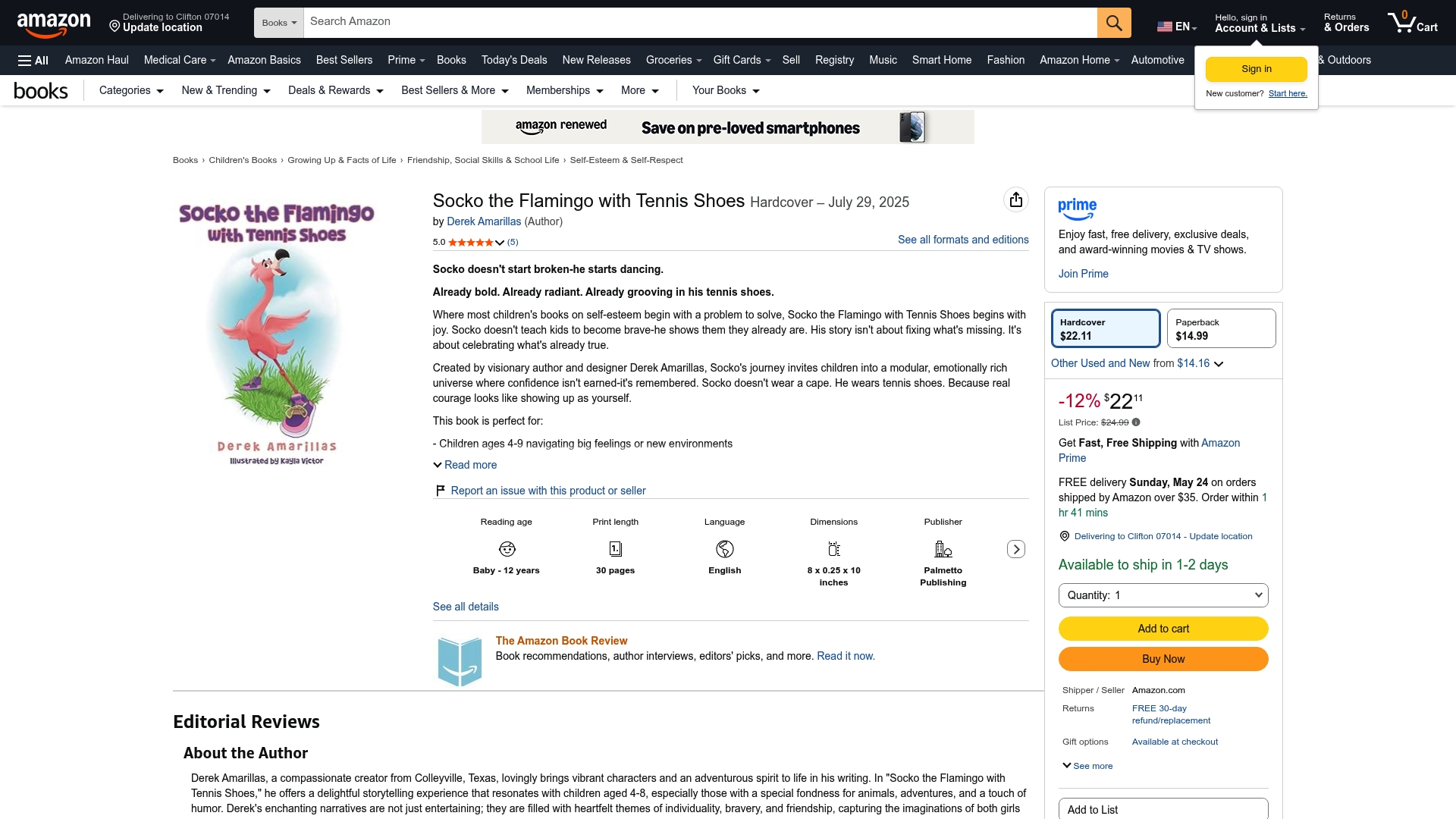
- Socko's Universe suits buyers looking for a broader story world to explore over time, with pricing available on request through the Icon Literary catalog.
Both lines are built for the same repeat-engagement principle covered throughout this guide: a story world with enough depth that kids choose to come back to it on their own, which is exactly the kind of product that turns a single read into an ongoing emotional-vocabulary habit.
Sources
- Understanding Feelings: Caregiver Guide — Child Mind Institute
- Picture books and emotional learning — Edutopia
- Books for social-emotional learning — Reading Rockets
- Feelings and emotions resources — Scholastic Teachables
FAQ
What age group benefits most from therapeutic storytelling products?
Children ages 3 to 8 tend to benefit most, since this is the window when emotional vocabulary and self-regulation skills develop quickly. Board books suit the younger end, while short graphic narratives and activity-embedded books fit the upper end of that range better.
How many times should we read the same emotional-literacy book?
At least three times, following a first read for enjoyment, a second to notice reactions and body language, and a third to connect the story to your child's own life, a sequence recommended by Edutopia. Repetition is what turns a story into a usable emotional vocabulary rather than a one-time experience.
Can storytelling products replace therapy or counseling?
No. These products work as a shared vocabulary tool that complements guidance from a counselor, teacher, or other professional rather than replacing it. If a child's emotional needs are more significant, storytelling should support, not substitute for, professional support.
What makes a storytelling product classroom-friendly?
Durable, reusable materials matter most: reproducible worksheets, sturdy game pieces, and a short prompt guide that a teacher can reuse across groups, features highlighted in NAEYC's guidance on emotional intelligence teaching. A stated learning goal on the packaging also helps teachers match the product to a specific classroom need.
What should I avoid when buying these products?
Avoid anything that promises to instantly fix a feeling instead of helping a child name and sit with it, a pattern flagged in a School Library Journal review of a well-regarded feelings book. Also skip novelty items with no replay value, since repeat engagement is what drives the actual emotional-vocabulary benefit.