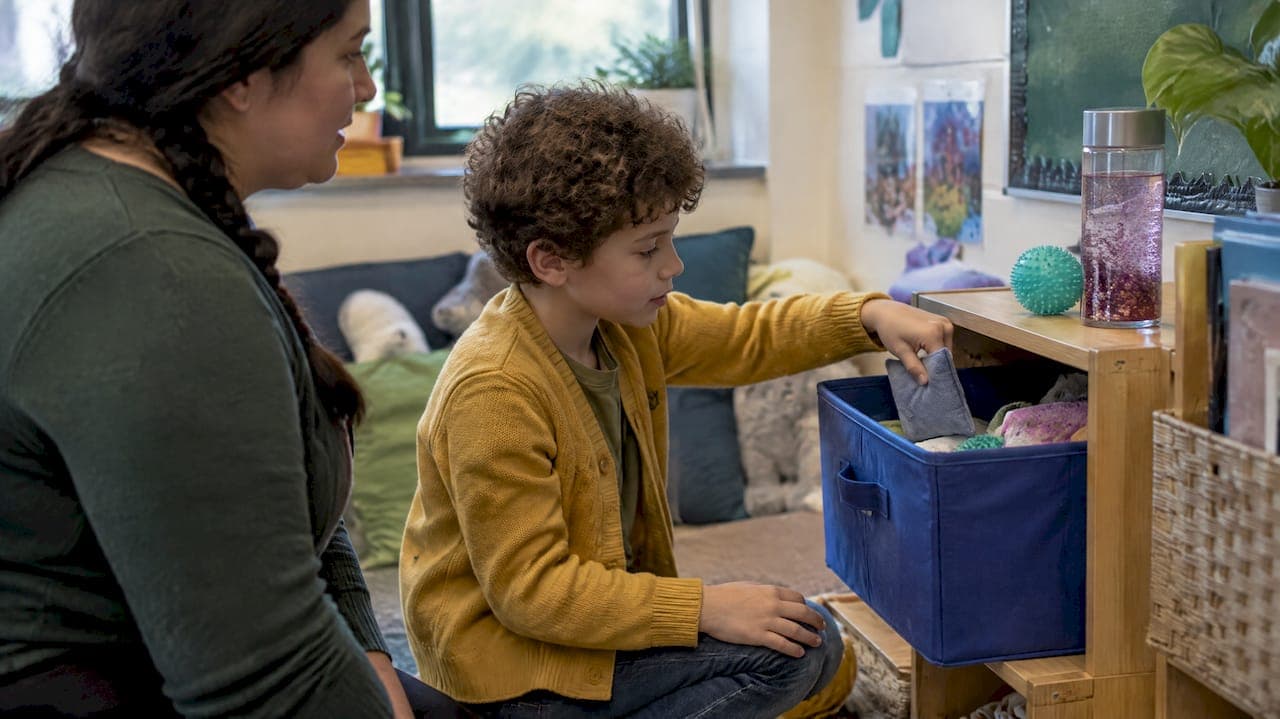
A calm down box is a small, child-curated kit of safe sensory items that helps children self-soothe and co-regulate with an adult by engaging the five senses. The best boxes mix touch, sight, sound, smell, and movement tools, chosen with age and safety in mind. This guide walks you through what to include, how to introduce it, and how to keep it working overtime.
TL;DR:
- Engaging children with sensory items from each of the five senses must be personalized and tested beforehand to ensure effective self-soothing during crises.
- Use accessible, low-cost substitutes such as heavy books or a beanbag chair for proprioceptive input instead of expensive sensory equipment.
- Introduce and rehearse calming routines regularly when children are calm to improve their likelihood of using the box independently during distress.
- Strict safety guidelines eliminate small or dangerous items like water beads or loose parts, especially for children under three.
- Keep the box simple with recycled containers and regular rotation, and pair sensory tools with emotion cards for enhanced emotional literacy and regulation.
Table of Contents
- 1. Five-senses items to fill your calm down box
- 2. Movement and deep-pressure tools that actually help
- 3. How to introduce the box so kids actually use it
- 4. Safety rules and age guidance for every item
- 5. Low-cost ways to build and store a classroom calm down kit
- 6. A classroom vignette: calm down boxes in action
- What most advice on calm down boxes gets wrong
- Pair your calm down box with story-based emotion tools
- Where to go for more safety and regulation guidance
- Sources
- FAQ
1. Five-senses items to fill your calm down box
A well-stocked box pulls from each sense so a child has options depending on what calms them that day. The Child Mind Institute's self-soothe activity sheet recommends picking at least one favorite item from each of the five senses, which keeps the box personal rather than generic.
For touch, think stress balls, theraputty, a soft piece of fabric, or playdough. Theraputty and playdough work well for children over three; for younger kids, swap in a larger, squishier stress ball that cannot be pulled apart into small pieces.
For sight, a sealed glitter bottle gives a child something to watch and follow with their eyes while their breathing slows. Calming picture cards, a laminated photo of a favorite person or pet, and a few color swatches in soothing tones round out the visual options.
For sound, load a phone or small player with a short, offline playlist of rain or ocean recordings so the box does not depend on an internet connection. A soft fabric wind chime or a small shaker can stand in for a traditional chime without the breakage risk.

For smell and taste, a travel-size mild lotion with a gentle scent gives younger children something calming to rub into their hands. A scent roller works for children old enough not to put it in their mouths. Gum or mints belong only in boxes for older children, and only with a clear rule that they are for chewing, not for younger siblings or classmates to find.
For movement, include a few laminated cards showing simple stretches, a small squeeze cushion, or instructions for a short walk.
- Touch: stress ball, theraputty, soft fabric, playdough
- Sight: sealed glitter bottle, calming cards, favorite-photo card, color swatches
- Sound: offline rain or ocean playlist, soft fabric chime
- Smell and taste: mild lotion, scent roller, gum or mints for older children only
- Movement: squeeze cushion, stretch cards, short walk prompt
Pro Tip: Let the child hold and test each item before it goes in the box. An item they chose works better in a crisis than one you picked for them.
2. Movement and deep-pressure tools that actually help
Proprioceptive input, the pressure and feedback a body gets from pushing, carrying, or squeezing, has a steadying effect on a dysregulated nervous system. You don't need specialized gear to offer it.
A few affordable substitutes work just as well as store-bought sensory equipment:
- A stack of heavy books wrapped in fabric can stand in for a weighted lap pad.
- A firm beanbag chair gives the same settling pressure as pricier sensory seating.
- A wall push, where the child presses both palms against a wall and holds for a count of ten, offers quick input with no equipment at all.
- Carrying a backpack with a few books inside on a short walk gives sustained proprioceptive feedback.
Try these classroom and home options first. If a child's sensory needs seem bigger than a calm down box can address, an occupational therapist can build a more structured sensory diet.
3. How to introduce the box so kids actually use it
A calm down box works best as a practiced routine, not a surprise pulled out mid-meltdown. NAEYC's guidance on co-regulation recommends practicing calming strategies when a child is already calm, which makes them far more likely to reach for the box later.
- Invite the child to help choose and label the items when they're relaxed, not upset.
- Rehearse two or three simple routines together: counting slow breaths, watching the glitter bottle settle, or naming what each touch item feels like.
- Model the behavior yourself. Narrate your own calming process out loud so the child sees what regulation looks like.
- Offer specific praise when they use the box, such as "You picked the stress ball and took three deep breaths, that's exactly how we use it."
This kind of validation and targeted praise, according to Child Mind Institute guidance on helping children calm down, makes a child more likely to reach for the strategy again on their own.
Pro Tip: Practice during a calm Tuesday afternoon, not during a Monday morning meltdown. The rehearsal is what makes the tool stick.
4. Safety rules and age guidance for every item
Every item in a calm down box should pass a basic safety check before it goes in, no matter how calming it seems.
Water beads are a hard no. Healthychildren warns that these beads can expand inside a child's body after swallowing, and they have caused serious injuries and recalls. Skip small loose parts, button batteries, and anything with long strings or ribbons that could pose a strangulation risk for unsupervised children.
For children under three, avoid anything smaller than a toddler's fist. For older children, gum and necklaces can work with clear rules about supervision and where they're used.
Before adding any item, run it through a quick checklist:
- Is it too big to swallow?
- Is it washable or easy to wipe down?
- Does it carry a non-toxic label?
- Are there small parts that could come loose?
Choking and ingestion hazards remain one of the most consistently flagged risks in guidance on toy and kit safety for young children, according to AAP guidance on buying safe toys. That alone is reason enough to double-check every item before it goes in the box.
5. Low-cost ways to build and store a classroom calm down kit
You don't need a big budget to put together a functional box. A shoebox, a repurposed cereal box, or a few zip pouches work fine, and a simple label helps kids find what they need fast.
In classrooms, consider splitting items into individual pouches for students with an IEP or a known sensory need, and keep a shared communal box for general use. NAEYC's co-regulation resources note that individual pouches respect a child's privacy and cut down on lost or damaged items.
A simple check-in and check-out system, where a student grabs their pouch and returns it to a labeled bin, keeps things organized without much teacher oversight.
- Use recycled boxes, pouches, or bins with clear labels.
- Rotate two or three items every few weeks to keep the box interesting.
- Ask families or local community groups to donate gently used sensory items.
- Wipe down shared items weekly, and more often during cold and flu season.
6. A classroom vignette: calm down boxes in action
Picture a second-grade classroom where a student feeling overwhelmed walks to the comfort corner and pulls out a themed story card featuring a favorite character working through a big feeling. Pairing a calm down box with character-driven storytelling gives kids language for what they're feeling, not just tools to feel calmer.
Themed decks and feelings-based activities can sit right next to the box, giving a child something to sort, name, or talk through while they settle. For more on building that kind of space, see our guide on designing a feelings corner and our roundup of emotion-sorting activities that pair naturally with calm-down practice.
What most advice on calm down boxes gets wrong
Most lists of calm down box ideas treat the box like a product: fill it with the right items and the problem solves itself. The research doesn't support that. The items matter less than the practice around them. A box full of perfect sensory tools that a child has never touched before a meltdown will sit untouched during one.

The part caregivers skip most often is rehearsal. Practicing the routine when a child is calm, labeling items together, and modeling your own regulation out loud does more for long-term use than any item on the shelf. Safety screening comes a close second: a water bead or a loose button battery turns a calming tool into an emergency room visit.
If you only have time to do one thing well, skip the shopping trip and spend ten minutes this week practicing the breathing routine with your child while they're already calm. The box works because of the habit, not because of what's inside it.
— Derek Amarillas
Pair your calm down box with story-based emotion tools
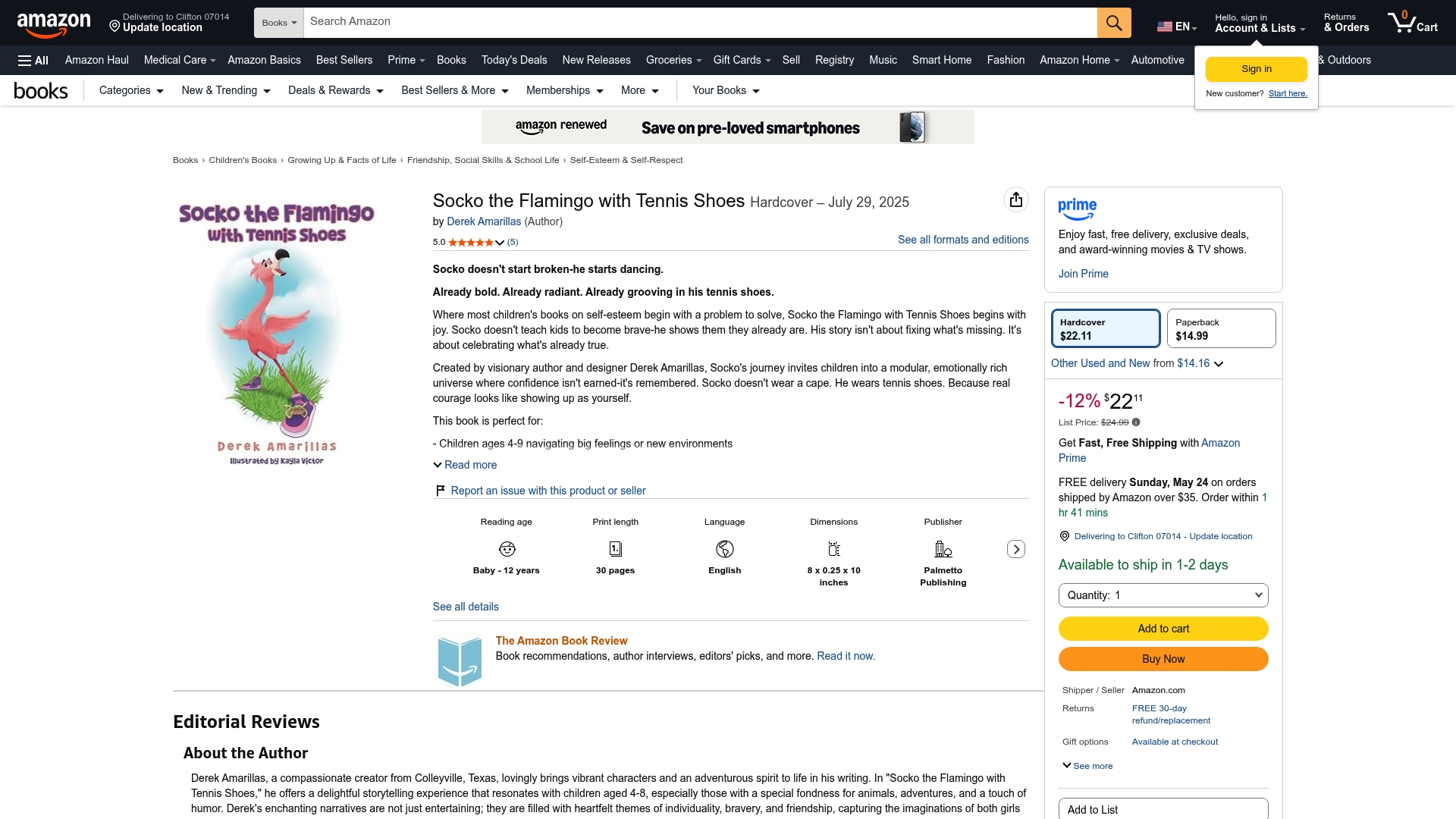
A calm down box gives kids a place to settle their body. Pairing it with a character-driven deck gives them the words for what they're feeling in the first place. Themed emotion cards and activity printables can help build emotional vocabulary alongside calming practice, so kids have something to sort, name, and talk through between sensory breaks.
- Use a themed card as a prompt before reaching for the box, to name the feeling first.
- Rotate cards into the calm space alongside your sensory items to keep practice fresh.
- Pair a short story moment with a breathing routine for a combined calming and labeling exercise.
Browse Duckwave Decks to see the full set of themed cards and activity printables, or check the Icon Literary catalog for Socko's Universe kits built around the same emotional-literacy themes.
Where to go for more safety and regulation guidance
- Child Mind Institute's self-soothe activity sheet for printable five-senses ideas.
- NAEYC's co-regulation resources for classroom comfort-corner guidance.
- Healthychildren for toy and choking safety standards.
- Edhed Learning for printable charts on naming and calming strategies.
Sources
- Managing intense emotions activity sheet — Child Mind Institute
- Healthychildren
- Co-regulation resources — NAEYC
FAQ
What are 10 calming activities I can do?
Deep breathing, counting, squeezing a stress ball, watching a glitter bottle settle, listening to rain or ocean sounds, smelling a mild lotion, stretching, a short walk, naming five things you can see, and pressing your palms against a wall are all simple calming activities. Most pair naturally with items from a calm down box.
What are some calming down activities?
Calming activities generally fall into five categories tied to the senses: touch (squeezing or kneading something soft), sight (watching a calming visual), sound (listening to a quiet recording), smell (a familiar mild scent), and movement (stretching or pushing against a wall). The Child Mind Institute recommends choosing at least one favorite activity from each sense.
What are some good items to put in a calm corner?
A calm corner works well with a few soft seating options, a calm down box stocked with sensory items, visual breathing guides, and a labeled check-in system for classroom use. NAEYC's guidance on classroom co-regulation emphasizes pairing a consistent space with practiced routines, not just a pile of items.
What are some ideas for calming down kids?
The most effective approach combines a sensory tool, like a calm down box, with validation and modeling from a trusted adult. Practicing the routine when a child is calm, rather than only during distress, makes the strategy far more likely to stick according to Child Mind Institute guidance.