
CASEL-aligned activities are classroom practices tied directly to one or more of CASEL's five core competencies: self-awareness, self-management, social awareness, relationship skills, and responsible decision-making. You can start today with three moves: a 60-second feelings check-in, a 5-to-10-minute embedded practice woven into an existing lesson, and an optimistic closure at the end of class. Each one maps cleanly to CASEL's framework and its SEL 3 Signature Practices.
TL;DR:
- Consistent use of low-lift routines, such as daily feelings check-ins and brief embedded activities, yields more progress than sporadic, lengthy SEL lessons.
- Rotating focus on different core competencies each day enhances skill development without overwhelming instructional time.
- Adapting activities with visual supports, multiple response modes, and cultural flexibility helps include neurodivergent and diverse learners effectively.
- Embedding SEL into existing lessons and involving families with simple communication increases student transfer and community support.
- Regular, brief observation checklists and reflections provide useful data for tracking social-emotional growth over time.
Table of Contents
- What are CASEL-aligned activities and the five core competencies?
- What are CASEL's SEL 3 Signature Practices?
- Five classroom-ready CASEL-aligned activities you can run today
- How do you fit SEL activities into an already packed schedule?
- How do you facilitate SEL without it becoming a checkbox exercise?
- How do you adapt SEL activities for neurodivergent and diverse learners?
- Who's behind this guidance?
- How do you get families and communities involved in SEL?
- How do you track SEL growth over time?
- Where can teachers get SEL training and professional development?
- How do you keep CASEL-aligned activities culturally responsive?
- The gap between SEL theory and Monday morning
- Ready-made materials for your next SEL lesson
- Sources
- FAQ
What are CASEL-aligned activities and the five core competencies?
CASEL's framework organizes social-emotional learning around five skill areas, and every activity worth your class time should map to at least one of them. This isn't a script you follow line by line. It's a set of target skills you design and evaluate lessons against, which matters because vague "SEL time" without a competency target is hard to assess or defend to administrators.
Here's what each competency looks like in a real classroom:
- Self-awareness: recognizing your own emotions and how they affect behavior. Example: a student notices frustration building during a math test and names it before it turns into shutting down.
- Self-management: regulating emotions, thoughts, and behavior to reach goals. Example: a student uses a breathing routine before a presentation instead of asking to skip it.
- Social awareness: understanding others' perspectives and showing empathy across backgrounds. Example: a student reads a peer's body language during group work and adjusts their tone.
- Relationship skills: communicating, cooperating, and resolving conflict. Example: two students negotiate roles in a group project without teacher intervention.
- Responsible decision-making: weighing consequences and ethics before acting. Example: a student thinks through the fallout of excluding a classmate from a game before doing it.
CASEL itself describes this as a framework, not a curriculum, so the five competency clusters guide your choices rather than dictate a script.
What are CASEL's SEL 3 Signature Practices?
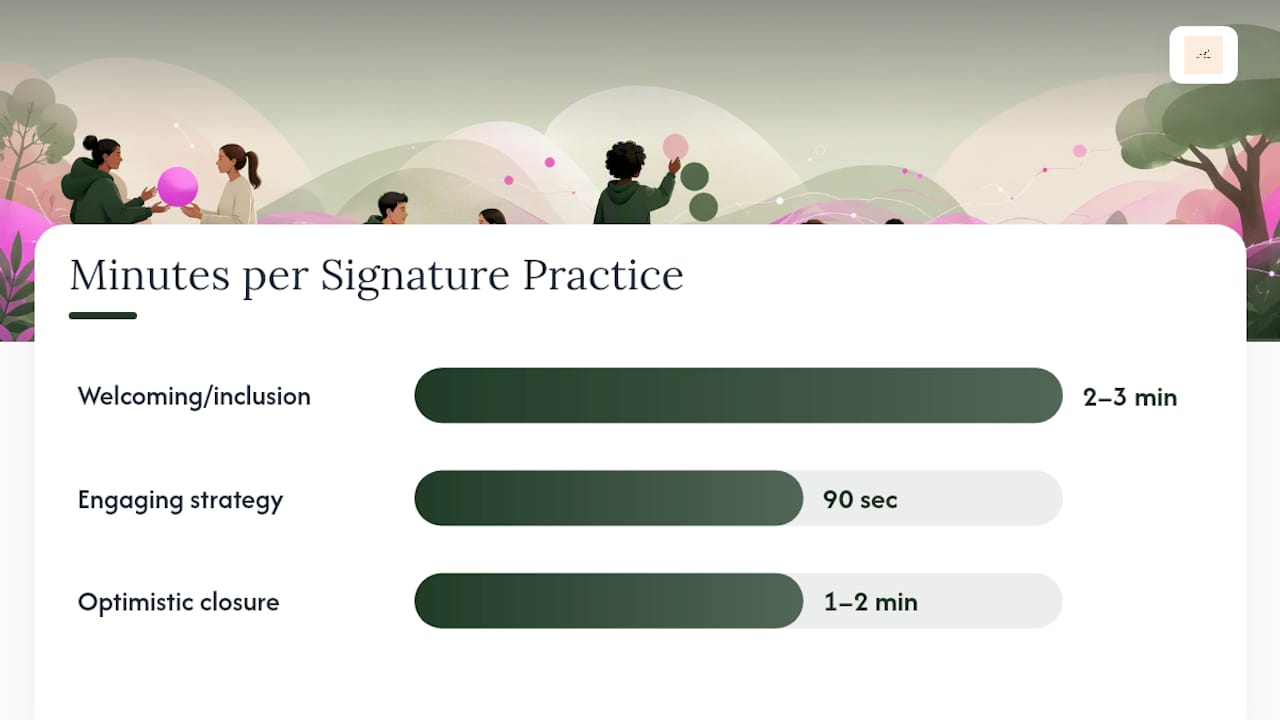
CASEL's Signature Practices Playbook breaks daily SEL routines into three moves: a welcoming or inclusion activity, an engaging strategy in the middle of a lesson, and an optimistic closure at the end. The Playbook frames these as equity-centered routines, meaning every student gets a voice, not just the ones who raise their hands first.
Here's how to run each one without adding prep time:
- Welcoming/inclusion activity (2 to 3 minutes at the start of class): Ask students to share one word describing their morning as they enter, or greet each other with a hand signal of their choice. This signals that every voice matters before instruction even begins.
- Engaging strategy (built into transitions or brain breaks): Pause mid-lesson for a 90-second "turn and talk" where students share how the material connects to something in their own life. Use it once per class period, ideally after introducing a new concept.
- Optimistic closure (1 to 2 minutes at the end of class): Ask students to name one thing they're looking forward to, or have them rate the day's learning with a thumbs signal and one word why. Save this for the last few minutes, right before dismissal.
You don't need all three every single period. A daily welcoming routine, one engaging strategy per lesson, and a closure at the end of each day covers the basics without eating into instructional time.
Five classroom-ready CASEL-aligned activities you can run today
These five activities map directly to the five competencies, and each takes under 15 minutes. CASEL's own activity bank offers a similar structure with time estimates you can adapt.
- Self-awareness (2 to 3 minutes): Run a 60-second feelings check-in using a feelings wheel or a quick body scan. Ask students to name a physical sensation (tight shoulders, fast heartbeat) before naming the emotion attached to it. A 60-second check-in ritual like this preserves instructional time while building emotional vocabulary over weeks.
- Self-management (3 to 5 minutes): Try a short goal-setting routine or a guided breathing exercise. Script: "Think of one thing you want to finish today. Take three slow breaths, then write it on a sticky note." Collect the notes and revisit them at the end of the week.
- Social awareness (8 to 10 minutes): Use an emotion-detection scenario, a short vignette where students identify what a character is feeling and why. This works especially well for neurodivergent learners, since scenarios can be de-identified and practiced repeatedly without the social pressure of a live interaction.
- Relationship skills (10 to 15 minutes): Run a small-group collaboration game, then debrief with three prompts: "What worked well in your group?", "What was hard to communicate?", and "What would you do differently next time?" Yearbook Builds School Community shows how similar activities strengthen student communication and collaboration.
- Responsible decision-making (8 to 10 minutes): Present a decision scenario (a student sees a classmate being excluded) and have students map out possible consequences before choosing a response. Close with a reflection prompt: "What made this decision hard?"
Pro Tip: Rotate which competency you target each day of the week instead of trying to hit all five daily. Consistency over five days builds more skill than cramming everything into Monday.
How do you fit SEL activities into an already packed schedule?
Explicit SEL instruction means a dedicated lesson block, scheduled and taught deliberately, usually 20 to 30 minutes. Embedded instruction means weaving SEL skills into academic content you're already teaching, like a 5-minute check-in before a reading lesson. CASEL's SchoolGuide recommends combining both, because dedicated time builds skill while embedded practice provides everyday reinforcement.
A realistic weekly model looks like this:
- Daily: 2 to 3 minute welcoming activity plus a 60-second check-in, embedded into morning routine.
- Three to four times a week: A 5 to 10 minute embedded practice tied to a reading, math, or advisory lesson.
- Once a week: A 20 to 30 minute explicit lesson, ideally during an advisory period or homeroom block.
To get administrator buy-in, frame the ask around minimal disruption. A 60-second check-in costs almost nothing in instructional time, and showing that scheduled SEL time raises engagement in academic lessons tends to land better than framing it as a separate initiative competing for the master schedule.
How do you facilitate SEL without it becoming a checkbox exercise?
Facilitation is where SEL activities either stick or turn into busywork. CASEL warns that superficial compliance, running an activity because it's on the calendar rather than because it serves a real skill gap, undercuts the whole point of systemic SEL implementation.
A few low-burden ways to keep it real:
- Debrief with open questions, not yes/no ones. "What did you notice about how your group handled disagreement?" gets further than "Did that go well?"
- Use a simple rubric or exit reflection instead of a formal assessment. A three-point scale (not yet, getting there, confident) tracked in a spreadsheet takes less time than grading a worksheet.
- Watch for activities that feel performative. If students are reciting feelings words without connecting them to real situations, the activity has drifted into compliance mode.
- Keep practices culturally responsive. Let students bring their own language and gestures into check-ins rather than forcing a single script for the whole class.
Pro Tip: If a student consistently opts out of a check-in, don't push. Offer a private, nonverbal option like a card they can flip instead of speaking aloud.
How do you adapt SEL activities for neurodivergent and diverse learners?
Start with the body, not the vocabulary. Interoception, noticing physical sensations like a racing heart or clenched jaw, often comes before a student can accurately name the emotion attached to it. Research on affect labeling and interoception supports leading with body cues rather than jumping straight to "How do you feel?"
Practical adjustments that take almost no extra prep:
- Offer multiple response modes: a checkbox on a card, a hand signal, a drawing, or a spoken answer, so students aren't locked into one format.
- Reduce cognitive load with visuals, like a feelings wheel with pictures instead of words alone.
- Shrink group size for social-awareness activities if a student struggles with multiple voices at once, even a pair instead of a group of four.
- Extend timing for decision-making scenarios. A student who needs more processing time shouldn't be rushed into a response just to keep pace with the class.
Who's behind this guidance?
This piece draws on published CASEL guidance and classroom-tested SEL routines, written by Derek Amarillas. Icon Literary builds SEL-themed picture books, Duckwave Decks, and activity kits designed to give teachers ready-to-use materials rather than one more thing to build from scratch.
How do you get families and communities involved in SEL?
SEL sticks better when the vocabulary and routines a student practices at school show up at home too. You don't need a formal parent-education program to start. A short note home describing the week's competency focus, self-management, for instance, gives families a shared language without asking them to become SEL experts overnight.
A few approaches that work without adding a heavy lift to your week:
Send home a one-page "ask me about" sheet after any explicit SEL lesson. Something as simple as "Ask your child what their check-in feeling was today and why" opens a two-minute conversation at dinner. Schools that run family SEL nights often keep them short and activity-based rather than lecture-style, letting parents try the same 60-second check-in their kids do in class.
Community partnerships matter too, especially in schools where families have limited time or multiple jobs. A local library, after-school program, or youth organization that reinforces the same competency language creates consistency a single classroom can't provide alone. If your school has a PTA or family liaison, loop them in on which competency you're focusing on each month rather than presenting SEL as a mystery initiative.
The goal isn't to turn parents into co-teachers. It's to make sure the words "self-awareness" or "responsible decision-making" mean the same thing at home as they do in your classroom, so a student isn't relearning a whole vocabulary system in two different places.
How do you track SEL growth over time?
Standardized academic tests won't tell you whether a student's self-management has improved, so you need lighter, more frequent tools instead. A simple three-point observation checklist (not yet, developing, consistent) tracked weekly gives you a trend line without turning every SEL activity into a graded assignment.
Exit reflections work well here too. A single index card asking "What's one thing you handled differently today because of what we practiced?" takes 90 seconds to collect and gives you real evidence of transfer, not just participation.
For year-over-year tracking, keep a simple spreadsheet by competency rather than by activity. If you're focusing on relationship skills in October, note which students needed more scaffolding in group debriefs versus which ones took on leadership roles unprompted. Compare that same group's notes in March. Growth in SEL rarely shows up as a dramatic before-and-after. It shows up as a student who used to shut down during conflict now naming what bothered them out loud.
Avoid over-relying on a single self-report survey given twice a year. Students, especially younger ones, often answer surveys based on how they feel that morning rather than reflecting real growth. Pairing brief self-reports with your own observation notes gives a more honest picture.
Where can teachers get SEL training and professional development?
CASEL's own SchoolGuide is a strong starting point, offering scope-and-sequence guidance and explicit-instruction frameworks built for classroom teachers rather than district administrators alone. It's free, publicly available, and designed to be worked through at your own pace.
Beyond CASEL's own materials, look for professional development that pairs a short training session with ongoing coaching rather than a one-day workshop. Instructional coaches who can observe a Signature Practice in action and give feedback tend to move a teacher's facilitation skill faster than a slide deck alone.
If your school has an SEL committee or points person, ask whether they can run a 20-minute staff meeting demo of one activity, like an optimistic closure or the emotion-detection scenario, so the whole staff sees it modeled before trying it solo. Peer observation, even informally, works the same way: watching a colleague run a check-in gives you scripts and pacing cues no written guide fully captures.
For self-directed learning, CASEL's blog and Playbook remain the most reliable free resources built specifically for classroom application rather than academic theory.
How do you keep CASEL-aligned activities culturally responsive?
An activity that works well in one classroom can fall flat, or worse, feel exclusionary, in another if it assumes a single cultural default for how emotions are expressed or discussed. Some students come from households where naming feelings out loud is uncommon, and pushing verbal disclosure as the only valid response can shut a student down rather than open them up.
Build in flexibility from the start. Let students choose how they express a check-in, drawing, gesture, or a private written note, instead of requiring everyone to speak. Watch your own examples too. If every scenario in a social-awareness activity features the same cultural context or family structure, students outside that norm may disengage even when the skill being taught is sound.

Equity also means watching who gets called on and how consequences get framed in decision-making scenarios. A scenario that implies one "right" cultural response to conflict, apologizing immediately, for instance, may not reflect how conflict resolution works in every student's home culture. Frame these scenarios with room for multiple reasonable responses rather than a single correct answer.
Finally, involve students in shaping the routines themselves when possible. Asking a class "What's a way you'd want to check in each morning?" often surfaces ideas more inclusive than anything a single teacher would design alone, and it gives students ownership over practices meant to serve them.
The gap between SEL theory and Monday morning
Most SEL guidance assumes a level of prep time teachers simply don't have. The conventional advice, build a full SEL curriculum, train the whole staff, roll out a schoolwide initiative, sounds right in a professional development session and falls apart by the second week of October when nobody has bandwidth left.
What actually works is smaller and more stubborn: a 60-second check-in run consistently for a month beats a beautifully designed 45-minute SEL unit run once and abandoned. CASEL's own research backs this, favoring daily, low-lift routines paired with occasional deeper lessons over sporadic big swings. The compliance trap is real, too. An SEL activity done because it's scheduled, without real facilitation or follow-up, teaches students that feelings talk is a box to check, which is worse than not doing it at all.
If you take one thing from this guide, prioritize consistency over ambition. Pick one signature practice, run it every day for two weeks, then add a second. Icon Literary's classroom materials exist for exactly this reason: to give you a ready-made prompt instead of one more thing to build from scratch on a Sunday night.
— Derek Amarillas
Ready-made materials for your next SEL lesson
You don't have to build every prompt, vignette, and discussion question from a blank page. Icon Literary designs its picture books, Duckwave Decks, and activity kits around the same emotional-literacy goals CASEL's framework targets, so a read-aloud can double as your social-awareness lesson and a card deck prompt can anchor your responsible decision-making activity.
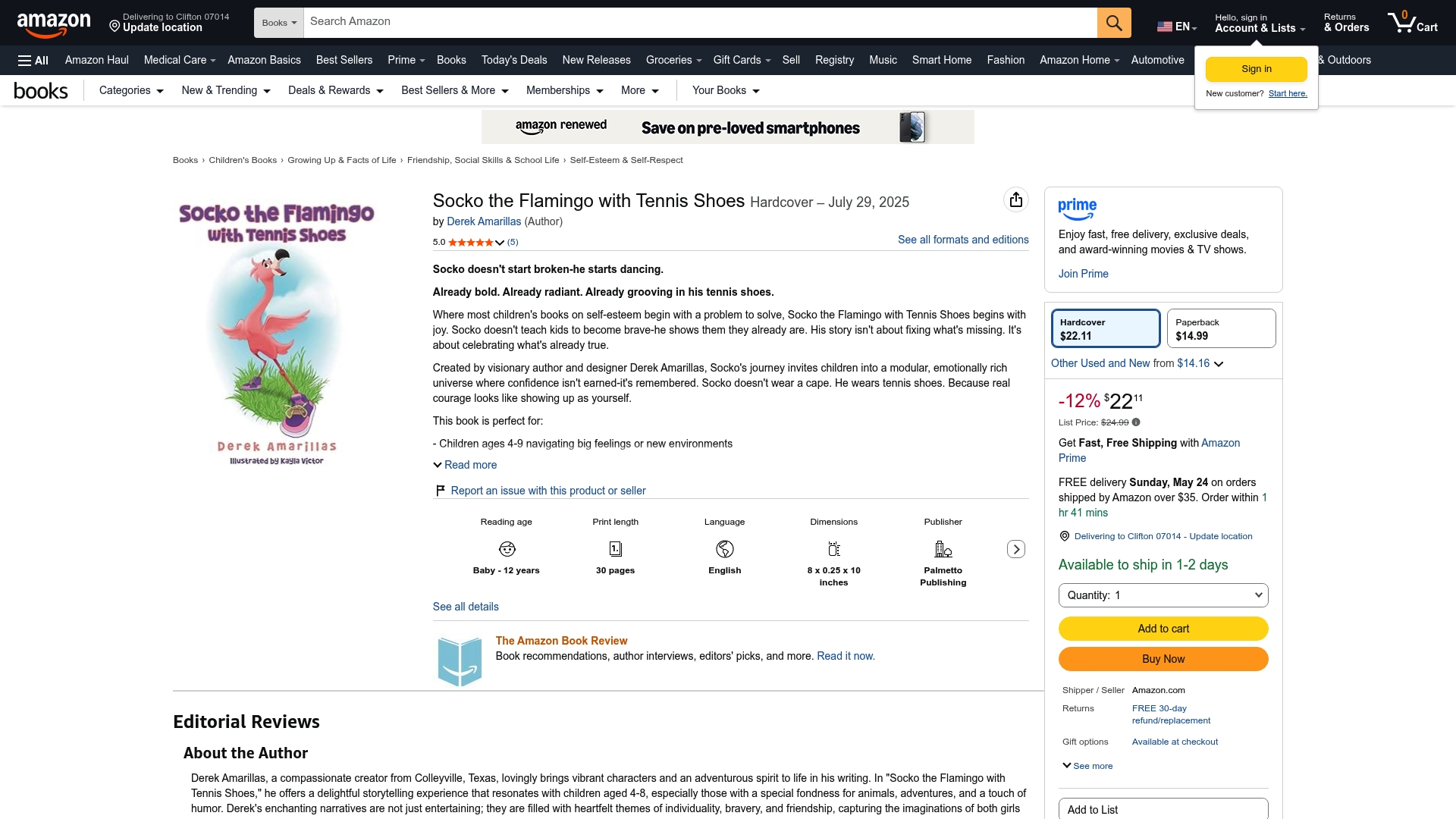
Here's a quick example: pull a single prompt card from a Duckwave Deck and use it as your optimistic closure. Ask students to respond to the card's scenario with one sentence about how they'd handle it, then share out with a partner before dismissal. That's a full Signature Practice covered in under three minutes, no lesson plan required. Icon Literary's card decks provide a cost-effective way to stock a classroom with ready-to-use SEL prompts. Browse the full catalog for read-alouds and activity kits, and start building a rotation of five-minute activities you can pull out whenever the schedule leaves you a spare moment.
Sources
Consult CASEL's Signature Practices Playbook and SchoolGuide for design templates, plus Icon Literary's guide to SEL activities for kids for more classroom examples.
- 5 Meaningful, Standards-Based SEL Activities for the Classroom - CASEL
- SEL 3 Signature Practices Playbook (CASEL)
FAQ
What are some examples of SEL activities?
Common examples include a 60-second feelings check-in, a breathing routine for self-management, an emotion-detection scenario for social awareness, a small-group collaboration game for relationship skills, and a decision-mapping scenario for responsible decision-making. CASEL's own activity bank offers five standards-based examples with time estimates.
What are the five pillars of the CASEL Framework?
The five competencies are self-awareness, self-management, social awareness, relationship skills, and responsible decision-making. CASEL treats these as a framework for designing and evaluating activities, not a fixed curriculum.
What are the criticisms of SEL?
The most common criticism is that SEL becomes a compliance exercise, running an activity because it's scheduled rather than because it's well facilitated or tied to a real skill gap. CASEL itself warns that thoughtful selection and skillful facilitation determine whether SEL implementation actually changes student behavior or just fills time on a calendar.
What are some examples of SEL programs?
Programs range from standalone curricula to embedded frameworks that weave SEL into existing academic lessons, and CASEL's SchoolGuide recommends combining explicit instruction with daily embedded practice rather than relying on one approach alone. Classroom resources like Icon Literary's read-alouds and Duckwave Decks can supplement either model without requiring a separate curriculum purchase.