
The most effective SEL read-aloud classroom examples share one structure: pick a picture book with a clear emotional arc, plan several stopping points keyed to character decisions or feelings, and run a short extension activity immediately after. Eight books cover the full range of CASEL competencies for early elementary: The Invisible Boy, The Color Monster, The Day You Begin, What If Everybody Did That?, All Are Welcome, I Am Human, The Magical Yet, and Do Unto Otters. Add Icon Literary's SEL picture books and activity kits featuring original characters and ready-made discussion guides. That combination handles morning meeting, literacy block, and counseling circle without extra prep.
Quick book map — classroom-ready at a glance:
- The Invisible Boy (Trudy Ludwig) → Social awareness / empathy → Shows exclusion through illustration; students see what "invisible" feels like before they name it. Best for: morning meeting, counseling circle.
- The Color Monster (Anna Llenas) → Self-awareness / emotion identification → Color-coded emotions give non-verbal learners a concrete vocabulary anchor. Best for: morning meeting, small group.
- The Day You Begin (Jacqueline Woodson) → Social awareness / belonging → Poetic language models courage in sharing personal stories. Best for: literacy block, first-week community building.
- What If Everybody Did That? (Ellen Javernick) → Responsible decision-making → Cause-and-effect structure makes collective impact visible and discussable. Best for: literacy block, whole class.
- All Are Welcome (Alexandra Penfold & Suzanne Kaufman) → Relationship skills / inclusion → Rhyming text supports ELL students; illustrations show diverse school community. Best for: morning meeting, first-week read.
- I Am Human (Susan Verde & Peter H. Reynolds) → Self-awareness / growth mindset → Normalizes mistakes as part of being human; strong for SEL vocabulary building. Best for: literacy block, counseling circle.
- The Magical Yet (Angela DiTerlizzi) → Self-management / perseverance → The word "yet" becomes a classroom anchor phrase students use all week. Best for: morning meeting, literacy block.
- Do Unto Otters (Laurence M. Gottlieb) → Relationship skills / kindness → Humor lowers affective filter; students laugh before they reflect. Best for: whole class, morning meeting.
Table of Contents
- Why do read-alouds teach SEL and literacy at the same time?
- How do you pick a single SEL competency and map it to CASEL?
- What should you look for when choosing an SEL picture book for K–2?
- How do you plan and deliver an interactive read-aloud?
- Classroom-ready book examples mapped by SEL skill
- What extension activities and assessments actually move the needle?
- A 15-minute mini-lesson you can run tomorrow
- How do you teach sensitive SEL content safely and inclusively?
- Key Takeaways
- Why the book is never the whole lesson
- Icon Literary classroom resources for K–2 SEL read-alouds
- Useful sources
Why do read-alouds teach SEL and literacy at the same time?
Interactive read-alouds build listening comprehension, vocabulary, and SEL competencies when teachers plan 2–5 intentional stopping points to discuss character emotions and social decisions. That dual payoff is what makes the format worth protecting in a packed school day.
The mechanism works on three levels. First, students practice perspective-taking by tracking a character's emotional state across a narrative arc — a cognitive skill that transfers directly to real peer interactions. Second, picture books introduce emotion vocabulary in context, which is far stickier than a feelings chart on the wall. Third, teacher think-alouds at stopping points model self-regulation out loud: "I'm noticing Brian looks left out here. I wonder how that feels in his body." Students hear an adult narrate an internal process they are still learning to do themselves.
Practitioner research from the Michigan Reading Journal confirms that the teacher's facilitation of discussion matters more than delivering a moral. Books are prompts to invite lived-experience sharing, not vehicles for a lesson the teacher already decided on. That reframe changes everything about how you plan stopping points.
The SAGE Social-Emotional Learning Playbook makes the case for treating read-alouds as part of a broader community of care rather than one-off activities. When SEL vocabulary from a Monday read-aloud shows up in a Wednesday conflict conversation, students transfer the learning. That only happens when teachers plan for it.
Stat to cite: Effective read-aloud planning typically includes a few planned stopping points per book — not a loose "pause when it feels right," but pre-selected emotional or decision moments marked in the text before the lesson begins.
How do you pick a single SEL competency and map it to CASEL?
CASEL's five-competency framework — self-awareness, self-management, social awareness, relationship skills, and responsible decision-making — gives teachers a shared language for planning. The practical move is to target one competency per read-aloud cycle rather than trying to address all five in a single book.
Classroom goal → CASEL competency → book category:
| Classroom Goal | CASEL Competency | Book Category |
|---|---|---|
| Students name and express feelings | Self-awareness | Emotion identification books |
| Students manage frustration or impulse | Self-management | Perseverance / growth mindset books |
| Students recognize peers' perspectives | Social awareness | Belonging / empathy books |
| Students practice kindness and cooperation | Relationship skills | Community-building / kindness books |
| Students consider impact of their choices | Responsible decision-making | Cause-and-effect / consequence books |
Checklist: which competency to prioritize this week?
- Are students struggling to name feelings during conflicts? → Start with self-awareness.
- Is the classroom community new or fractured? → Lead with relationship skills and belonging.
- Are impulsive behaviors disrupting learning? → Target self-management.
- Are students blaming others without considering impact? → Responsible decision-making.
- Is empathy already strong but cooperation lagging? → Shift to relationship skills.
A sensible sequence across a school year: begin with community-building and belonging early in the year, move to kindness and empathy in the following months, then self-regulation and growth mindset later on, and cycle back as behavior data warrants. AASL-aligned resources organize books by exactly these thematic categories, which makes planning a semester faster.
What should you look for when choosing an SEL picture book for K–2?
Not every book with "feelings" in the description belongs in a read-aloud lesson. These criteria separate texts that actually generate discussion from ones that deliver a lecture in picture-book form.
Selection checklist:
- Length fits your session. Most K–2 read-alouds run 10–20 minutes total. Books of 32–40 pages with moderate text density are the sweet spot. Age-appropriate book selection matters more than a book's reputation.
Pro Tip: Before your lesson, flip through the illustrations alone — cover the text. Mark every spread where a character's face or body language shows a strong emotion. Those spreads are your natural stopping points. You can plan a full read-aloud in under five minutes using illustrations as your guide.
For a deeper look at what separates effective from ineffective SEL texts, the SEL book selection criteria guide from Icon Literary's blog walks through each criterion with classroom examples.
How do you plan and deliver an interactive read-aloud?
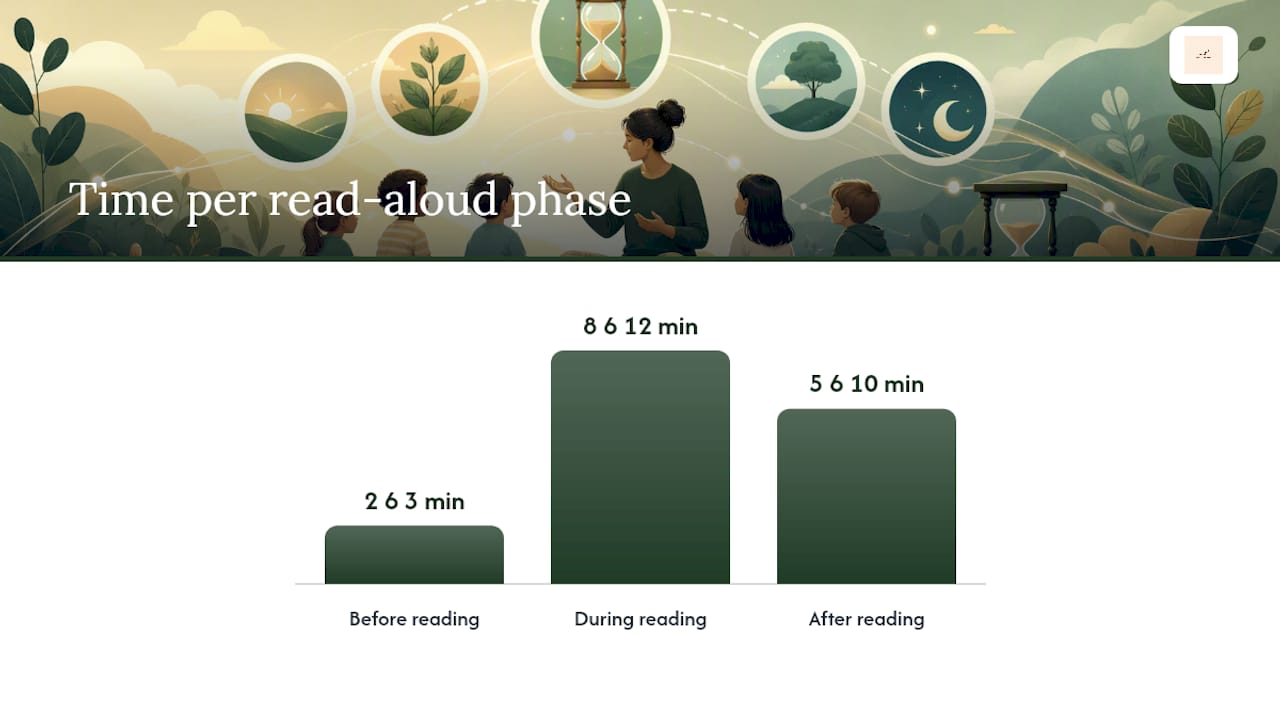
The before/during/after structure is the backbone of every effective SEL read-aloud. Responsive Educator's interactive read-aloud framework breaks this into concrete moves teachers can rehearse.
Before reading (2–3 minutes):
- State the purpose in one sentence: "Today we're reading to notice how Brian feels when he's left out."
- Preview one or two key vocabulary words with a quick visual or gesture.
- Set participation norms: "When I stop, give me a thumbs up if you have a thought. We'll use turn-and-talk, not hands."
- Activate prior knowledge with a single question: "Has anyone ever felt invisible at school? Just think — don't share yet."
During reading (8–12 minutes):
Plan 2–5 stopping points before you open the book. Mark them with sticky notes. At each stop, use one of these question types:
- Feeling question: "What is [character] feeling right now? How do you know?"
- Perspective question: "Why do you think [character] made that choice?"
- Connection question: "Has anything like this ever happened to you or someone you know?"
- Prediction question: "What do you think [character] will do next? What would you do?"
Teacher think-aloud example: "I'm going to stop here. I notice Brian's shoulders are slumped and he's eating alone. I'm thinking he feels really lonely. I wonder if anyone in the class has noticed him." Then open to students.
After reading (5–10 minutes):
- Quick formative check: thumbs up/middle/down — "Did you ever feel like [character] today?"
- Immediate extension: one of role-play, drawing, journaling, or a kindness chart entry.
- Anchor phrase: name the SEL concept and post it. "Today's word is empathy. We'll use it again at lunch."
Planning note: The 2–5 stopping point recommendation from Edutopia's SEL read-aloud research is a planning minimum, not a ceiling — but more than five stops fragments the story and loses younger students. Two well-chosen stops beat five rushed ones.
Classroom-ready book examples mapped by SEL skill
Storyboard That's SEL lesson plan library and WeDoListen's book-and-lesson resources both organize read-alouds by theme and grade band. The examples below use that structure with explicit stopping points and prompts you can copy directly.
Community-building and belonging
All Are Welcome (Penfold & Kaufman)
- Stop 1: After the opening spread showing different students arriving. "Look at all the different kids. What do you notice? How does this school feel?"
- Stop 2: Near the end, when the refrain repeats. "Why do you think the author keeps saying 'all are welcome'? Who needs to hear that?"
- Extension (2 min): Students draw themselves arriving at school and write or dictate one thing that makes them feel welcome.
- Setting: Whole class, morning meeting. 15 minutes total.
The Day You Begin (Woodson)
- Stop 1: When Angelina hesitates to share her summer story. "Why is she nervous? What is she worried people will think?"
- Stop 2: After she shares. "What changed? What did it take for her to speak up?"
- Extension: Partner share — "Tell your partner one thing about yourself that feels brave to share."
- Setting: Literacy block, first week of school or after a break.
Kindness and empathy
The Invisible Boy (Ludwig)
- Stop 1: When Brian is left out of the lunch group. "How do you think Brian feels? What clues do you see in the picture?"
- Stop 2: When Justin includes Brian. "What did Justin do? Was it hard or easy? Why does it matter?"
- Extension: Kindness chart — students add one name of someone they noticed today.
- Setting: Morning meeting or counseling circle. 20 minutes with extension.
Do Unto Otters (Gottlieb)
- Stop 1: When Mr. Rabbit lists what he wants from neighbors. "Is this a fair list? Would you want a neighbor like that?"
- Stop 2: The Golden Rule reveal. "Have you heard this idea before? Is it easy or hard to do?"
- Extension: Role-play in pairs — one student is the new neighbor, one is Mr. Rabbit. Practice one kind greeting.
- Setting: Whole class. 15 minutes.
Emotion identification and self-awareness
The Color Monster (Llenas)
- Stop 1: When the monster's colors are all mixed up. "Have you ever felt mixed up inside? What does that feel like?"
- Stop 2: After each emotion is sorted. "Which color/feeling is hardest to sort out? Why?"
- Extension: Students color their own "feeling jar" using the book's color code for how they feel right now.
- Setting: Morning meeting or small group. 15 minutes.
I Am Human (Verde & Reynolds)
- Stop 1: "I make mistakes." "Is it okay to make mistakes? What happens after?"
- Stop 2: "I am human." "What does it mean to be human? What do all humans share?"
- Extension: Students complete the sentence: "I am human. I can ___."
- Setting: Literacy block or counseling circle.
Self-management and growth mindset
The Magical Yet (DiTerlizzi)
- Stop 1: When the child can't do something. "What does 'yet' mean here? How does one word change the feeling?"
- Stop 2: Near the end. "What's something you can't do yet? Say it out loud with 'yet' at the end."
- Extension: "Yet" wall — students write one skill they're working on and post it.
- Setting: Morning meeting or literacy block. 15 minutes.
Responsible decision-making
What If Everybody Did That? (Javernick)
- Stop 1: After the first "what if." "What would really happen? Is one person's choice a big deal?"
- Stop 2: Midbook, when consequences stack up. "Why does it matter what everyone does, not just one person?"
- Extension: Class creates one classroom rule using the "what if everybody" frame.
- Setting: Whole class, literacy block. 15 minutes.
Icon Literary SEL picture books and activity kits
Icon Literary's SEL picture books for early elementary feature original characters built around the same CASEL competency framework, with activity kits that include pre-written stopping points, discussion cards, and extension printables. The kits are designed specifically for ages 3–8, so the language complexity and illustration density are calibrated for K–2 read-alouds without additional teacher adaptation.

What extension activities and assessments actually move the needle?
The read-aloud is the spark. Extension activities are where students practice the skill, and quick formative checks tell you whether the concept landed.
High-impact extension activities:
- Role-play scenarios: Immediately after reading, give pairs a brief scenario that mirrors the book's conflict. Keep it under two minutes. The low-stakes context lets students try a response before they need it in real life.
- Emotion journals or drawings: Students draw or write how a character felt and why. For pre-writers, a drawing with a dictated caption works. This doubles as a writing activity.
- Kindness charts: A class chart where students add a name or tally each time they notice a kind act. Visible, ongoing, and self-reinforcing.
- Classroom norms posters: After a community-building book, co-create one class agreement. Students own it because they built it.
- Peer feedback routines: After role-play, partners give one specific compliment ("I noticed you used a calm voice") before any suggestion.
Quick formative checks (no grading required):
- Exit prompt: "Draw or write: What would you do if you were [character] at the end of the story?"
- Thumbs check: "Thumbs up if you've ever felt like [character]. Thumbs sideways if you're not sure."
- Observation checklist: During role-play, note which students use the SEL vocabulary from the book and which avoid the emotional language entirely.
Differentiation for ELLs and students with IEPs:
- Provide sentence starters: "I think [character] feels ___ because ___."
- Use the book's illustrations as a reference during extension activities — students point before they speak.
- Partner ELL students with a bilingual peer for turn-and-talk stops.
- For students with IEPs, offer a choice board: draw, write, act, or point to a feelings card.
- Reduce role-play complexity to a single line of dialogue rather than a full scenario.
A 15-minute mini-lesson you can run tomorrow
Book: The Invisible Boy by Trudy Ludwig SEL focus: Social awareness / empathy CASEL competency: Social awareness Setting: Whole class on the rug
Materials: Book, sticky notes marking two stops, kindness chart on the wall, drawing paper or journals.
Timed script:
-
(0:00–1:00) — Set the purpose. "Today we're going to read about a boy named Brian. While I read, I want you to watch his face and body in the pictures. Notice how he's feeling."
-
(1:00–2:00) — Preview vocabulary. Hold up the word invisible. "Has anyone felt invisible before? Not literally — but like nobody noticed you were there?" Take two quick responses.
-
(2:00–10:00) — Read aloud. Read at a steady pace. Stop at the lunch scene: "Pause. Look at Brian's face. What is he feeling? Turn and tell your partner." Take two shares. Continue reading. Stop when Justin includes Brian: "What just happened? What did Justin do? Was it a big thing or a small thing?" Take two shares. Finish the book.
-
(10:00–12:00) — Quick formative check. "Thumbs up if you've ever felt a little invisible. Thumbs up if you've ever been a Justin." Observe. Note students who don't respond.
-
(12:00–15:00) — Extension. "You have two minutes. Draw or write one person you could notice today — someone who might feel invisible. Add their name to our kindness chart when you're done."
Where to shorten: Skip the vocabulary preview if the class already knows invisible. Cut the extension to a verbal share instead of drawing.
Where to expand: Add a third stopping point when Brian's illustrations shift from gray to color. Ask: "What changed? Why does he look different now?"
Pro Tip: Mark your two stops with sticky notes the night before. Write your exact question on the note. When you're in the moment with 22 kids on the rug, you will not remember the wording you planned — the note saves the lesson.
How do you teach sensitive SEL content safely and inclusively?
Some SEL topics — grief, family instability, exclusion, trauma — need more than a good book. They need a teacher who has previewed the text, thought through who is in the room, and planned for what might surface.
Sensitivity checklist before you read:
- Does the book depict a family structure, cultural practice, or life experience that mirrors students in your class? If so, is the portrayal accurate and affirming?
- Does the topic (death, divorce, food insecurity, bullying) have a high likelihood of triggering a personal disclosure?
- Are there images or language that could feel othering to any student in the room?
- Is there a school counselor you should loop in before reading this book with a particular group?
When a student discloses during a read-aloud:
Acknowledge briefly and privately: "Thank you for sharing that. I want to talk with you more after." Do not redirect the class to the student's disclosure. Continue the read-aloud and follow up one-on-one. If the disclosure suggests a safety concern, follow your school's mandatory reporting protocol.
Pro Tip: Send a simple note home before reading books on grief, family change, or exclusion. One sentence: "This week we're reading [title], which explores [topic]. If you'd like to talk about it at home, here's one question to try: 'Has a character in a book ever felt the way you feel?'" This invites family conversation without exposing any student's situation.
Community and museum resources, including programs from institutions like the Chicago Children's Museum, offer culturally grounded text recommendations that strengthen identity and belonging themes — worth consulting when building a collection that reflects your specific school community.
Family engagement moves that work:
- Send the book home for a weekend re-read with a single discussion prompt on a bookmark.
- Invite caregivers to a 20-minute "book share" morning where students read to a family member.
- Create a classroom book display that families can browse during pickup.
- Use digital read-alouds (author recordings on YouTube, Storyline Online) for families without the physical book at home.
On digital read-alouds: Multimedia versions of SEL books — author-read videos, animated adaptations — are particularly effective for re-engagement. A student who heard The Color Monster in class and then watches the animated version at home encounters the emotion vocabulary a second time in a different modality. That repetition is where retention happens.
Key Takeaways
Interactive read-alouds with 2–5 planned stopping points, mapped to a single CASEL competency, and followed by a short extension activity are the most efficient structure for teaching SEL and literacy together in K–2 classrooms.
| Point | Details |
|---|---|
| Plan 2–5 stopping points | Mark emotional or decision moments before the lesson; pre-written questions on sticky notes prevent in-the-moment improvisation. |
| Map each book to one CASEL competency | Targeting one competency per read-aloud cycle builds depth; cycling through all five across a semester builds breadth. |
| Run a brief extension immediately | Role-play, kindness charts, or emotion journals immediately after reading solidify transfer from story to behavior. |
| Differentiate with sentence starters and visuals | ELL students and students with IEPs access the same SEL content when given illustration references, sentence frames, and partner support. |
| Icon Literary activity kits | Pre-written stopping points, discussion cards, and extension printables reduce teacher prep for K–2 SEL read-alouds. |
Why the book is never the whole lesson
The most common mistake teachers make with SEL read-alouds is treating the book as the lesson. Read it, close it, move on. The book is actually the least important part of the structure. What matters is the two minutes before reading, when you name what students are watching for, and the ten minutes after, when they practice the skill in a low-stakes context.
The Invisible Boy does not teach empathy. The conversation you facilitate at the lunch-scene stop teaches empathy. The kindness chart entry teaches empathy. The moment on Thursday when a student says "I noticed Marcus was sitting alone, like Brian" — that is the lesson landing. The book just gave everyone a shared reference point.
This is also why choosing the "right" book matters less than teachers think. A mediocre book with excellent stopping points and a strong extension outperforms a celebrated book read straight through. The facilitation is the pedagogy. The text is the prompt.
What Icon Literary's activity kits get right is that they build the facilitation into the product. The stopping points are pre-written, the discussion cards are sequenced, and the extension printables are ready to hand out. For a teacher running three literacy groups before 10 AM, that infrastructure is the difference between a read-aloud that happens and one that gets skipped.
Icon Literary classroom resources for K–2 SEL read-alouds
Teachers who want ready-made SEL read-aloud materials without building everything from scratch will find Icon Literary's picture books and activity kits worth a look. Each kit includes a physical or downloadable picture book with original characters, pre-written stopping points, discussion cards mapped to CASEL competencies, and extension printables calibrated for ages 3–8.
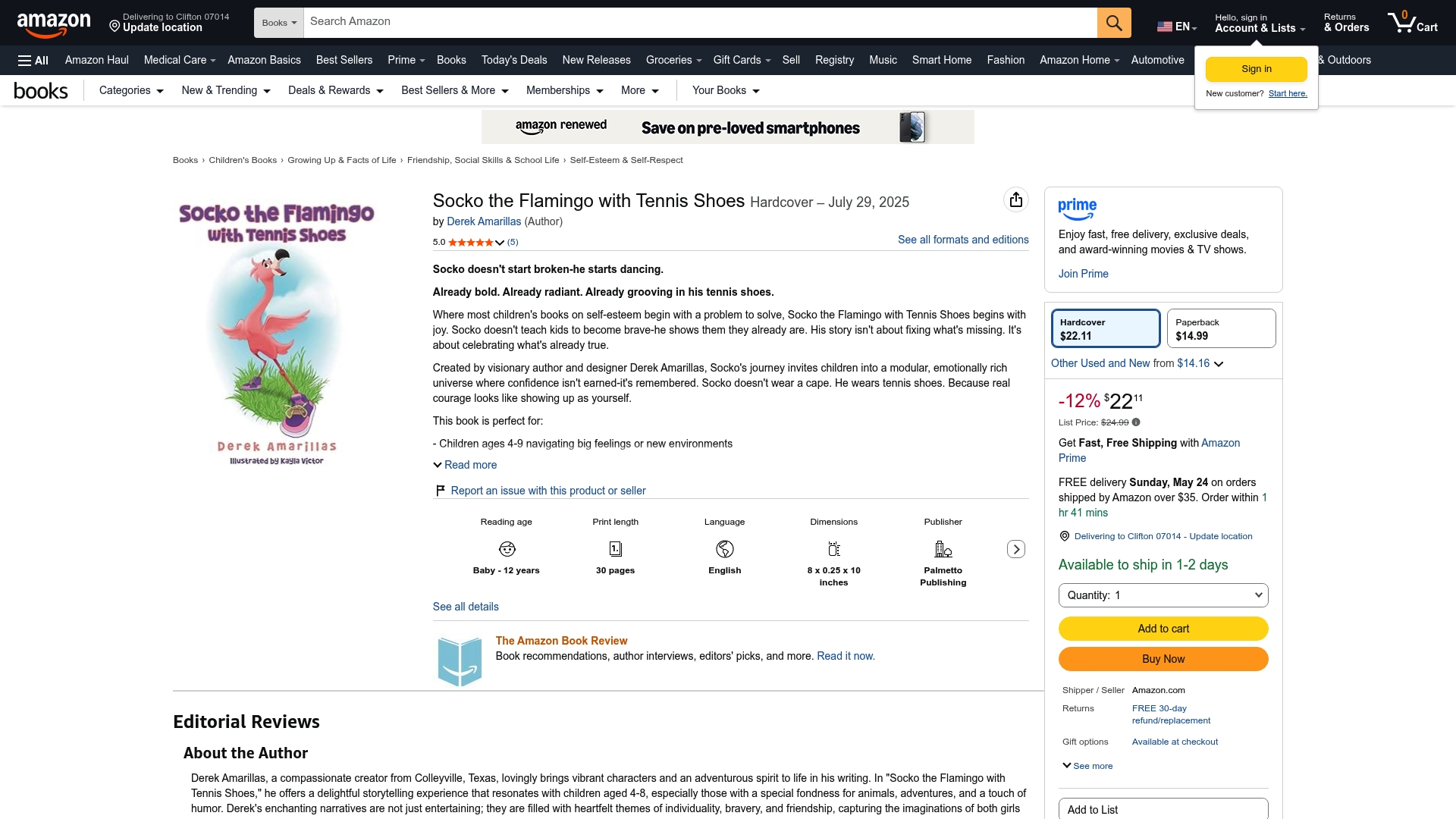
The kits are available as physical books, digital downloads, and bundled classroom sets through Icon Literary's online storefront. Physical copies ship directly; digital versions are available immediately via download, which works well for teachers who need something for Monday. Browse the full collection and pick the competency focus that matches your classroom's current need.
Useful sources
These are the primary research and practitioner resources cited throughout this article. Each one offers something specific for classroom use.
- Social-Emotional Learning Read-Alouds Can Support Literacy | Edutopia
- Connecting the Dots between Academic and Social-Emotional Learning with Literacy | Michigan Reading Journal
- Social and Emotional Learning for Picture Book Readers (AASL Standards–Based Learning Series) | ALA Store
- What does the research say? — CASEL
- The Social-Emotional Learning Playbook | SAGE Publications
- Create Powerful Interactive Read Alouds | The Responsive Educator
- SEL read-aloud lesson plans | Storyboard That
- Books and Lessons | WeDoListen