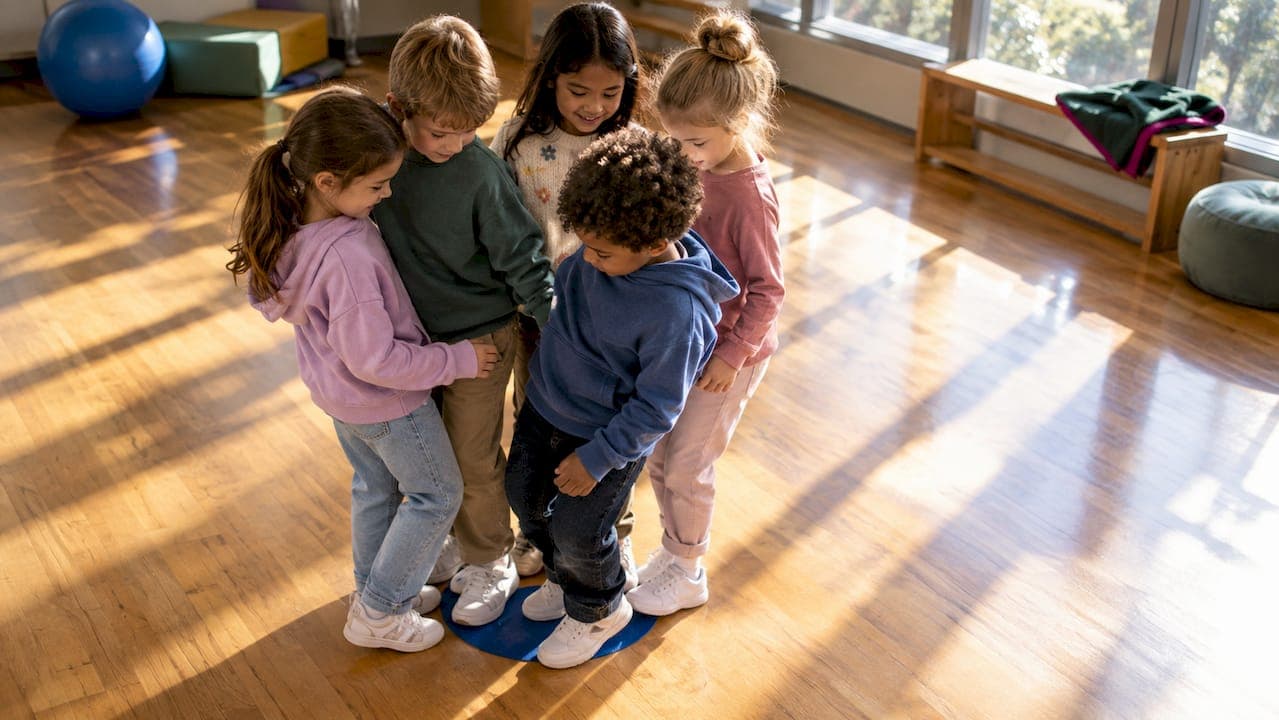
This page is a ready-to-run bank of social emotional games organized by the skill each one builds and the age group it fits best. Every game is mapped to one of Playworks' six SEL domains: self-management, positive relationships, social awareness, decision making, problem-solving, and teamwork. If you need something to run in the next five minutes, jump to the age-specific lists below and grab a warm-up.
TL;DR:
- Matching the game to the specific SEL skill and age group is crucial for effective skill development and measurable progress.
- Using visual aids, binary choices, and predictable routines helps neurodiverse and reluctant learners engage more successfully.
- Consistent, short daily practices combined with weekly full games lead to observable improvements within four to six weeks.
- Tracking progress through simple logs and noticing behavior transfers outside the game can confirm real social-emotional growth.
- Pairing games with story-based tools enhances emotional vocabulary and reinforces skills through context and shared discussion.
Table of Contents
- How to Pick a Social Emotional Learning Game in Under a Minute
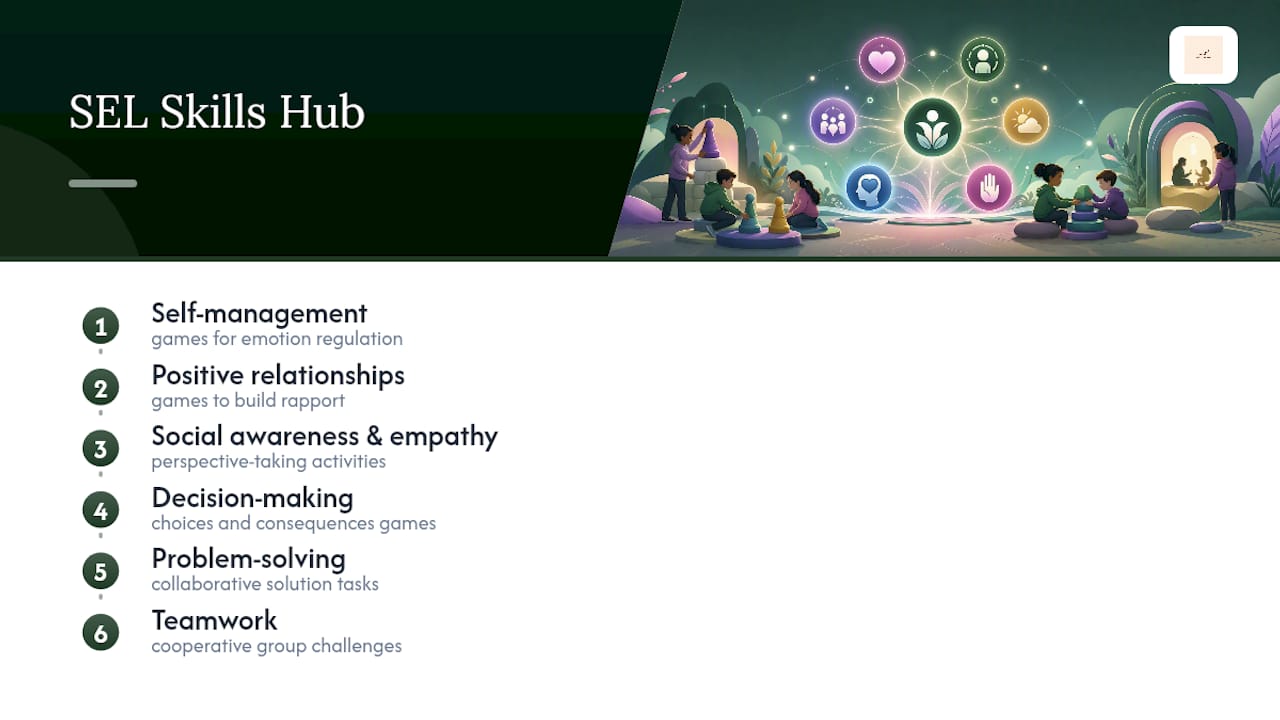
- The Six SEL Skills Behind Every Game in This List
- Social Emotional Games by Skill and Age
- Making These Games Work in Real Classrooms and Homes
- Why Games Actually Build These Skills
- Tracking Whether the Games Are Actually Working
- Matching Games to Specific Goals
- Reaching Reluctant, Multilingual, and Culturally Diverse Groups
- A Publisher's View on Games, Stories, and Emotional Vocabulary
- Pair These Games With Story-Driven Tools for Emotional Vocabulary
- Where to Find More SEL Games and Research
- Sources
How to Pick a Social Emotional Learning Game in Under a Minute
Start with what you have, not what you wish you had. Most classrooms and living rooms don't have 40 minutes and a supply closet full of props, and the best social emotional learning games don't need either.
Work through three quick filters: the age of the group, the specific skill you're targeting, and how much time and material you actually have on hand. A kindergarten class needs shorter rounds and more physical movement than a group of sixth graders working through a decision-making scenario. A therapist running a one-on-one session has different constraints than a teacher managing 24 kids after lunch.
Time budgets matter more than most guides admit. Break your options into three buckets:
- Micro (5 to 10 minutes): Transition games, breathing check-ins, one-round warm-ups between subjects.
- Mini (10 to 20 minutes): Small-group games with a clear goal and a short debrief.
- Full session (20 to 40 minutes): Multi-round cooperative games with reflection built in.
Materials-minimal substitutions keep the bank usable when you're short on supplies. Swap physical objects for verbal or gesture-based versions: a "pass the ball" game becomes "pass the compliment" with eye contact instead of a ball. For virtual or hybrid groups, chat-based prompts and screen-share drawing tools replace most tabletop materials without losing the SEL target.
The debrief is where the actual learning happens. A game without a reflection prompt is just recess. Ask three questions after almost any round: What did you notice? What was hard? What would you do differently next time? Track answers in a simple weekly log, even a few sentences per child, and patterns in emotional vocabulary and self-regulation start showing up within a few weeks.
Pro Tip: Keep a running list of which game you used for which skill and date. When a specific student struggles with turn-taking or frustration, you'll have a quick reference for which games already worked for them.
The Six SEL Skills Behind Every Game in This List
Playworks organizes SEL games into six domains, and using that framework instead of grouping activities loosely by "feelings" or "cooperation" makes it much easier to track measurable progress over time, according to Playworks' research.
- Self-management: regulating impulses, emotions, and attention. Measurable objective: a child pauses before reacting to frustration in at least 3 out of 5 observed instances. Watch for: fewer outbursts during transitions, longer wait times before speaking.
- Positive relationships: building trust, communication, and mutual respect with peers. Objective: initiates or responds to a peer interaction without adult prompting. Watch for: unprompted greetings, sharing materials.
- Social awareness and empathy: reading others' emotions and perspectives accurately. Objective: correctly names a peer's likely feeling in a role-play scenario. Watch for: comments that reference how someone else might feel.
- Decision making: weighing choices and consequences before acting. Objective: articulates two possible outcomes before choosing an action. Watch for: "if I do this, then..." language appearing unprompted.
- Problem-solving: working through obstacles methodically rather than giving up or escalating. Objective: tries a second strategy after the first attempt fails. Watch for: reduced reliance on adult intervention.
- Teamwork: coordinating with others toward a shared goal. Objective: contributes a specific role or idea during a group task. Watch for: fewer conflicts over roles, more spontaneous division of labor.
Facilitation cue for all six: name the skill out loud before you start. "We're practicing problem-solving today" primes kids to notice the skill in action, which makes the debrief faster and more specific.
Social Emotional Games by Skill and Age
Each game below lists the goal, group size, time, materials, and one adaptation for small groups and one for neurodiverse learners. Reflection prompts are short on purpose. Use them as a script, not a suggestion.
Self-Management Games
1. Starfish and Tornadoes (ages 3 to 8) Goal: teach kids to shift from high-energy states to calm ones on cue. Players: any size group. Time: 5 minutes. Materials: none. Steps: kids move like a "tornado" (fast, wild movement) until you call "starfish," at which point they freeze and spread out flat and still. Adaptation for small groups: pair up and mirror each other's freeze pose. Adaptation for neurodiverse learners: use a visual card showing the starfish shape as the calm cue instead of relying on the verbal signal alone. Reflection prompt: "What did your body feel like as a tornado versus a starfish?" This game comes from Understood's family SEL activities.
2. Turtle Time (ages 4 to 9) Goal: practice pausing before reacting to frustration. Players: individual or small group. Time: 5 minutes. Materials: none. Steps: when a child feels upset, they pull their arms in like a turtle shell, take three breaths, then come back out to talk. Adaptation for small groups: practice as a whole class before using it individually. Adaptation for neurodiverse learners: pair the physical gesture with a laminated visual reminder card. Reflection prompt: "What changed in your body after the three breaths?"
3. Freeze Dance with Feeling Check (ages 5 to 10) Goal: build impulse control tied to emotional check-ins. Players: 4 or more. Time: 10 minutes. Materials: music player. Steps: dance until the music stops, then freeze and name one feeling word out loud. Adaptation for small groups: whisper the feeling word to a partner instead of the whole group. Adaptation for neurodiverse learners: offer a feelings chart to point to instead of requiring a spoken word. Reflection prompt: "Which feeling word came up most often for you today?"
4. Breathing Buddies (ages 6 to 11) Goal: self-regulate using a shared physical anchor. Players: pairs. Time: 5 minutes. Materials: a small stuffed animal or object per pair. Steps: one partner places the object on their stomach and breathes slowly enough to make it rise and fall smoothly; the other partner counts breaths. Adaptation for small groups: rotate roles every 3 breaths. Adaptation for neurodiverse learners: allow noise-canceling headphones during the exercise if sensory input is distracting. Reflection prompt: "Was it easier to slow your breathing with a partner watching?"
Positive Relationships Games
5. Compliment Circle (ages 5 and up) Goal: practice giving and receiving specific, genuine feedback. Players: 5 to 15. Time: 10 minutes. Materials: none. Steps: standing in a circle, each child gives one specific compliment to the person next to them, based on something observed that day, not a generic trait. Adaptation for small groups: write compliments on paper and pass them instead of speaking aloud. Adaptation for neurodiverse learners: provide sentence starters ("I noticed you...") to reduce the pressure of open-ended speech. Reflection prompt: "How did it feel to receive a specific compliment versus a general one?"
6. Two Truths and a Feeling (ages 8 and up) Goal: build trust through shared vulnerability. Players: small groups of 4 to 6. Time: 15 minutes. Materials: none. Steps: each person shares two true facts and one true feeling about a recent event; the group guesses which is the feeling. Adaptation for small groups: use partners instead of full groups for shyer kids. Adaptation for neurodiverse learners: allow written responses read aloud by the facilitator. Reflection prompt: "What was harder to share, a fact or a feeling?"
7. Partner Trust Walk (ages 7 and up) Goal: practice giving and following clear verbal directions while building trust. Players: pairs. Time: 15 minutes. Materials: open space, optional blindfold. Steps: one partner closes their eyes or wears a blindfold while the other gives verbal directions to navigate a simple obstacle path. Adaptation for small groups: shorten the path and add checkpoints. Adaptation for neurodiverse learners: skip the blindfold and use a "follow my voice only" version instead, which reduces sensory discomfort. Reflection prompt: "What made you trust or hesitate to trust your partner's directions?"
Social Awareness and Empathy Games
8. Feelings Charades (ages 4 to 10) Goal: recognize emotions from body language and facial expression. Players: 4 or more. Time: 10 minutes. Materials: index cards with feeling words. Steps: one child acts out a feeling without words; others guess. Adaptation for small groups: act out feelings in pairs and guess together. Adaptation for neurodiverse learners: offer a picture-based feeling chart as an alternative to guessing verbally. Reflection prompt: "What clues told you which feeling it was?"
9. Perspective Swap Story (ages 8 and up) Goal: practice seeing a conflict from another person's point of view. Players: pairs or small groups. Time: 15 minutes. Materials: a short conflict scenario card. Steps: each child tells the same story from a different character's perspective. Adaptation for small groups: use puppets or drawings to represent each character. Adaptation for neurodiverse learners: provide a structured template with "this character felt ___ because ___" to reduce open-ended demand. Reflection prompt: "What did you notice that you missed the first time you heard the story?"
10. Who Am I Right Now? (ages 5 to 9) Goal: build emotional vocabulary through role-play. Players: pairs or small groups. Time: 10 minutes. Materials: none. Steps: one child acts out a mood while others ask yes-or-no questions to identify it. Adaptation for small groups: give a list of feeling words to choose from instead of open-ended acting. Adaptation for neurodiverse learners: allow the child to point to a feelings chart rather than act. Reflection prompt: "Which feeling was hardest to guess and why?" Adapted from Understood's family SEL activities.
Decision-Making Games
11. Let's Make a Deal (ages 6 to 11) Goal: practice negotiation and weighing tradeoffs. Players: pairs. Time: 10 minutes. Materials: two small items to "trade." Steps: each child picks something to offer and negotiates a fair trade with a partner. Adaptation for small groups: assign a mediator role to a third child. Adaptation for neurodiverse learners: provide a simple script with sentence starters for offering and countering. Reflection prompt: "How did you decide what was fair?" This activity comes from Understood's family SEL activities.
12. Choose Your Consequence (ages 9 and up) Goal: connect decisions to realistic outcomes before acting. Players: small groups. Time: 15 minutes. Materials: scenario cards with two or three choice branches. Steps: kids read a scenario, pick a choice, then discuss the likely consequence before revealing what actually happens in the card. Adaptation for small groups: assign roles (reader, decider, discussed) to keep everyone engaged. Adaptation for neurodiverse learners: reduce choices to exactly two binary options instead of open-ended branching, which lowers the cognitive load significantly. Reflection prompt: "Would you make the same choice again?"
13. Taking Turns Taking Charge (ages 5 to 10) Goal: practice fair decision-making within a group. Players: 3 or more. Time: 10 minutes. Materials: none. Steps: rotate a "leader" role every few minutes during a simple group task, with each leader making one decision for the group. Adaptation for small groups: shorten rotation time for younger kids. Adaptation for neurodiverse learners: use a visible timer so transitions are predictable. Reflection prompt: "What was different about being the leader versus following?" From Understood's family SEL activities.
Problem-Solving Games
14. Human Knot (ages 8 and up) Goal: work through a physical puzzle that requires communication and patience. Players: 6 to 10. Time: 15 minutes. Materials: none. Steps: kids stand in a circle, reach across to grab two different hands, then untangle without letting go. Adaptation for small groups: use a smaller circle of 4 to 5 kids. Adaptation for neurodiverse learners: offer a non-contact version using a rope maze diagram to solve on paper instead. Reflection prompt: "What strategy finally worked?"
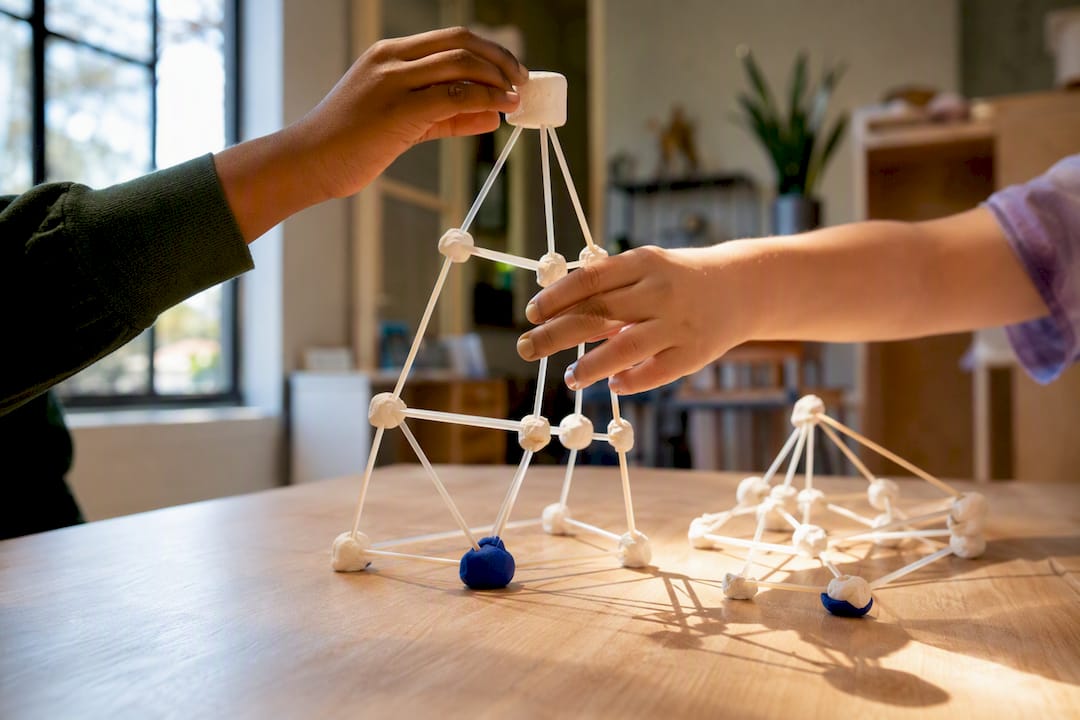
15. Marshmallow Tower Challenge (ages 6 and up) Goal: build persistence through iterative problem-solving. Players: small groups of 3 to 4. Time: 20 minutes. Materials: toothpicks or straws, marshmallows or clay. Steps: build the tallest freestanding structure possible in a time limit, then rebuild after it collapses. Adaptation for small groups: pair up instead of grouping in threes or fours. Adaptation for neurodiverse learners: provide a step-by-step visual card showing one example structure to reduce open-ended uncertainty. Reflection prompt: "What did you change after your first attempt failed?"
16. Barrier Game (ages 7 and up) Goal: practice clear communication to solve a shared problem. Players: pairs. Time: 15 minutes. Materials: identical sets of blocks or shapes, a divider. Steps: one partner builds a design and describes it verbally while the other tries to replicate it without seeing the original. Adaptation for small groups: allow one clarifying question per round. Adaptation for neurodiverse learners: permit drawing instead of speaking as the communication method. Reflection prompt: "What kind of instructions were easiest to follow?"
Teamwork Games
17. Group Juggle (ages 6 and up) Goal: build coordination and shared attention across a team. Players: 6 to 12. Time: 10 minutes. Materials: 2 to 4 soft balls. Steps: toss balls in a set pattern around a circle, adding balls as the group succeeds. Adaptation for small groups: use fewer balls and slower pacing. Adaptation for neurodiverse learners: use a beanbag instead of a ball to reduce unpredictable bouncing. Reflection prompt: "What helped the group keep track of multiple balls at once?"
18. Minefield (ages 8 and up) Goal: practice trust and precise verbal guidance in a team setting. Players: pairs within a larger group. Time: 15 minutes. Materials: soft objects scattered on the floor as "mines." Steps: one blindfolded partner navigates the field using only verbal directions from their partner. Adaptation for small groups: reduce the field size and object count. Adaptation for neurodiverse learners: skip the blindfold and use a "eyes closed, voice only" variation that still removes visual dependence without sensory discomfort. Reflection prompt: "What made directions clear or confusing?"
19. Story Cube Relay (ages 6 and up) Goal: build a shared narrative through teamwork and turn-taking. Players: small groups of 3 to 6. Time: 15 minutes. Materials: story cubes or prompt cards. Steps: each child rolls or draws a prompt and adds one line to a group story, building toward a shared ending. Adaptation for small groups: reduce to two rounds per person. Adaptation for neurodiverse learners: allow a "pass" option if a child needs more time to think before contributing. Reflection prompt: "What part of the story surprised you?" Pair this with story cube prompts designed for classroom SEL practice.
20. Cooperative Musical Chairs (ages 5 to 9) Goal: shift a competitive game into a cooperative one focused on including everyone. Players: 6 or more. Time: 10 minutes. Materials: chairs, music. Steps: instead of eliminating players, remove one chair each round and require everyone to find a way to fit, even if it means sharing seats. Adaptation for small groups: use floor spots instead of chairs. Adaptation for neurodiverse learners: allow a "helper" role for a child who prefers not to be physically close to others during the squeeze. Reflection prompt: "How did the group solve the problem of fewer chairs?"
Making These Games Work in Real Classrooms and Homes
Games fall apart without predictable structure, not because the activity itself was wrong. Set the same opening ritual every time: a signal to start (a chime, a clap pattern, a specific phrase), a stated skill for the day, and a clear ending cue before transitioning to the next activity.
Emotion-coaching language matters more than most facilitators realize. Instead of saying "calm down," try naming what you observe: "I see your hands are in fists. That usually means frustrated. Want to try turtle time?" This models the exact self-awareness skill the game is trying to build, rather than just demanding compliance.
De-escalation works best when it's proactive, not reactive. If a game is heading toward conflict, pause the group, name what's happening ("I'm noticing some frustration"), and offer a choice: keep going with a small adjustment, or switch to a calmer activity. Giving kids a say in the fix, even a small one, reduces power struggles significantly.
For neurodiverse learners, the single most effective adjustment across almost every game on this list is replacing open-ended social choices with explicit, binary options and visual step cards, which reduces the cognitive load required to participate, according to Playworks' facilitation guidance. A detailed guide to autism-specific social skills adaptations offers deeper strategies for sensory breaks, reduced verbal demand, and predictable routines.
Virtual play requires more upfront planning but loses very little of the SEL value. Chat-based feelings check-ins replace circle-time sharing. Screen-share whiteboards replace barrier games. Breakout rooms work well for paired activities like Two Truths and a Feeling. The debrief structure stays identical whether kids are in a room together or on a video call.
- Set a consistent start and end signal for every session.
- Name the target skill out loud before starting.
- Offer a choice point when tension rises instead of shutting the game down.
- Replace open-ended prompts with binary choices for learners who need lower cognitive load.
- Build a simple visual routine chart for kids who benefit from predictability.
Pro Tip: Keep one "reset" game in your back pocket for every session. When a game isn't landing, a 60-second reset like Starfish and Tornadoes buys you time to regroup without losing the whole session.
For a deeper library of ready-to-adapt lesson ideas, SEL activities for kids covers additional classroom-ready structures that pair well with the games above.
Why Games Actually Build These Skills
Kids learn social skills the same way they learn to ride a bike: by practicing in low-stakes situations where a wrong move doesn't cost much. Playworks' research found that interactive games and role-play let children rehearse social responses more effectively than passive worksheets, largely because games force a decision in real time instead of asking kids to describe what they'd hypothetically do.
CASEL's research summaries report that high-quality SEL programming, implemented consistently, is linked to improved social skills, fewer conduct problems, and better academic outcomes. The word "consistently" carries the weight there. A single great game run once a semester won't move the needle. A short daily practice paired with a weekly deeper session will.
A practical pattern that shows real results: one daily 5 to 7 minute self-management warm-up combined with one weekly 20 to 30 minute cooperative game targeting teamwork or problem-solving produces observable improvements in classroom behavior within 4 to 6 weeks.
Schools using Playworks-style game programming have also reported reduced disciplinary referrals when games are built into daily recess and transition routines rather than treated as an occasional special activity.
Track progress with something simple: a weekly note on which skill each child practiced and one observed behavior change. You don't need a formal rubric to see whether "pauses before reacting" is happening more often after six weeks of turtle time.
- Run a daily micro-practice (5 to 7 minutes) for self-management.
- Add one weekly full game (20 to 30 minutes) targeting teamwork or problem-solving.
- Log one observed behavior per child per week, not a grade or score.
- Revisit the log every 4 to 6 weeks to spot real trends.
Tracking Whether the Games Are Actually Working
The measurable objectives listed under each SEL domain above give you a starting point for tracking, but the tracking itself doesn't need to be complicated. A weekly index card per child, or a shared spreadsheet row per week, works better than an elaborate rubric that nobody has time to fill out consistently.
Look for behavior changes outside the game itself. If a child practiced turn-taking during Taking Turns Taking Charge on Monday and you notice them waiting their turn during snack time on Thursday without prompting, that's a real transfer signal, not just game performance.
Indexing games by the specific skill they target, rather than grouping them loosely by age or theme, makes it much easier to track progress on a specific goal across several weeks. If a student needs work on decision making specifically, you can pull three or four games from that category over a month and compare notes on how their reasoning language changes.
Watch for three signals across any domain: reduced need for adult prompting, more specific and accurate language about feelings or choices, and faster recovery time after a setback or conflict. None of these require standardized testing. They require paying attention over time and writing down what you notice, even briefly.
For therapists working one-on-one, session notes that reference specific games ("used Perspective Swap Story, client identified two of three character emotions correctly") give you a much clearer trend line than general notes about "engagement" or "participation."
Matching Games to Specific Goals
Start with the goal, not the game. If a teacher's IEP goal is "reduce impulsive reactions during peer conflict," self-management games like Turtle Time or Breathing Buddies target that goal directly. If a therapist's treatment goal is "increase accurate identification of others' emotions," social awareness games like Feelings Charades or Perspective Swap Story are the better fit.
Avoid picking games because they're popular or fun without checking whether the skill matches the goal. A high-energy game like Human Knot is excellent for problem-solving and teamwork, but it does very little for a child working specifically on emotional vocabulary. Match the domain first, then pick a game within that domain that fits the group's age and energy level.
For classroom-wide goals tied to a curriculum, a rotating weekly focus across the six domains keeps coverage broad without abandoning depth. For an individual therapeutic goal, staying within one or two domains for several consecutive weeks, using different games that target the same skill, tends to build more consistent evidence of progress than jumping across categories.
Reassess every 4 to 6 weeks. If a goal isn't showing movement after that window with consistent practice, the mismatch is usually either the skill target or the format, not the child's effort. Switching from a verbal game to a visual or written version of the same skill target often unlocks progress that seemed stalled.
Reaching Reluctant, Multilingual, and Culturally Diverse Groups
Some kids resist SEL games because the format feels babyish or exposing, not because they lack the skill. Giving older or more reluctant kids a choice in which game to run, or letting them help design a variation, often turns resistance into buy-in fast.
Language barriers change the math on which games work best. Movement-based games with minimal verbal instruction, like Starfish and Tornadoes or Group Juggle, transfer across language differences far more easily than games built entirely on verbal negotiation, like Let's Make a Deal. When verbal games are necessary, visual prompt cards and sentence starters in multiple languages reduce the barrier without watering down the skill target.
Cultural context shapes how comfortable kids feel with things like eye contact, physical closeness, and direct compliments. Compliment Circle, for example, may need adjusting in groups where direct praise feels uncomfortable. A written or anonymous version of the same activity often gets the same reflection without the discomfort.
Reluctant teens specifically respond better to games framed around real stakes than games framed as childish exercises. Reframing Choose Your Consequence around social media conflicts or peer pressure scenarios, instead of generic playground disputes, tends to increase engagement in that age group significantly.
A Publisher's View on Games, Stories, and Emotional Vocabulary
Games teach kids what to do in the moment. Stories give them the words to talk about it afterward, and that combination is where the real skill-building happens. A child who plays Feelings Charades might correctly guess "frustrated," but a story that shows a character working through frustration gives that word context, texture, and a reason to remember it.
One thing that comes up again and again in emotional-literacy work: kids reach for a character's name before they reach for a clinical feeling word. "I feel like when he got mad at his brother" carries more weight for a seven-year-old than "I feel frustrated." Story-based SEL tools work because they give kids a reference point that games alone don't build. Read-aloud stories paired with reflection have been shown to reduce peer conflict precisely because they build that shared emotional vocabulary before conflict even starts.
Pairing a game with a story afterward, not before, tends to lock in the lesson better than either alone.
— Derek Amarillas
Pair These Games With Story-Driven Tools for Emotional Vocabulary
Games build the skill in the moment. Story-driven tools give kids the words to talk about it later, and that's exactly the gap Icon Literary's emotional-literacy books, activity kits, and card decks are built to fill. A child who just played Feelings Charades has practiced recognizing an emotion; a picture book with a character working through that same emotion gives the feeling a name that sticks.

Original story worlds designed for young children pair naturally with the games above. A themed card deck built around emotional vocabulary works well as a follow-up to Compliment Circle or Perspective Swap Story, extending the conversation about character and choice. Browse the full collection of emotional-literacy books and activity kits to find a story world that fits the skill you're targeting this week, then use it as the reflection tool your next game session is missing.
Where to Find More SEL Games and Research
- Games for Social and Emotional Learning (Playworks): a downloadable PDF guide mapping dozens of games to the six SEL domains.
- What does the research say? (CASEL): a research summary on SEL program outcomes and implementation quality.
- 5 social-emotional learning games to play with your child (Understood): simple, low-tech activities built for home use.
- Social-Emotional Learning (SEL) Games Bank (IRC): a downloadable bank of more than 60 activity ideas for educators.
- Emotional intelligence apps and games (Common Sense Education): a curated, educator-vetted list of digital tools to supplement active play.
Sources
- Games for Social and Emotional Learning (Playworks)
- What does the research say? (CASEL)
- 5 social-emotional learning games to play with your child (Understood)
- Emotional intelligence apps and games (Common Sense Education)