
Emotion regulation is a learnable skill, not a fixed personality trait, and the fastest way to build it is matching the right activity to the moment: physiological grounding when your body is flooded, cognitive reframing when your mind is stuck in a loop, and small behavioral action when you need to move forward. Most of these practices take a few minutes and work best with regular, short repetition rather than occasional marathon sessions.
TL;DR:
- Physiological grounding techniques are most effective when arousal is above a 6 or 7, while cognitive reframing is better after the body calms.
- Short, regular practice of activities like grounding and mindful breathing build emotion regulation skills more effectively than occasional long sessions.
- Using a manageable "menu" of three strategies, one physiological, one cognitive, and one behavioral, improves response speed during emotional crises.
- Techniques such as grounding, breathing, and body scans have clinical support for instant physiological calming, but skill development takes weeks of consistent practice.
- Avoidance and distraction provide short-term relief but hinder emotional skill growth unless balanced with active regulation practices.
Table of Contents
- What To Know Before You Try Any Emotion Regulation Activities
- What Emotional Regulation Actually Means
- How To Match Activities To The Moment
- 12 Evidence-Based Emotion Regulation Activities To Try
- What The Research Actually Supports, And Where It Stops
- Why Habit Formation Beats Willpower Here
- Bring These Skills Home With Icon Literary
- Sources
What To Know Before You Try Any Emotion Regulation Activities
A few ground rules make every technique on this page work better, and skipping them is why some people try one breathing exercise, feel nothing, and give up.
- Regulation means choosing your response, not muting the emotion. You're not trying to make anger or grief disappear. You're building a gap between feeling and reacting.
- The technique has to match the intensity. A racing heart needs a physical intervention before your mind can do any useful thinking.
- Short and repeatable beats long and occasional. A short daily practice builds more skill than occasional long sessions.
- Distraction isn't the enemy, but it's not a strategy either. Watching a show to get through a rough hour is fine. Using it every time you feel discomfort teaches your brain that feelings are dangerous rather than survivable, which is a distinction that coping and emotion regulation research draws clearly between emotion-focused and problem-focused approaches, and why a mixed toolkit outperforms leaning on just one.
What Emotional Regulation Actually Means
Emotional regulation is the ability to notice what you're feeling, understand it, and choose how to act on it instead of getting hijacked by it. The common misconception is that regulated people don't feel much. That's backward. People with strong regulation skills often feel just as intensely as anyone else. They've simply built a longer pause between the spike and the reaction.
Researchers generally point to six overlapping mechanisms at work. Attention is where you direct your focus during a feeling (fixating on a threat versus noticing your breath). Interoception and arousal is your body's internal read on stress, heart rate, and tension. Meaning-making is the story you tell yourself about why something happened. Acceptance is your willingness to let a feeling exist without fighting it. Behavior selection is what you actually do next. And relational regulation is the underrated one: how much another person's calm presence, or even a text message, can shift your state.
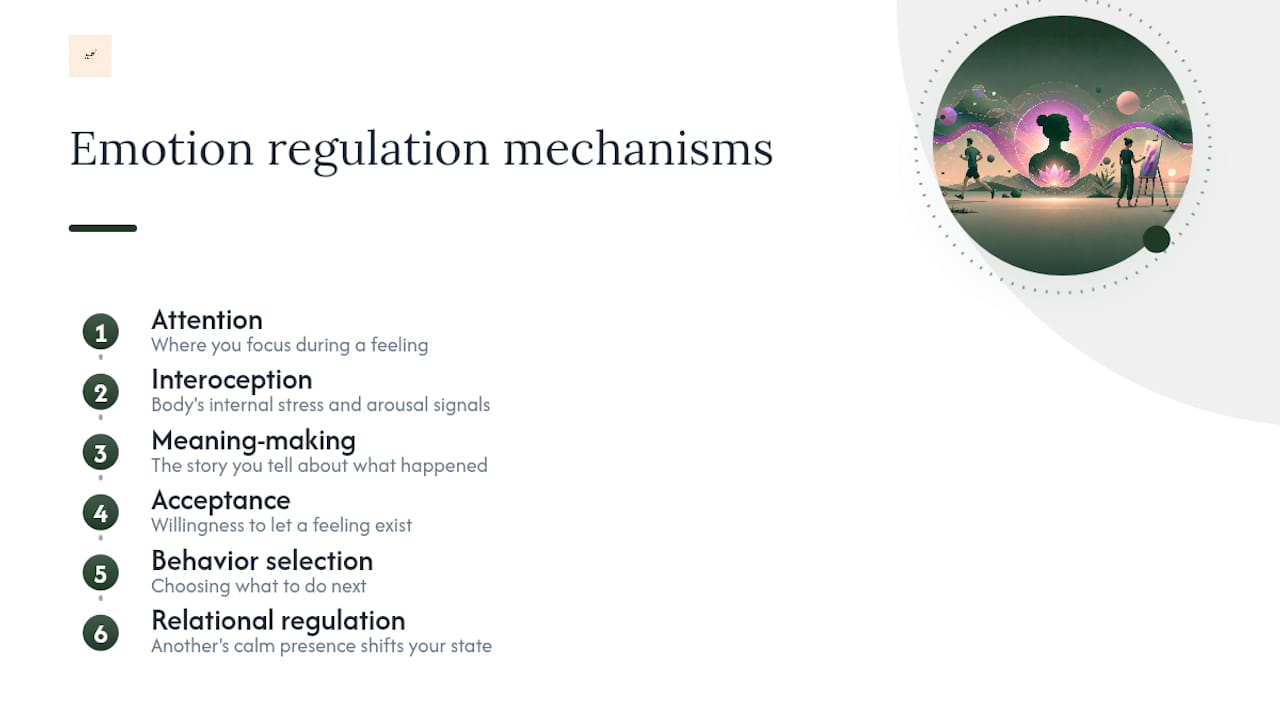
None of these mechanisms work in isolation. A racing heart (interoception) makes it harder to reframe a thought (meaning-making), which is why trying to "think positive" during a panic spike so often fails. You need to calm the body first.
This matters beyond the moment itself. Yale Medicine's research on emotion regulation describes it as a linchpin for mental health broadly, tying poor regulation to higher rates of anxiety, depression, and strained relationships over time. The goal isn't to feel less. It's to feel fully without your feelings running the show, which is a subtle but important difference in how you approach the activities below.
How To Match Activities To The Moment
Timing determines whether a technique helps or just frustrates you. Emotion regulation activities generally fall into three windows: before an emotional wave hits, during the peak, and after it passes.
Before is preventive. This is where journaling, exercise, and building a general mindfulness habit pay off, because they lower your baseline stress and widen your capacity before anything triggers you.
During is triage. When you're in the middle of panic, rage, or overwhelm, your prefrontal cortex, the part of your brain responsible for reasoning, is partially offline. This is the moment for physiological tools: grounding, breathing, cold water, movement. Trying to reason your way out of a nervous system in fight-or-flight rarely works, which is the core insight behind matching strategy to emotional state: high arousal calls for physiological stabilization, while lower-grade rumination responds better to cognitive reframing.
After is processing. Once your body has settled, this is when journaling, cognitive reappraisal, and talking things through with someone actually stick, because your thinking brain is back online.
Here's a simple checklist for the moment itself:
- Rate your arousal, roughly, on a scale of 1 to 10. Above a 6 or 7, skip straight to a physiological tool.
- Name the feeling out loud or in your head. One word is enough: angry, scared, embarrassed.
- Pick one tool, not five. Trying to stack techniques mid-crisis usually backfires.
- Give it 90 to 120 seconds before judging whether it's working. Physiological shifts take a little time to register.
- Follow with a small action, even something tiny, once you've settled.
A few concrete pairings: a panic spike before a meeting calls for 5-4-3-2-1 grounding or cold water on your wrists, not a pep talk. Lingering resentment toward a coworker three days later calls for reappraisal or a journaling prompt, not another lap around the block. A slow-burning low mood that's been building all week calls for movement and social contact more than either.
Pro Tip: Keep a "menu" of three go-to activities, one physiological, one cognitive, one behavioral, written on a sticky note or saved in your phone. Decision fatigue during a hard moment is real, and having to think up a strategy from scratch wastes the exact window you need to act in.
12 Evidence-Based Emotion Regulation Activities To Try
These cover the full range from acute crisis tools to slower cognitive work. Try a few, not all twelve at once.
1. The 5-4-3-2-1 grounding technique Name five things you can see, four you can hear, three you can touch, two you can smell, and one you can taste. It takes about two minutes and pulls your attention out of a spiraling thought and back into your physical surroundings. Best for panic attacks, acute anxiety, or the moment right before something stressful, like walking into a difficult conversation or an exam. Harvard Health's guidance on stress-reducing mindfulness practices lists grounding among the clinically supported, low-effort tools adults can use without any equipment or training.

2. Mindful breathing Inhale for four counts, hold for four, exhale for six. The extended exhale is what activates your parasympathetic nervous system, the "brake" on your fight-or-flight response. Do five to ten full cycles, roughly two to three minutes total. This works well during moderate to high arousal and as a daily five-minute practice to lower your baseline stress over time.
3. Progressive muscle relaxation Starting at your feet, tense each muscle group for five seconds, then release and notice the contrast. Work up through calves, thighs, stomach, hands, shoulders, and face. A full pass takes 8 to 12 minutes, though a shortened version hitting just the shoulders, jaw, and hands works in under three. This is especially useful for physical tension that's built up over a stressful day, like clenched shoulders after back-to-back meetings.
4. Mindful body scan Lie down or sit comfortably and mentally move through your body from head to toe, noticing sensation without trying to change anything. A brief version takes three minutes; a fuller one runs 10 to 15. Unlike progressive muscle relaxation, you're not actively tensing anything, just observing, which makes this a good end-of-day practice for people who carry stress without realizing where.
5. Cognitive reappraisal (reframing) When a thought is stuck on repeat, run it through a quick check: What's the evidence for this thought? Is there another explanation? What would I tell a friend thinking this? This "check the facts" approach is a core DBT emotion regulation skill, and it works best once your arousal has already dropped below a 6 or so. Trying to reframe a thought while your heart is still pounding rarely lands.
6. Emotion journaling Set a timer for five minutes and write without editing: what happened, what you felt, and what story you're telling yourself about it. A follow-up prompt, "what's one thing I know for certain versus one thing I'm assuming," moves you from raw feeling toward workable perspective. This is an after-the-wave tool more than an in-the-moment one; it works because putting a feeling into words engages the same reasoning parts of the brain that panic temporarily sidelines.
7. Short movement bursts and walking A brisk 10-minute walk, 20 jumping jacks, or even pacing around your living room burns off the adrenaline that a purely mental strategy can't touch. High-intensity movement (jumping jacks, a fast walk) suits anger or agitation, discharging physical energy. Slower movement, like an unhurried walk outside, suits low mood or numbness, where the goal is gentle activation rather than release.

8. Sensory stimulation for rapid downshift Splashing cold water on your face, holding an ice cube, or gripping a textured object like a stress ball can interrupt a panic spiral within seconds. This works through the same principle as the mammalian dive reflex, cold on the face triggers a real, measurable slowing of heart rate. Coping strategy guides recommend this specifically for moments when you need to downshift fast and don't have privacy for a longer practice.
9. Behavioral activation Depression and low motivation often create a trap where you wait to feel better before doing anything, but the sequence usually runs the other way. Pick the smallest possible action aligned with something you value, texting one friend back, washing one dish, stepping outside for two minutes, and do just that. The goal is momentum, not productivity.
10. DBT's opposite action When an emotion is pushing you toward a behavior that will make things worse, deliberately do the opposite. If anxiety says avoid the call, make the call. If shame says isolate, reach out to one person. This is one of the more counterintuitive DBT skills, but it's also one of the most effective for breaking avoidance cycles that keep an emotion locked in place.
11. Guided imagery Close your eyes and picture a specific calm scene in detail: the temperature, sounds, what you'd smell, how the ground feels underfoot. A two to five minute script works well before a stressful event, like right before a difficult meeting, or as a wind-down before sleep. It's a cognitive tool, so it works better once your body has already partially settled.
12. Social micro-support Sometimes the fastest regulation tool is another person. A short text asking a friend to just listen for two minutes, or explicitly saying "I don't need advice, I just need to vent," activates relational regulation, one of the six core mechanisms and often the most overlooked. This isn't a sign of weak coping. It's one of the most efficient tools available, and it costs nothing.

Across all twelve, short daily or several-times-weekly sessions build the same underlying skill that longer, structured mindfulness training deepens over weeks. You don't need an hour a day. You need a few minutes, used consistently, on the right tool for the moment.
If you're navigating something with a hard deadline attached, like exam anxiety, the same body-first logic applies. Practical stress techniques for high-stakes moments and strategies for managing performance panic both lean on the same principle: settle the nervous system before asking your brain to perform.
What The Research Actually Supports, And Where It Stops
Mindfulness-based techniques and DBT skills have real clinical backing, but the evidence points to gradual, practice-dependent improvement rather than instant transformation.
Grounding, breathing, and body scans reduce measurable physiological arousal in the short term. Clinical guidance from Harvard Health frames these as legitimate, evidence-backed tools for daily stress, not just relaxation gimmicks. The timeline matters here: a single session can lower your heart rate and calm racing thoughts within minutes, but the deeper skill, staying regulated under real-world pressure, tends to build over weeks of consistent short practice rather than appearing after one good session.
DBT-derived skills like opposite action and checking the facts carry solid clinical support, largely because DBT was developed specifically for people who experience very intense emotions and need concrete, teachable moves rather than abstract advice. A common beginner mistake is expecting mindfulness to produce calm on the first try. What usually shows up instead is a lot of noticing how busy your mind actually is, which is the practice working, not failing.
Avoidance-based coping, constant distraction, numbing out, changing the subject every time discomfort surfaces, often provides real short-term relief. Used as a default rather than an occasional tool, it tends to be maladaptive over time, leaving the underlying emotional skill underdeveloped and the same triggers just as sharp the next time they appear.
Watch for signs that self-guided practice isn't enough on its own: emotions that stay at a 9 or 10 for days rather than hours, avoidance that's shrinking your life (skipping work, isolating from friends), or intrusive thoughts that don't respond to any of the techniques above. That's the point to bring in a therapist, ideally one trained in DBT or cognitive behavioral approaches, rather than pushing harder on solo tools.
Why Habit Formation Beats Willpower Here
Most advice about emotion regulation treats it like a discipline problem: try harder, remember your breathing, stick to the plan. That framing sets people up to fail. What actually works is making the practice small enough and interesting enough that you don't need willpower to return to it.
I think the most underrated lever is ritual, not repetition for its own sake, but attaching a regulation practice to something you already find engaging or meaningful. A specific object on your desk that cues a breathing pause. A short story or character that reminds you what "opposite action" looks like in practice. Anchoring an abstract skill to something concrete and a little bit playful is why read-aloud emotional practices work so well for kids, and there's no real reason the same principle stops applying once you turn eighteen.
The other overlooked piece is variety without chaos. Rotate through two or three techniques rather than forcing yourself into one "correct" method, and pay attention to which ones your body actually responds to. Emotional-literacy tools built around characters, imagery, and story can make that noticing easier, giving you a vocabulary for feelings that a worksheet alone rarely provides.
— Derek Amarillas
Bring These Skills Home With Icon Literary
Icon Literary gives you a tangible, low-pressure way to keep emotion regulation skills present in daily life, not just in a crisis moment. Instead of another app notification asking you to log your mood, Icon Literary's emotionally rich picture books, themed card decks, and activity kits turn feelings vocabulary and coping practice into something you actually want to pick up.
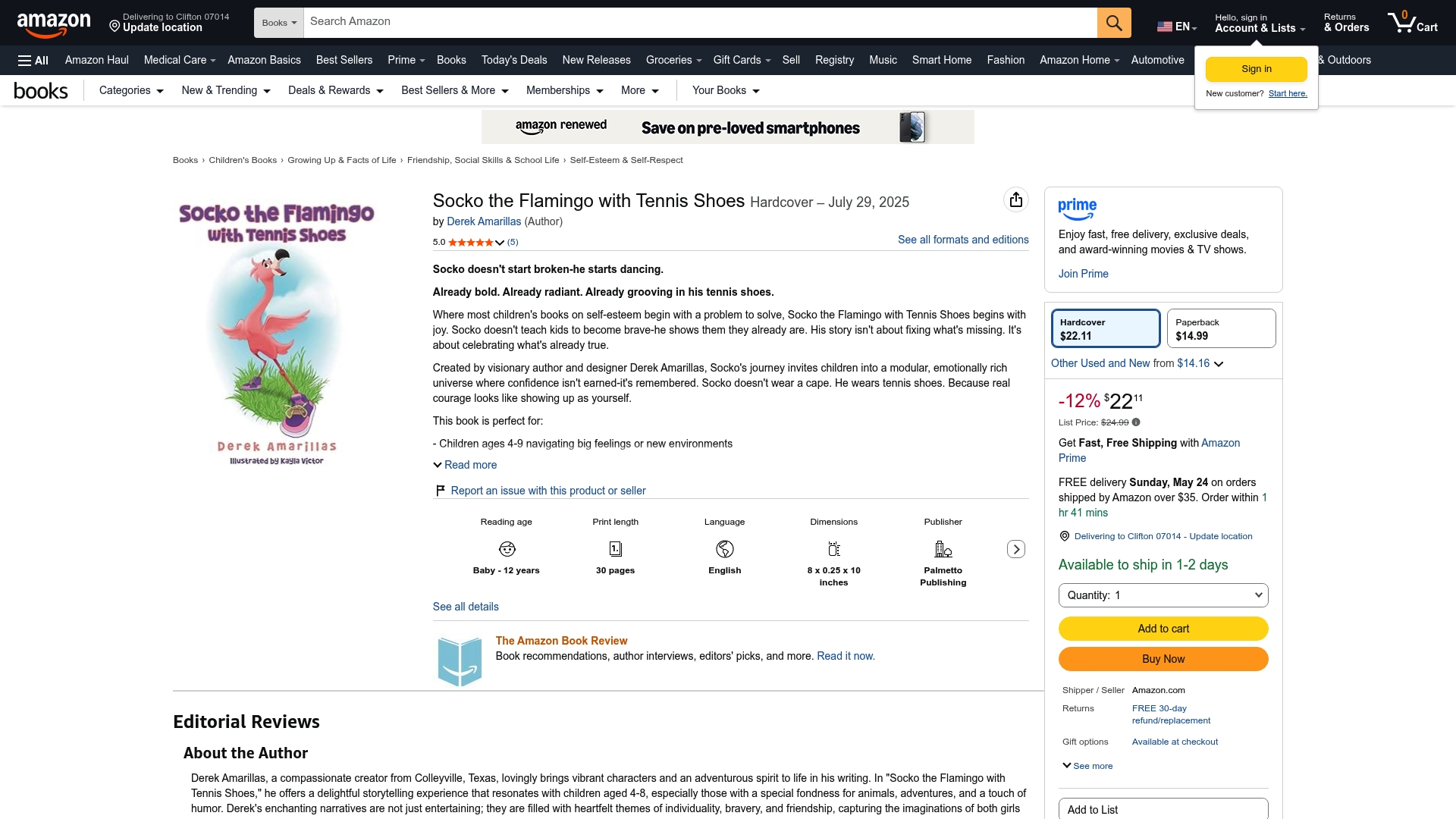
For parents and educators reading this piece who want these same regulation concepts to click for the kids in their lives, Icon Literary's story-driven world-building makes labeling feelings and choosing calm responses feel like play rather than homework. The characters and card decks give kids (and honestly, the adults reading with them) a shared language for exactly the mechanisms covered above: naming a feeling, pausing before reacting, and choosing a small next step. If you found the emotional-themes organizing approach useful for planning your own practice, that same structured thinking shapes every Icon Literary product. Browse the current lineup of books and card decks at Iconliterary and start with whichever title matches the age and feelings your household is working through right now.
Sources
A few resources back the claims throughout this piece and are worth returning to as you build your own practice:
- Emotion Regulation Strategies: How to Choose What Works
- Mindfulness practices to reduce stress and improve focus (Harvard Health)
- Mindfulness exercises - Mayo Clinic
- Coping and emotion regulation (NCBI Bookshelf)