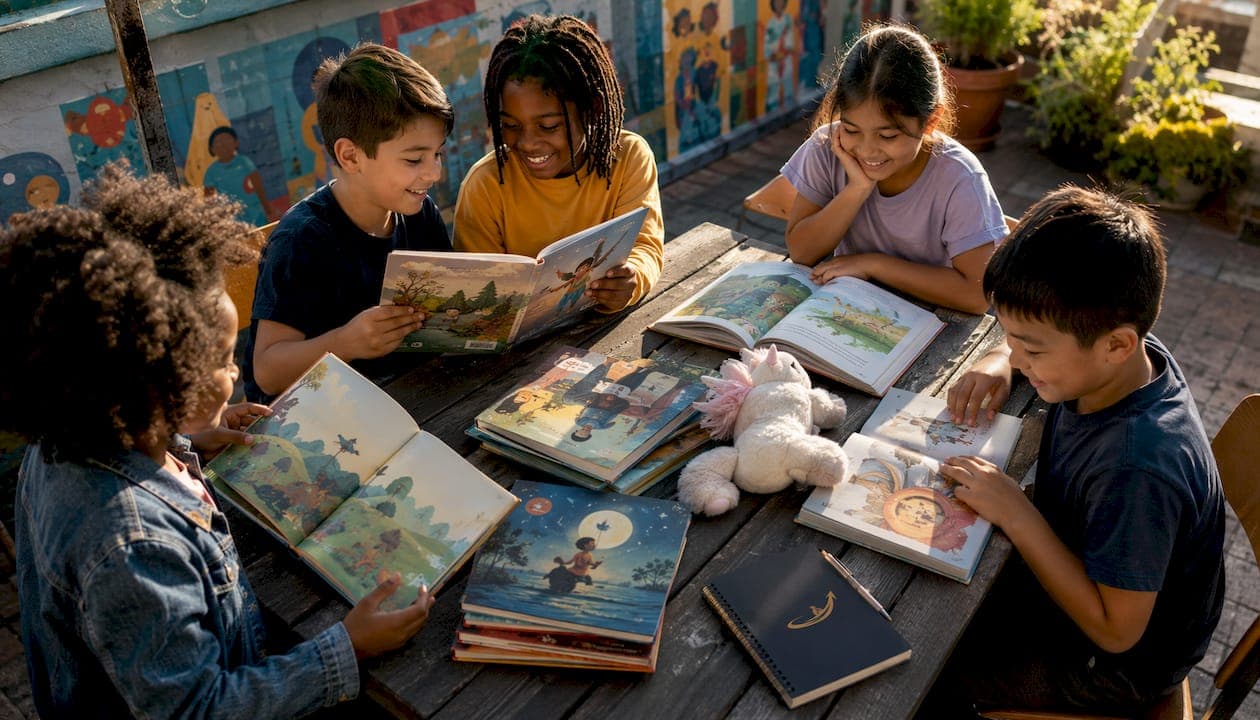
Children's books that celebrate being different are among the most powerful tools parents and educators have for building empathy, self-confidence, and genuine acceptance in young children. The titles below span physical differences, cultural backgrounds, neurodiversity, and family structures, giving every child a chance to see themselves on the page and understand someone else's story.
1. The best examples of books celebrating being different
These twelve titles represent the strongest, most widely used examples of children's literature celebrating uniqueness, drawn from picture books through middle-grade fiction.
-
Wonder by R.J. Palacio (ages 8–12): Auggie Pullman was born with a facial difference and enters fifth grade for the first time. The novel rotates perspectives among classmates and family members, showing how one person's courage to show up changes everyone around him. Palacio's book has become a classroom staple precisely because it refuses to make Auggie a symbol. He is a kid who loves Star Wars and hates cafeteria pizza.
-
You Are Enough by Margaret O'Hair (ages 4–8): Written with Down syndrome representation at its center, this picture book affirms belonging for children of all abilities. Back matter included in the book gives parents and teachers factual context about Down syndrome, making follow-up conversations easier and more grounded.
-
It's Okay To Be Different by Todd Parr (ages 2–6): Parr's bold, flat illustrations and short declarative sentences work for the youngest readers. His approach avoids labeling any trait as normal versus different, treating self-acceptance as something every child needs, not just children who stand out. Perfect for preschool read-alouds.
-
The Day You Begin by Jacqueline Woodson (ages 4–8): Woodson's lyrical prose follows children entering a new classroom and noticing how different they feel from their peers. The book validates those feelings while showing that sharing your story is what builds connection, not hiding what makes you unique. Rafael López's illustrations are vivid enough to carry the emotional weight even before a child can read a word.
-
Just Ask: Be Different, Be Brave, Be You by Sonia Sotomayor (ages 4–8): Justice Sotomayor wrote this book from personal experience with juvenile rheumatoid arthritis. Each character in the story has a different condition or way of experiencing the world, and the central message is that asking questions builds community rather than creating distance. The book's authoritativeness comes partly from Sotomayor's public profile and partly from how naturally it weaves disability representation into an everyday garden setting.
-
Different Just Like Me by Lori Mitchell (ages 4–8): A girl named April spends a week noticing the diverse people around her while waiting to visit her grandmother. Mitchell's engaging illustrations pair with a narrative that teaches tolerance through observation rather than lecture, making it one of the more organic approaches to the subject.
-
The Sneetches by Dr. Seuss (ages 4–8): Seuss built an entire allegory around the absurdity of in-group and out-group thinking. Star-bellied Sneetches and plain-bellied Sneetches spend the story chasing belonging until the distinction collapses entirely. It is one of the earliest examples of children's literature using humor to expose how arbitrary social hierarchies work.
-
Not Quite Narwhal by Jessie Sima (ages 3–6): Kelp is born into a family of narwhals but eventually discovers he is a unicorn. The story handles identity exploration with warmth and zero melodrama, landing on the idea that you can belong to more than one world. Younger children respond to the fantasy framing; older ones often catch the deeper message about mixed identity.
-
All Are Welcome by Alexandra Penfold (ages 3–7): A rhyming picture book that follows a single school day through a classroom where every cultural background, family structure, and ability is present. The refrain "all are welcome here" functions less as a slogan and more as a demonstrated fact across each spread.
-
One by Kathryn Otoshi (ages 4–8): Colors bully Blue until the number One stands up. The concept-book format makes abstract ideas about standing up for others concrete for very young children. Teachers frequently use it as an entry point for conversations about bystander behavior.
-
The Name Jar by Yangsook Choi (ages 5–8): Unhei arrives from Korea and considers choosing an American name to fit in. Her classmates end up wanting to learn her real name instead. The book handles cultural identity with specificity, which is what separates it from more generic "be yourself" stories.
-
Wings by Christopher Myers (ages 5–9): Ikarus Jackson has wings and gets mocked for them until one classmate speaks up. Myers uses the fantastical detail to make the experience of being visibly different feel immediate and real. It pairs well with Wonder for older picture-book readers.
Pro Tip: When reading any of these aloud, pause at a moment where a character feels left out and ask, "Has anything like this ever happened to you?" That single question turns a read-aloud into a conversation.
What themes and benefits do these books share?
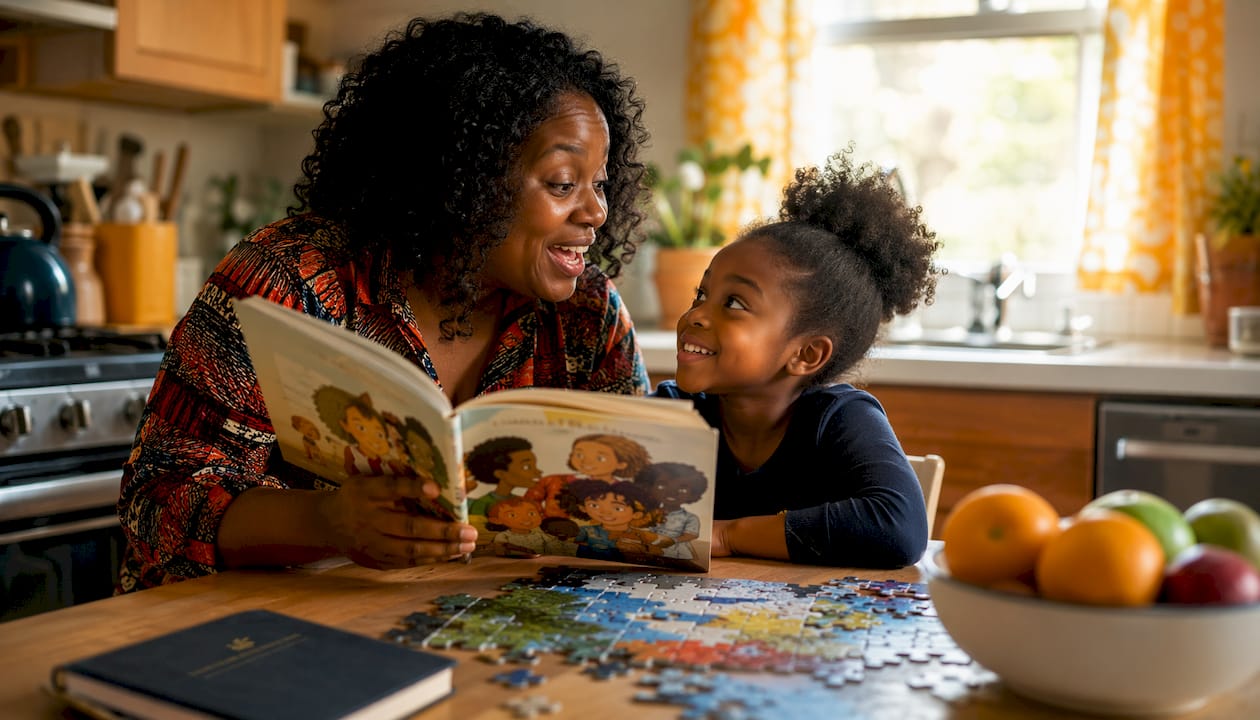
The strongest thread running through stories about embracing differences is that difference is not a problem to solve. It is a fact of being human, and the books above treat it that way.
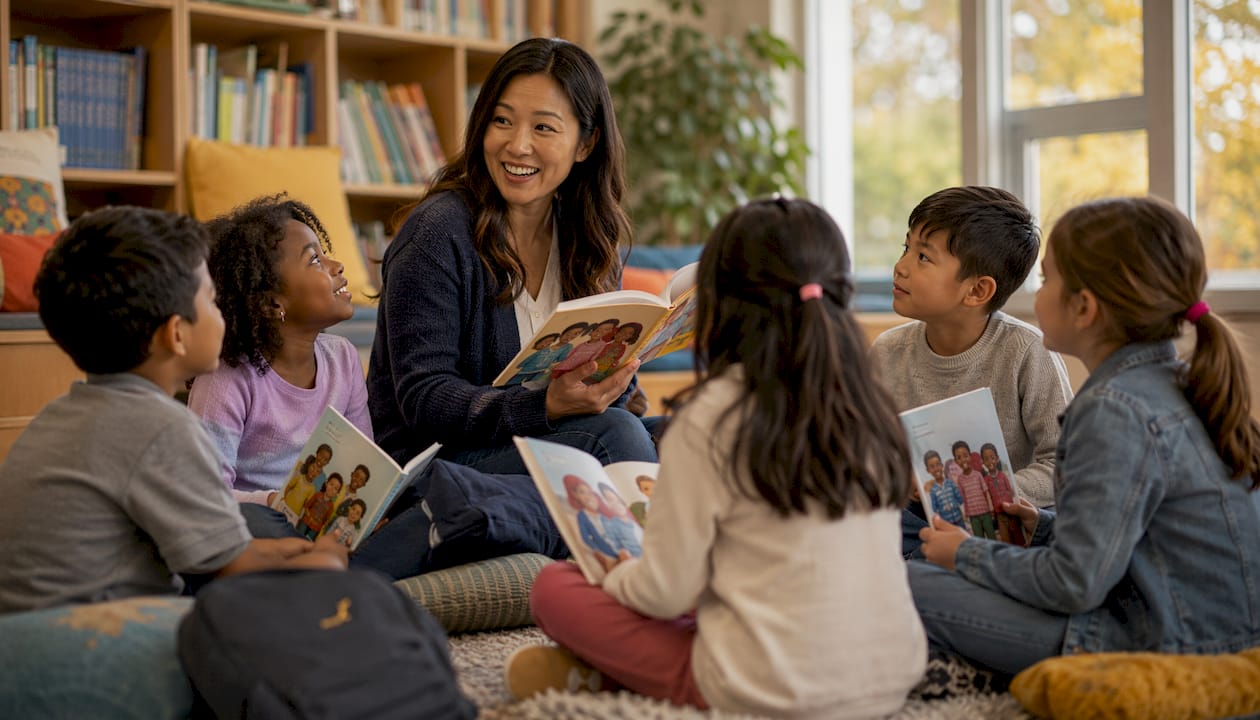
Children's literacy researchers describe books as "windows and mirrors": mirrors let children see themselves reflected in a story, while windows let them look into someone else's experience. Both functions matter. A child who only ever reads about characters who look and live like them develops a narrower sense of what the world contains. A child who encounters a range of characters builds the mental habit of imagining other people's inner lives, which is the foundation of empathy.
The specific benefits these books deliver include:
- Self-confidence: Characters who own their differences model that behavior for readers. Auggie going to school, Unhei keeping her name, Ikarus Jackson flying anyway. Each one shows children that visibility is survivable.
- Empathy: Asking about differences, as Sotomayor's book frames it, builds community. Children who practice that curiosity in fiction tend to carry it into real interactions.
- Normalization of diversity: When diverse characters appear in ordinary story settings rather than only in "issue books," children absorb the message that difference is background, not spectacle.
- Emotional vocabulary: Books like The Day You Begin give children words for feelings they already have but cannot name, such as the specific discomfort of being the only person in a room who eats a different lunch.
Todd Parr's approach is worth noting separately. His books treat self-acceptance as a universal condition rather than a lesson aimed at children who are visibly different. That framing matters because it prevents the "othering" that can happen when inclusion books are handed only to the child who seems to need them.
Pro Tip: After finishing a book, try asking, "What would you do if you were that character?" rather than "What did you learn?" The first question invites collaborative exploration rather than a right answer, which keeps children engaged longer.
Resources and reflection ideas for parents and educators
The books do the heavy lifting, but the conversations around them are where the real learning happens. A few practical tools and prompts make those conversations easier to start and sustain.
Discussion questions that work across most of these titles:
- What made the main character feel different from everyone else?
- Did any character do something kind that surprised you?
- Have you ever felt like you didn't quite fit in? What helped?
- What would you want someone to ask you if they wanted to understand you better?
Activities to extend the reading:
- Identity maps: Have children draw a circle with their name in the center and fill the surrounding space with things that make them who they are, such as languages spoken, foods they love, and things they are good at. This works especially well after reading The Name Jar or The Day You Begin.
- Window and mirror journals: After each book, ask children to write or draw one way the story was a mirror (they recognized themselves) and one way it was a window (they learned something new about someone else's life).
- Classroom garden project: Just Ask uses a garden as its central metaphor. Planting different seeds and watching them grow differently gives younger children a tactile connection to the book's theme.
Useful resources for finding more titles:
- The Inclusive Books for Children database organizes titles by age range, type of difference represented, and reading level, making it one of the most practical tools for building a diverse classroom library.
- The Art of Education University maintains a list of 100 children's books about diversity and inclusion, organized by theme, that teachers have used as a curriculum planning resource.
- For picture books specifically designed to spark inclusion conversations with children ages 3–8, Icon Literary's blog offers curated reading lists with discussion guides.
Bilingual editions and books that incorporate sign language or sensory tools extend the reach of these conversations to children who communicate differently, normalizing the full range of human expression rather than treating verbal language as the default.
Pro Tip: Keep a short stack of these books in a visible spot rather than a dedicated "feelings shelf." Children are more likely to pick them up casually when they are mixed in with everything else, which is exactly when the reading feels least like a lesson.
Socko the Flamingo brings emotional literacy to life
The books on this list are excellent starting points. For parents and educators who want a title that goes a step further into emotional literacy and belonging, Socko the Flamingo with Tennis Shoes by Derek Amarillas, published through Icon Literary, offers something a little different.
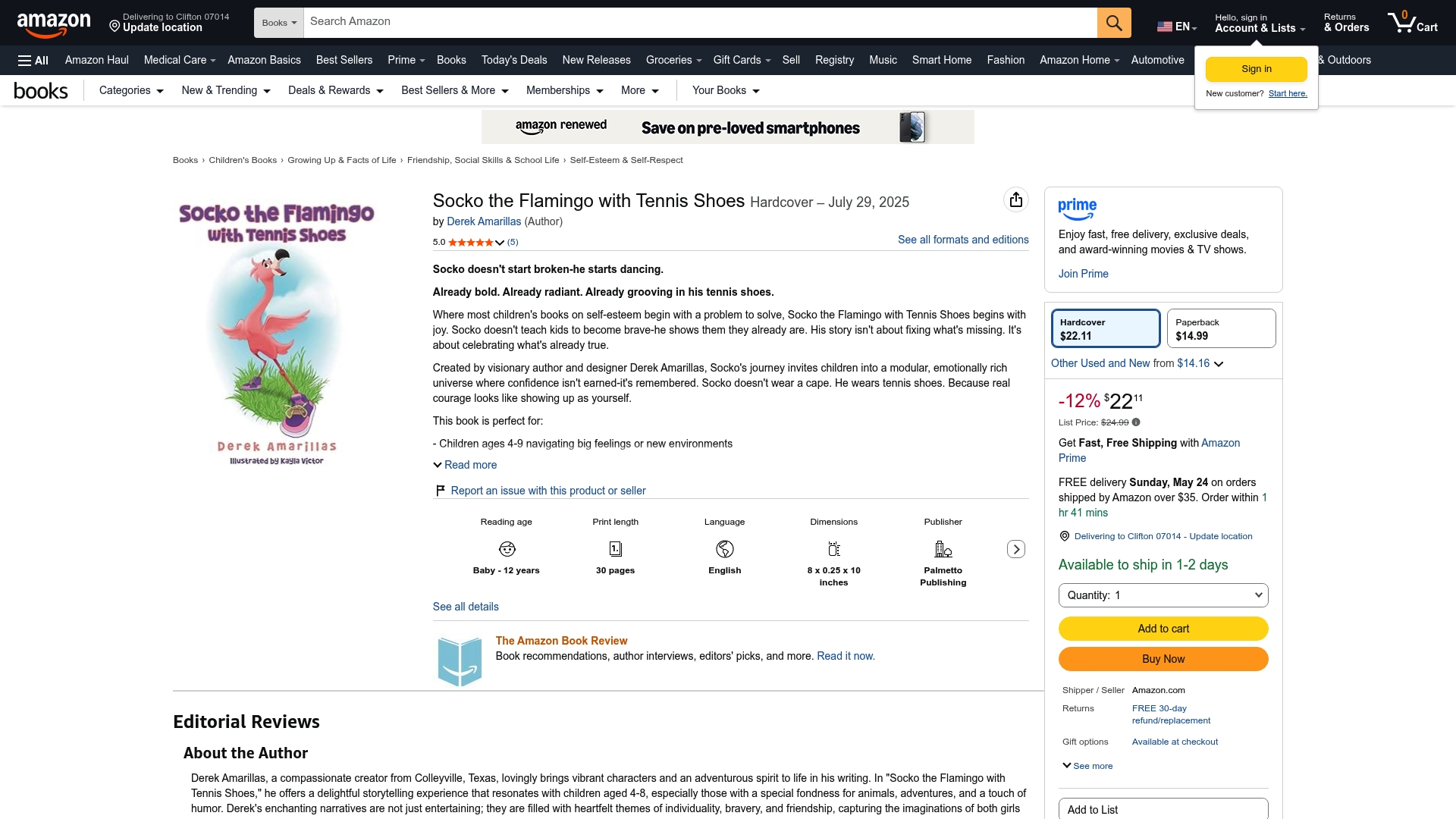
Socko is a flamingo who wears tennis shoes. That single detail is enough to make any child laugh and then wonder why it matters so much to everyone else in the story. Amarillas uses humor and imagination to open conversations about big feelings and identity without ever making the child feel like they are being taught a lesson. The character's warmth and absurdity work together in the way the best picture books always do: the funny surface carries the serious weight underneath.
For teachers and librarians, the book fits naturally alongside titles like It's Okay To Be Different and The Day You Begin as part of a unit on self-acceptance and belonging. Parents who have worked through the list above will find Socko a natural next read, one that reinforces the same themes with a fresh voice and a character children genuinely want to spend time with. You can find Socko the Flamingo with Tennis Shoes on Amazon and learn more about Icon Literary's approach to emotional literacy at iconliterary.com.
Key Takeaways
The most effective children's books celebrating being different treat diversity as a universal human condition rather than a problem belonging to a specific group of children.
| Point | Details |
|---|---|
| Start with mirrors and windows | Choose books where your child sees themselves AND encounters someone whose life looks different from theirs. |
| Back matter adds depth | Titles like You Are Enough include factual context that helps adults lead more informed follow-up conversations. |
| Questions beat summaries | Asking "What would you do?" after reading builds empathy more effectively than reviewing what the story was about. |
| Normalize, don't spotlight | Placing diverse books throughout a regular reading rotation works better than reserving them for teachable moments. |
| Icon Literary extends the conversation | Socko the Flamingo with Tennis Shoes pairs humor with emotional literacy themes, making it a strong complement to any diversity reading list. |