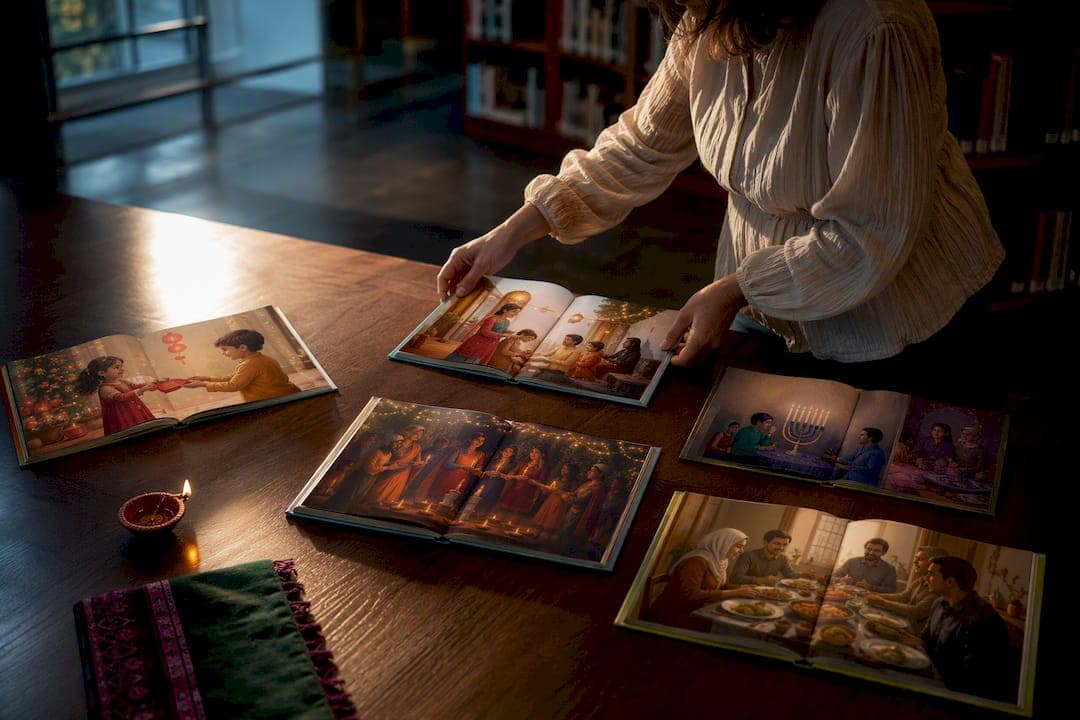
Yes, you can build a multicultural holiday picture-book collection right now that honors Diwali, Lunar New Year, Hanukkah, Kwanzaa, Ramadan, and the Winter Solstice alongside Christmas, without settling for tokenism. The picks below prioritize own-voice authors, intersectional characters, and details that hold up in a classroom or on a bedtime shelf. Everything is grouped by holiday so you can scan, request from your library, or buy in minutes.
TL;DR:
- Prioritize books written by own-voices authors that feature culturally specific details, such as regional dishes or rituals, over general holiday summaries for authenticity.
- Focus on titles that depict real families, communities, and multigenerational scenes to effectively teach values and celebrate tradition-specific practices.
- Regularly update your collection by checking library catalogs, educator lists, and independent publishers throughout the year to include the latest diverse and intersectional titles.
- Evaluate new holiday books quickly by verifying author or illustrator cultural credentials, checking for authentic details, and reviewing back matter like glossaries or notes.
- Choose fewer, highly specific titles that accurately portray one family's experience to foster empathy, rather than broad or superficial collections that skim over depth and intersectionality.
Table of Contents
- Inclusive Holiday Picture Books, Grouped by Tradition
- How to Vet Any Holiday Book for Authenticity
- Making Holiday Books a Teachable Moment
- Author and Publisher Perspective on Inclusive Storytelling
- Why Holiday Representation in Children's Books Took So Long
- What Publishers Get Right, and Where They Still Fall Short
- What Families and Educators Say About These Books
- Where to Find New Inclusive Holiday Titles
- The Real Standard for a Good Holiday Book Isn't Diversity Quotas
- Bring the Same Values Home With Icon Literary
- Sources
- FAQ
Inclusive Holiday Picture Books, Grouped by Tradition
Every strong holiday collection reads like a set of "mirrors and windows": some titles reflect a child's own home life back at them, others open a door into a tradition they've never seen. Educator-curated lists lean on this exact framing to guide book pairing, and it's the organizing logic behind every group below.
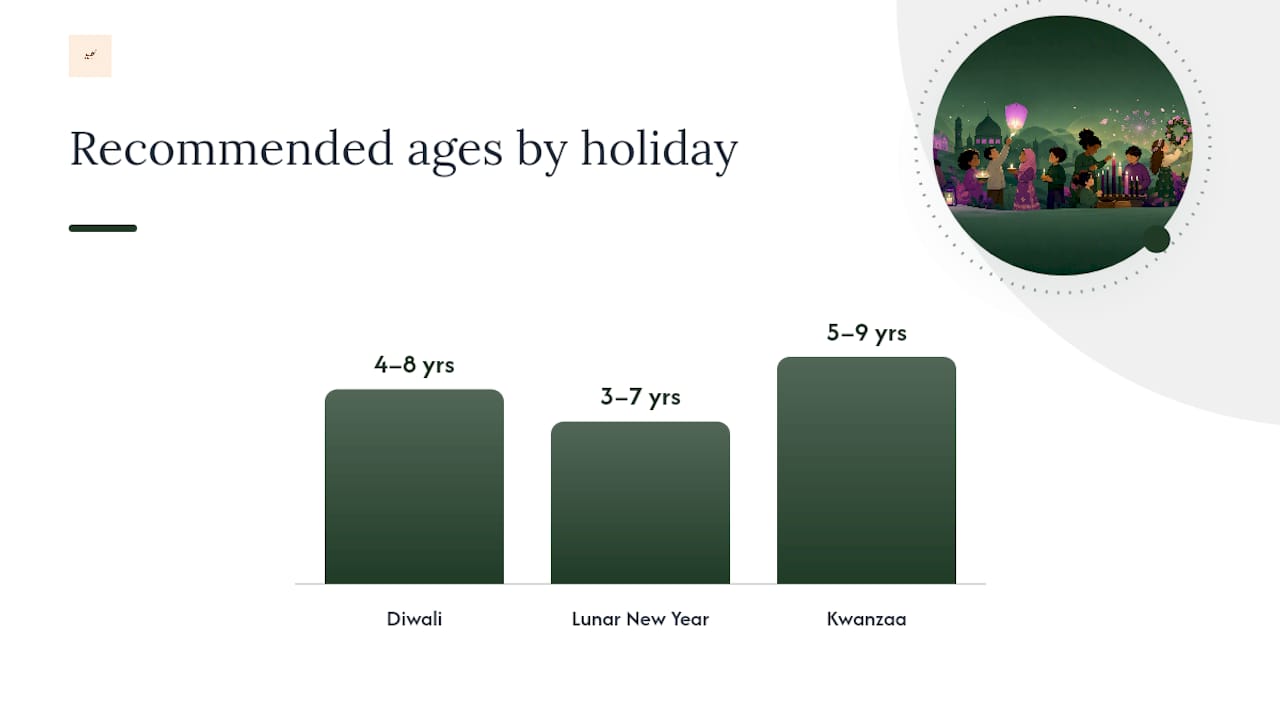
Diwali. Look for titles that treat the Festival of Lights as a lived family event, not a history-textbook entry. The strongest Diwali picture books show diyas being lit, sweets being made, and relatives arriving, with a glossary in the back explaining terms like "rangoli" or "puja" for readers outside the tradition. Ages 4 to 8 get the most from these, especially when a caregiver reads the family scenes first and saves the glossary for a second pass. If you're planning a related craft night, a U.S.-focused guide to shippable Diwali sweets pairs naturally with a Diwali read-aloud and keeps the activity culturally grounded rather than generic.
Lunar New Year. The best titles in this category follow one family through the specific rituals: cleaning the house, red envelopes, a particular regional dish, a grandparent's memory of celebrating decades ago. Specificity is the tell of an own-voices book here; a story that names a city, a dialect, or a exact dish reads as authentic in a way that a vague "Asian New Year" description never will. These work well for ages 3 to 7 as a bedtime story and for older elementary classrooms when paired with a short discussion of how the date shifts on a lunar calendar.
Hanukkah. Strong Hanukkah picture books balance the miracle story with the texture of modern celebration: latkes burning on the stove, a menorah passed down through generations, a kid negotiating gelt with a sibling. Watch for books that also acknowledge Hanukkah's place as a minor holiday in the Jewish calendar rather than treating it as a "Jewish Christmas." Back matter explaining the Maccabee story in kid-friendly language is a strong quality signal, and it's what separates a thoughtful title from a seasonal placeholder.
Kwanzaa. Because Kwanzaa is a relatively young holiday, founded in 1966, the best picture books tend to explain the seven principles (the Nguzo Saba) through a single family's nightly candle-lighting ritual rather than a dry list. Look for illustrations that show real community, potlucks, storytelling circles, and multigenerational households, since that communal framing is central to what Kwanzaa celebrates. These titles work especially well for ages 5 to 9 as a launch point for a classroom discussion on values like unity and collective work.
Ramadan and Eid. Ramadan picture books that work well center a child's own experience of fasting, sunset meals, or preparing for Eid, often with a sibling or grandparent guiding them through their first attempts at fasting. Because Ramadan follows a lunar calendar and shifts each year, a book that explains this briefly in back matter helps kids understand why the holiday doesn't land on the same date every year. Classroom guidance from Lesley University specifically recommends including Eid and other lunar-calendar holidays so a collection isn't accidentally biased toward December.
Winter Solstice. Solstice books are the quiet workhorses of an inclusive collection: they let you talk about seasonal celebration, darkness and light, and shared human ritual without defaulting to a specific religious frame. They're especially useful for interfaith classrooms or mixed-tradition families who want a shared entry point before branching into Hanukkah, Kwanzaa, or Christmas specifically.
Interfaith and cross-cultural stories. A smaller but valuable category follows families who blend traditions, a Jewish and Christian household celebrating both Hanukkah and Christmas, or a Diwali and Christmas home. These titles do double duty: they validate kids from blended-tradition households and model for everyone else that holiday celebration isn't either-or.
Year-round celebrations. Don't stop at winter. Lunar New Year sometimes falls in February, Eid shifts across the calendar entirely, and a collection that only stocks up in November and December quietly signals that some traditions matter more than others. Rotating a few non-winter titles into your shelf or your classroom library keeps representation from being seasonal window dressing.
- Diwali: family-centered stories with glossaries beat "history of the festival" summaries for ages 4 to 8.
- Lunar New Year: specific regional or family detail signals authenticity.
- Hanukkah: look for back matter explaining the Maccabee story simply.
- Kwanzaa: community and multigenerational scenes matter more than a dry list of principles.
- Ramadan/Eid: center a child's own fasting or Eid-prep experience.
- Winter Solstice: strong shared entry point for interfaith classrooms.
- Interfaith stories: validate blended-tradition households directly.
How to Vet Any Holiday Book for Authenticity
Once you've worked through a curated list, you'll want to evaluate new titles on your own, especially since publishers release fresh holiday books every year. Run each candidate through this checklist before it earns shelf space.
- Check for an own-voices signal. Is the author or illustrator from the culture being depicted, or credited as a cultural consultant? This detail is usually on the jacket flap or the author bio page.
- Look for culturally specific detail, not generalization. A book that names a specific dish, city, or ritual detail is doing more work than one that describes a holiday in vague, textbook terms.
- Scan for intersectionality. Does the story show a character's race, disability, family structure, or gender identity as part of a whole person, rather than isolating one trait as the entire plot? Gaps here are common. Analysis of children's literature shows disability and non-binary identity are routinely left out even when race is represented, so actively search for titles that combine more than one identity facet.
- Read the illustrations, not just the text. Do characters look individual and specific, or do they read as generic stand-ins for "a culture"?
- Flip to the back matter. A glossary, pronunciation guide, or author's note is a strong marker of careful curation, and it's one of the most reliable and free ways to gauge quality before you buy.
- Check accessibility formats. Board book, large print, or audio versions matter if you're building a collection that serves kids with different needs.
Quick verification takes under two minutes: skim the back matter, check whether the book appears on an educator-curated list, and preview a few interior pages if your retailer or library allows it.
Pro Tip: Pair a personal-story picture book with a context-setting one on the same holiday. Reading a family's Diwali morning alongside a book that explains why diyas are lit turns a single story into a fuller picture, instead of asking one book to represent an entire culture on its own.
Making Holiday Books a Teachable Moment
A holiday book earns its shelf space when it starts a conversation, not when it just fills fifteen minutes before nap time. For younger kids (ages 3 to 5), keep discussion prompts concrete: "What foods do you see on this page?" or "How does this family show they're happy together?" For ages 6 to 8, push toward comparison: "How is this celebration similar to one your family has? How is it different?"
A few low-prep extension activities go a long way:
- Pair two books on the same holiday, one narrative and one informational, and ask kids what each one taught them that the other didn't.
- Add multilingual labels to a classroom display (a Hanukkah corner labeled in Hebrew and English, for instance).
- Build a small-group project where each child researches one holiday from the read-aloud list and presents one fact and one question.
- Invite a family member or community guest to share a personal tradition tied to a featured book, rather than relying on the book alone to represent a culture.
Representation is catching up, slowly. In 2024, 51% of children's books received by the Cooperative Children's Book Center featured significant BIPOC content, up from 49% the year before, and books with minority religious content rose to 6% from 4%. That's real movement, but it also means nearly half of children's books still lack meaningful representation, which is exactly why deliberate curation still matters more than picking whatever's on the front table at the store.
Author and Publisher Perspective on Inclusive Storytelling
Derek Amarillas has spent years studying how children's media shapes empathy and identity formation, with particular attention to how holiday and seasonal stories either widen or narrow a child's sense of who belongs in a celebration.
Representation in children's books isn't a box to check once a year in November. It's a daily signal to a kid about whose family looks like a "normal" holiday family and whose doesn't. The books that do this well don't lecture, they just show a specific, fully realized family and trust the reader to connect.
Icon Literary builds its own stories, decks, and activity kits around that same belief: emotional literacy lands best when it's woven into a specific, art-forward story rather than delivered as a lesson. Editorial vetting for representation isn't cosmetic. It shapes whether the social-emotional learning actually reaches the kid reading the page.
Why Holiday Representation in Children's Books Took So Long
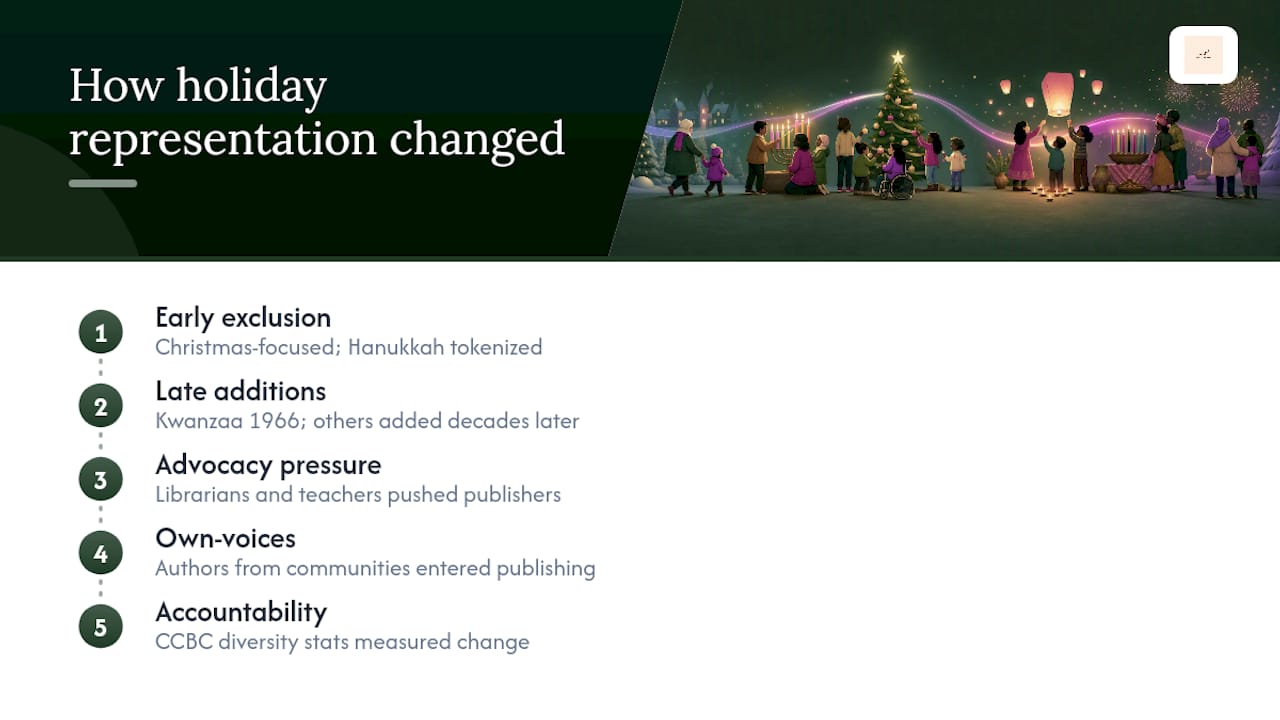
Mainstream American children's publishing spent decades treating "holiday book" as shorthand for Christmas, with Hanukkah occasionally added as a token nod toward diversity and almost nothing else represented at all. Kwanzaa didn't exist as a holiday until 1966, and picture books depicting it didn't reach meaningful numbers of years on shelves until decades later. Diwali, Lunar New Year, and Eid followed a similar pattern: present in the communities that celebrated them, largely absent from mainstream bookstore shelves and school reading lists until relatively recently.
What changed wasn't a single event but a slow accumulation of pressure: librarians and educators pushing publishers for classroom-ready titles, own-voices authors breaking into an industry that had mostly published outsider perspectives on other cultures, and organizations tracking the gap publicly enough that publishers couldn't ignore it. The CCBC's ongoing diversity statistics are part of that accountability structure. They turn a vague sense that "publishing should do better" into a number publishers can be measured against year over year.
The stakes are bigger than shelf variety. A kid who never sees their own holiday reflected in a picture book absorbs a quiet message about whose traditions count as normal, and a kid who only ever sees one version of "the holidays" absorbs a narrower view of the world than the one they actually live in.
What Publishers Get Right, and Where They Still Fall Short
Big publishing houses have made visible investments in inclusive holiday titles over the past several years: dedicated imprints for own-voices authors, cultural consultants brought on for accuracy checks, and marketing budgets that finally treat a Diwali or Lunar New Year picture book as a lead title rather than a niche seasonal add-on.
The gaps are just as real. Intersectionality remains the weakest spot industry-wide. It's far easier to find a book that represents race than one that combines race with disability, a non-traditional family structure, or gender diversity in the same character. Practitioner analysis of children's literature confirms this pattern holds across genres, not just holiday titles specifically. Smaller and independent publishers, including studio-model creators like Icon Literary, often move faster on these gaps than larger houses because a smaller catalog means every title carries more weight, and there's less institutional inertia protecting an outdated formula. The tradeoff is discoverability. Independent titles frequently need word-of-mouth, librarian recommendations, or targeted lists to find the readers who'd want them most.
What Families and Educators Say About These Books
Parents who've deliberately diversified their holiday shelf tend to describe the same shift: kids stop treating "holiday books" as synonymous with one specific celebration and start asking questions about traditions outside their own without prompting. Educators report a similar pattern in classrooms that rotate holiday read-alouds across the full calendar year rather than clustering everything into a two-week December unit.
The recurring theme in feedback from caregivers and teachers isn't really about the books themselves. It's about what happens after the last page: a kid asking a classmate about their family's Lunar New Year dinner, or a child from an interfaith household finally seeing a book that reflects both sides of their own home. That's the practical payoff of building a collection around multiple traditions instead of one, and it's hard to manufacture with a single "diverse" title dropped into an otherwise homogenous shelf.
Community response also tends to reward specificity over breadth. A book that gets one tradition exactly right, down to a specific regional dish or a family's particular ritual, generates more genuine enthusiasm among families from that background than a broader survey book ever does. That's worth remembering the next time a "12 Holidays in One Book" title looks tempting as a shortcut.
Where to Find New Inclusive Holiday Titles
New inclusive holiday picture books release throughout the year, not just in the fall rush before the holidays hit shelves, so a one-time shopping trip won't keep a collection current. A few reliable ways to stay on top of new releases:
- Follow your local library's youth services newsletter or new-arrivals shelf, since librarians often flag diverse titles before they hit bestseller lists.
- Check educator-curated roundups that update seasonally rather than a single static list from years ago.
- Search library catalog systems directly using specific terms (a holiday name plus "own voices" or a specific culture) rather than a generic "holiday books" search.
- Watch for independent and small-press catalogs, which often move faster on niche or intersectional titles than large publishing houses.
- Ask children's librarians directly. Most maintain informal running lists of strong new titles that never make it into a big publication's annual roundup.
Setting a recurring reminder to check for new titles every few months, rather than only during the pre-holiday shopping season, keeps a collection growing instead of static.
The Real Standard for a Good Holiday Book Isn't Diversity Quotas
The conventional advice around inclusive holiday books tends to stop at "buy one book from each culture," as if representation were a checklist you complete once. That framing misses the point entirely. A shelf with ten mediocre, generic holiday books covering ten different cultures teaches kids less than a shelf with five specific, well-crafted ones that show real families with real texture.
What the research on intersectionality gaps actually supports is a harder truth: quantity is improving industry-wide, but depth and combination of identity are still lagging. Prioritize specificity over coverage. A book that nails one family's Diwali morning, disability and all, sibling rivalry and all, teaches more about empathy than three generic "here's how this holiday works" surveys combined.
If you take one thing from this guide, take this: buy fewer books, choose them more carefully, and reread the ones that get it right more than once. Kids build empathy through repetition and detail, not through breadth alone.
— Derek Amarillas
Bring the Same Values Home With Icon Literary
If you're building a shelf that treats emotional literacy and cultural specificity as inseparable, Icon Literary's story-led products are built around the same principle: character-driven worlds that teach feeling and connection without ever sounding like a lesson plan. The Duckwave Decks are available for purchase as individual card decks, providing a way to add a story-world card deck to a classroom center or a family game night alongside your holiday shelf.
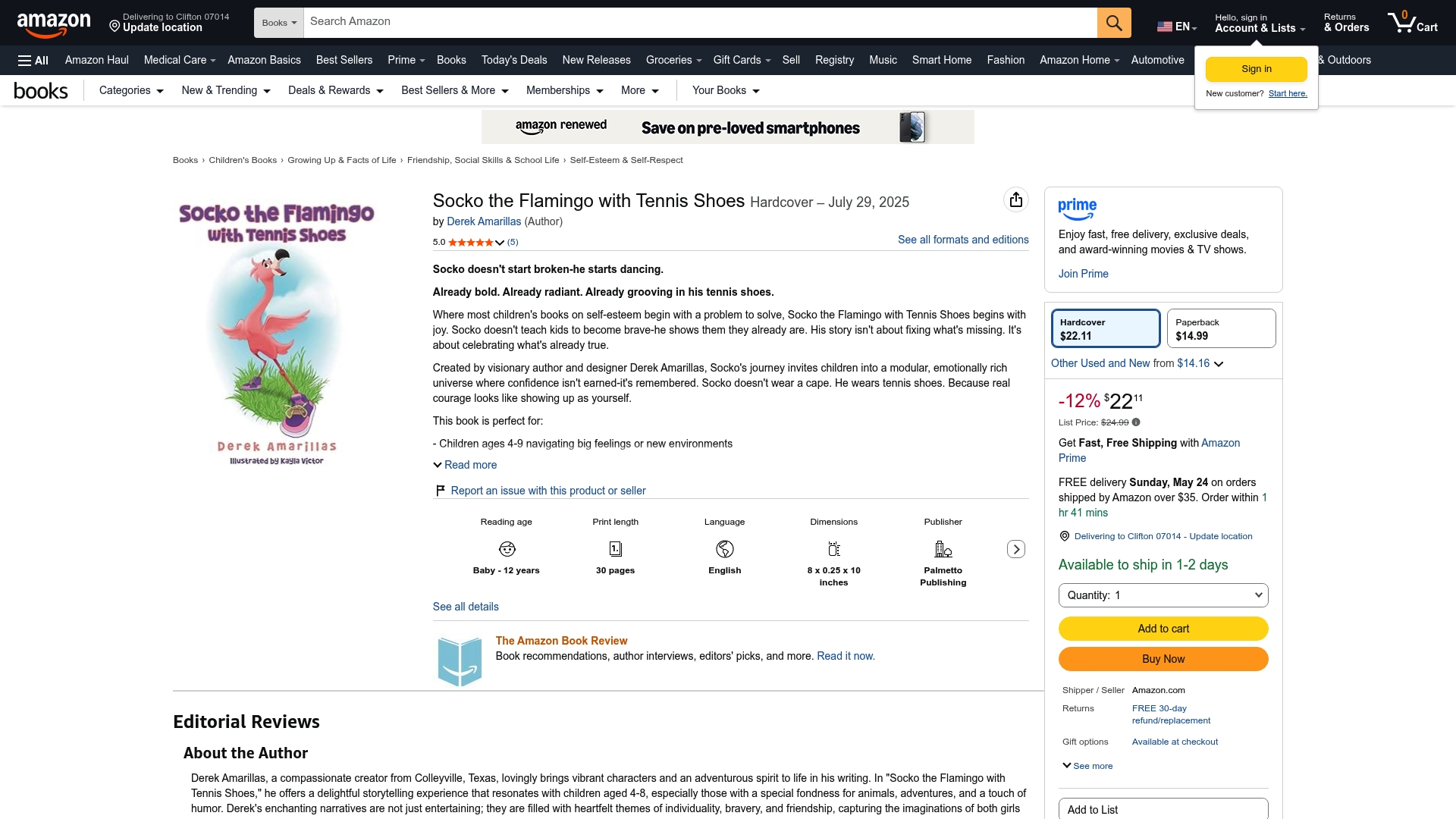
For caregivers and educators who want a broader story world to pair with a rotating holiday collection, Socko's Universe offers original characters and printable activities designed for the same age range, 3 to 8, that most inclusive holiday titles target. These aren't replacements for the culturally specific holiday books above. They're a complementary layer of SEL storytelling for the weeks between celebrations, when kids still need practice naming feelings and reading social cues. Browse the full Icon Literary catalog to preview what's available and add a deck or kit to your next order.
Sources
- CCBC’s diversity statistics show promising growth in diverse children’s books in 2024, but room for progress – School of Education – UW–Madison
- Books That Celebrate Diverse Holidays and Traditions | Brightly
- Celebrating the Season: New and Diverse Holiday Books for the PK–6 Classroom - Lesley University
FAQ
What Makes a Holiday Picture Book Truly Inclusive?
Own-voices authorship, culturally specific detail instead of generalized description, and back matter like glossaries or author notes all signal genuine inclusivity rather than a surface-level nod to diversity.
How Many Holidays Should a Classroom Collection Cover?
Aim for at least the major traditions your students' families celebrate, plus a few beyond that, including lunar-calendar holidays like Eid and Lunar New Year so the shelf isn't skewed toward December.
Are There Inclusive Books That Cover More Than One Holiday?
Yes, interfaith and cross-cultural titles that follow blended-tradition families exist, and they're valuable for validating kids from mixed-heritage households while modeling multi-tradition celebration for everyone else.
Where Can I Find Newly Released Diverse Holiday Books?
Library new-arrivals shelves, educator-curated roundups that update seasonally, and direct catalog searches using specific cultural terms tend to surface new titles faster than general bestseller lists.
Does Icon Literary Publish Holiday-Specific Picture Books?
Icon Literary focuses on character-driven story worlds and SEL tools like Duckwave Decks and Socko's Universe rather than holiday-specific titles, making them a strong complement to a curated holiday shelf rather than a replacement for it.