
Here are librarian-curated SEL book lists by grade band, plus quick cataloging and program ideas you can put to work this week. The lists below cover kindergarten through second grade, upper elementary, and middle school, chosen for how well each title supports emotional recognition, belonging, and resilience. You'll also find metadata tips, a selection rubric, and ways to loop in counselors, teachers, and families so the collection stays useful year after year.
TL;DR:
- Using specific emotional tags like anxiety or belonging helps students self-select relevant books without requiring staff assistance.
- Incorporating grade level, format, and award status in cataloging ensures the collection is accessible and signals quality.
- Regularly reviewing and updating titles every six months maintains a fresh, relevant collection that reflects new titles and changing student needs.
- Building a small, dedicated shelf around one SEL theme and tracking its circulation provides valuable insights into actual student use and relevance.
- Involving students, teachers, and families in selecting titles enhances cultural responsiveness and improves the collection’s impact.
Table of Contents
- Librarian SEL Book List Suggestions by Grade Band
- Organizing SEL Books in Your Catalog and on the Shelf
- How to Choose SEL Titles Worth Adding to the Collection
- Putting SEL Books to Work in Library Programs
- Why This Approach Holds Up
- Keeping Your SEL Shelf Current Year After Year
- Measuring Whether Your SEL Books Are Actually Working
- Bringing Students, Teachers, and Families Into the Selection Process
- What a Working Librarian Actually Notices
- Extending Your SEL Shelf With Ready-Made Kits
- Sources
- FAQ
Librarian SEL Book List Suggestions by Grade Band
A strong SEL collection needs range: books that name feelings for a five-year-old and books that sit with a sixth grader's anxiety without flinching. These shortlists are starting points, not a full acquisition plan, and each title earns its spot for a specific reason.
Early elementary (K–2)
- The Color Monster by Anna Llenas. Sorts feelings into colors, which gives kids who can't yet name an emotion a visual entry point.
- The Rabbit Listened by Cori Doerrfeld. Models what it looks like when a friend simply sits with someone's sadness instead of trying to fix it.
- A Sick Day for Amos McGee by Philip C. Stead. A quiet story about routine, care, and reciprocity that works well for read-alouds on friendship.
- I Am Human: A Book of Empathy by Susan Verde. Direct enough for a five-minute morning-meeting read, with language that names empathy without lecturing.
Upper elementary (3–5)
- The Thing About Bees: A Love Letter by Shabazz Larkin. Handles grief and family love in verse, useful for kids processing loss.
- Each Kindness by Jacqueline Woodson. A rare picture book that lets a character fail to be kind and never resolves it neatly, which sparks real classroom discussion about regret.
- Fish in a Tree by Lynda Mullaly Hunt. Follows a girl hiding a reading disability, strong for confidence and self-worth conversations.
- The Bad Seed by Jory John. Handles identity and change with humor, a good bridge title for reluctant readers still working through picture books.
Middle school
- New Kid by Jerry Craft. A graphic novel confronting code-switching and belonging at a mostly white private school, and one of the most requested bibliotherapy titles for identity conversations.
- Starfish by Lisa Fipps. Verse novel on body image and self-acceptance that middle-schoolers pass to each other without prompting.
- Ghost by Jason Reynolds. Covers grief, anger, and mentorship through track and field, useful for boys who resist "feelings books."
- When You Trap a Tiger by Tae Keller. Folds Korean folklore into a story about family illness and coping, good for cultural responsiveness alongside emotional content.
None of these lists need to be exhaustive to be useful. A tight shelf of proven titles beats a sprawling one nobody can find.
Organizing SEL Books in Your Catalog and on the Shelf
Metadata is what turns a good list into a usable one. TeachingBooks organizes school-facing SEL lists using word count, reading level, curricular area, and award status, and that structure translates well into a local catalog.
- Tag by SEL theme first, not just topic. Use discrete labels like anger, anxiety, belonging, or grief rather than one catch-all "SEL" tag, since SEL4OH's librarian resources show that organizing by specific emotional states helps students self-select help without asking an adult.
- Add grade band, reading level, and format. Include large print, audiobook, and bilingual editions in the same record so staff can match a title to a reader's actual access needs.
- Flag award and distinction data. Pull from Newbery, Schneider Family Book Award, and similar honors, since award status signals both quality and often more nuanced emotional content.
- Use color-coded spine labels for the most-requested themes. A small colored dot for anxiety, friendship, or anger lets a shy student browse without asking the desk for help.
How to Choose SEL Titles Worth Adding to the Collection
Not every book that mentions feelings belongs in an SEL collection. A workable rubric keeps acquisitions focused and keeps weak titles from clogging shelf space.
- Readability and curriculum fit. Match reading level and vocabulary to the grade band you're buying for, and check whether the title ties naturally to an existing unit or counselor referral topic.
- Cultural responsiveness. Look for accurate, specific portrayals rather than generic "diverse" characters dropped into a plot that never engages their actual experience.
- Format and accessibility. Prioritize titles available in large print, audio, or bilingual editions when your population needs them.
- Circulation red flags. Watch for books that resolve trauma too neatly in twelve pages, or that use a mental health struggle as a plot twist rather than a real experience.
Pro Tip: Keep a short "bench" list of backup titles for each theme. When a popular anxiety or grief title goes missing or falls apart from heavy circulation, you can replace it same-week instead of leaving a gap on the shelf.
Putting SEL Books to Work in Library Programs
A list only matters once it's in front of a reader who needs it. Two practical models work well for library SEL programs, drawn from real practitioner cases.
- Counselor-led referral. The counselor identifies a student's need and prescribes a title; the librarian checks in at pickup and return to see how the book landed. School Library Journal's account of this model shows it works best when the librarian and counselor share a simple tracking sheet.
- Librarian-initiated appointment. A student asks for help directly, and the librarian pulls two or three options from the theme-tagged shelf on the spot, no counselor loop required.
- Thematic displays with discussion prompts. Rotate a themed shelf monthly (friendship in September, resilience in winter) with a laminated card asking one open-ended question.
- Adult SEL titles for staff. Stocking a few professional titles for teachers to model self-regulation improves how consistently SEL gets reinforced outside the library, an idea supported by guidance on embracing adult SEL for educators.
Why This Approach Holds Up
This list draws on practitioner sources rather than guesswork: SEL4OH's librarian resources, TeachingBooks, and School Library Journal's reporting on real bibliotherapy programs. The Social-Emotional Learning Playbook makes a similar case: SEL sticks better when it's woven into daily practice rather than isolated to one lesson a month, and a library's shelves are one of the few places that happens without a bell schedule getting in the way.
Every school population is different, so treat these lists as a base to adjust against your own circulation data, counselor referrals, and student requests. A rural elementary collection and an urban middle school will diverge fast once local need enters the picture, and that's exactly how it should work.
Keeping Your SEL Shelf Current Year After Year
An SEL list goes stale faster than most librarians expect, mostly because publishers release strong new titles on identity, anxiety, and grief every season. Build a standing check into your existing collection development calendar rather than treating updates as a separate project.
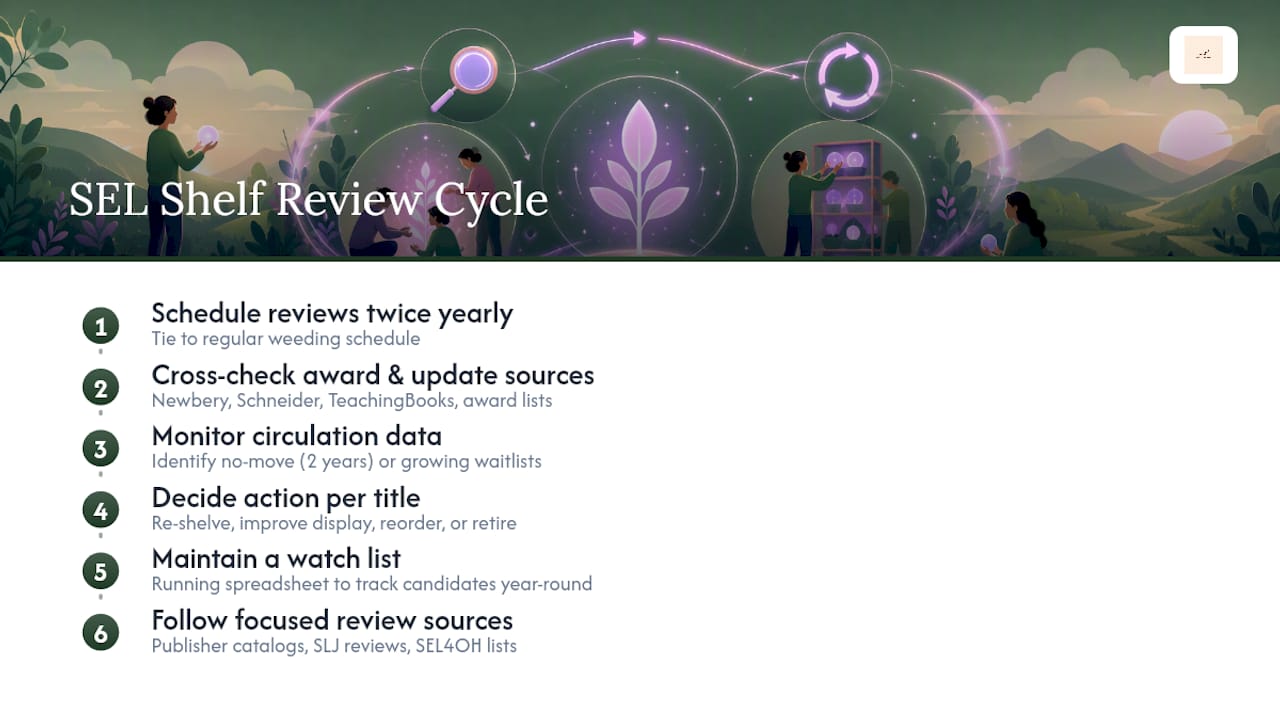
Set a twice-a-year review, ideally tied to your regular weeding schedule, where you cross-check your shelf against new award lists, TeachingBooks updates, and recent Schneider Family Book Award or Newbery honors. Watch circulation data closely during that review. A title that hasn't moved in two years might need better shelf placement, better display visibility, or simply retirement, while a title with a growing waitlist tells you where to spend the next order.
Follow a handful of SEL-focused review sources rather than trying to track every new release yourself. Publisher catalogs, School Library Journal's review coverage, and SEL4OH's ongoing lists give you a manageable stream instead of an overwhelming one. Keep a running "watch list" spreadsheet throughout the year so review time becomes a matter of confirming picks rather than starting from scratch. For a deeper walkthrough of what to check at each review cycle, the SEL collection development checklist covers the process step by step.
Retire titles as deliberately as you add them. A grief or anxiety book that hasn't aged well, whether the language feels dated or the portrayal reads as thin by current standards, does more harm sitting on a themed shelf than an empty slot does.
Measuring Whether Your SEL Books Are Actually Working
Circulation numbers alone won't tell you if a book is helping a student cope with anxiety or just filling a school requirement. You need at least two layers of evidence: usage data and direct feedback.
Track checkouts by theme tag, not just by title, so you can see whether your anger shelf or your belonging shelf is getting used relative to how often counselors report those needs. A theme with heavy counselor referrals but low circulation usually means a shelving or awareness problem, not a book quality problem.
Build a light feedback loop with your counseling team. If you're running a referral model, a quick monthly check-in on how students responded to specific titles turns anecdote into a pattern over time. Ask simple, non-clinical questions: did the student finish it, did they ask for a similar book, did they mention it in a follow-up conversation. You're not diagnosing outcomes. You're noticing which titles keep earning a second look.
Student self-selection is its own signal. When kids repeatedly pull a title from an anxiety-tagged shelf without staff prompting, that's a stronger indicator of relevance than any survey. SEL4OH's research on theme-based cataloging found that a small starter shelf per emotional state increases self-selection and cuts down on staff triage time, which is as close to a real effectiveness metric as most school libraries can get without a formal study.
Bringing Students, Teachers, and Families Into the Selection Process
The strongest SEL collections aren't built by one librarian working alone with a review journal. Involve the people who actually use the books, and the list gets sharper fast.
Ask students directly, especially older elementary and middle schoolers. A short suggestion box or an end-of-year survey asking "what book helped you this year" or "what feeling do we need more books about" surfaces gaps a professional review never would. Middle schoolers in particular know exactly which anxiety or identity books their peers are quietly passing around.
Loop teachers and counselors into your acquisition cycle instead of just your circulation reports. A counselor who's fielding the same three student concerns every week can point you toward a theme gap before it shows up in checkout data. Teachers tied to a specific curriculum unit, like a fifth-grade unit on resilience, often know which titles land with their specific class and which fall flat.
Families matter too, particularly for cultural responsiveness. A parent advisory input session, even an informal one at a school event, can flag whether a title's portrayal of a specific culture or family structure feels accurate to families living that experience, not just accurate on paper. Icon Literary's read-aloud examples for K–2 classrooms show how a shared read-aloud experience often becomes the easiest entry point for that kind of family feedback, since parents hear directly what resonated with their child.
What a Working Librarian Actually Notices
Start smaller than you think you need to. Pick one SEL theme, anxiety or belonging usually generates the most demand, and build a six-title starter shelf around it this month. Track checkouts for eight weeks and ask two or three students what they thought.
That single data point tells you more than a sweeping collection overhaul ever will. Libraries succeed at SEL not by stocking everything, but by making sure the right book is easy to find on the day a kid actually needs it. For more on why that role matters, see why libraries prioritize emotional literacy books.
— Derek Amarillas
Extending Your SEL Shelf With Ready-Made Kits
Building a full SEL collection from scratch takes time most librarians don't have between weeding, cataloging, and reference desk hours. Icon Literary designs character-driven story worlds and activity tools meant to sit alongside your book collection rather than replace it, giving you a shelf-ready option when you need a quick program hook.
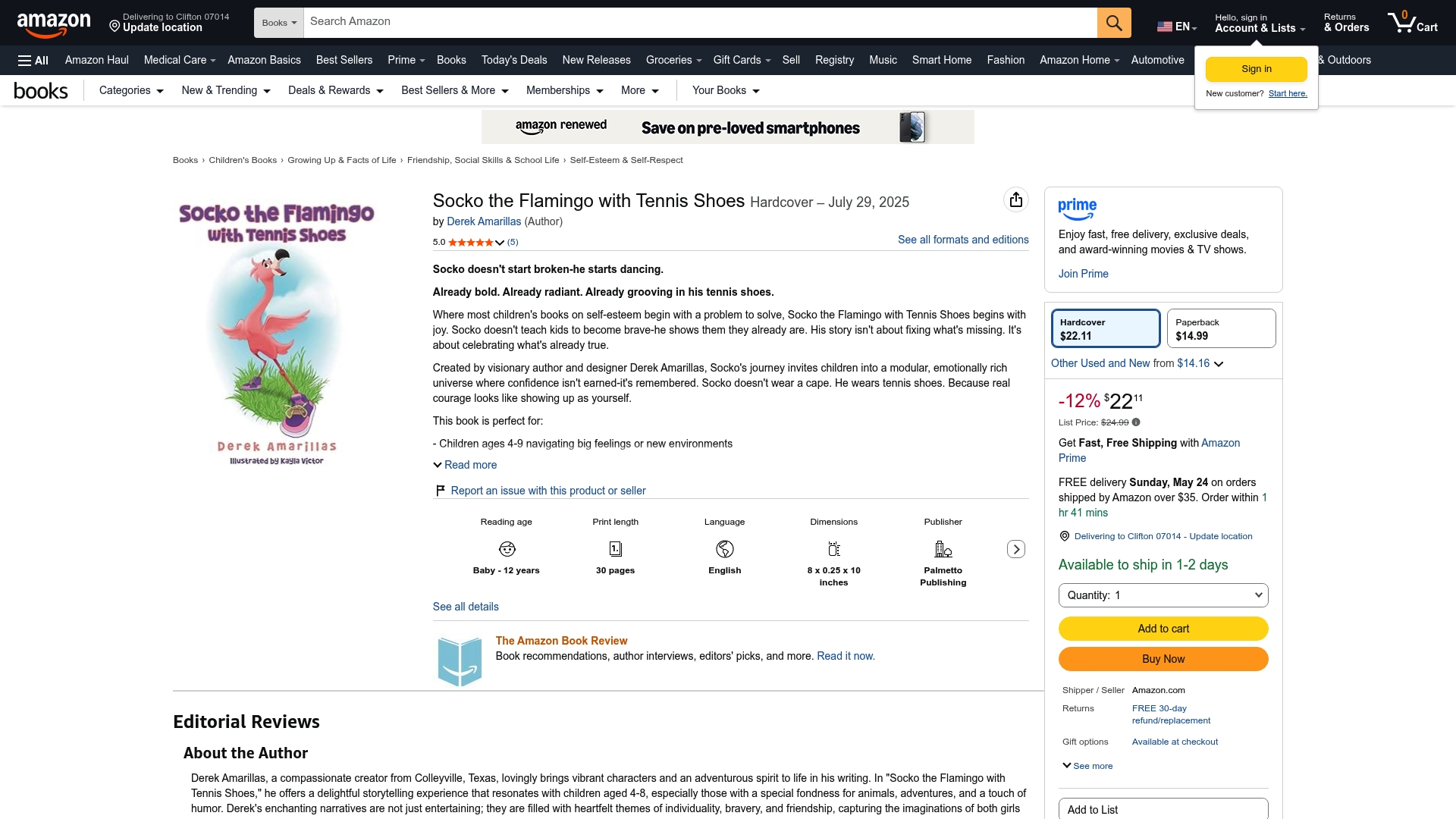
The Duckwave Decks, priced at $7 one-off through the Icon Literary storefront, work well as a themed card activity for a short book club session or a discussion warm-up before a read-aloud. Socko's Universe, part of the Icon Literary catalog, offers character-driven story worlds designed to make emotional themes feel indirect and developmentally attuned rather than like a lesson. Both are built for kids ages 3 to 8, which makes them a natural fit for K–2 display stations or a counselor referral pairing alongside the picture books above. Browse the catalog for sample pages and current pricing before your next order.
Sources
A few practitioner sources are worth checking every time you refresh your SEL shelf:
- Middle School Social-Emotional Book List
- SEL Resources for Librarians
- How My School Library Embraces Social Emotional Learning
- The Social-Emotional Learning Playbook
FAQ
What are some of the best SEL books for a school library?
Strong picks vary by grade band, but titles like The Color Monster for K–2, Each Kindness for upper elementary, and New Kid or Starfish for middle school consistently work well because they name specific emotions without resolving them too neatly. Pair any list with theme-based cataloging tags so students can find the right title without asking staff.
What books would a librarian recommend for social-emotional learning?
A librarian building an SEL collection typically recommends books organized by specific emotional states, such as anger, anxiety, or belonging, rather than one general "feelings" shelf. This approach, supported by SEL4OH's librarian guidance, helps students self-select support instead of relying on an adult to point them to the right book.
Why are some critics against SEL programs in schools?
Some critics argue SEL curricula can drift into ideological territory or take time away from academic instruction, and this concern shows up most often around mandated classroom SEL programs rather than library book collections. A librarian-curated SEL book list sidesteps much of that debate by offering optional, story-based titles students choose for themselves rather than a required curriculum.
What is the five-finger rule for choosing books?
The five-finger rule helps a reader gauge whether a book's reading level fits them: they read a page and hold up a finger for each unfamiliar word, and five or more fingers suggests the book may be too difficult right now. It's a quick fit check, not an emotional-content filter, so pair it with theme tags when matching a student to an SEL title specifically.
Does Icon Literary offer materials for library SEL programs?
Icon Literary's Duckwave Decks, available through its storefront, and Socko's Universe, found in its product catalog, work as optional activity tools for read-aloud hooks or discussion stations. Both are designed for children in early elementary grades and pair naturally with a themed SEL display or counselor referral shelf.