
Pick one SEL objective per read-aloud, then follow it with a five to fifteen minute activity tied to something you're already teaching. That's the whole method. CASEL, researcher Joseph A. Durlak, and the Handbook of SEL all point the same direction: the book carries the emotional content, and a short academic-adjacent task locks it in. Icon Literary builds its picture books and activity kits around exactly this rhythm.
Do this before your next read-aloud:
- Pick a book with one clear SEL skill (empathy, self-management, conflict resolution)
- Name that skill out loud to students before you start reading
- Choose a two-step activity that connects to a current academic standard
- Close with a one-line exit prompt you can glance at later
Right now, in order:
- Grab a book from your current unit or classroom library
- Run today's read-aloud with the SEL skill named upfront
- Add a 10-minute paired activity
- Jot a quick rubric note on 3 to 5 students
Key Takeaways
Embedding one explicit SEL objective per read-aloud, paired with a short academic-linked activity, teaches emotional skills without cutting into instructional time.
| Point | Details |
|---|---|
| One skill, one book | Name a single SEL objective before reading so students know what to watch for. |
| Match the activity to a standard | A five to fifteen minute task tied to ELA, math, science, or social studies keeps academic time intact. |
| Assess with rubrics, not tests | Use a three-level observational rubric and one exit prompt per lesson for usable evidence. |
| Build weekly, not daily, intensity | A morning read-aloud, a midday check, and one 10-minute weekly focus sustain the habit without burnout. |
| Icon Literary supplies the materials | Its picture books, activity kits, and downloadable resources are built to plug directly into these templates. |
Table of Contents
- Why Picture Books Work for Teaching SEL Skills
- What Makes a Picture Book Good for Teaching SEL?
- Copy-Paste Lesson Templates by Subject
- Weekly Routines That Make Book-Based SEL Stick
- How Do You Assess SEL Learning From a Picture Book Lesson?
- A One-Week SEL Book Unit You Can Run Tomorrow
- Why Icon Literary Builds Its Books Around This Method
- Pair These Lessons With Ready-Made Icon Literary Resources
- Frequently Asked Questions
- Sources
Why Picture Books Work for Teaching SEL Skills
Literature-based SEL doesn't compete with your reading block. It rides inside it. Research collected in the Handbook of Social and Emotional Learning and in the Routledge guide on integrating SEL into your curriculum makes a case administrators actually care about: embedding SEL into ELA, math, science, and social studies protects instructional minutes while still building the skills kids need.
Reading Rockets breaks the classroom strategy into three moves that work with almost any picture book:
- Have students name the character's goal and what's blocking it
- Ask them to argue for a different character's point of view
- Connect the character's choice to something the student has actually faced
Dr. Mark T. Greenberg's research frames this as more than emotional first aid. He argues that SEL integration builds the caring classroom climate that academic gains tend to follow. CASEL's own curated resource library exists specifically because districts kept asking for exactly this kind of evidence-backed book list.
What Makes a Picture Book Good for Teaching SEL?
You can vet a book in under five minutes if you're checking for the right things. Run through this list before it goes on your shelf:
- Explicit SEL target. Skim the jacket copy or the last page. If it doesn't name a feeling, skill, or dilemma outright, it's harder to build a lesson around.
- Diverse representation. Kids need to see themselves and their classmates reflected, not just one dominant family structure or culture.
- Age-appropriate emotional complexity. K–3 students can handle real conflict, but the resolution needs to land somewhere they can process.
- A visible character goal and obstacle. If you can't answer "what does this character want, and what's stopping them" in one sentence, skip it.
- Cross-curricular potential. The best books quietly connect to a science concept, a math pattern, or a social studies theme.
For mixed-ability classrooms, pair a complex text with a simpler companion book on the same theme so ELL students and early readers get in through a different door. Research on differentiated teaching with picture books backs this up, and it also flags something teachers often miss: thoughtful book choices matter just as much for gifted students, who frequently grasp emotional nuance earlier than their peers expect.
Icon Literary designs its picture books and companion activity kits with these criteria built in from the start, which saves you the five-minute vetting step entirely.
Copy-Paste Lesson Templates by Subject
Every template below follows the same skeleton: read the book, name the SEL skill out loud, run a short activity, and close with one exit prompt. Swap in your own book title and standard.
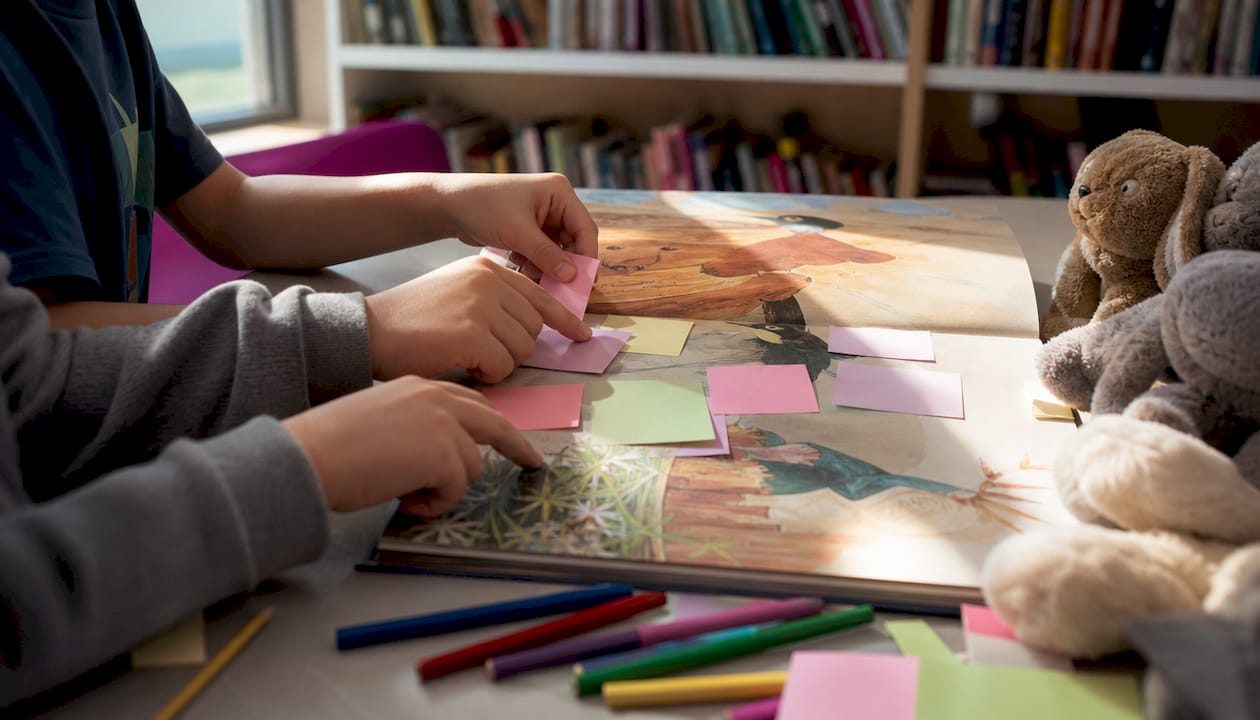
1. ELA: Character Goals and Obstacles Academic target: identify character motivation (RL.K-2.3). SEL skill: perspective-taking. Materials: one picture book, sticky notes. Script: "Today we're reading to find out what our character wants most." Read 8 to 10 minutes. "Turn to your partner: what's stopping them from getting it?" Activity: students write or draw the obstacle (6 minutes). Exit prompt: "What would you do if you were the character?"
2. Math: Persistence Through Mistakes Academic target: problem-solving strategies. SEL skill: self-management. Materials: a book featuring a character who fails before succeeding, math manipulatives. Script: "Watch how many times this character tries before it works." Read 8 minutes. "Now it's your turn to try, fail, and try again." Activity: a multi-step problem with intentional friction (10 minutes). Exit prompt: "What did you tell yourself when it got hard?"
3. Science: Curiosity and Collaboration Academic target: observation and inquiry. SEL skill: relationship skills. Materials: a nature or discovery-themed book, observation journals. Script: "This character asks a lot of questions. Let's count them." Read 8 minutes. "Now find a science partner and ask three questions about our topic." Activity: paired observation task (10 minutes). Exit prompt: "What question did your partner ask that surprised you?"
4. Social Studies: Community and Fairness Academic target: community roles and rules. SEL skill: responsible decision-making. Materials: a community-themed book, chart paper. Script: "Notice how this character decides what's fair." Read 8 minutes. "What rule would you make in their neighborhood?" Activity: small groups draft one community rule (8 minutes). Exit prompt: "Why did your group choose that rule?"
Timing across all four: read-aloud 8 to 10 minutes, activity 5 to 12 minutes, reflection 2 to 3 minutes. The exit prompt is your assessment data. Keep it that simple.
Pro Tip: Write your exit prompt on a sticky note before the lesson starts, not after. If you can't finish the sentence in advance, the SEL objective probably isn't clear enough yet.
Weekly Routines That Make Book-Based SEL Stick
You don't need a new program. You need three repeatable moments:
- Morning meeting read-aloud (5 minutes): one short picture book excerpt, one feeling word.
- Two-minute emotion check at midday: thumbs up, sideways, or down, no explanation required.
- Weekly 10-minute SEL book focus on a set day, same time, same expectations.
Three micro-lesson scripts to rotate:
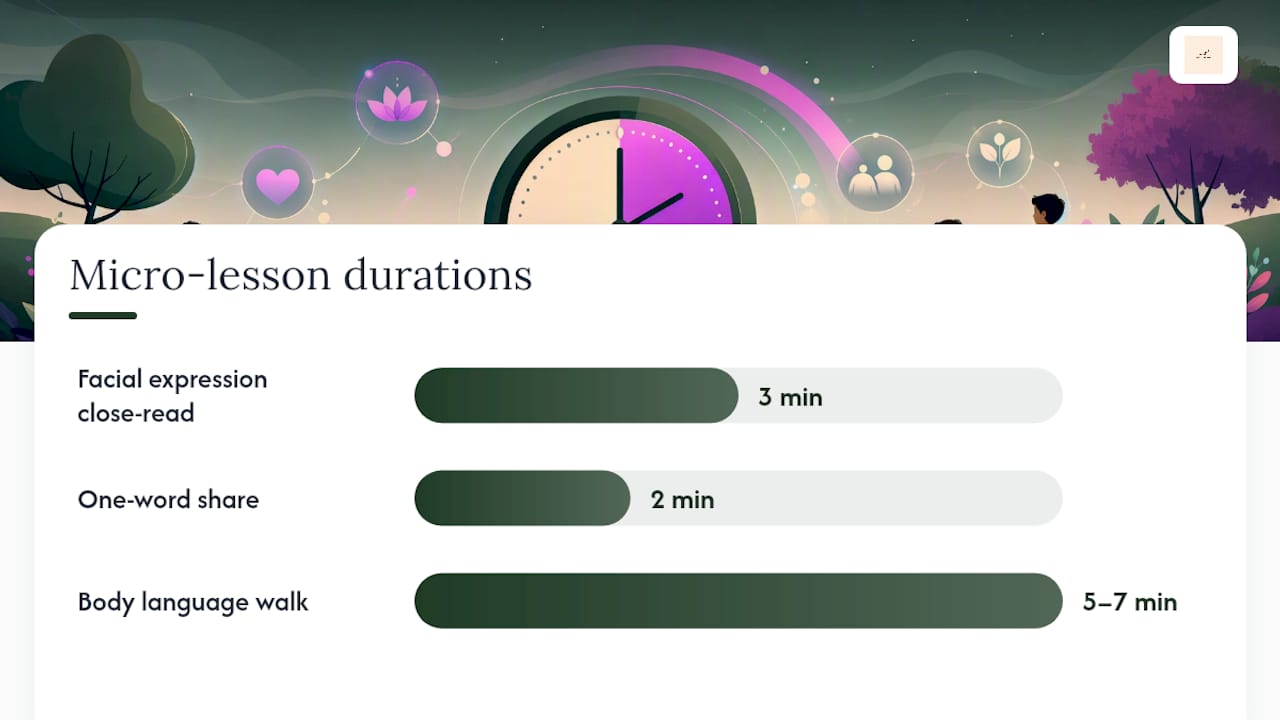
- Facial expression close-read (3 minutes). Hold up an illustration. "What is this character feeling? How do you know?" This uses illustration as primary evidence, a strategy Reading Rockets recommends specifically because K–3 readers decode faces before they decode text.
- One-word share (2 minutes). Students say one word describing how a character felt at the story's turning point.
- Body language walk (5 to 7 minutes). Students act out a character's posture at the start versus the end of the book.
Keep seating predictable during these routines and use visual turn-taking cues (a talking stick, a numbered order) so transitions don't eat your two minutes. Curated classroom displays of SEL books also cut prep time, since rotating a themed shelf gives students a visual cue for what skill the week is targeting.
Pro Tip: Ask "What do their eyebrows tell you?" instead of "How do they feel?" Specific illustration prompts get faster, more honest answers from young readers than open emotion questions do.
How Do You Assess SEL Learning From a Picture Book Lesson?
Skip the formal test. A short observational rubric tied directly to the book's SEL skill gives you usable evidence for report cards or parent conferences without adding grading time.
| Skill Area | Emerging | Developing | Secure |
|---|---|---|---|
| Self-awareness | Names a feeling with prompting | Names a feeling independently | Explains why the feeling occurred |
| Perspective-taking | Identifies one character's view | Compares two characters' views | Argues for a view different from their own |
| Relationship skills | Waits for a turn with reminders | Waits for a turn independently | Invites a peer into the conversation |
Reusable exit prompts: "What would you have done?" / "Name one feeling this character had." / "What's one thing you'd tell them?"
Keep a running weekly note per small group rather than a grade per student. Over four to six weeks, those notes show growth patterns you can bring straight into a PLC or a family conference.
A One-Week SEL Book Unit You Can Run Tomorrow
This schedule assumes one book, reused across the week from different angles.
| Day | Focus | Academic Tie-In | SEL Objective |
|---|---|---|---|
| Monday | Read-aloud + goal/obstacle mapping | ELA comprehension | Perspective-taking |
| Tuesday | Illustration close-read mini-lesson | Visual literacy | Self-awareness |
| Wednesday | Subject-linked activity (math or science) | Standard-aligned task | Self-management |
| Thursday | Family connection task sent home | Home-school link | Relationship skills |
| Friday | Exit prompt + rubric note | Assessment | Responsible decision-making |
Three ready-to-run activities:
- Paired writing card. Students co-write one sentence predicting what the character does next. Materials: index cards. Extension: illustrate the prediction.
- Role-play freeze frame. Two students act out the story's turning point and freeze; classmates guess the emotion. Materials: none. Extension: add a line of dialogue.
- Art response. Students draw the character's face at the start and end of the story, labeling the emotion shift. Materials: paper, crayons. Extension: write one sentence explaining the change.
Send the family connection task home as a single printed prompt: "Ask a grown-up about a time they felt the same way as our story's character." That one line does more to reinforce the skill than a full worksheet, and it costs you nothing to prepare.
Why Icon Literary Builds Its Books Around This Method
Story-driven learning sticks because kids remember Nour, or Theo, or whatever character carried the lesson, long after they forget a worksheet. That's the premise behind every book Icon Literary designs: give the SEL skill a face and a plot, and the vocabulary follows the story instead of getting drilled in isolation.
Icon Literary's picture books and activity kits go through the same classroom-tested lens described in the templates above, built for teachers who need something that works on the first read, not the fifth revision. The goal was never a book that sits nicely on a shelf. It was a book a teacher can open cold and run a full SEL lesson from in under fifteen minutes.
Pair These Lessons With Ready-Made Icon Literary Resources
Every template above works faster with a book built for it, and that's exactly what Icon Literary sells: picture books, printable activity kits, themed card decks, and downloadable classroom resources designed to slot directly into a K–3 SEL routine.
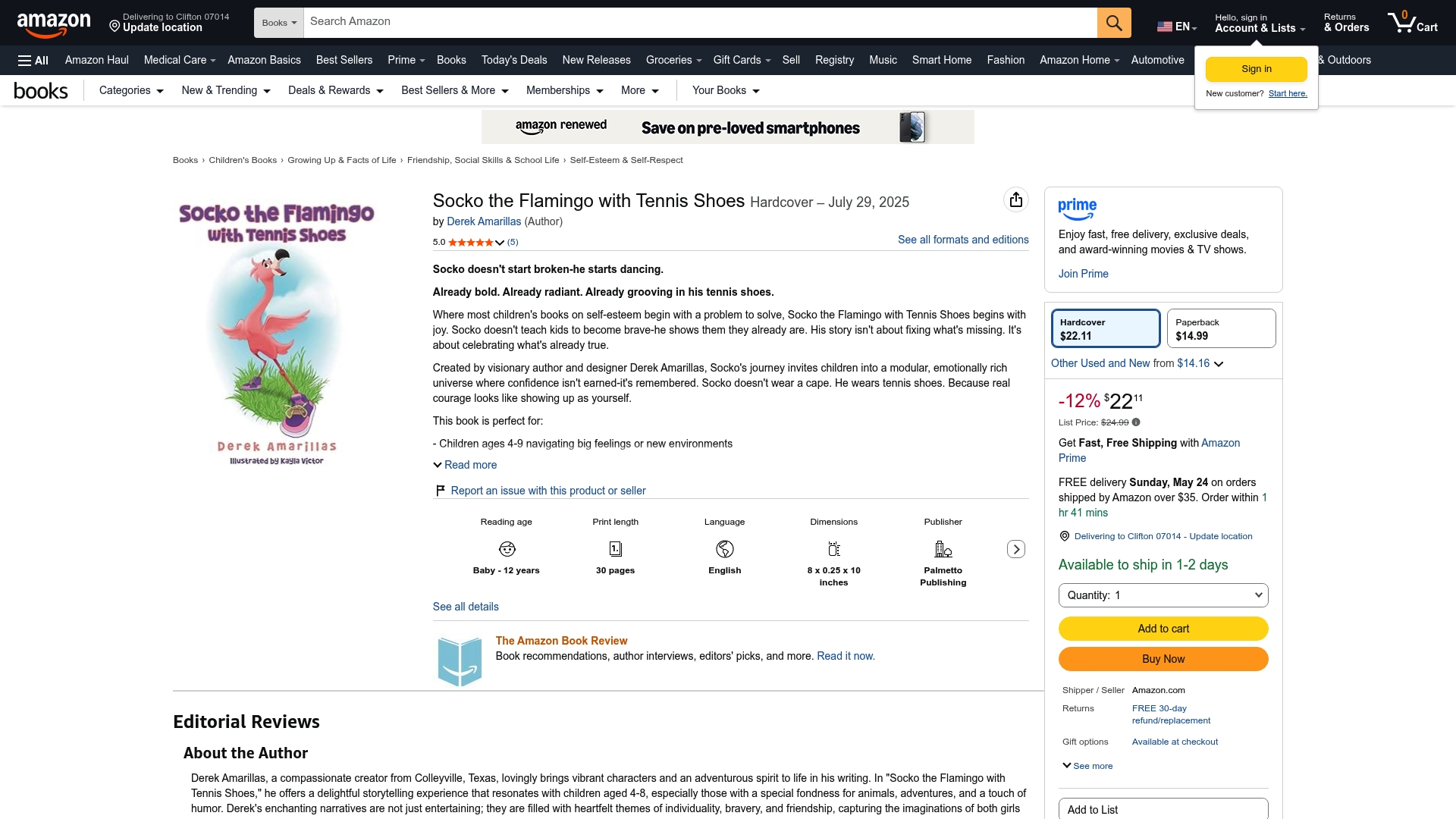
Here's how the product line maps to what you just read. The picture books carry the character-driven story your morning meeting read-aloud needs. The printable activity kits give you the paired-writing cards and role-play prompts for small-group work without any prep the night before. The card decks work well as a quick weekly SEL focus, and the downloadable classroom resources double as family connection tasks you can send home without reinventing a worksheet. For classrooms building a themed shelf, Icon Literary's best SEL books for early elementary kids and its guide to teaching empathy through books are a solid starting point, and teachers looking to expand into illustrated cross-curricular texts might also look at Brainie Comics for science-themed graphic storytelling that pairs naturally with an SEL unit.
Visit Icon Literary to browse the current picture book and activity kit lineup and find the title that matches your next read-aloud.
Frequently Asked Questions
Do I need a separate block of time to integrate SEL books into classroom lessons? No. The templates above embed the SEL objective inside a reading, math, science, or social studies block you're already teaching, so you're not adding a new subject to the day.
How many SEL books should I read per week to see results? One well-chosen book, used across two to three short activities during the week, works better than several books skimmed once each. Repetition with one text deepens the skill.
What's the fastest way to check if a book is good for teaching SEL through literature? Look for a clear character goal, a visible obstacle, and an emotion named somewhere in the text or jacket copy. If you can't name the SEL skill in one sentence, keep looking.
Can these SEL book activities work for English language learners? Yes. Pairing a complex title with a simpler companion book on the same theme, and leaning on illustration close-reads instead of text-heavy prompts, gives ELL students multiple ways into the same lesson.
How do I show administrators that book-based SEL supports academic outcomes? Point to the exit prompts and rubric notes as evidence, and cite the research base directly. The Routledge guide on integrating SEL into your curriculum is written specifically to make that case to school leadership.
Sources
- Literature studies and SEL | Reading Rockets
- Handbook of Social and Emotional Learning (Second Edition)
- CASEL resources — books