
Use this 8-point SEL collection development checklist to evaluate and buy books and creative kits for children ages 3–8 right now. Score each candidate item against all 8 criteria; prioritize purchases that meet most of the criteria.
The 8-Point Checklist at a Glance
- CASEL competency alignment — does the item explicitly target self-awareness, self-management, social awareness, relationship skills, or responsible decision-making?
- Age-developmental fit — is content, vocabulary, and emotional complexity right for the 3–4, 5–6, or 7–8 band?
- Authentic representation — are characters portrayed with cultural specificity and complexity, not as tokens?
- Author/illustrator lived experience — does the creator have direct connection to the culture or experience depicted?
- Format accessibility — is the item available in multilingual, large-print, or digital read-along versions?
- Durability and reset-ability — for kits and card decks, can staff easily reset and re-circulate the item?
- Curriculum integration potential — can a teacher or caregiver pair this with a lesson plan or storytime activity?
- Diversity of format — does this acquisition add a picture book, kit, card deck, or digital resource the collection currently lacks?
Quick 3-question mini-check for parents and gift-givers: (1) Is the age band printed on the item? (2) Does the back cover name an SEL skill? (3) Can the child use it independently or with one adult? If yes to all three, it's worth buying.
Table of Contents
- Why a focused SEL collection for ages 3–8 matters
- The full SEL collection-development checklist with scoring
- How to map acquisitions to CASEL competencies
- Does your collection go beyond tokenism?
- Board-approved collection policy and donation acceptance
- How to plan and budget a pilot SEL micro-collection
- Three questions every parent and gift-giver should ask
- Key Takeaways
- What Icon Literary actually looks for when curating SEL materials
- Icon Literary SEL books and kits, mapped to the checklist
- Useful sources and further reading
Why a focused SEL collection for ages 3–8 matters
A focused SEL collection does one thing a general children's section cannot: it maps every item to a measurable competency so teachers, caregivers, and librarians can pull exactly what they need for a specific child or lesson. The CASEL framework — five domains covering self-awareness through responsible decision-making — gives that map its structure. Without it, SEL purchases tend to drift toward whatever looks appealing on a catalog page.
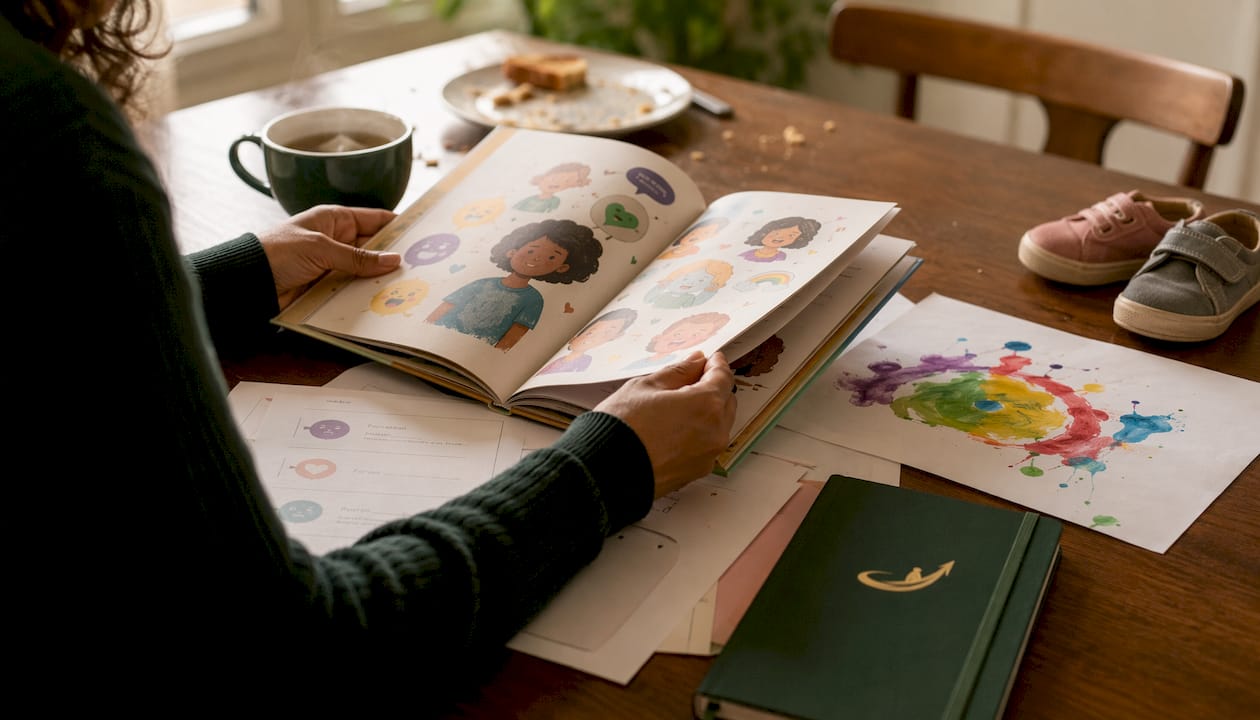
The age band 3–8 spans three distinct developmental windows. A three-year-old is just beginning to name emotions; a seven-year-old can reason through a conflict scenario. Formats that serve this range include picture books, hands-on activity kits, themed card decks, and digital read-alongs. Each format reaches a different learner and a different setting, from a school library storytime to a kitchen table.
State SEL guidance documents, the CASEL framework, and the Lee & Low Toolkit together form the three-legged stool this guide is built on. All three are free to access and referenced throughout.
The full SEL collection-development checklist with scoring
Score each item 0–2 per criterion (0 = absent, 1 = partial, 2 = strong). A higher total signals a strong acquisition; a moderate total warrants a second look; lower scores should be passed over.
| Criterion | 0 | 1 | 2 |
|---|---|---|---|
| CASEL competency alignment | None named | Implied | Explicit, named |
| Developmental fit (age band) | Wrong band | Borderline | Clearly matched |
| Authentic representation | Tokenism present | Mixed | Culturally specific |
| Author/illustrator background | No connection | Partial | Direct lived experience |
| Format accessibility | One format only | Two formats | Multilingual/accessible |
| Durability/reset-ability | Fragile, no reset | Moderate | Sturdy, easy reset |
| Curriculum pairing potential | None | Possible | Included guide/prompts |
| Format diversity for collection | Duplicates existing | Adds minor variety | Fills a gap |
Three quick selection examples:
- Picture book (ages 5–6): A story about a child navigating a new school scores 2 for social awareness, 2 for developmental fit, 2 for authentic representation by an own-voices author, and 2 for curriculum prompts included. Total: 14. Strong buy.
- Activity kit (ages 3–5): A feelings-sorting card set with bilingual labels scores 2 for accessibility, 2 for durability, 1 for CASEL alignment (implied, not named). Total: 9. Worth reviewing with a teacher before purchasing.
- Card deck (ages 7–8): A decision-making scenario deck scores 2 for responsible decision-making alignment and 2 for curriculum pairing, but 0 for representation. Total: 8. Buy only if the collection already has strong representation elsewhere.
Red flags that should disqualify an item:
- Single-story tropes (a culture reduced to one narrative)
- Emotional vocabulary pitched two or more years above the stated age band
- No reset instructions for kits; pieces that cannot be replaced
- Illustrations that rely on physical stereotypes
Pro Tip: A living acquisition document that records why you chose each format — picture book vs. kit vs. card deck — makes budget justification at fiscal review straightforward and fast.
How to map acquisitions to CASEL competencies
Tag each acquisition to one primary CASEL competency and one observable skill. That single rule keeps a collection purposeful rather than decorative, and experts warn against treating SEL as supplementary.
| CASEL Domain | Observable Skill (ages 3–8) | Catalog Tag | Age Band |
|---|---|---|---|
| Self-awareness | Names own emotions | SEL-SELFAWARE | 3–4 |
| Self-management | Waits turn; uses calming strategy | SEL-SELFMGMT | 4–6 |
| Social awareness | Identifies others' feelings | SEL-SOCAWARE | 5–7 |
| Relationship skills | Shares; resolves conflict verbally | SEL-RELSKILLS | 5–8 |
| Responsible decision-making | Considers consequences before acting | SEL-DECISION | 6–8 |
Use these tags in physical displays ("Feeling Big Feelings" shelf label = SEL-SELFAWARE) and in lesson-plan pairing documents sent to teachers. A teacher searching for a read-aloud on conflict resolution can pull every SEL-RELSKILLS item in under a minute.
Does your collection go beyond tokenism?
Use this authenticity checklist, adapted from Lee & Low Toolkit principles, before finalizing any purchase.
- Does the character have a full personality beyond their cultural identity?
- Are cultural details specific (a named place, a real tradition) rather than generic?
- Does the author or illustrator have direct lived experience with the community depicted?
- Are physical features illustrated with variety, not a single "representative" look?
- Does the story avoid a single problem-narrative (poverty, immigration, trauma) as the only lens?
Sample selection record template (copy into your acquisition form):
Pair fiction with nonfiction on the same cultural theme to show range. A picture book about a child navigating friendship pairs naturally with a nonfiction card deck about emotions from the same cultural perspective.
Pro Tip: When evaluating inclusive children's books, check the author bio first. If no bio is provided, that absence is itself a data point worth noting in your selection record.
Board-approved collection policy and donation acceptance
Adopt a written, board-approved collection and gifts policy that ties acquisitions to SEL competencies and use cases. A formal gifts policy prevents the slow accumulation of outdated or non-inclusive donated materials that staff then spend hours weeding.
Short policy template — required elements:
- Selection criteria — items must align to CASEL competencies and the library's age-band priorities.
- Deselection/weeding — review SEL items every two years; remove items with stereotyped content or physical damage.
- Replacement — replace high-circulation items within one budget cycle; prioritize own-voices titles.
- Acceptance of gifts — donated items are evaluated against the same selection criteria as purchased items; the library reserves the right to decline or redirect donations.
- Accessibility — at least one format per competency tag must be available in a language other than English or in an accessible format.
- Curriculum alignment — all acquisitions must map to at least one CASEL domain and one classroom or storytime use case.
Gifts acceptance checklist for staff:
- Physical condition: no torn pages, missing pieces, or broken components
- Relevance: maps to at least one CASEL competency
- Representation: passes the authenticity checklist above
- Durability: kits and card decks can complete a full circulation cycle
For small public or school libraries: adopt the policy at a single board meeting, attach it to your annual budget request, and review it every two years. The Idaho Commission for Libraries toolkit provides a ready-made policy framework you can adapt in an afternoon.
How to plan and budget a pilot SEL micro-collection
Run a pilot over several weeks with a small micro-collection of under thirty items. Keep the scope tight so you can measure what actually circulates before committing a larger budget.
| Phase | Weeks | Key Actions |
|---|---|---|
| Planning | 1–2 | Score candidates; confirm CASEL tags; set budget |
| Acquisition | 3–4 | Order items; catalog with tags; prep display |
| Circulation/Pilot | 5–10 | Circulate; collect teacher and caregiver feedback |
| Evaluation | 12 | Pull circulation data; survey 3–5 teachers; decide renewals |
Realistic cost estimates by format:
- Picture book: $8–$18 per title
- Activity kit: $20–$45 per kit
- Card deck: $12–$30 per deck
- Digital read-along license: $5–$15 per title per year
Trackable metrics:
- Circulation count per item over the pilot period
- Number of lesson integrations reported by teachers
- Caregiver check-out rate vs. classroom check-out rate
- Staff-observed child engagement during storytime
Funding sources worth pursuing: PTA mini-grants, local community foundation grants, and shared purchases with a neighboring school or public library branch. Collaborative planning with teachers and community stakeholders consistently improves both use rates and curricular integration.
Three questions every parent and gift-giver should ask
Ask these three questions before buying, then use the activities below to extend the SEL learning.
The 3-question buying checklist:
- Is the age band clearly stated, and does it match the child?
- Does the item name at least one SEL skill on the cover or in the description?
- Can the child engage with it independently or with one adult, without special equipment?
Gift note template: "This [book/kit/card deck] helps kids practice [SEL skill]. Try the activity on page [X] together — it takes about 10 minutes and works great after dinner or at bedtime."
Ready-to-run activities:
- Feelings check-in: Before reading, ask the child to point to the emotion they feel right now. After reading, ask if the character felt the same.
- What would you do? Pause at a conflict moment in the story and ask the child to suggest a solution before turning the page.
- Card deck sorting: Sort emotion cards into "I've felt this" and "I haven't felt this yet" piles, then talk about one from each.
- Draw the ending: After a picture book, ask the child to draw a different ending where the character makes a different choice.
For multilingual households or children with visual impairments, look specifically for items that include a Spanish or dual-language edition, large-print text, or audio companion. These formats are worth noting on your gift receipt so the family can request the accessible version if needed.
Key Takeaways
A focused SEL collection built on the CASEL framework, the Lee & Low Toolkit, and a board-approved policy turns random purchases into a purposeful, measurable resource for young children in early childhood and early elementary age bands.
| Point | Details |
|---|---|
| Score before you buy | Use the 8-point rubric; prioritize items that meet most criteria strongly. |
| Tag every acquisition | Assign one CASEL domain tag and one observable skill to every item at cataloging. |
| Adopt a written policy | A board-approved gifts and selection policy prevents collection drift and simplifies donation decisions. |
| Pilot small, then scale | A 10–15 item, 6–12 week pilot with tracked circulation metrics tells you what to expand. |
| Icon Literary resources | Icon Literary's picture books, card decks, and activity kits are designed to meet CASEL alignment, diversity, and durability criteria out of the box. |
What Icon Literary actually looks for when curating SEL materials
Most SEL collection guides treat diversity as a checklist item to satisfy and move on from. That's the wrong frame. Representation isn't a box to tick after you've confirmed the CASEL tag. It's the mechanism by which SEL actually works for a child who has never seen themselves in a story. A book about managing anger lands differently for a child who recognizes the family kitchen, the grandmother's voice, the specific texture of that particular frustration.
The other thing guides underestimate is format. A picture book is not interchangeable with a card deck. A card deck invites a child to make a choice, hold a physical object, and return to it. That tactile repetition is how young children internalize a skill, not from a single read-aloud. Libraries that stock only picture books are leaving the most durable SEL tools on the table.
The CASEL framework is genuinely useful, but it's a skeleton. The flesh is the story, the art, the character who feels like someone the child knows. That's where the real SEL work happens, and it's why curation judgment matters more than any scoring rubric alone.
Icon Literary SEL books and kits, mapped to the checklist
Icon Literary builds picture books, activity kits, and themed card decks specifically for children ages 3–8, with CASEL competency alignment, own-voices creative direction, and durability standards baked into every product from the start.
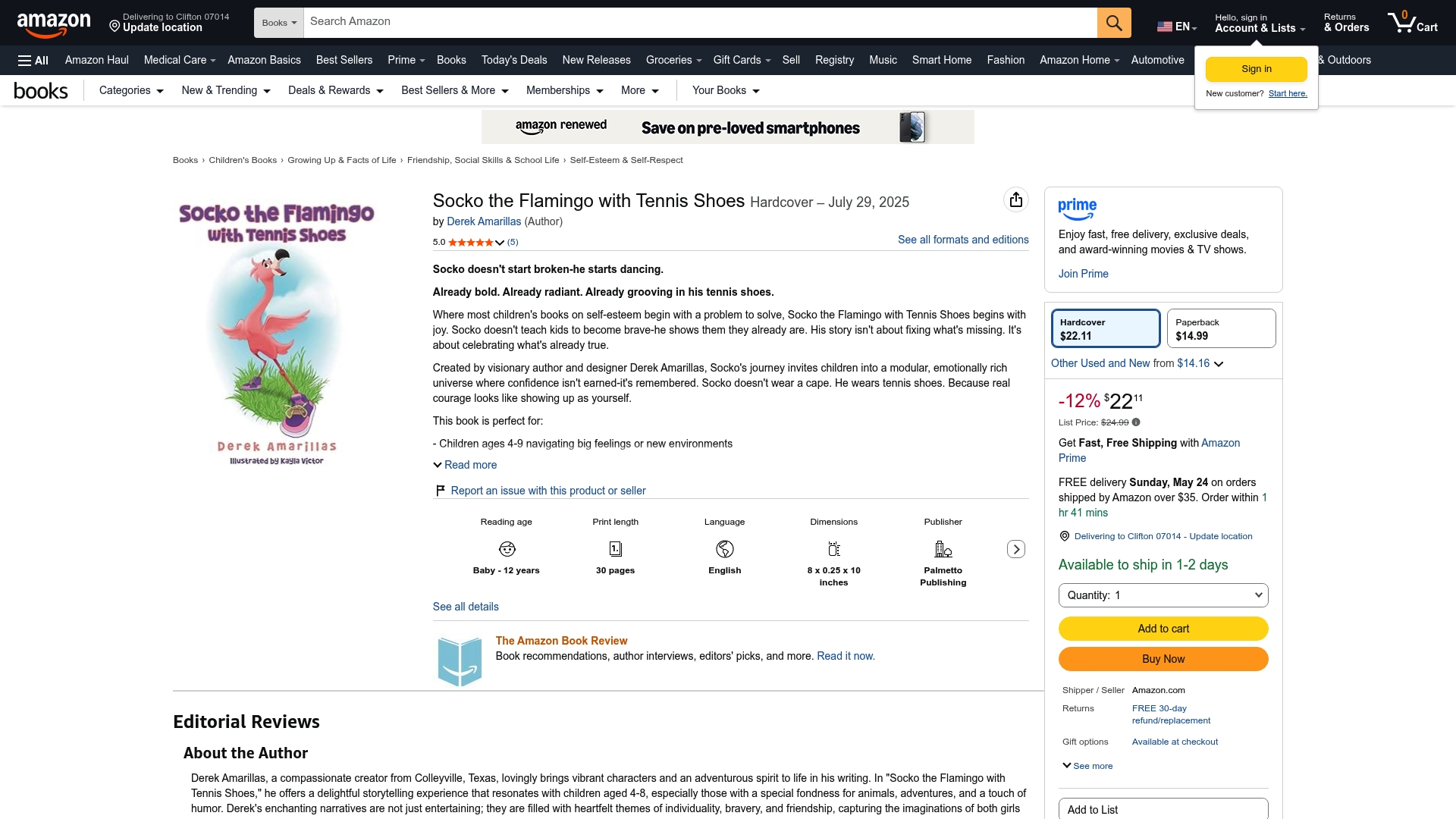
A card deck from Icon Literary, for example, maps directly to two checklist criteria: format accessibility (bilingual labeling, designed for independent child use) and CASEL competency alignment (each card names the skill it targets). That's not accidental. It's how the studio designs every product in its catalog.
If you're building or refreshing an SEL collection and want materials that already meet the scoring rubric in this guide, browse Icon Literary's full catalog or explore the member resource library for curated packs by age band and competency.
Useful sources and further reading
Start with these toolkits and policy templates if you want to go deeper.
- Lee & Low Toolkit for Building a Diverse SEL Library — evaluation prompts, pairing suggestions, and links to CASEL and Explore SEL. Best starting point for diversity review. Useful for staff training.
- Lee & Low Toolkit PDF — downloadable version with direct selection prompts for PreK–8. Print and attach to your selection form.
- CASEL Framework — the five-domain competency model referenced throughout this guide. Free to access; use the "What Is SEL?" section for board presentations.
- SEL4OH Resources for Librarians — compiled evidence-based programs, lesson plans, and materials for school and youth SEL implementation.
- Idaho Commission for Libraries Collection Development Toolkit — policy components including selection, weeding, replacement, and gift acceptance. Adaptable for any small public or school library.
- ALA Collection Development and Management Guide — updated guidance on collaborative collection development and community stakeholder coordination. Useful for building a board-approved policy.
- Cleveland Public Library Collection Development Policy — real-world example of selection criteria, weeding cadence, and durability standards for non-print materials.
- Icon Literary SEL Book Selection Criteria Guide — practical selection criteria and written policy guidance for educators managing gifts and donations.
- How to Curate an SEL Picture Book Collection — step-by-step guidance on assessing picture books for SEL goals and diverse representation.
- Best SEL Books for Early Elementary Kids — curated examples of effective SEL titles for ages 3–8, useful for gift-givers and new collection builders.