A teen's diary is a primary-source artifact: culturally dense, emotionally unfiltered, and collectible when it carries clear provenance and ethical handling. For collectors of graphic narratives and immersive worlds, these objects offer something rare — authentic voice, period slang, and developmental rawness that no retrospective account can replicate. Archival practice, journalism on diary re-reads, and Icon Literary's worldbuilding studio work all point to the same conclusion: handled well, a teenager's journal is one of the richest source materials a creator or collector can hold.
Three immediate actions worth taking:
- Evaluate provenance and physical condition before any acquisition decision.
- Preserve the physical object before digitizing or exhibiting.
- Decide on consent and use before any reproduction or adaptation.
Table of Contents
- Why do teen diaries matter to collectors and creators?
- How do you evaluate an original teen diary?
- Where do US collectors find originals and artist editions?
- Designing a collectible teen diary product
- How do you preserve, digitize, and exhibit personal journals?
- Micro-project: build a collectible teen diary edition
- Key Takeaways
- What teen diaries taught me about design responsibility
- Icon Literary builds collectible worlds from authentic voices
- Useful sources and production resources
Why do teen diaries matter to collectors and creators?
Teen diaries are primary sources, full stop. They carry period slang, social hierarchies, media references, and emotional texture that historians and cultural researchers actively seek. Archivists have long treated personal journals as windows into lived experience that official records miss entirely.
The catch is that diary rereads often confront adult readers with vulnerabilities they did not anticipate — eating disorders, serious insecurity, social pain recorded without the writer realizing its weight. That rawness is precisely what makes these objects valuable. It is also what demands care.
Not every teenage journal is emotionally dense. Many focus on daily facts — TV schedules, school sport, weekend plans — with little introspection. For collectors, that is not a disqualifier. A diary that catalogs 1994 media consumption and social rituals is a social-history document, even if it never once names a feeling.
For creators building immersive universes, teen diaries offer something more specific: alter-ego experiments and serialized narrative fragments that foreshadow later creative careers. A teenager who writes herself as a future actress, complete with imagined dialogue and scene-setting, is already worldbuilding. That material translates directly into character backstories, authentic slang banks, and the kind of interior voice that makes fictional universes feel inhabited.
How do you evaluate an original teen diary?
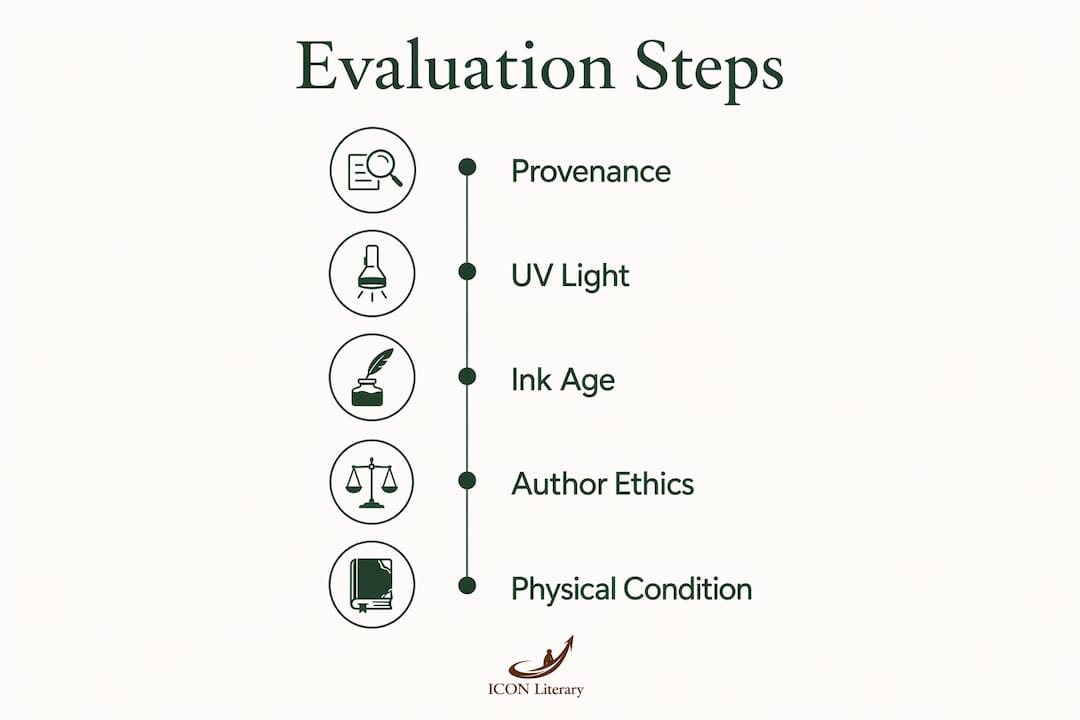
Evaluation prioritizes provenance, physical condition, and informed consent — in that order.
Physical inspection checklist:
- Check binding integrity: loose signatures, broken spines, or detached covers signal handling stress and affect display value.
- Assess paper type and aging: wood-pulp paper yellows and becomes brittle; rag or cotton-content paper holds better. Yellowing alone does not indicate forgery, but uniform yellowing across all pages warrants scrutiny.
- Examine ink aging: ballpoint ink from the 1970s–1990s shows characteristic oxidation patterns; gel ink (post-mid-1990s) behaves differently under UV.
- Note damage: water staining, mold foxing, insect damage, and adhesive residue all affect condition grade and conservation cost.
- Look for ephemera: ticket stubs, photos, clippings, and folded notes tucked inside pages add provenance weight and collectible interest.
Provenance checklist:
- Ask for the ownership chain: who owned it, how it passed hands, and whether it came from an estate or a direct sale.
- Request accompanying documentation: estate inventories, letters, photographs, or family records that place the diary in context.
- Confirm the acquisition channel: estate sales, family estates, and institutional deaccessions carry stronger provenance than anonymous online listings.
- Verify dates against internal evidence: named events, referenced media, and slang patterns should align with the claimed period.
Ethics note: If entries are clearly personal, the author is identifiable, and they were a minor at the time of writing, default to restrictive handling unless documented consent from the author (or their estate) exists. Under US privacy norms, publishing identifiable private content without consent carries legal and reputational risk.
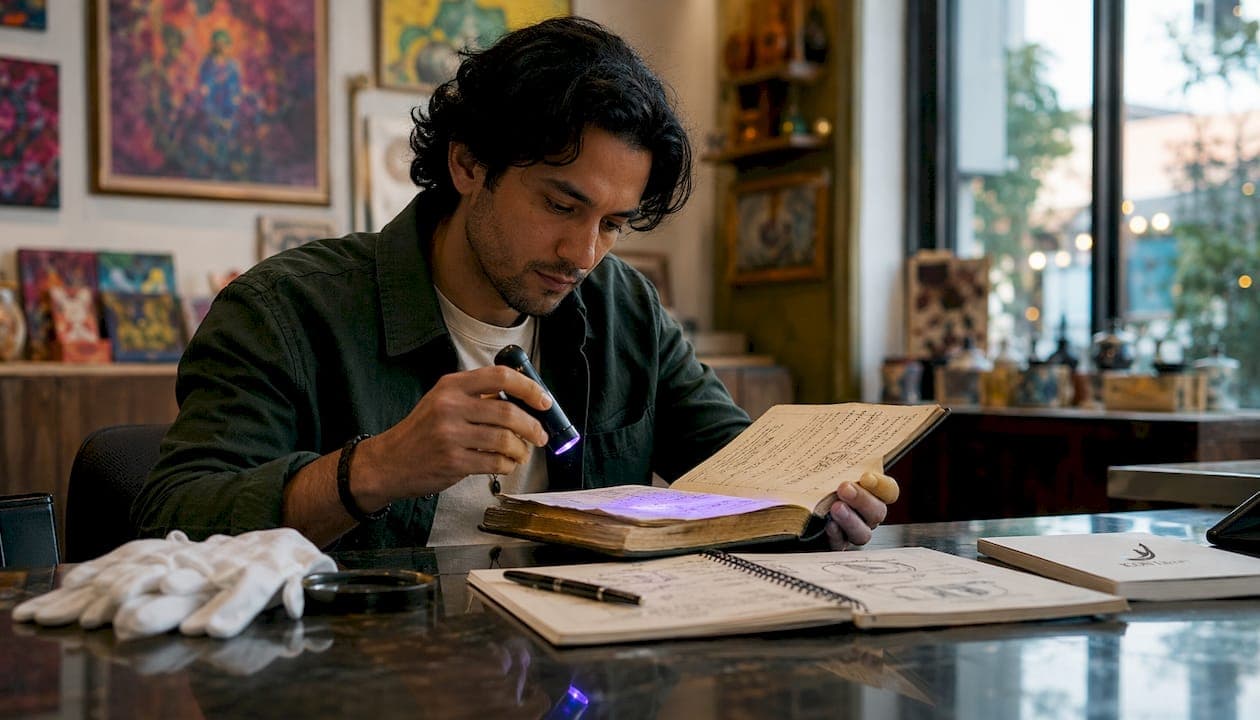
Pro Tip: Run a UV light across pages you suspect contain later inserts. Original ink from a given decade fluoresces differently from modern ballpoint or inkjet additions — date inconsistencies between adjacent entries are the first flag, UV patterns the confirmation.
Where do US collectors find originals and artist editions?
The most reliable channels in the US are estate sales, regional auction houses, zine fairs, and artist-run limited editions. Each channel shapes what you can expect for provenance and price.
Estate sales are the richest source for unmediated originals. Diaries surface alongside family papers, and estate managers rarely know what they have. Provenance is often strong by default — the object stayed in one household — but documentation is thin. Ask the manager directly whether the diary came from the deceased's personal effects and whether any family members are available to confirm context. Price expectations are low; condition varies wildly.
Specialty auctions (Heritage Auctions, Swann Galleries) occasionally handle personal papers and manuscript lots. Provenance documentation here is more formal — lot notes, condition reports, sometimes letters of authenticity. Prices reflect that rigor. A diary with named historical context commands a premium; one that records daily TV schedules and school events without emotional or historical hooks will move at modest estimates.
Zine fairs and artist markets (Chicago Zine Fest, LA Zine Fest, Brooklyn Zine Fest) are where artist-made and limited-edition diary objects live. These are not originals — they are designed artifacts inspired by diary form. Request an edition number, the artist's statement, and production notes. For collectible purposes, signed and numbered runs with documented materials hold value best.
Online marketplaces (eBay, Etsy, Ruby Lane) surface originals regularly, but provenance is the weakest here. Treat any listing without a documented ownership chain as anonymous until verified. When in doubt, involve a conservator or appraiser before committing to a significant purchase.
Designing a collectible teen diary product
Successful collectible designs honor the diary's texture — the roughness, the inside jokes, the crossed-out lines — while elevating craft through materials and printing. That tension between rawness and luxury is the whole game.
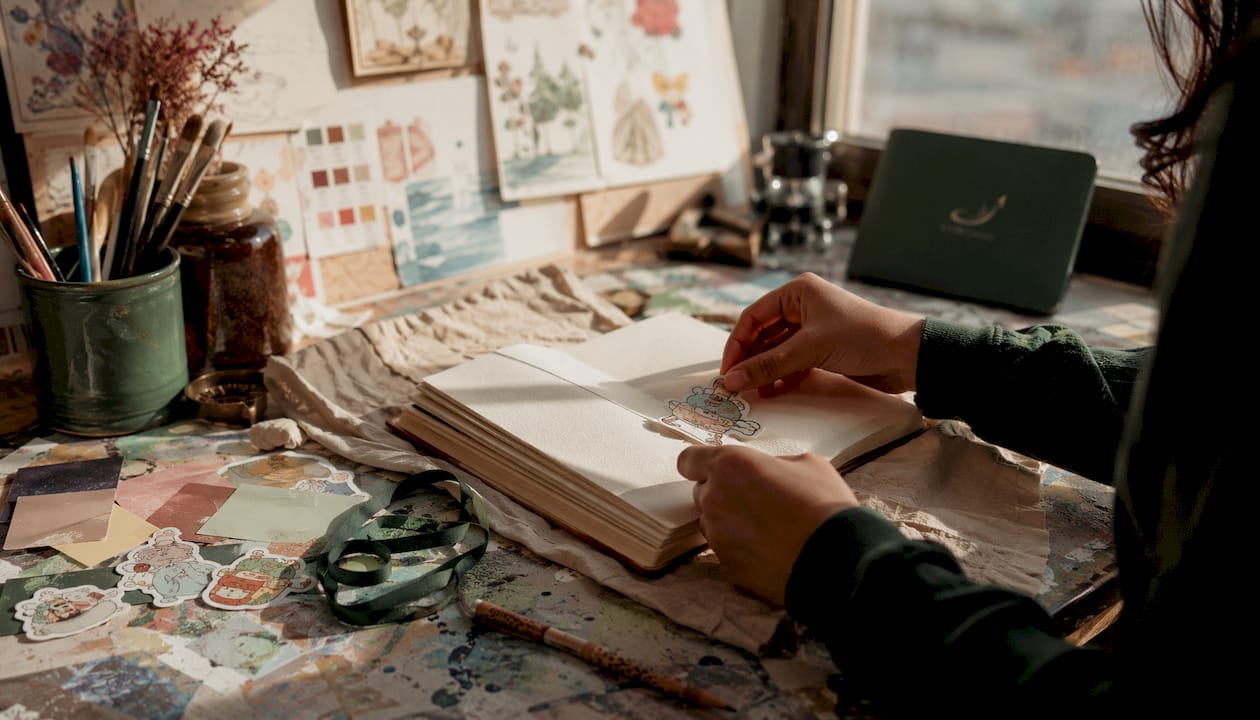
Cover and binding: Soft-touch or cloth-wrapped covers with debossed titles read as premium without losing the personal feel. Lie-flat binding (as used in the HappySelf Teen Journal's 100gsm FSC paper edition) lets the object open naturally, which matters for display and use. Exposed Coptic stitch signals handcraft; perfect binding signals mass production.
Interior layout: Leave marginalia zones — unruled margins wide enough for doodles, stamps, or stickers. Built-in ephemera pockets (a folded envelope glued to the inside back cover) add tactile surprise. Mood meters, doodle zones, and side quests borrowed from digitally native journal design keep the object feeling alive rather than archival.
Narrative mechanics: Fold worldbuilding into the prompts themselves. An alter-ego fragment prompt ("Write one entry as the version of yourself who made the other choice") draws directly on how teens already use diaries to try on fictionalized selves. Meme-style entry starters, codex-like mythic insertions, and "side quest" pages that interrupt the linear diary flow all signal satirical intent without breaking immersion.
Materials: Archival-quality paper (acid-free, minimum 80 lb. text weight) protects longevity. Ribbon markers, elastic closures, and metallic coil binding (as in Erin Condren's A5 Young Adult Diary, made in the USA) are production details that read as luxury at the point of unboxing.
Balancing authenticity and satire: Keep voice cues believable — period-accurate slang, handwritten-style fonts used sparingly — while signaling playful artifice through design choices like gold-foil "classified" stamps or deliberately anachronistic prompts.
How do you preserve, digitize, and exhibit personal journals?
Preserve first, digitize second. Stabilizing the physical object before wide digitization or display protects the original and produces better scan quality.
Preservation steps:
- Handle with clean cotton gloves; skin oils accelerate paper degradation.
- Store at 60–70°F and 30–50% relative humidity; fluctuations cause more damage than stable moderate conditions.
- House in acid-free clamshell boxes with acid-free tissue interleaving between pages.
- Keep away from direct light; UV exposure fades ink and weakens paper fibers.
- Consult a conservator before attempting any cleaning, repair, or deacidification — amateur intervention is the leading cause of irreversible damage.
Digitization specs: Scan at a minimum of 400 dpi for text pages, 600 dpi for pages with fine illustration or ephemera. Use color-managed workflows (ICC profiles, calibrated monitors). Save masters as TIFF; distribute as PDF/A or high-quality JPEG. Embed provenance metadata (creator, date range, acquisition source, condition notes) in every file.
Ethics callout: When digitizing or exhibiting identifiable, sensitive entries, redact names and details that could harm a living, identifiable person — and obtain consent from the author or estate before any public display.
Micro-project: build a collectible teen diary edition
A four-week small run mixing archival materials and playful prompts yields a collectible prototype worth pitching to galleries, zine shops, or direct collectors.
Materials: Source acid-free text-weight paper (Mohawk Superfine or French Paper Company stocks work well for short runs) for interior pages. For covers, use book cloth or soft-touch laminate over 100 lb. board. Ribbon markers, elastic closures, and a small glassine envelope for ephemera complete the physical package.
| Week | Tasks |
|---|---|
| Week 1 | Research and provenance audit: gather reference diaries, identify period slang and visual cues, document ethical sourcing decisions |
| Week 2 | Layout and prompts: design interior spreads, write alter-ego and side-quest prompts, set marginalia zones and ephemera pockets |
| Week 3 | Production sample: print and bind a proof copy, test paper weight and closure hardware, photograph for pitch materials |
| Week 4 | Finishing and packaging: finalize edition size, number and sign copies, write product-page copy and prepare for distribution |
Pitch copy template:
"[Title] is a [edition size]-copy limited run that captures the unfiltered voice of adolescence in archival materials built to last. Each copy includes [X] prompted spreads, a built-in ephemera pocket, and [signature design detail]. Designed by [Author/Studio] for collectors who want a mythic, satirical object — not a wellness checklist."
Key Takeaways
Teen diaries are culturally rich primary sources that reward collectors and creators who approach them with provenance discipline, conservation care, and design ambition.
| Point | Details |
|---|---|
| Provenance first | Always verify ownership chain and documentation before acquiring an original diary. |
| Consent is non-negotiable | Obtain documented consent from the author or estate before reproducing or exhibiting identifiable entries. |
| Preserve before digitizing | Stabilize physical condition at 60–70°F and 30–50% humidity before scanning or displaying. |
| Design with voice authenticity | Honor the diary's roughness — marginalia zones, ephemera pockets, and alter-ego prompts outperform polished wellness layouts for collectible appeal. |
| Icon Literary collaboration | Icon Literary's studio supports limited-run worldbuilding and collectible diary projects for creators who want luxury craft with mythic and satirical depth. |
What teen diaries taught me about design responsibility
The conventional wisdom treats teen diaries as either nostalgia objects or therapy prompts. Both framings miss the point. What makes a teenager's journal genuinely interesting — to a collector, a curator, or a creator — is its resistance to being tidied up. The crossed-out lines, the embarrassing certainty, the raw emotional records that surface struggles the writer never named: that is the material worth preserving and, carefully, adapting.
At Icon Literary, the approach to diary-inspired collectibles starts from that resistance. The studio's worldbuilding practice — across graphic narratives, card decks, and immersive universes — treats authentic voice as a design constraint, not a mood board. When a prompt or a layout tries to smooth the roughness out, it loses the thing that made the source worth touching. The meaningful journaling practices that inform the studio's work consistently point back to the same principle: the object has to feel like it was actually lived in.
Collectors and creators who want to work with this material responsibly owe it to the source to hold both things at once — the luxury of craft and the ethics of care.
Icon Literary builds collectible worlds from authentic voices
Icon Literary's signature is exactly the tension this guide describes: luxury aesthetics applied to playful, satirical, mythic material that refuses to be precious about itself. The studio develops limited-run collectibles, graphic narratives, and immersive brand universes for collectors who want objects with genuine creative DNA — not mass-market journals dressed up in foil.
For creators and curators interested in diary-inspired collectibles, Icon Literary supports the full arc: provenance-informed concept development, prompt and layout design, worldbuilding integration, and small-run production guidance. The studio's catalog includes examples of how mythic and satirical storytelling can live inside a physical object that collectors actually want to own. Explore the Icon Literary studio to see current projects, or browse the full catalog for examples of the studio's collectible design work. For more on journaling design and emotional-literacy craft, the Icon Literary blog is the right next stop.
Useful sources and production resources
Journalism and primary sources:
- The Guardian — "I re-read my teenage diaries hoping for nostalgia — instead I was horrified": Essential reading on the ethics and emotional complexity of diary re-reads.
- The Oldie — "My dull teenage diaries" by Simon O'Hagan: A useful corrective on the range of diary content and its social-history value.
- Teenagediaries Substack — "It didn't half hurt": Real diary extracts with editorial commentary; excellent reference for voice authenticity and zine adaptation.
- My Brain Rot Diary: Design reference for meme-native prompt structures and engagement-first layouts.
US production resources:
- Archival paper: Mohawk Superfine and French Paper Company both offer acid-free text-weight stocks suitable for short-run diary production; request swatchbooks directly.
- Small-run printing and binding: Look for letterpress and short-run offset printers with hand-binding capabilities; the Printing Arts Research Laboratories network and local book-arts centers (including those affiliated with the American Bookbinders Guild) are good starting points.
- Conservation consultation: For high-value originals, contact a conservator certified by the American Institute for Conservation (AIC) before any treatment or digitization.