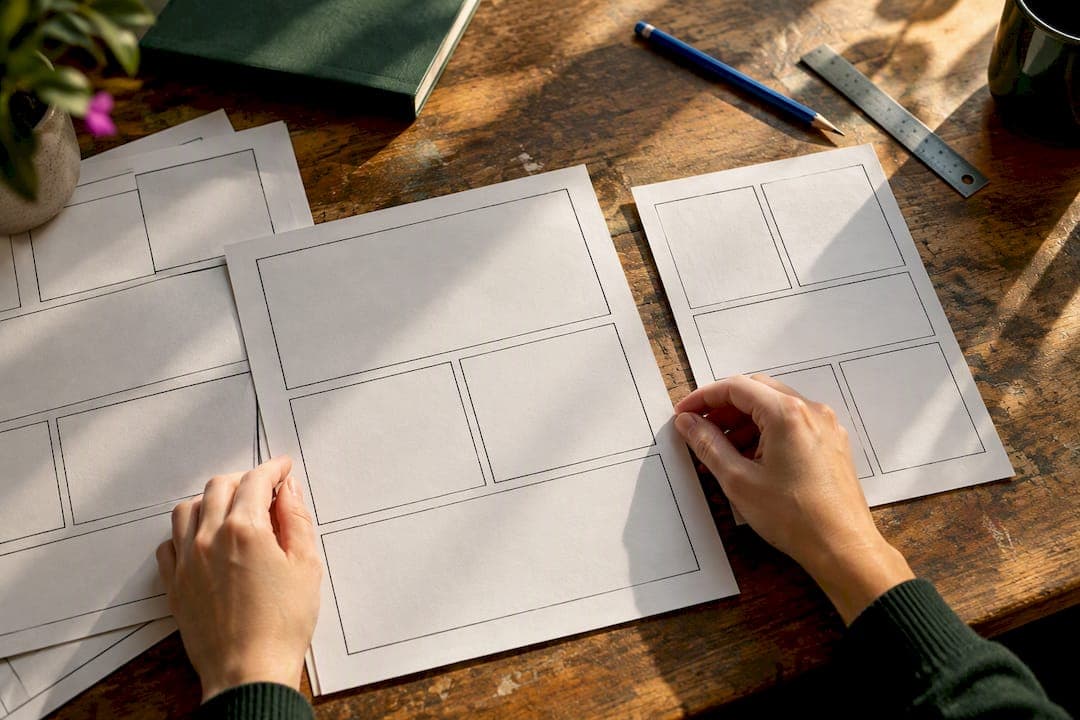
You can download ready-to-print blank comic templates in PDF for strips, full pages, and booklet layouts from free teacher and craft bundles. Pick a multi-panel strip suited to your story length, such as a few panels for single jokes, a moderate number for short stories, or a multi-page booklet template for a full comic book project. When you print, choose letter size and select "fit to page" so panels line up correctly.
TL;DR:
- Templates vary from 3-panel strips for quick jokes to multi-page booklets for longer stories, suitable for different age groups and project lengths.
- Use a 3 to 4 panel strip for early elementary students and a 6 to 9 panel sheet for short stories with a clear arc; choose booklets for multiple scenes.
- Print templates at full size with "fit to page" settings and appropriate margins, using standard letter paper for daily practice or heavier stock for keepsakes.
- Younger children benefit from drawing and dictation with simple templates, while older students add captions and revise using multi-page booklets.
- Pair templates with storytelling prompts and modeling to develop visual literacy and narrative skills across various grade levels.
Table of Contents
- 1. Free blank comic template packs and what each contains
- 2. How to choose the right template and printing checklist
- 3. Age-appropriate activities and scaffolds using blank comic templates
- 4. A classroom scaffold from Icon Literary and resources that pair well
- 5. Why structure and creativity need to work together
- An optional paid path if you want ready-made lessons
- Sources
- FAQ
1. Free blank comic template packs and what each contains
Most free bundles group templates by panel count and purpose, so you can match the layout to the assignment before you print anything. Here is what to expect from a typical pack.
- 3-panel strip: A single PDF page split into three boxes, best for a quick joke, a simple cause-and-effect story, or a warm-up drawing task.
- 4-panel strip: The classic setup: up, down, twist format, useful for beginning-middle-end practice or short dialogue exchanges.
- Full-page grid (6 to 9 panels): One page with a mixed grid, good for short stories that need more room to build tension or show a sequence of events.
- Comic-book booklet templates: Multi-page PDFs, usually 6 to 12 pages, designed to be folded or stapled into a small booklet for a longer project.
- Storyboard or beginning-middle-end templates: Three or four large boxes with lines underneath for captions, made for planning before drawing.
- Nonfiction retelling templates: Blank panels paired with prompts for retelling a historical event or a science process, which turns a comic page into a content review tool.
Teacher-oriented bundles are a strong signal of quality because they bundle several of these types together and format them for classroom printing. The We Are Teachers comic strip template bundle includes beginning-middle-end templates, storyboarding pages, voices and thoughts pages, and nonfiction templates built for curriculum use. That range makes it easy to grab one file and cover a full week of activities instead of hunting for separate downloads.
Most of these packs print as standard letter-size PDFs, which keeps the panels proportioned whether the assignment is a five-minute warm-up or a take-home booklet.

2. How to choose the right template and printing checklist
The right template depends on story length and the age of the artist, not just what looks appealing on screen. A kindergartner working on a single idea needs a 3-panel strip with plenty of white space, while a fifth grader planning a short story benefits from a 9-panel page that forces decisions about pacing.
- Match panel count to story length: Use a 3 to 4 panel strip for one idea, a 6 to 9 panel page for a short story with a clear arc, and a booklet for anything with multiple scenes.
- Open the PDF at full size: Print settings default to "fit to page" on most home and classroom printers, which keeps panel borders from getting cut off.
- Set margins before printing: A quarter-inch margin usually preserves panel lines that sit close to the page edge.
- Choose single- or double-sided printing: Booklets read best single-sided so pages can be folded and stapled without text showing through.
- Pick your paper: Standard 20 lb letter paper works for daily practice, while heavier stock, around 65 to 80 lb, holds up better for keepsake booklets kids take home.
- Check the license line on the download page: Most free templates are marked for personal or educational use only, and that wording matters if the project will be sold or published.
Pro Tip: If a page comes out larger than letter size, use your printer's tile or poster setting to split it across two sheets and tape them together for a bigger drawing surface.
3. Age-appropriate activities and scaffolds using blank comic templates
Younger children can begin with drawing or dictation, while older students can add captions, dialogue, descriptive detail, and revision, according to research on positioning young writers through comics. That range means the same blank template can serve very different classrooms if you adjust the task.
- Kindergarten through second grade: Use beginning-middle-end templates for drawing and dictation, with the teacher scribing the child's spoken story under each panel.
- Grades three through five: Add speech bubbles, captions, and panel transitions, then ask students to revise one panel for clarity after a peer read.
- Tweens and teens: Move into multi-page booklet templates for character-driven stories, experiment with panel size and shape, and build in a peer critique round before a final draft.
- Scaffolds that work across ages: Model the reading order out loud, think aloud through one sample panel, let students share work in pairs, and use a short revision checklist before calling a project finished.
These scaffolds matter because reading a comic is a skill, not something children pick up automatically. Visual narrative comprehension depends on exposure and practice, and panel layout follows learned conventions rather than being instantly obvious to a new reader, according to a review of visual narrative research. A few minutes of modeling before independent work closes that gap quickly.
4. A classroom scaffold from Icon Literary and resources that pair well
Icon Literary's story materials were built to pair naturally with blank comic templates once panels are printed and ready to fill. Several free assets work as prompts or planning steps before students pick up a pencil.
- Story Cubes prompts: Roll-and-write prompts that give students a starting image or idea before they sketch their first panel, detailed in 30 prompts and 10 games for Story Cubes.
- Session plans for wordless picture books: Structured plans that walk through sequencing and viewpoint, useful for modeling panel order before a template goes out, available in session plans for wordless picture books.
- SEL read-aloud examples: Classroom-tested visual conventions for early grades, outlined in SEL read-aloud classroom examples.
- Age-tagged storytelling prompts: Ready-made ideas sorted by grade level in storytelling prompts for kids.
A short lesson built around these pieces can run in 15 to 20 minutes: spend 3 to 5 minutes modeling panel order and reading direction, 7 to 8 minutes on guided or paired drawing with a prompt, and 5 to 7 minutes on sharing plus one round of revision.
5. Why structure and creativity need to work together

Templates work best as scaffolds, not constraints. The strongest comic lessons I have seen follow the same rhythm every time: model one example, hand over a blank page, let students draw or write, then revise once before calling it finished.
A blank panel can feel intimidating to a child who has never made a comic before. Give them one clear model first, and the page stops being a blank test and starts being a tool. Celebrate the finished strip even when the transitions are rough. That is how kids learn the visual language of comics instead of just filling boxes.
— Derek Amarillas
An optional paid path if you want ready-made lessons
Free templates cover most classroom and home needs, but if you want prompts and story worlds already built for you, Printable activity kits and themed card decks are available to pair with this kind of lesson. The Duckwave Decks product line is offered as a one-time purchase and provides teachers and parents with characters and prompts to accompany a blank template.

This is not a replacement for free printable templates. It is a shortcut for anyone who wants the planning done already, particularly parents assembling a take-home activity or teachers building a themed unit around one set of characters. Activity kits and collectible items are also available in a broader catalog, Socko's Universe, for those who want to browse beyond decks. If a ready-made story world sounds like the missing piece, start with the Duckwave Decks page and see which deck fits your classroom or living room.
Sources
- Rewriting deficit storylines: the positioning of one fourth grader
- Free Printable Comic Strip Template Bundle
- Visual narrative comprehension: Universal or not? | Psychonomic Bulletin & Review
FAQ
What file format do free blank comic templates come in?
Most free blank comic templates are distributed as PDFs sized for letter paper, which keeps panels aligned when printed. Look for a download page that specifies "PDF" and "letter size" before printing so panel borders do not get cut off.
What panel layout works best for young kids?
A 3 to 4 panel strip works well for kindergarten through second grade because it limits the story to one clear idea. Templates built for beginning-middle-end drawing and dictation, like those in the We Are Teachers bundle, support this age range directly.
Can I use free comic templates for classroom assignments?
Most free templates are marked for personal or educational use, which covers standard classroom activities, but selling student work made from them or republishing the templates commercially usually is not allowed. Check the specific download page's license wording before using a template for anything beyond a lesson or take-home project.
Do I need special software to fill out a blank comic template?
No special software is required. Print the PDF and draw by hand, or open it in a basic PDF editor or drawing app if you want to fill panels digitally before printing.
How do I print a booklet-style comic template correctly?
Print booklet pages single-sided on letter paper, then fold and staple along the left edge to form the booklet. Heavier paper stock, around 65 to 80 lb, holds up better if the booklet is meant to be a keepsake.