
Picture books are the fastest, most reliable way to teach a growth mindset to children ages 3 to 8. The best classroom and library lists keep returning to the same core titles: The Dot, The Most Magnificent Thing, Beautiful Oops, Jabari Jumps, The Book of Mistakes, and After the Fall. Below, you'll find age tags, teaching notes, and read-aloud prompts for each pick.
TL;DR:
- The books often show characters making mistakes, trying again, and developing persistence, which are key to building a growth mindset in children.
- Pausing during read-alouds to discuss characters' feelings and strategies significantly improves children's understanding and retention of growth mindset concepts.
- Match the book's complexity and themes to children's developmental stages, focusing on simple emotional cues for ages 3–5 and full narratives for ages 5–8.
- Follow-up activities like "yet" jars, mistake collages, and strategy walls reinforce the lessons, especially when children start expressing "I can't yet."
- Successful stories feature characters kids can relate to, visibly change through their journey, and include illustrations that encourage curiosity rather than over-explanation.
Table of Contents
- The Best Growth Mindset Picture Books, by Theme
- How to Read Aloud and Lead a Growth Mindset Talkback
- Choosing the Right Book for Each Age, 3 to 8
- Activities That Make the Lesson Stick
- Icon Literary's Take on What Makes These Stories Work
- Bring the Lesson Home With Icon Literary
- Where to Find More Titles and Teaching Guidance
- Sources
The Best Growth Mindset Picture Books, by Theme
Teachers and librarians tend to reach for titles that show a character making a mistake and then recovering, because those stories normalize error instead of dramatizing it. That's the thread running through every book below. Each one earns its spot for a specific reason, not just because it's popular.
Perseverance and effort
- The Most Magnificent Thing by Ashley Spires (ages 5–8): A girl builds, fails, storms off, and comes back to try again. The book gives frustration a visible arc, which makes it one of the clearest models of persistence for early elementary readers.
- Jabari Jumps by Gaia Cornwall (ages 3–5): Jabari talks himself through fear at the diving board with his dad's help. It's a gentle entry point for preschoolers who need language for "I'm scared, but I can still try."
- The Little Engine That Could by Watty Piper (ages 3–5): The original self-talk story. "I think I can" still works as a mantra kids repeat back to you unprompted.
- Ish by Peter H. Reynolds (ages 5–8): A boy quits drawing until his sister reframes his work as "ish," not wrong. Good for kids who equate imperfect with failed.
Mistakes as opportunity
- Beautiful Oops! by Barney Saltzberg (ages 3–5): A lift-the-flap book that turns spills and rips into art. It's less a story than a hands-on demonstration, which makes it ideal for the youngest listeners.
- The Book of Mistakes by Corinna Luyken (ages 5–8): An artist keeps "fixing" mistakes by drawing over them, and each fix builds a bigger picture. The metaphor lands well with kids who are starting to judge their own drawings.
- After the Fall by Dan Santat (ages 5–8): This one picks up where Humpty Dumpty left off, and it's the most emotionally direct book on this list about fear of trying again after a public failure.
- Sam and the Firefly by P.D. Eastman (ages 3–5): An early-reader-style mistake story about a lonely owl who causes trouble for a firefly friend, then makes amends. Simple sentence structure suits pre-K.
Trying new things and the power of "yet"
- The Magical Yet by Angela DiTerlizzi (ages 3–5): A small, stubborn creature called "the Yet" follows a girl around, reminding her that "I can't" is really "I can't yet." Books that personify abstract ideas like "Yet" tend to click fastest with preschoolers because the metaphor does the explaining for you.
- Giraffes Can't Dance by Giles Andreae (ages 3–5): A giraffe too gangly to dance finds his own rhythm. Rhyming text makes it a strong read-aloud for group storytime.
- What Do You Do With a Problem? by Kobi Yamada (ages 5–8): A problem literally follows a child around until they turn and face it. Better suited to slightly older kids who can sit with abstraction.
- The Rabbit Listened by Cori Doerrfeld (ages 3–8): Not strictly a mistake story, but it teaches the emotional groundwork growth mindset depends on: sitting with disappointment before trying again.
Role models and transformation stories
- Bubble Gum Brain by Julia Cook (ages 5–8): Two personified brain types, "bubble gum brain" and "brick brain," act out flexible versus fixed thinking. Kids who've heard the phrase "growth mindset" in class often recognize the concept instantly here.
- Your Fantastic Elastic Brain by JoAnn Deak (ages 5–8): A nonfiction-leaning picture book that explains neuroplasticity in kid terms. Good for a classroom that wants the science behind the story.
- She Persisted by Chelsea Clinton (ages 5–8): Short biographical vignettes of women who kept going despite setbacks. Works well as a chapter-a-day read for K–2.
- Salt in His Shoes by Deloris Jordan (ages 5–8): Michael Jordan as a kid, frustrated by his height, coached by his mother toward effort over talent. A strong pick for sports-minded readers.
Creativity and resilience
- The Dot by Peter H. Reynolds (ages 3–8): A student who insists she "can't draw" makes one dot on paper, and it changes everything about how she sees herself as an artist. It's the most quoted title on nearly every teacher list for a reason: the transformation happens in one page turn.
- Rosie Revere, Engineer by Andrea Beaty (ages 5–8): Rosie's inventions fail publicly before one finally works, tying persistence directly to STEM identity.
- The Girl Who Never Made Mistakes by Mark Pett (ages 5–8): A cautionary flip side. Beatrice's perfect streak becomes a trap until she learns mistakes are survivable. Useful for high-achieving kids who fear failure more than they fear not trying.
- Ralph Tells a Story by Abby Hanlon (ages 5–8): Ralph insists he has "no stories to tell" until a teacher helps him see the material was there all along.
Practitioners who work with these titles consistently note that children need to see themselves in the character and watch that character visibly shift from a fixed to a growth mindset for the story to stick. That's the filter worth applying to any book you add beyond this list. For more on how emotionally driven stories build resilience over time, Icon Literary's breakdown of emotional-literacy picture books digs into the mechanism further.
How to Read Aloud and Lead a Growth Mindset Talkback
A book alone doesn't build growth mindset. What happens during and after the reading does most of the work. Pausing to unpack a character's feelings and reactions, rather than explaining the moral outright, measurably improves how well kids retain the strategy behind it. Here's a routine that works for a classroom circle or a one-on-one bedtime read:
- Set the intention. Tell kids what to watch for before you start: "This character is going to get stuck. Let's see what they do about it."
- Read with two planned pauses. Stop at the frustration point and again right before the character tries a new strategy. Don't rush past these.
- Model your own thinking aloud. Say what you notice: "I saw her try three different ways before it worked. That's not luck, that's persistence."
- Close with reflection. Ask a question that connects the book to the child's own experience, not just the plot.
Three prompts map directly onto scenes you'll hit in almost every book on this list:
- At the frustration point ("The Most Magnificent Thing" storms off): "What is she feeling right now? Have you ever felt that way?"
- At the mistake ("The Book of Mistakes" draws something "wrong"): "Is this mistake something she can fix, or is it stuck forever?"
- At the next attempt (Jabari climbs the ladder again): "What did he tell himself to make himself brave enough to try?"
Pro Tip: Skip praise like "You're so smart" after the discussion. Label the strategy instead: "You noticed the character kept trying different approaches, and that persistence is what worked." That phrasing mirrors the coaching language researchers point to when explaining how growth mindset actually takes root.
Choosing the Right Book for Each Age, 3 to 8
A book that lands with a kindergartner can fall flat with a preschooler, and vice versa. Match the format to the developmental stage before you match it to the theme.
- Ages 3–5: Prioritize short sentences, strong illustration cues, and a single clear emotional beat. Beautiful Oops! and The Magical Yet both work because the pictures carry as much of the story as the words.
- Ages 5–8: Look for a full narrative arc with a visible turning point. The Most Magnificent Thing and After the Fall both dedicate real page time to the struggle before the recovery, which older kids need to find believable.
- K–2 classroom use: Choose books that support a written or spoken reflection afterward. She Persisted and Rosie Revere, Engineer both give kids a real person or invented character to reference in their own writing.
A quick checklist before you buy or borrow: does the main character struggle believably, does the book show a strategy rather than just a happy ending, and can the child picture themselves in that character's shoes? If a title checks two out of three, it's worth reading. If it checks all three, keep it in permanent rotation.
Activities That Make the Lesson Stick
Reading the book gets the idea in the door. A short follow-up activity is what keeps it there. Pairing a read-aloud with a low-prep extension gives kids a chance to practice the skill instead of just hearing about it.
- "Yet" jar. Materials: index cards, a jar. Kids write one "I can't ___ yet" statement, drop it in, and revisit the jar monthly to cross off what they've learned.
- Mistake collage. Materials: scrap paper, glue, markers. Turn a crumpled or torn piece of paper into art, echoing Beautiful Oops! directly.
- Strategy wall. Materials: sticky notes, poster board. After a book, kids write one strategy a character used and stick it to a shared wall that grows over the week.
Watch for one signal that it's working: kids start saying "I haven't figured it out yet" instead of "I can't," unprompted, days after the activity.
Icon Literary's Take on What Makes These Stories Work
At Icon Literary, we build character-driven stories precisely because transformation has to be visible on the page, not stated in a caption. A book earns a spot on our shelf, or on any list we'd put our name behind, when three things are true: the cast reflects kids who don't usually see themselves as the hero, the character's shift from stuck to capable happens in a way a five-year-old can point to, and the illustrations leave room for a kid to ask "why did that happen?" instead of answering everything for them.
That last point is the one most lists skip. A book that explains its own moral does less work than one that trusts the reader to find it. If you're building a classroom routine around these ideas, Icon Literary's SEL read-aloud examples for K–2 walk through how to structure that discussion without over-explaining the point.
— Derek Amarillas
Bring the Lesson Home With Icon Literary
Icon Literary gives you a direct way to extend what these picture books start, without hunting through a dozen separate storefronts for the right follow-up material. Our catalog includes original character-driven picture books built around emotional literacy for ages 3–8, plus printable activity kits and themed card decks that give kids a hands-on way to practice resilience language after the story ends.
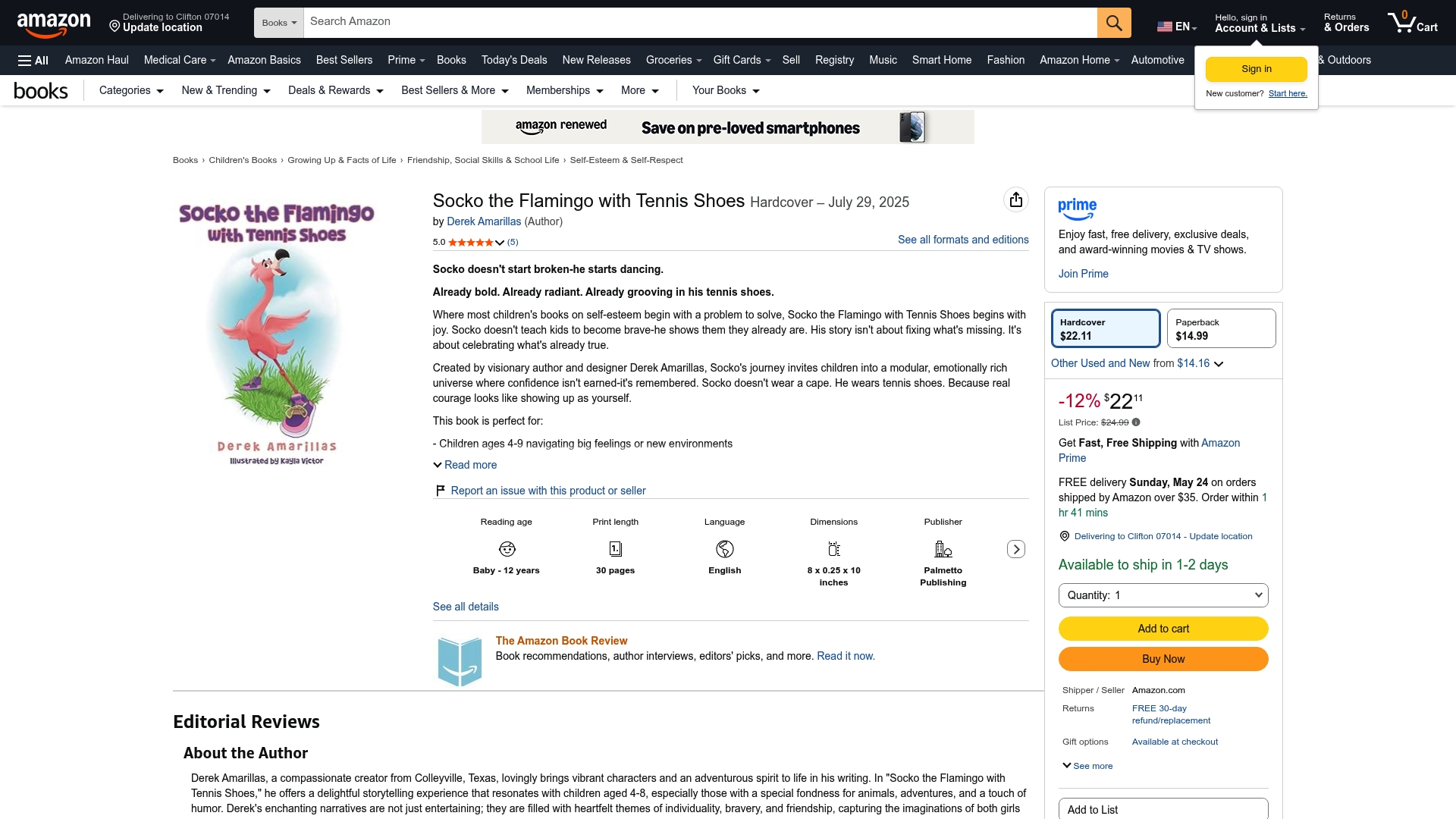
Formats range from physical hardcovers to instant digital downloads you can print for a classroom circle the same afternoon. If a read-aloud from this list sparked a good discussion, a matching activity kit or printable from Icon Literary can turn that one conversation into a weekly habit. Browse the current lineup at the Icon Literary storefront and pick a title or kit that fits the age group you're working with right now. For dialogic reading techniques that pair well with any book on your shelf, Mooshie Moments' guide to narrating play is a solid companion resource.
Where to Find More Titles and Teaching Guidance
- ReadBrightly's growth mindset book roundup for additional read-aloud pairings.
- We Are Teachers' classroom-tested list of mistake-normalizing titles.
- Children's Library Lady's selection guidance on choosing relatable protagonists.
- Carol Dweck's faculty page at Stanford for the research foundation behind the theory.
- BGSU LibGuides book selection list for additional library-vetted titles.
- Susan Jones Teaching's K–2 activity guide for more low-prep lesson extensions.
- Bookaholic Podcast's reading habits archive for building consistent read-aloud routines at home.
Sources
- Best growth mindset books for kids, as chosen by teachers | We Are Teachers
- Growth mindset books for children | Children's Library Lady
- Carol Dweck faculty page | Stanford Graduate School of Education