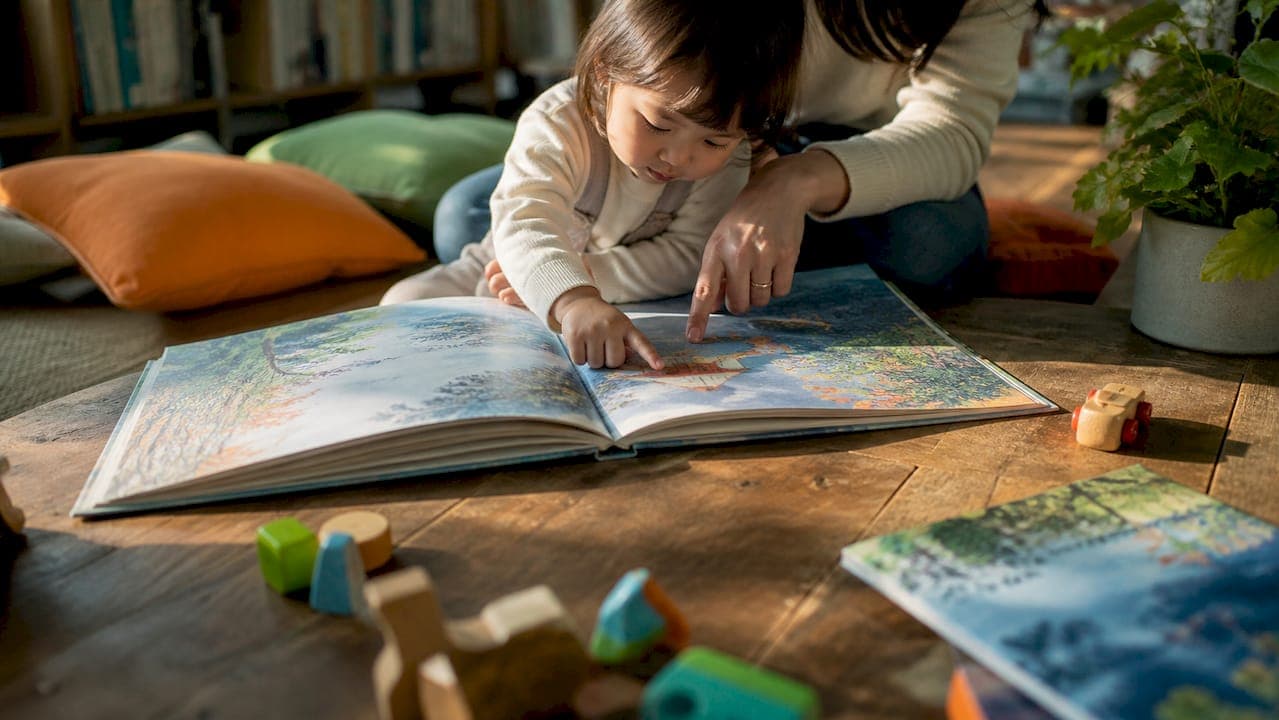
Wordless picture books tell complete stories through illustration alone, and they work because they hand the storytelling job to the child instead of the page. That trade builds visual literacy, vocabulary, sequencing skills, and social-emotional awareness all at once. This guide gives you curated picks by age and use case, word-for-word reading techniques, ready-to-run classroom and therapy activities, and where to actually find these titles, including a few from Icon Literary.
TL;DR:
- Wordless picture books improve visual literacy, emotional understanding, and storytelling skills by relying solely on illustrations and open-ended interpretation.
- Selection should match a child's attention span and development stage, with simple, bold images for toddlers and more complex narratives for older children.
- Effective reading techniques include co-creative narration, asking prediction questions, and using expressive voice effects to engage children actively.
- Classrooms and therapists can implement short or extended activity templates focused on sequencing, emotion recognition, and discussion, adapting to different age groups.
- Icon Literary offers original, socially-emotional titles designed with built-in visual storytelling clarity and activity kits, ideal for educators, parents, and therapists.
Table of Contents
- What Are Wordless Picture Books, and Why Do They Work?
- Curated Wordless Picture Books by Age and Use Case
- How to Read a Wordless Book Out Loud (Without Any Words)
- Ready-to-Run Activities for Classrooms, Therapy, and Home
- How to Choose the Right Wordless Picture Book
- Where to Find Wordless Picture Books and Free Lesson Plans
- Why Icon Literary's Take on Wordless Storytelling Holds Up
- A Rainy Afternoon and a Book With No Words
- Bring These Techniques Home With Icon Literary
- Sources
What Are Wordless Picture Books, and Why Do They Work?
A wordless picture book (sometimes called a silent storytelling book) tells its story entirely through sequential illustration, with no printed narration for the reader to lean on. That absence of text is the whole mechanism. When there's no sentence to decode, the child has to build the story from visual evidence: facial expressions, page composition, color shifts, the position of a character's hands. Reading Rockets notes that sharing these books builds visual literacy, vocabulary, comprehension, and an intuitive sense of story structure, and that they're especially useful with English language learners and struggling readers.
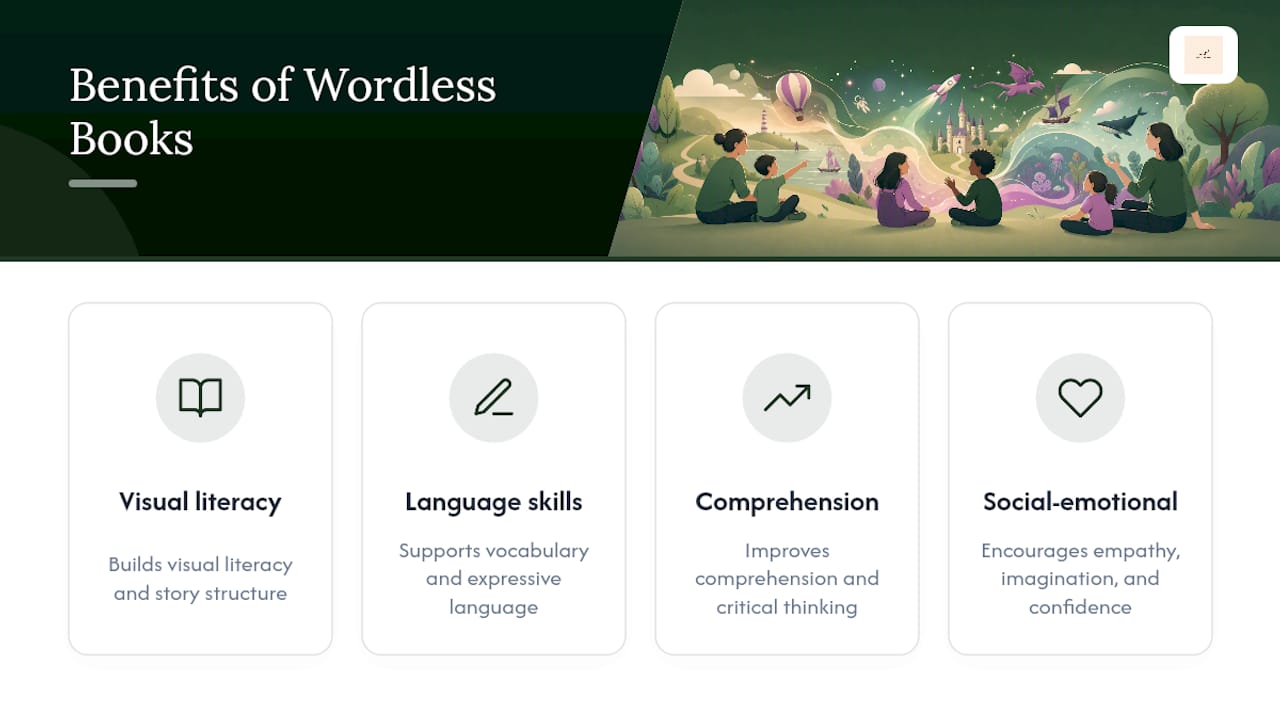
The reason wordless books help ELL students and reluctant readers specifically comes down to decoding pressure. A child staring at a page of text has to crack a code before they can even get to the story. Strip the text away, and the cognitive load shifts entirely to interpretation and language production. Reading Rockets frames this directly: removing text reduces decoding pressure and centers story construction on visual evidence, which is exactly what a child who's intimidated by print needs.
There's also no single correct answer when a child narrates a wordless book, and that matters more than it sounds. One kid might decide the fox in the illustration is scared; another might decide he's plotting something. Both readings are valid, because the "text" is the child's own interpretation. That's a fundamentally different relationship to a story than following someone else's sentence, and illustrators and literacy specialists have long pointed out that this open-endedness is what builds a child's confidence as an interpreter, not just a reader.
Beyond literacy, these books do heavier lifting than most parents expect. A child who has to invent dialogue, guess at motivation, and track a character's emotional arc across twenty silent pages is doing the early work of empathy and critical thinking. BookTrust points out that wordless books encourage kids to form their own interpretations, which supports imagination, empathy, and expressive language all in the same sitting. That's the case for treating a picture book without words as a legitimate literacy tool rather than a "pre-reading" placeholder until real books show up.
Curated Wordless Picture Books by Age and Use Case
Not every wordless book fits every kid, and the biggest mistake caregivers make is grabbing whatever's on the library display without checking illustration density against the child's attention span. Below are the categories that matter most, with the selection cues to look for in each.
Toddler and preschool (ages 2 to 4)
At this age, you want big, uncluttered illustrations with one or two things happening per page. A toddler can't track six background subplots, so density is the enemy here. Look for:
- Bold, high-contrast color palettes that make the main action obvious at a glance
- One clear character whose expressions are exaggerated enough to read from across a room
- Repetitive visual patterns (a character checking the same spot three times) that toddlers can predict and "read along" with
- Sturdy board-book or thick-page construction that survives small hands
- A session length of 2 to 5 minutes, since that's the realistic attention window
Pair these books with simple labeling prompts: "What's he doing now?" or "Where did the dog go?" You're not asking for a narrative yet, just vocabulary and pointing.
Early elementary (kindergarten through second grade)
This is the sweet spot for classroom use, and it's also where most published wordless books cluster. Kids at this age can hold a multi-page sequence in their heads and start noticing cause and effect. Selection cues:
- Clear panel-to-panel continuity, so a child can tell what changed between pages
- A visible emotional arc for at least one character (frustration, then relief, then joy)
- Illustration style that rewards a second look, since kids this age often ask to "read" the same book three times in a row
- Session length of 8 to 12 minutes for a full cover-to-cover read
- At least one page that invites a genuine guess about what happens next
Icon Literary's SEL-focused picture titles are built around exactly this range, with character-driven visual arcs designed for a single sitting and a follow-up conversation about what the character felt and why.
Middle elementary (grades 3 through 5)
Older elementary kids can handle denser art and subtler storytelling, including books with parallel plotlines or a twist that only makes sense on a second pass. Look for:
- Multi-layered illustrations where background details carry their own mini-story
- Ambiguous endings that invite debate rather than a single tidy resolution
- Historical, mythic, or fantastical settings that reward research or follow-up questions
- Session length of 15 to 20 minutes, often broken into two viewings
- Themes mature enough to sustain a real discussion, like loss, courage, or moral gray areas
A good activity pairing here is a "two truths and a theory" prompt: the child states two things they're sure happened, then one theory about a detail they're unsure of.
Speech and therapy-focused selections
Speech-language clinicians gravitate toward wordless books for a specific reason: the child has to generate language to interpret the images, rather than just repeating what a narrator already said. Speech Room News documents this as one of the most reliable uses of the format in clinical settings, since the therapist can target /wh-questions, sequencing, and emotion vocabulary directly off the page. Cues to look for in a therapy-ready title:
- Clear, unambiguous sequencing (page 3 has to obviously follow page 2)
- At least one strong emotional beat per few pages to elicit feeling words
- Enough white space per page that a therapist can pause and prompt without losing the child's place
- A cast small enough that pronoun confusion doesn't derail the session
Books for older visual readers
Wordless storytelling doesn't stop being interesting once a kid can read fluently. Graphic-narrative style wordless books for readers age 9 and up often use panel layout, shadow, and scale the way a film uses camera angles. These work well for reluctant readers who've decoded plenty of words but haven't yet fallen in love with story, and they're also a strong fit for a family read where an older sibling narrates for a younger one.
Pro Tip: Keep one "easy" wordless book and one "complex" wordless book in rotation at all times. When a child is tired, cranky, or just had a rough day, the easy book still delivers a win. Save the dense, multi-layered title for a calm Sunday afternoon when they have the patience to look twice.
How to Read a Wordless Book Out Loud (Without Any Words)
The central technique here is co-creative narration: you're not reading the book, you're improvising it together, using the illustrations as your script. There's no line to recite, so your job is to ask questions, supply vocabulary the child doesn't have yet, and follow their interpretation rather than steering it toward "the right answer." This works differently depending on how much time you have.
- The two-minute version. Flip through once, point at three or four key pages, and ask a single question per page: "What do you think just happened here?" This works great at bedtime or in a waiting room, and it's enough to plant the habit.
- The extended ten to fifteen-minute read. Go page by page. Start each spread with an open prompt ("What's going on?"), follow with a prediction question ("What do you think happens next?"), and close with a feeling check ("How do you think she feels right now?"). Let the child backtrack if they change their mind about the plot. That backtracking is the skill you want.
- The classroom group read-aloud. Project or hold up the book, and instead of narrating yourself, collect competing theories from different kids before settling on a class version of events. Assign one student to "keep track" of the agreed story out loud, which builds oral summarizing skills on top of the interpretation work.
For English language learners and kids who struggle with expressive language, scaffold with sentence stems rather than open questions alone. "I think the boy feels ___ because ___" gives a struggling reader a frame to fill rather than a blank page to fill. This pairs well with strategies used for bilingual picture book reading, where the goal is building narrative confidence before worrying about grammatical precision.
Prediction and inference prompts are the backbone of any wordless read. Useful stems include: "What do you think is about to happen?", "What clue on this page tells you that?", and "Would you have done the same thing as this character?" That last question moves a child from description into judgment, which is a much harder cognitive skill and worth pushing toward once they're comfortable with the basics.
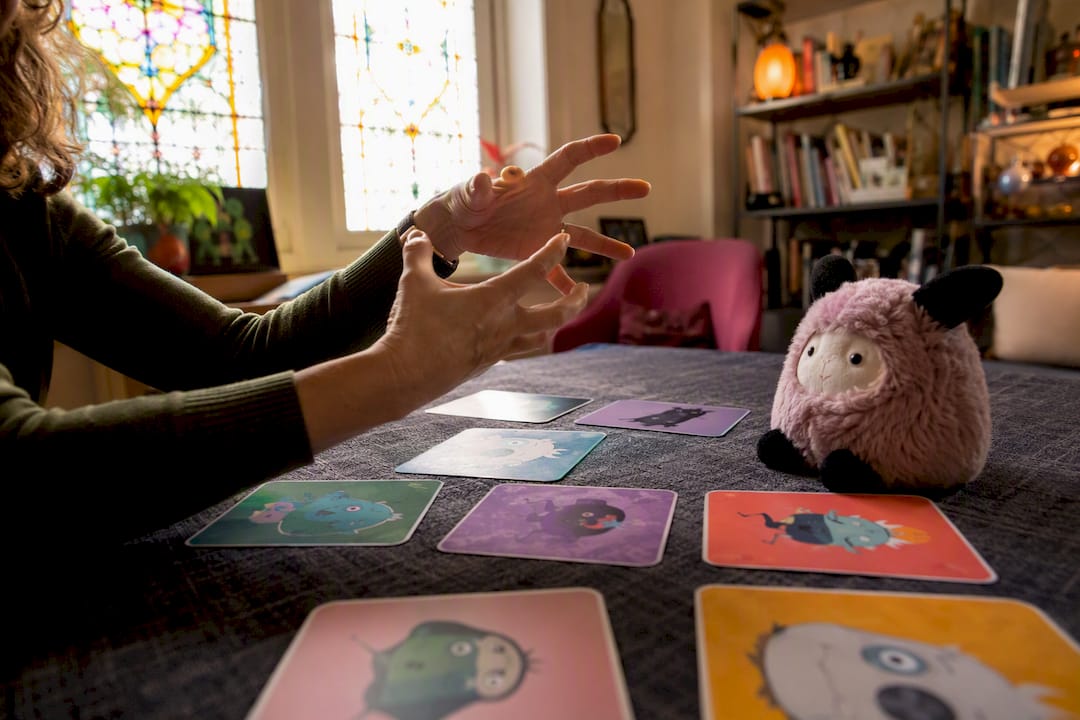
Pro Tip: Use your voice like a soundtrack, not a narrator. A sudden "SPLASH!" or a whispered "uh oh" does more to model expressive language than any explanation ever will. Reading Rockets specifically calls out acting out the plot and using sound effects and varied voices as an effective engagement strategy, and kids copy this fast, often within the same reading session.
Ready-to-Run Activities for Classrooms, Therapy, and Home
You don't need much prep to turn a wordless book into a full lesson. Here are three session templates you can run as-is, scaled from a single sitting to a five-day unit.
Single-session template (20 to 30 minutes).
- Do a "picture walk," flipping through the whole book without stopping to build anticipation.
- Re-read page by page, collecting predictions before turning each page.
- Ask the child or class to retell the whole story out loud, start to finish, in their own words.
Three-session template, which mirrors the sequence ReadWriteThink uses in its creative writing lesson plans built around wordless books: session one is the picture walk and prediction pass; session two has the child retell the story using props, puppets, or their own drawings; session three expands into a written or dictated narrative version of the story.
Five-session unit for a full classroom week: add a sequencing day (mix up printed pages and have students reorder them), a vocabulary day (pull emotion and action words directly from the illustrations), and a peer-collaboration day where pairs compare their two different versions of the same wordless story and defend their choices.
Activity variants worth mixing into any of these templates:
- Sequencing: print and shuffle six key pages, then have the child put them back in order and explain their reasoning.
- Emotion identification: pause on a character's face and ask the child to name the feeling, then find a clue in the art that supports it.
- Vocabulary practice: build a running word bank of verbs and feeling words pulled straight from the pictures.
- Peer collaboration: have two kids narrate the same spread separately, then compare where their stories diverged and why.
- Storytelling extension: ask what happens on the page after the book ends, since most wordless books leave real room for an epilogue.
For observation and progress notes, skip counting "correct" answers, since there usually isn't one. Instead, Speech Room News recommends tracking increased utterance length, more causal connectives like "because" and "so," and richer emotion vocabulary over repeated sessions. A simple checklist works fine: did the child volunteer a prediction unprompted? Did they use a causal connective? Did they name an emotion beyond "happy" or "sad"? Those three markers alone tell you more about growth than any right/wrong tally, and this SEL-focused framing lines up closely with the read-aloud approaches K through 2 teachers already use for classroom emotional literacy work.
How to Choose the Right Wordless Picture Book
Matching the book to the kid matters more than matching the kid to a recommended age range printed on the back cover. Two five-year-olds can have wildly different tolerances for visual complexity, and a book that's "too easy" bores a child just as fast as one that's "too hard" frustrates them.
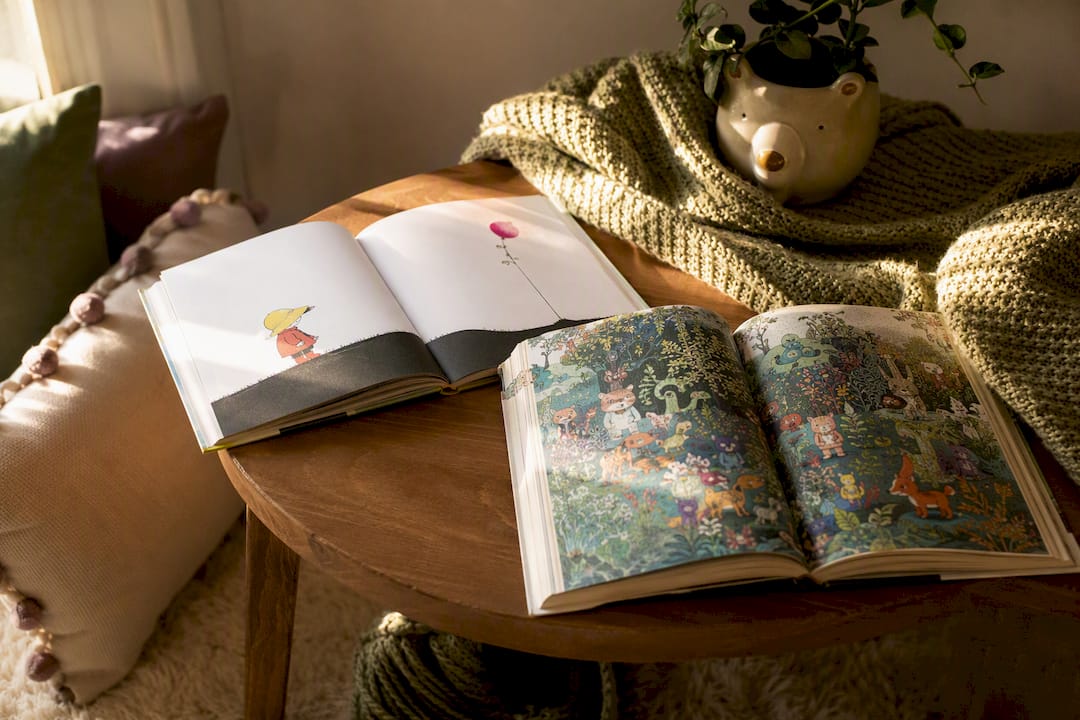
Start with attention span, not grade level. If a child struggles to sit through a 12-page book with clear panels, a 40-page book with layered subplots is going to lose them regardless of what the publisher's suggested age says. Watch for the actual signal: does the child ask what happens next, or do they flip ahead impatiently?
Theme review matters just as much as visual complexity, especially for therapy or classroom settings where you can't predict every child's background. Before introducing a new title, check for:
- Emotional tone that matches your goal (some books lean melancholy, which is powerful for grief work but wrong for a first-day-of-school icebreaker)
- Potential trauma triggers, particularly around loss, separation, or conflict, if you're working with a child in crisis
- Cultural representation that reflects the child or classroom you're serving, not a default assumption
- Whether the book's ambiguity is a feature (invites discussion) or a liability (confuses a child who needs clearer sequencing)
On the practical side, page size and construction affect how a book actually performs in your setting. A large-format book projects well for group read-alouds but is awkward for one-on-one lap reading. Board-book construction survives toddlers; standard picture-book pages don't. If you're working with a bilingual family or classroom, check whether companion materials or supporting bilingual resources exist, since a wordless format is naturally friendlier to multilingual households but a printable vocabulary companion still helps parents extend the conversation at home. This kind of illustration-first thinking is also why the connection between illustration choices and literacy outcomes matters just as much as the story itself.
Where to Find Wordless Picture Books and Free Lesson Plans
Your local library is still the fastest, cheapest way to test a wordless book before committing to a purchase, and most library catalogs let you filter by "wordless" or "no text" as a subject tag. If your branch doesn't carry a specific title, ask about interlibrary loan; most public library systems can pull a copy from a neighboring branch within a week or two at no cost.
For classroom bulk orders, school and library discount programs through major booksellers typically beat retail pricing once you're buying a full classroom set. Independent bookstores are worth checking too, since many carry a stronger wordless and picture-book-without-text section than big retailers stock, and staff picks are often genuinely useful for finding titles you wouldn't find by browsing algorithms alone.
For lesson plans and printable companions, a handful of sources are worth bookmarking directly:
- Reading Rockets' curated wordless book list for vetted title recommendations and classroom framing
- ReadWriteThink's creative writing lesson plan for a full multi-session unit built specifically around wordless narrative construction
- Speech Room News' therapy-focused list for clinicians who need books mapped to specific language targets
Digital read-alouds and downloadable prompt sheets are worth using when you need a book immediately (a sub covering a class, a therapy session scheduled last minute) or when a physical copy isn't available yet. But for young kids especially, prefer the physical book when you can get it. Page-turning is part of the interpretive act. A child who controls the pace of the reveal engages differently than one watching a screen turn pages for them. If you're building out a library or classroom SEL corner, a practical playbook for picture books in public library programming can help you think through acquisition and shelving strategy at scale.
Why Icon Literary's Take on Wordless Storytelling Holds Up
Icon Literary builds original illustrated narratives for kids ages 3 to 8 with social-emotional learning baked into the visual design rather than bolted on as an afterthought, which is a meaningfully different starting point than adapting an existing story into a wordless format after the fact. Every character arc is built to be legible without a caption, because that constraint forces cleaner emotional storytelling.
A story that can't lean on a sentence to explain a character's feelings has to earn that feeling through posture, color, and page composition alone. That discipline is what makes a wordless book worth reading twice.
Derek Amarillas has spent years studying how illustration sequencing shapes a child's comprehension and emotional recognition, drawing on classroom and therapy use cases documented across sources like Reading Rockets and Speech Room News to understand what actually works in a real session versus what looks good on a publisher's marketing page. That research informs how Icon Literary paces its own visual narratives, from panel density to the emotional beats it stages on each spread.
The overlap with this guide's categories isn't a coincidence. Icon Literary's SEL picture titles are designed for the early elementary sweet spot, its activity kits map directly onto the sequencing and emotion-identification exercises covered above, and its printable companions extend a single reading session into the kind of multi-day unit outlined in the SEL classroom integration guide.
A Rainy Afternoon and a Book With No Words
A few years back, a kindergarten teacher I know handed a restless class a wordless book about a lost kite on a rainy Tuesday when the scheduled activity fell through. Within four pages, kids who normally couldn't sit still for a picture book were arguing about whether the kite string had actually snapped or the boy let go on purpose. Nobody assigned that debate. The book just made room for it.
That's the whole case for this format in one afternoon: give kids the visual evidence and get out of the way, and they'll build a richer story than most scripted read-alouds ever get to. The technique matters more than the title. Pick a book, ask a real question, and follow wherever the kid takes it.
— Derek Amarillas
Bring These Techniques Home With Icon Literary
Icon Literary is the direct source for the exact kind of SEL-driven picture book this guide keeps pointing back to, without the extra step of piecing together mismatched activity sheets from five different sites. Its illustrated titles for ages 3 to 8 are built with the same emotional-arc-through-art approach covered above, paired with activity kits and printable companions designed to slot straight into the reading techniques and lesson templates in this guide, no adaptation required.
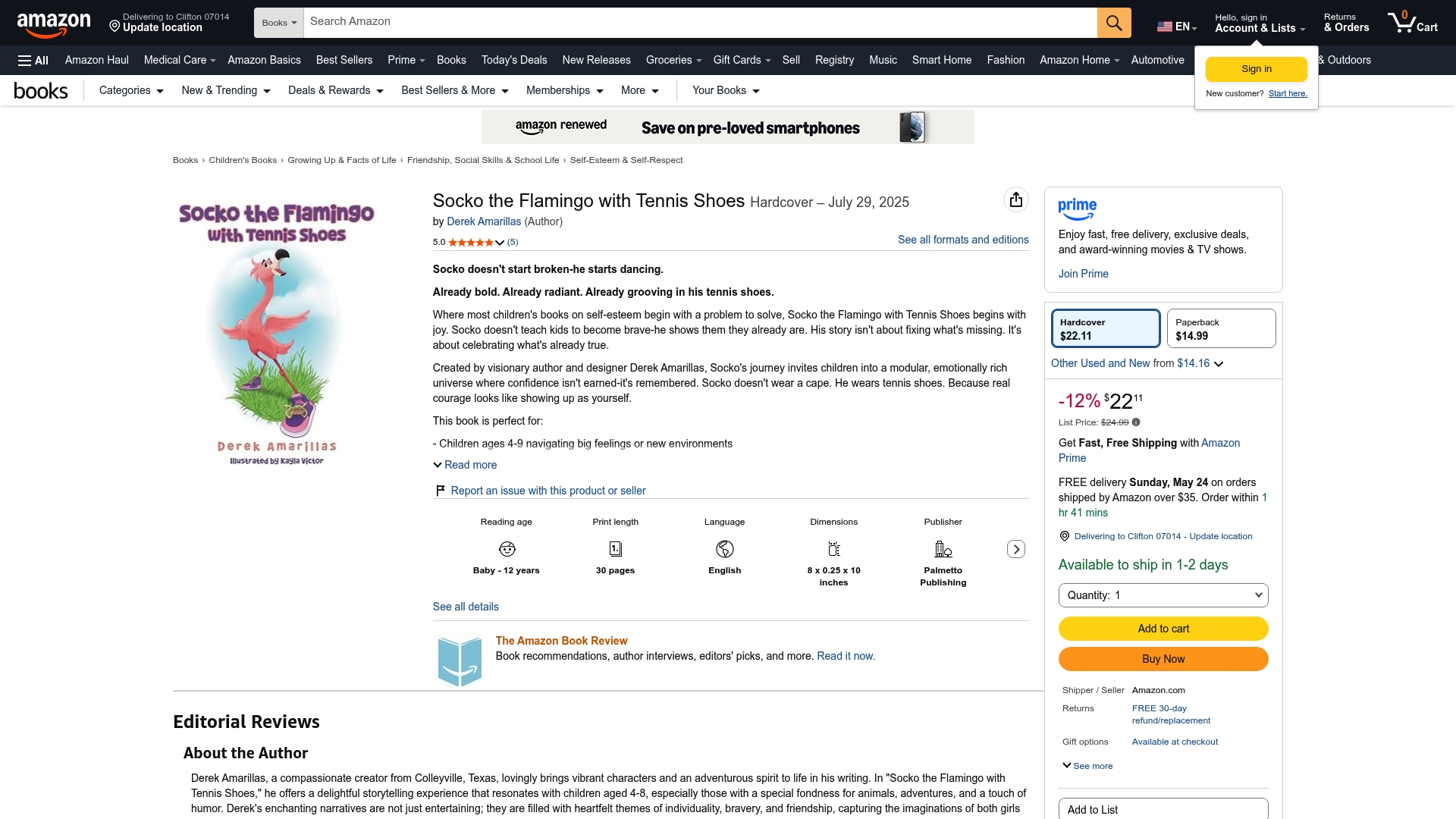
If you're a parent looking for a single book that opens up real conversation at bedtime, a teacher building an SEL corner for a K through 2 classroom, or a therapist who wants a title already mapped to emotion vocabulary and sequencing goals, Icon Literary's catalog is built around that exact use case. Browse the current lineup of picture books, activity kits, and classroom companions at Icon Literary's website and pick the title that matches the age range and goal you're working with today.
Sources
- Sharing wordless picture books | Reading Rockets
- Our Favorite Wordless Picture Books | Reading Rockets
- Creative writing through wordless picture books | ReadWriteThink
- The ULTIMATE List of Wordless Picture Books for Speech Therapy - Speech Room News