
The most reliable way to teach body boundaries to young children is to read age-appropriate books, then back them up with simple consent scripts and short role-play practice. The right picture book makes the abstract concrete: it gives your child words for "no," "stop," and "ask first," in a format they'll ask to repeat. Some titles are designed around exactly this loop, but any well-built body boundaries book works the same way when paired with practice.
TL;DR:
- Repeated use of age-appropriate books with clear boundary language and modeling is more effective than single conversations or one-time talks.
- Matching book format and complexity to the child's developmental stage enhances engagement and reinforces learning, from board books for toddlers to backmatter for elementary kids.
- Incorporating interactive prompts and follow-up activities like role-playing with stuffed animals or hula hoops helps solidify boundary language and consent behaviors.
- Starting early, around age one or two, with correct anatomical terms and routine exposure sets a foundation for healthier body image and better protection.
- Focus on incorporating boundary language into everyday practice rather than relying solely on the book, as repetition and practical application drive real behavioral change.
Table of Contents
- Why Picture Books Actually Teach Body Boundaries
- Choosing the Right Book by Age Stage
- How to Read These Books So the Lessons Stick
- Why This Guidance Holds Up
- Handling the Hard Questions These Books Bring Up
- Matching Books to Specific Topics
- When to Start and How to Build Up Over Time
- What Most Boundary Advice Gets Backward
- Find the Right Format for Your Child's Age
- Sources
- FAQ
Why Picture Books Actually Teach Body Boundaries
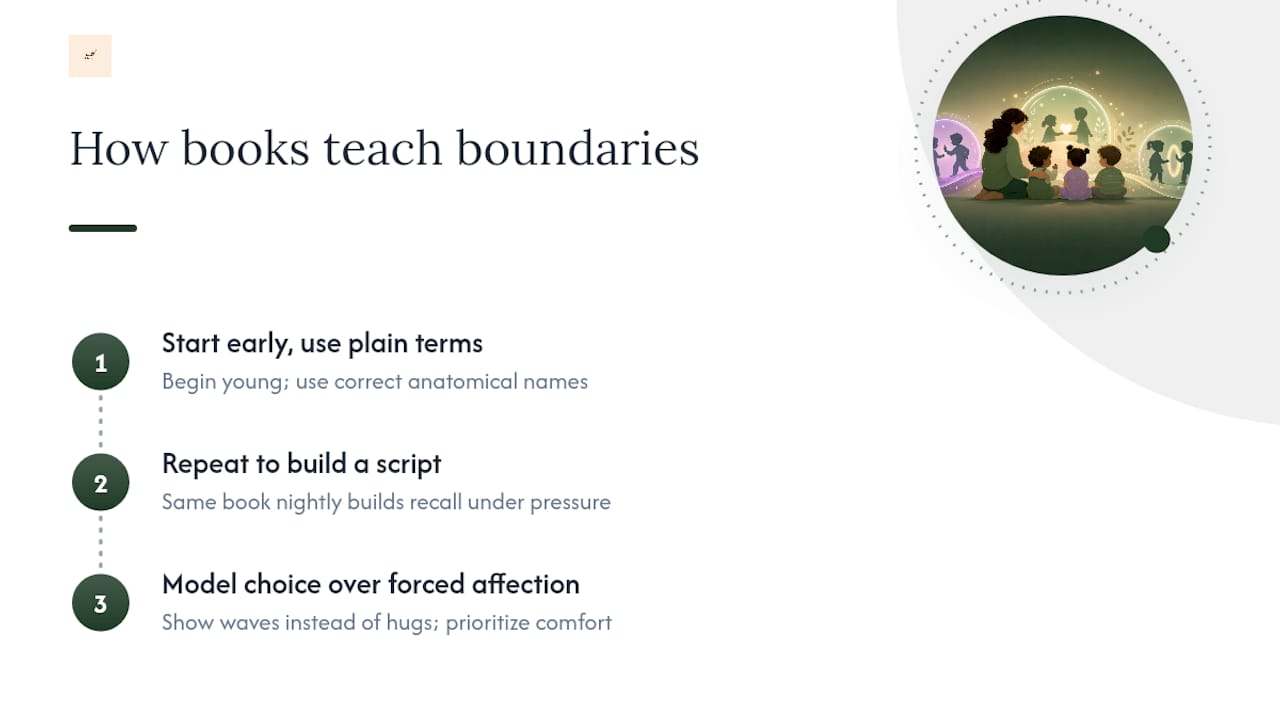
Books work because they turn a hard, emotionally loaded topic into a routine one. The American Academy of Pediatrics recommends starting body boundary conversations as early as possible, noting that kids who learn accurate body-part names and boundary language early tend to have better body image and less vulnerability to exploitation later. That guidance shapes how the strongest personal space books for kids are written: short sentences, correct anatomical terms, and no euphemisms.
Repetition does the heavy lifting. A single conversation about consent rarely sticks with a four-year-old, but a board book read the same way every night builds a script the child can recall under pressure. Practitioners who work directly with families point out that naming body parts plainly and letting kids practice saying "no" builds self-advocacy, not defiance. That single finding reframes a lot of parental hesitation: kids who practice refusal in a book don't become harder to parent. They become easier to protect.
Expert consensus is also shifting away from forced affection, the classic "give Grandpa a hug" script. Advocacy groups now recommend centering the child's comfort over social politeness, and the better children's consent books model exactly that: characters get to choose a wave instead of a hug, and nobody is punished for it.
Quick stat check: There's no single national number tallying how many families use books this way, but every major source in this space — the AAP, HealthDay's child-safety reporting, and child advocacy centers — agrees on the same mechanism: early, repeated, plainly-worded exposure changes outcomes more than a single "big talk" ever does.
Choosing the Right Book by Age Stage
A board book that works for a two-year-old will bore a seven-year-old, and a chapter-style safety guide will overwhelm a toddler. Matching format to developmental stage is the single biggest factor in whether a book gets a second read.
Toddlers (ages 1 to 3): Look for board books with short, repeated phrases and correct labels for private body parts. At this age, kids absorb rhythm and repetition more than plot, so a book that says the same boundary phrase on every page, "my body, my choice," for instance, is more useful than one with a complex storyline.
Preschoolers (ages 3 to 5): This is where consent practice starts to matter. Look for books that let a character make a visible choice (hug, wave, or high-five) and show consequences of both safe and unsafe touch in plain terms. Interactive read-aloud prompts, where the book pauses and asks "What should she do?", turn a passive story into a skill drill.
Early elementary (ages 5 to 7): Kids this age can handle real problem-solving. Look for books with backmatter that gives reporting language ("tell a trusted adult," rather than a vague "tell someone"), and scenarios that go beyond stranger danger into more common situations, like a family friend or a sibling ignoring "stop."
Neurodiverse-friendly features to check for at any age:
- Predictable page structure and consistent phrasing on every spread
- Visual sequencing (a routine shown step by step, not implied)
- Clear, literal language over metaphor-heavy phrasing
- Illustrations that show a range of family structures, abilities, and skin tones
Parents supporting sensory-sensitive kids may also want to adapt the touch examples in a book. A practical guide to tactile defensiveness in autism offers useful language for framing "safe touch" conversations when a child's sensory experience of touch differs from a typical script.
Pro Tip: Before buying, flip to the last two pages. Backmatter with a script for adults is the single fastest way to tell a well-designed body safety book from one that just tells a nice story.
How to Read These Books So the Lessons Stick
Reading the book once is the easy part. Turning it into a habit your child actually uses is the goal, and it takes a script, not just a story time.
Start every reading with a one-line frame: "This book helps us practice keeping our bodies safe. Let's read it and then try it out." That sentence primes your child to expect a follow-up activity instead of treating the book as pure entertainment.
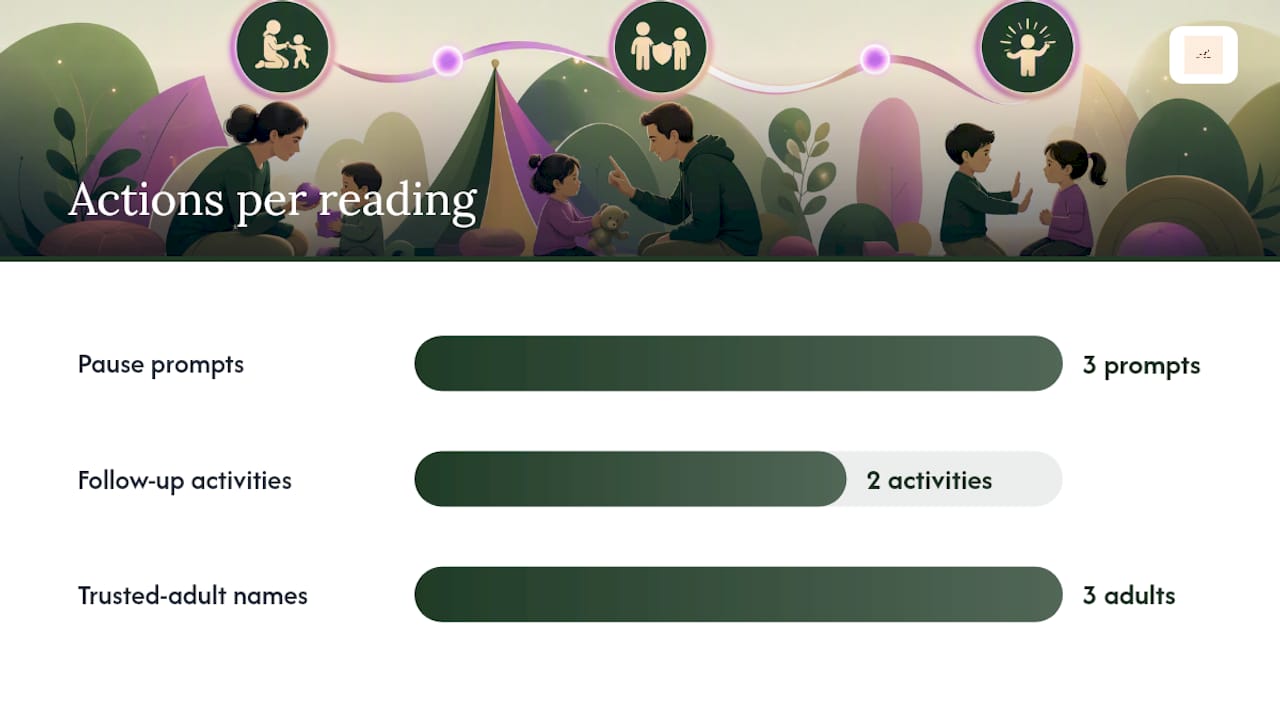
Three places to pause mid-book:
- Ask. When a character makes a choice, stop and ask, "What would you do here?" before turning the page.
- Model. Show the boundary phrase out loud yourself first: "I would say, 'Please stop, I don't like that.'"
- Let them choose. Offer your child the same choice the character faced, hug, wave, or high-five, and honor whatever they pick, every time.
Two follow-up activities turn the book into muscle memory:
- Stuffed-animal practice. Have your child "ask permission" before hugging a stuffed animal, then swap roles so they practice saying no.
- Bubble space with a hula hoop. Set a hula hoop on the floor and let your child stand inside it. Explain that anyone entering their "bubble" needs to ask first. This is one of the more effective hands-on tools used in personal space curricula for young children, and it takes about two minutes to set up.
Close every reading with a short trusted-adult checklist: name three adults your child can tell if something feels wrong, and repeat that list monthly. Consistency, not intensity, is what makes the script usable in the moment it's actually needed.
Pro Tip: Keep the script identical every time you read. Kids under seven learn boundary language the same way they learn a bedtime routine: through exact repetition, not creative variation.
Why This Guidance Holds Up
Every recommendation here traces back to pediatric and child-safety sources, not marketing copy.
- The AAP's position that early, plainly-worded conversations reduce vulnerability and support healthy body image anchors the "start now" advice throughout this piece.
- Practitioners specifically recommend metaphor-driven teaching, like framing a child's body as "your own country" where they set the rules for entry, because playful metaphors help kids retain abstract ideas about consent.
- Some picture books and SEL activity kits are built around this same evidence base: correct anatomical language, choice-driven scenes, and backmatter scripts for the adult reading aloud, with titles specifically shaped around age-appropriate consent language rather than generic "stranger danger" messaging.
The result is a body of guidance that doesn't ask parents to invent a script from scratch. It hands them one that's already been checked against pediatric consensus.
Handling the Hard Questions These Books Bring Up
Books about body boundaries are designed to provoke questions, and that's a feature, not a problem. The trouble comes when parents freeze up instead of answering plainly.
If your child asks "has that happened to me?", answer honestly and calmly: "No, and if it ever did, you could always tell me." Don't over-reassure to the point of dismissing the question, and don't panic in front of your child, since kids read parental fear as a signal that the topic is dangerous to bring up again.
If a book prompts a disclosure, even a vague one ("Sam doesn't like it when his cousin tickles him"), take it seriously without turning it into an interrogation. Ask one open question ("What happened next?") and let your child lead. Save the deeper follow-up for a calmer moment, and involve a pediatrician or counselor if anything feels off.
Expect some giggling or discomfort around body-part names, especially with preschoolers. That's developmentally normal. Naming body parts plainly, without punishing laughter, keeps the language usable instead of taboo. If your child changes the subject, let them. Boundary conversations work better as short, repeated check-ins than one long, forced discussion.
Finally, resist the urge to sanitize the book's message to avoid an awkward moment. A book that says "stop" and "ask first" only works if you read those words exactly as written, every time.
Matching Books to Specific Topics
Not every body boundaries book covers the same ground, and matching the topic to your child's actual situation matters more than picking the most popular title.
Personal space: Look for books built around a physical demonstration, like the hula hoop "bubble" concept, that give kids a visual boundary they can point to. These work especially well for kids who struggle with abstract rules but understand physical space.
Safe touch versus unsafe touch: The strongest titles here use clear, literal categories, safe, unsafe, and confusing touch, rather than vague good/bad labels, and they pair every category with a specific action step ("tell a trusted adult").
Understanding secrets: This is one of the trickier categories. Good books distinguish between a fun secret (a surprise party) and a secret that makes a child feel scared or uneasy, since predators often frame abuse as a "special secret." A board-book-style title built with early-childhood experts can model this distinction using affirmative language, showing a character actively saying "yes" or "no" rather than passively accepting a situation, which gives kids the vocabulary to name their own discomfort.
Consent and choice-making: Books using metaphors, like a child being the "ruler" of their own body, help kids as young as six grasp that consent applies to everyday moments, not just unsafe ones: tickling, hugging, even having a photo taken.
When to Start and How to Build Up Over Time
There's no age too early to start. The AAP's own guidance favors introducing body-boundary language as soon as a child can name objects, typically around age one to two, using correct anatomical terms from the start rather than nicknames.
Ages 1 to 3: Introduce board books with simple, repeated phrases during regular story time, not as a special "safety talk." The goal is exposure and vocabulary, not comprehension of abuse prevention concepts, which are too abstract for this age.
Ages 3 to 5: Add books with visible choice-making and interactive prompts. This is the window where consent language starts to generalize: kids apply "ask first" to toys, snacks, and physical affection, not just the book's specific scenario.
Ages 5 to 7: Introduce books with more direct safety scenarios and clear reporting language. Kids this age can handle discussing a family friend or babysitter as a potential source of discomfort, not just a stranger, and they're developmentally ready to understand that trusted adults sometimes need to be told about small worries, not just big emergencies.
Reintroduce the same books every six to twelve months. A four-year-old and a six-year-old will pull different meaning from an identical page, and a periodic reread often surfaces a new question you hadn't heard before. Pairing a boundaries title with an empathy-focused picture book can also help kids connect their own right to say no with respecting that same right in siblings and friends.
What Most Boundary Advice Gets Backward
Most advice on this topic treats the book as the lesson. It isn't. The book is the rehearsal space, and the actual lesson happens in the thirty seconds after you close it, when your child either does or doesn't get to practice the words out loud.
I'd argue the industry default, one big "the talk" delivered around age five or six, is close to the least effective model available. The evidence points the other way: short, boring, repeated exposure starting in toddlerhood beats a single dramatic conversation almost every time. Parents treat repetition as a sign the lesson isn't landing. It's usually the opposite. A kid who can recite the same boundary phrase for the tenth time has actually encoded it as a default response, not just a memory.
The other place conventional advice falls short is treating "no" as something to manage rather than something to build. Parents worry that practicing refusal will make kids harder to parent. It mostly does the reverse: a child who's rehearsed saying "stop, I don't like that" to a stuffed animal is far more likely to say it to an adult when it actually counts.
If you take one thing from this: prioritize the follow-up activity over the book itself. The story sets up the vocabulary. The hula hoop, the stuffed animal, the trusted-adult list, that's where it actually sticks.
— Derek Amarillas
Find the Right Format for Your Child's Age
Some picture books and SEL activity kits use original characters and immersive story worlds to make consent language something kids actually want to reread, not something they endure once.
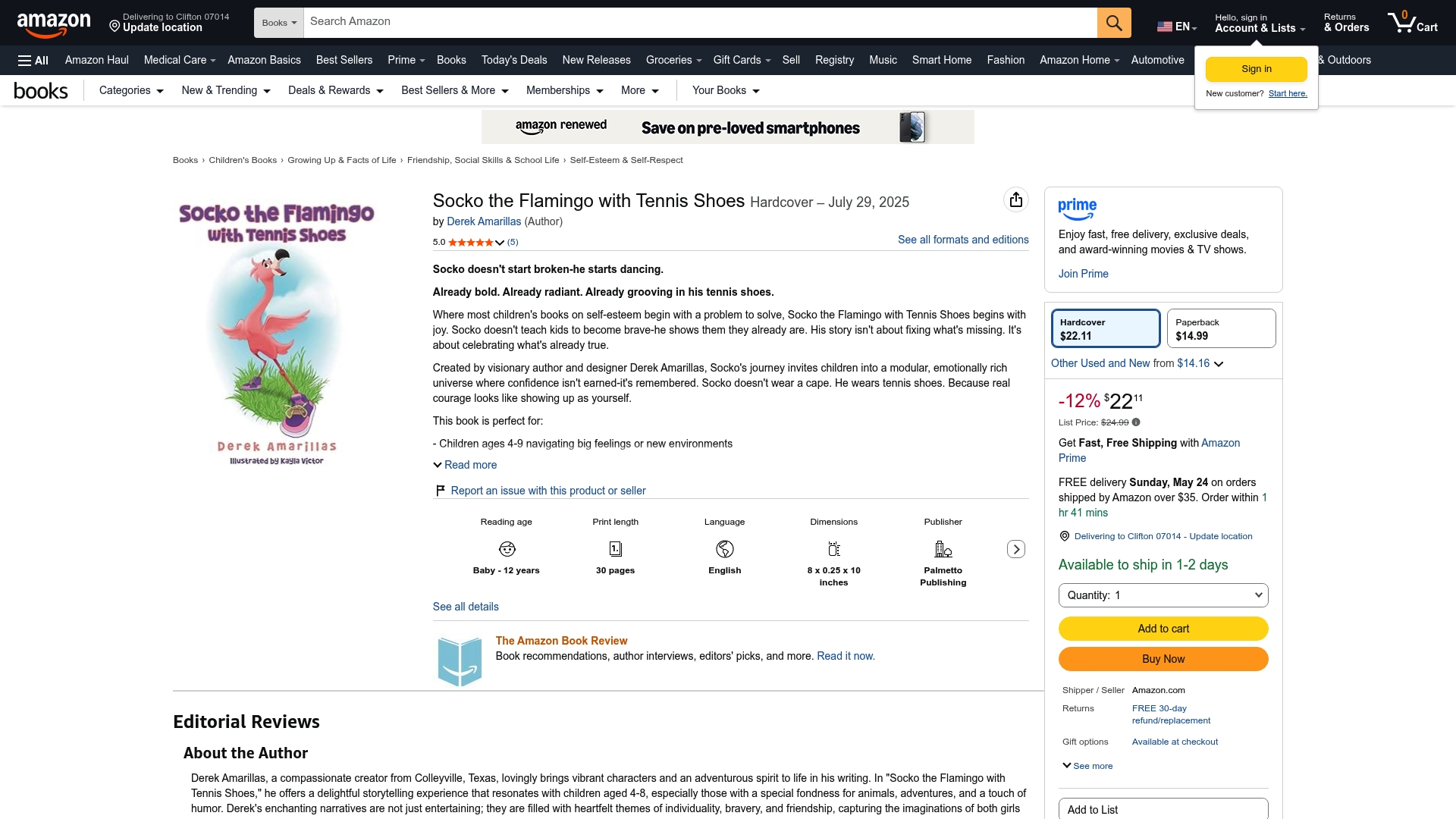
For toddlers, the picture book format works best read cover to cover at bedtime, using the same phrasing every night to build recognition before comprehension. Preschoolers get more out of the accompanying printables and activity kits, which turn the "ask, model, choose" script from this guide into a hands-on exercise instead of a passive listen. Early elementary readers benefit most from titles with denser backmatter, since they can handle the reporting-language scripts and trusted-adult checklists directly, with less parent narration needed.
Every format ties back to the same three-step practice loop covered above: read, pause to ask, then role-play. Browse the current lineup of picture books, activity kits, and digital downloads at the storefront and match a title to your child's age bracket before your next story time.
Sources
For vetted book lists organized by safety topic and reporting steps, the Child Advocacy Center of Fayetteville's resource page is a solid starting point. Parents wanting a broader curated list of consent and bodily-autonomy titles can also check Bookshop, and Icon Literary's own SEL books by age guide breaks down which themes fit which developmental stage.
- AAP tips for teaching children about body boundaries and safety | Contemporary Pediatrics
- Bodies and boundaries | Action for Healthy Kids
FAQ
What are some good books about body boundaries for kids?
Look for titles that use correct anatomical language, show a character making a visible choice about touch, and include backmatter scripts for adults. Some picture books and activity kits are built around these same design features for preschoolers and early elementary kids.
How do you teach kids about body boundaries?
Read an age-appropriate book regularly, pause to ask what the character should do, model the boundary phrase yourself, then let your child practice the same choice with a stuffed animal or a hula hoop "bubble" space.
What are the 7 body safety rules for kids?
Definitions of a "7 rules" list vary by source and none of the citations used here confirm one standardized version. The consistent core across pediatric and child-safety guidance is simpler: correct body-part names, the right to say no, safe versus unsafe touch, no secrets that cause fear, and a list of trusted adults to tell.
What are some good body safety books for kids?
Prioritize board books for toddlers with short repeated phrases, interactive choice-based books for preschoolers, and early-elementary titles with reporting language in the backmatter. Child advocacy centers maintain curated lists matching these categories to specific age ranges.
When should I start reading these books to my child?
As early as age one or two, according to AAP guidance, using correct anatomical terms from the start rather than waiting for a single "big talk" later.