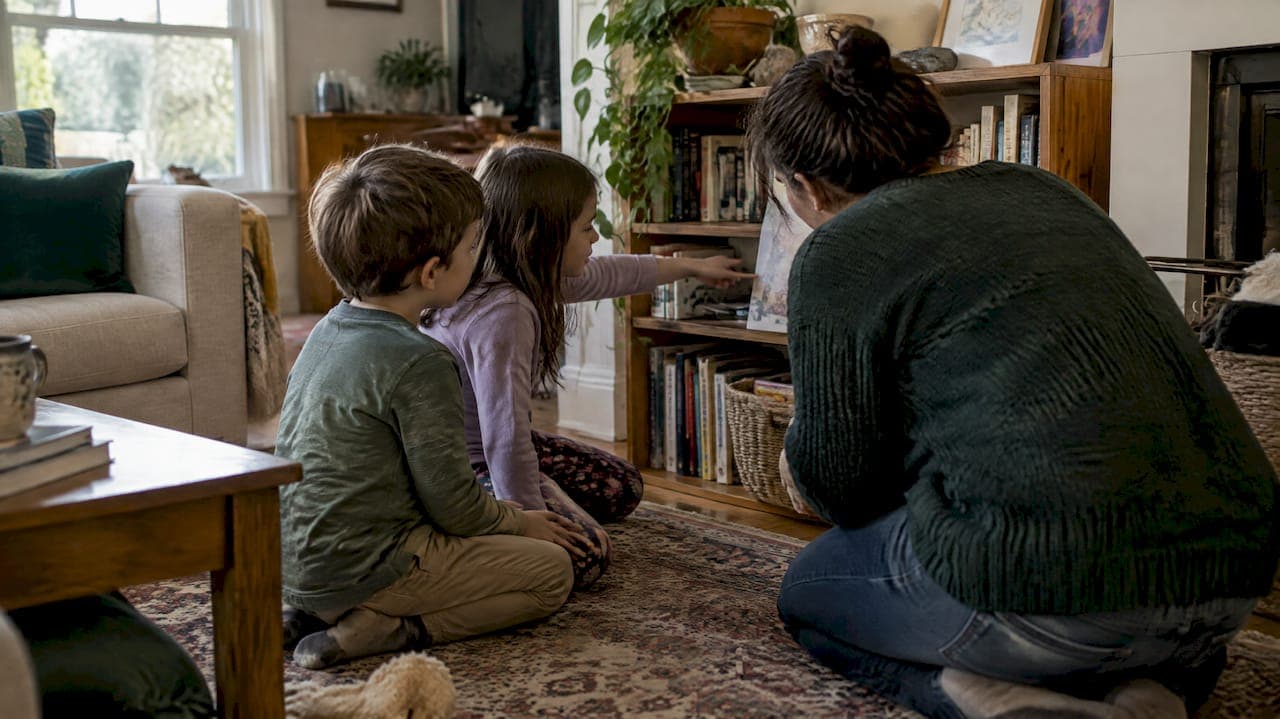
An emotions scavenger hunt is a short, playful activity that helps children find objects, pictures, or clues tied to a specific feeling, then name and talk about that feeling out loud. The main benefit is simple: kids practice recognizing and labeling emotions in a low-pressure way. You can run one indoors with hidden cards, outdoors while watching for body language, or over video chat with drawing and show-and-tell.
TL;DR:
- Activity settings can include indoor, outdoor, virtual, or mixed formats, with prompts scaled in complexity for preschoolers, older children, and mixed feelings.
- Preparation involves selecting 4 to 8 emotion prompts, gathering visuals, and explaining each word clearly to children before starting the hunt.
- Children can respond by pointing, drawing, typing, or showing objects, with response modes alternated to accommodate different communication needs.
- To prevent emotional overload, give kids options to opt out, avoid personal disclosure questions, and provide calming choices throughout.
- Follow-up activities like a feelings treasure chest or descriptive writing deepen understanding, and tools like character cards or emotion wheels aid facilitation.
Table of Contents
- 1. Six Ready-to-Run Emotion Hunts You Can Try Today
- 2. How to Run the Hunt: Prep, Play, and Debrief
- 3. Matching Prompts to Your Child's Age and Stage
- 4. Running the Hunt Online or With Different Communication Styles
- 5. Keeping the Activity Safe for Kids Who've Experienced Trauma
- 6. Extensions That Build Vocabulary and Writing Skills
- 7. Tools That Make Facilitation Easier
- 8. A Ten-Minute Routine Worth Trying Tonight
- Pairing a Scavenger Hunt With Icon Literary's Decks and Kits
- FAQ
- Sources
1. Six Ready-to-Run Emotion Hunts You Can Try Today
Each of these hunts takes a short time to set up and works for one child or a group. Pick the format that fits your space and swap in the prompts your kids respond to best.
- Home or indoor hunt: hide cards labeled "happy," "sad," or "calm" around a room, then ask kids to find one and point to an object that makes them feel that way.
- Outdoor observation hunt: have children look for signs of emotion in the environment, like a crossed-arms posture on a playground figure or a wilting plant that "looks sad."
- Virtual hunt: ask kids to show an object on camera, type a word in chat, or draw a face that matches a feeling word you call out.
- Story or character hunt: pause during a read-aloud and ask what the character might be feeling on that page, then why.
- Treasure-chest hunt: kids collect small items or pictures tied to feelings and drop them into a decorated box to revisit later.
- Mixed-emotion hunt for older kids: ask for an example of feeling two things at once, like excited and nervous before a first day of school.
An emotions scavenger hunt is, at its core, a search for objects, pictures, words, or observable clues connected to feelings, followed by naming the emotion and explaining the connection, according to Mosswood Connections. Simple home versions hide emotion words for kids to read aloud and discuss, a format detailed by YouthFirst Inc.
2. How to Run the Hunt: Prep, Play, and Debrief
A little structure keeps the activity moving and makes the learning stick. Here's a script you can follow almost exactly.
- Prep: choose 4 to 8 emotion prompts (happy, sad, calm, angry, proud, worried, grateful, surprised), gather visuals or a printable sheet, and pick a quiet space.
- Announce: say, "We're going on a feelings hunt. Find something that matches each word on your card."
- Search: give 1 to 2 minutes per prompt, longer for younger kids or bigger spaces.
- Share: invite each child to show, name, and explain their find: "I found this because..."
- Clarify: ask one follow-up question, like "What else could feel that way?"
- Debrief: name the feeling together, ask "What clue told you that?", and connect it to one coping idea, such as taking three slow breaths when angry.
To run a hunt well, choose a small set of emotion prompts, explain each word, let children find or represent an example, and pause after each discovery for naming and reflection, a sequence recommended by YouthFirst Inc. A single child or a group of six works fine; just add a minute or two per prompt for larger groups.
Pro Tip: Keep debrief questions open-ended, "What clue told you that?" works better than "Is this the sad one?"
3. Matching Prompts to Your Child's Age and Stage
Younger kids need simpler, more visual prompts; older kids can handle nuance and cause-and-effect thinking.
- Preschool (ages 3 to 5): stick to single-word labels and strong visual cues, like a smiling face or a toy that got dropped; model the word yourself first.
- Early elementary (ages 6 to 8): add "why" questions and simple intensity scales, like "a little mad or really mad?", and introduce one regulation strategy per session.
- Older children (ages 9 and up): introduce mixed feelings, perspective-taking, and writing extensions, like describing a time they felt both proud and nervous.
- Quick assessment cue: if a child can label the feeling but struggles to explain the clue, spend more time on cause-and-effect before adding new vocabulary.
Developmentally, children build simpler emotion skills before more complex ones: they typically master basic recognition and labeling before tackling mixed feelings or perspective-taking, according to recent developmental research. The same research links stronger emotion recognition and vocabulary in preschoolers to better regulation later on, which is worth keeping in mind as you choose how far to push a session.
4. Running the Hunt Online or With Different Communication Styles
A feelings hunt translates easily to video calls or classrooms with mixed communication needs, as long as you offer more than one way to respond.
- Let kids type an answer in chat, use a reaction emoji, hold up an object on camera, or draw and hold up the picture.
- Offer extra processing time before calling on anyone, and let quieter kids answer privately through chat instead of out loud.
- Alternate response modes each round, object, gesture, then text, so no single mode feels mandatory.
A virtual or inclusive version can let children type in chat, use facial expressions or gestures, show an object or picture, or draw, which keeps emotionally sensitive prompts optional for kids who communicate differently or feel overloaded, per this virtual hunt guide.
Pro Tip: Test your screen share and chat settings before the session starts so kids aren't waiting while you troubleshoot.
5. Keeping the Activity Safe for Kids Who've Experienced Trauma
Emotion prompts can brush up against real pain for some kids, so build in choice at every step.
- Preview the activity before starting and let kids opt out of any single prompt without explanation.
- Avoid questions that require personal disclosure; use fictional characters or pictures instead of "tell us about a time you felt scared."
- Phrase observation prompts tentatively: "This person might be feeling worried," not "This person is worried."
- Offer a calming choice, like a quiet corner or a stretch break, and have a follow-up plan ready if a child becomes upset.
Guidance on trauma-sensitive practice recommends avoiding forced sharing, surprise touch, or prompts that demand disclosure, favoring choice, privacy, and predictable routines instead, as outlined in a trauma-sensitive schools implementation guide.
6. Extensions That Build Vocabulary and Writing Skills
Once the hunt itself wraps up, a few follow-up activities stretch the learning further.
- Start a feelings treasure chest where kids add one item or drawing after each hunt and revisit it over weeks.
- Pair the hunt with a read-aloud and pause on key pages to ask what a character is feeling, a method that works well alongside our guide to reading aloud to babies which highlights the importance of reading aloud from day one.
- Print color or black-and-white sheets with drawing space, or use editable templates so you can customize prompts for your group.
- For older kids, combine emotion clues with a short descriptive-writing assignment about the scene or object they found.
Extensions like a feelings treasure chest and a digital memory game that pairs feelings with definitions and examples work as variations on the same core routine rather than replacements for adult discussion, according to WIAIMH. Shared reading afterward helps kids put new vocabulary into context, a connection explored further in our piece on shared reading's emotional benefits.
7. Tools That Make Facilitation Easier
Character cards and illustrated decks give kids something concrete to hold onto when a feeling is hard to name. Decks featuring original characters work well as a ready-made prompt source: each card shows a character whose expression or situation can anchor a "what might this character be feeling" question during a hunt. An emotion wheel printed alongside the cards gives a vocabulary bank to point to during debrief, which helps when a child knows a feeling but not the word for it.

8. A Ten-Minute Routine Worth Trying Tonight
Set a timer for 10 minutes, hand your child three feeling cards, and ask them to find one object for each. Expect hesitation on the first card and more confidence by the third. Close with, "You found three feelings today, that's real practice." Jot down which prompts clicked so next time runs smoother.
— Derek Amarillas
Pairing a Scavenger Hunt With Icon Literary's Decks and Kits

If you want ready-made prompts instead of building your own cards, Icon Literary's Duckwave Decks give you character-driven emotion cues you can drop straight into a hunt, priced at $7 one-off on the Icon Literary site. Socko's Universe, browsable on the Icon Literary catalog, offers additional downloadable kits for classroom warm-ups, small therapy groups, or family practice at home.
- Duckwave Decks work as a quick prompt source for a home or classroom hunt.
- Downloadable kits from Socko's Universe add printable sheets for group settings.
- Both pair naturally with the treasure-chest and story-hunt formats covered above.
Pick up a deck on the Icon Literary site and build your next feelings hunt around it.
FAQ
What is a good game for identifying feelings?
An emotions scavenger hunt works well because it turns feeling words into a search-and-find task, which keeps kids engaged while they practice naming emotions. Simple versions use hidden word cards; more advanced versions add observation or storytelling.
What are 7 basic emotions?
Common emotion-recognition activities include prompts like happiness, sadness, anger, calmness, pride, worry, and surprise, following examples used in feelings scavenger hunt activities. Different programs list slightly different sets, so treat this as a practical starting point rather than a fixed rule.
Can you give me 20 examples of emotions?
Scavenger hunt prompts commonly draw from a broader list that includes happiness, sadness, calmness, anger, courage, loneliness, pride, worry, gratitude, surprise, confusion, excitement, frustration, embarrassment, joy, and disgust, among others, per Mosswood Connections. You can mix and match from this list depending on your child's age and the session's goal.
Can you give me a list of positive and negative emotions?
Positive prompts often include happiness, pride, gratitude, calmness, and excitement, while negative prompts include sadness, anger, worry, frustration, and embarrassment. Framing both types as equally normal to discuss, rather than labeling one set as "bad," helps kids feel safer naming difficult feelings.
Sources
- Feelings and Emotions Scavenger Hunt (Mosswood Connections)
- Emotions scavenger hunt (YouthFirst Inc.)
- Child Development article on emotion knowledge and outcomes