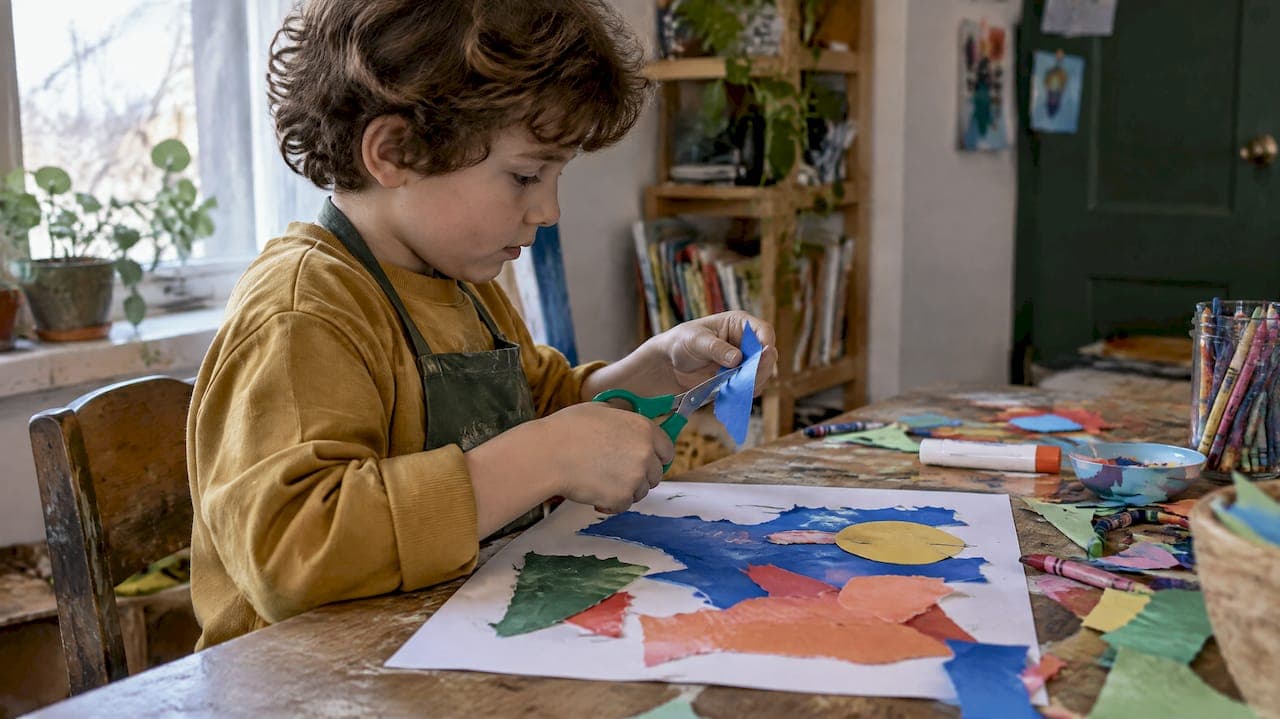
A feelings collage is a low-prep art activity that helps children ages 3 to 10 name and express emotions through color, texture, and choice. It builds emotional vocabulary without a worksheet or a lecture, and most sessions run 20 to 40 minutes, with supplies you likely already have at home or in a classroom closet.
TL;DR:
- Children benefit from pre-sorted, textured, and colorful materials suited to their age, with supervision and adjustments for younger or older kids.
- Focused conversation prompts and simple scales enhance emotional vocabulary and help children articulate feelings more precisely.
- Repeating the activity weekly or adding collages to a feelings wall supports ongoing emotional development more effectively than one-off projects.
- Using accessible materials like tissue paper, fabric scraps, or stickers can substitute for magazines and still foster creativity and self-expression.
- Avoid showing a finished sample; instead, model basic techniques and allow children to express their unique feelings through their collage choices.
Table of Contents
- Materials and Setup for a Feelings Collage
- Step-by-Step Instructions for Making the Collage
- Facilitation Prompts and Reflection Questions
- Variations and Extensions for Different Settings
- Why This Activity Supports Emotional Growth
- A Quick Note From the Classroom
- Pair the Collage With Story-Driven Resources
- FAQ
- Sources
Materials and Setup for a Feelings Collage
You do not need a craft store trip for this one. A sturdy base, some paper to cut or tear, and a glue stick cover most of what a child needs to get started.
- Poster board, cardboard, or heavy paper for the base
- Glue sticks (easier for little hands than liquid glue)
- Child-safe scissors, plus magazines, catalogs, or scrap paper
- Textured paper, fabric scraps, yarn, or tissue paper
- Markers, crayons, or stickers for finishing touches
For children who are not ready for scissors, pre-tear paper into pieces or offer stickers and torn tissue paper instead. Set materials out in trays or color-sorted piles rather than one messy pile. Curated, inviting setups like this help children engage longer and make more deliberate choices about what they pick up. Plan for about 10 minutes of setup, 20 to 30 minutes of creating, and a quick wipe-down since glue sticks keep things fairly contained.
Step-by-Step Instructions for Making the Collage
Start with a short conversation, not a demonstration. Ask what feelings a child knows about, and let the talk flow before any glue comes out. Skip making a sample collage yourself: showing a finished piece invites children to copy it rather than express their own experience, which works against the point of the activity. You can model how to use a glue stick without showing them what the final picture should look like.
- Discuss and label. Ask, "What's a feeling you've had today?" and write or say a few words together (happy, mad, worried, excited).
- Gather and choose. Let the child pick colors, textures, and images that feel right to them, no right or wrong answers.
- Arrange and attach. Glue pieces onto the base, encouraging shapes and colors over literal faces or scenes.
- Share or display. Invite the child to talk about their choices if they want to, then post the collage somewhere visible or photograph it for a portfolio.
Age changes the shape of this process. For children 3 to 5, offer two or three pre-sorted material choices at a time and handle scissors yourself or supervise closely. For children 6 to 8, introduce simple labeling words and ask for a one-word title. For children 9 to 10, let them write emotion labels directly on the collage and experiment with layering materials to show mixed or changing feelings.
Let the glue dry flat before moving the piece, and snap a photo for a portfolio or a family memory book even if the collage itself gets recycled later.
Pro Tip: Keep a rolling "feelings wall" in a hallway or classroom corner so collages can be added weekly instead of treated as a one-time project.

Facilitation Prompts and Reflection Questions
What you say during the activity matters more than what gets glued down. Short, validating phrases help children feel heard without steering them toward a particular answer.
- "I see you picked a lot of red. What does red feel like to you?"
- "That makes sense, big feelings are hard to explain sometimes."
- "Where do you feel that in your body, your chest, your hands, your stomach?"
- "On a scale of 1 to 10, how big does that feeling feel right now?"
Using a simple intensity scale helps children communicate strength, not just the name of a feeling, and makes space for mixed emotions on the same page. Naming and discussing emotions helps children build vocabulary and can ease emotional distress by improving how they communicate needs.
One CASEL-cited classroom case saw reading proficiency climb from 63% to 73% and math proficiency rise from 64% to 86% over four months when SEL practices were woven into routines, which suggests that short, repeated emotional check-ins add up over time.

If a child produces something surprising or intense, like a scribbled-over face or dark colors covering the whole page, resist the urge to fix or explain it away and consider incorporating sensory play for emotional regulation as described in this parent's guide to sensory play and child development. Listen, validate what you see, and offer a calming option such as a short break or a sensory activity if the child seems stuck in the feeling.
Variations and Extensions for Different Settings
A feelings collage adapts easily once the basic structure clicks. For a classroom, try a group mural where each child adds one piece to a shared "feelings wall" and rotates contributions over several days.
- Take the collage outdoors with leaves, petals, and bark for a nature-based version, checking for allergies first
- Pair the activity with a read-aloud about emotions to give quieter children a shared vocabulary before they start
- Offer pre-cut shapes and a visible timer for children who need extra support with motor skills or attention
- Rotate who picks materials first in group settings to build patience and turn-taking
For families wanting more structure at home, a homeschool SEL routine can turn this into a weekly habit rather than a one-off craft.
Why This Activity Supports Emotional Growth
Labeling feelings is a core social-emotional learning practice, and CASEL's framework treats emotional vocabulary as something that helps children regulate and engage more fully in learning, not just a nice-to-have add-on. Choice-driven, open-ended art supports that same growth: NAEYC's guidance on creativity favors process art, where children explore freely, over product-focused projects that push toward a specific finished look.
Process art works best when adults model basic technique, like how to use a glue stick, but step back from providing a sample to copy.
Icon Literary builds its own story worlds and activity resources around this same idea: emotional themes that children absorb through play and imagery rather than direct instruction.
A Quick Note From the Classroom
I once watched a quiet five-year-old spend ten minutes picking only gray and blue paper, then glue it all into one corner of the page. I didn't ask her to explain it. I just said, "That's a lot of blue in one spot," and she nodded and kept working. The small tweak that helped most across a class: letting kids start without any verbal prompt at all, just materials and time. Try a 15-minute version this week and watch what colors kids reach for first.
— Derek Amarillas
Pair the Collage With Story-Driven Resources
If you want ready-made prompts to go alongside collage time, our story prompts and printable activity ideas can pair naturally with an emotions discussion before the glue comes out and extend a single craft session into a longer SEL routine.
- Use a Duckwave Decks prompt card as the opening conversation starter before a collage session
- Browse the full Icon Literary catalog for printable kits that complement art-based emotional learning
- Visit the Duckwave Decks landing page to see current story and activity offerings
FAQ
What age is best for a feelings collage?
This activity works well for ages 3 to 10, with the materials and expectations adjusted by age. Younger children benefit from pre-sorted choices and supervised scissors, while older children can write their own emotion labels and layer materials.
What if we don't have magazines or scrap paper?
Tissue paper, scrap fabric, yarn, stickers, or even torn construction paper work just as well as magazine clippings. The goal is color and texture choice, not a specific material.
How do I respond if my child's collage looks upsetting?
Stay calm, describe what you see without judgment, and ask an open question like "What's going on here?" rather than correcting or explaining it for them. If the imagery signals real distress, follow up privately with a calming activity rather than addressing it in front of a group.
Should I make my own collage first to show my child?
No, skip the sample. Process-art guidance from NAEYC recommends modeling basic techniques like gluing without showing a finished piece, since a sample tends to invite copying instead of personal expression.
How often should we do this activity?
A short, repeated routine, such as a weekly collage or an ongoing "feelings wall," tends to build emotional vocabulary more effectively than a single one-time project.
Sources
- Understanding feelings — Child Mind Institute
- Supporting the development of creativity — NAEYC
- What is SEL? — CASEL