
Picture books are one of the most practical, research-backed tools public libraries can use to teach and model CASEL-aligned SEL skills for young children. The verdict is simple: picture books plus adult-led techniques, especially talking about characters' thoughts and feelings while reading, produce measurable gains in social-emotional learning. This isn't a hunch. A classroom-based reading intervention using this exact method showed lasting effects on children's learning understanding, and the CASEL framework gives librarians and parents a map for which books teach which skills.
Try this at your next read-aloud:
- Pause once per page and ask, "What do you think she's feeling right now?"
- Point to a character's face or posture before reading the text on that page.
- Ask your librarian for an SEL-themed display or a curated booklist by competency.
Pro Tip: A single well-placed "why do you think he did that?" question does more for SEL than finishing three extra books in one sitting.
Key Takeaways
Picture books produce durable SEL gains only when paired with adult-led mental-state discourse, not passive reading alone.
| Point | Details |
|---|---|
| Mental-state talk is the lever | Asking what characters think or feel drove the measurable, 18-month gains in the classroom study. |
| Libraries are natural SEL hubs | Curated collections, staff modeling, and family take-homes extend SEL practice beyond one visit. |
| Selection needs a checklist | Match books to CASEL competencies, check illustrations for emotional cues, and prioritize representation. |
| Wordless books teach empathy | Forced narration from images alone builds perspective-taking skills text-based books can't replicate. |
| Icon Literary builds SEL into the story | Its picture books and activity kits embed CASEL-aligned prompts directly into character arcs and take-home materials. |
Table of Contents
- The role of picture books in public library SEL programs
- How public libraries put picture books to work
- How to choose SEL-aligned picture books
- Read-aloud techniques that turn storytime into SEL practice
- Building an SEL picture-book program libraries can actually run
- Handling hard emotions and cultural differences in SEL storytime
- Why storytelling craft is the missing piece in most SEL advice
- Icon Literary: picture books and kits built for SEL from the page up
- Frequently Asked Questions
- Sources
The role of picture books in public library SEL programs
The role of picture books in public library SEL programs comes down to a mechanism called dual narrative: the words tell one story, the pictures tell another, and children learn to read both simultaneously. That skill, visual literacy, is what lets a 4-year-old notice a slumped posture or a tight jaw before an adult even names the emotion. Picture books build vocabulary, comprehension, and motivation to read at the same time they build emotional vocabulary.
The strongest evidence comes from a classroom study of 104 children ages 46 to 64 months. An eight-week intervention using mental-state discourse, adults asking about characters' thoughts, feelings, and intentions during reading, produced gains in learning understanding that held at an 18-month follow-up. That's not a short-term bump. That's a durable shift in how children process other people's inner lives.
- Self-awareness and self-management show up in stories about a character naming or managing a big feeling.
- Social awareness and relationship skills develop through mental-state questions about other characters.
- Responsible decision-making appears in stories with consequences a child can predict and discuss.
How public libraries put picture books to work
Public libraries function as SEL hubs in three ways: curated collections, staff modeling, and family-facing outreach. None of this is accidental. Librarians lean on trusted review sources, ALSC Notable lists, School Library Journal, and Booklist, to build shelves that hold up to CASEL scrutiny rather than just popularity.
- Curated SEL collections. Libraries such as the New York Public Library maintain themed booklists tied to SEL concepts, often timed to transitions like back-to-school, when kids need extra help naming new-classroom anxiety.
- Staff modeling during storytime. A librarian who pauses to ask "how do you think he feels?" is demonstrating the exact mental-state discourse technique parents can copy at home.
- Family resources. Take-home prompt sheets, themed displays, and school partnerships extend the read-aloud beyond the library visit.
The payoff is measurable. Library early-literacy programs that center picture books show documented gains in children's early literacy behaviors, and caregivers in those programs report reading more often at home afterward. That second finding matters as much as the first: a library storytime that changes a parent's Tuesday-night routine has done its real job.
- Look for a library's "SEL" or "social emotional" shelf tag, not just "feelings books."
- Ask staff which titles pair with an upcoming classroom transition (new sibling, new school year, a big move).
How to choose SEL-aligned picture books
Selecting for SEL isn't the same as grabbing anything with a smiling animal on the cover. A workable checklist gives librarians, teachers, and parents a repeatable filter:
- CASEL alignment. Which of the five competencies does this story actually teach, not just mention?
- Illustration-driven emotional cues. Can a child read the character's feelings from the art alone, before the text confirms it?
- Cultural and identity representation. Does the book reflect the child's own experience or expand it honestly?
- Vocabulary scaffolding. Are the feeling-words age-appropriate but still a small stretch?
- Age-appropriateness and emotional complexity. A book about grief for a 3-year-old needs different pacing than one for a 7-year-old.
- Trusted review sources. Cross-check against ALSC Notable, Booklist, or School Library Journal before committing shelf space.
A story about a character forgetting their lunch and feeling embarrassed maps to self-awareness. A story about two friends disagreeing over a game maps to relationship skills. That distinction helps you build a booklist that covers all five competencies instead of five copies of the same lesson.
Wordless books deserve their own line on the checklist. Because there's no text to lean on, the child has to narrate the plot from the illustrations alone, inferring what a character wants and feels from posture and expression. That forced narration is exactly what trains perspective-taking and empathy, and it works across language levels since there's no vocabulary barrier to entry. A collection development checklist built around CASEL can help standardize this across a library system rather than relying on one librarian's memory.
Read-aloud techniques that turn storytime into SEL practice
The technique that moves the needle most is mental-state discourse: pausing to ask what a character is thinking, feeling, or planning to do next. It works for ages 3 through 8, though the phrasing shifts. For a 3-year-old, try "Is she happy or sad? How do you know?" For a 7-year-old, try "Why do you think he lied about breaking the vase?"
Performer read-aloud technique amplifies the effect. Slowing down at emotional beats, using distinct voices for characters, and physically pointing at a facial expression before reading the line all sharpen a child's ability to decode emotional cues. None of this requires acting training. It requires slowing down.
- Mental-state prompts. Pause on key pages and ask what the character wants, fears, or plans.
- Role-play. Act out the story's central conflict with two willing volunteers.
- Emotion-match cards. Hold up face cards and ask which one matches the character's expression on the page.
- Perspective-shift prompts. Ask, "What would the story look like if the other character told it?"
- Drawing-to-feel. Have kids draw how a scene made them feel, not what happened in it.
- Problem-solving vignettes. Stop before the resolution and ask the group how they'd solve the character's problem.
- Wordless narration. Hand a wordless book to a child and let them tell you the story in their own words.
Pro Tip: Don't rush to fill silence after a mental-state question. A three-second pause often produces a more honest answer than a quick follow-up.
These techniques translate directly into classroom settings too. Teachers running SEL read-alouds for K-2 students use nearly identical scripts, just with slightly more structured group discussion afterward.
Building an SEL picture-book program libraries can actually run
A library doesn't need a grant-funded pilot to start. The choice is between a single-session demo, good for exposure and caregiver modeling, and a six-to-eight-week series, which is where the durable gains from the classroom study actually showed up. Single sessions build awareness; repeated sessions build skill.
- Pick a format. A one-off SEL storytime works for a first attempt; a six-week series works if you want measurable change.
- Train staff on three things. Mental-state prompting, comfortable use of wordless books, and inclusive facilitation for kids with different home languages or family structures.
- Send families home with something. A one-page prompt sheet or a themed booklist keeps the practice going after the visit ends.
- Measure lightly. Track attendance, ask caregivers a two-question self-report survey, and note simple staff-observed indicators like a child spontaneously naming a feeling.
- Rotate an SEL-themed display monthly to keep circulation moving and give browsing families an easy entry point.
- Partner with local schools or early-years programs, such as nursery and EYFS family-learning networks, to extend take-home prompts beyond the library building.
- Keep evaluation forms short. A quick caregiver self-report survey beats a long form nobody finishes.
Handling hard emotions and cultural differences in SEL storytime
Not every SEL book is comfortable, and that's the point. Stories about grief, anger, or exclusion do real work precisely because they let a child rehearse a hard feeling in a low-stakes setting before facing it in real life. The discomfort an adult feels reading a book about a parent's illness or a friend's unkindness is often a sign the book is doing its job, not a reason to skip it.
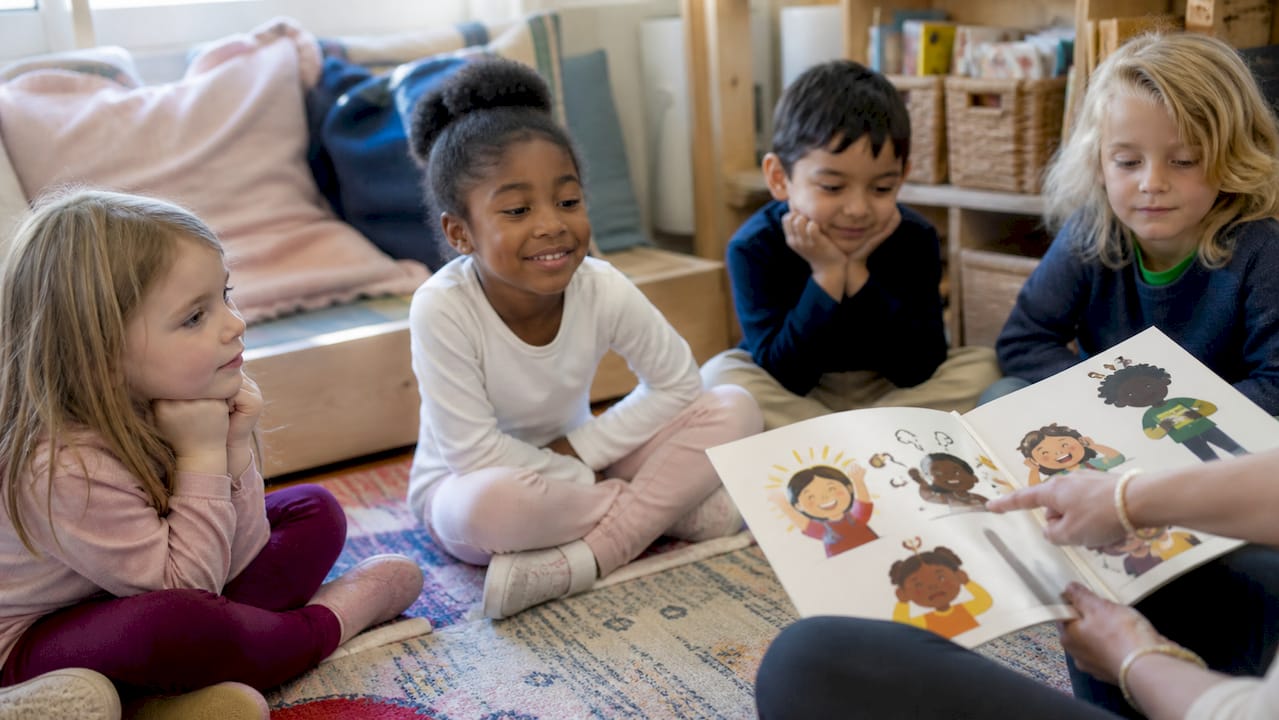
Cultural differences complicate this further. A story about confronting a bully might reflect one family's values around directness and clash with another's emphasis on deference or group harmony. The fix isn't avoiding those books. It's pairing them with open questions rather than fixed morals: "What would you do?" invites a child's own cultural lens into the conversation instead of imposing one.
Representation matters here too. A child who never sees a character who looks like them, prays like them, or lives in a family structured like theirs learns a quiet lesson about whose feelings count. Building a shelf with genuinely diverse picture books isn't a separate initiative from SEL work; it's part of the same job.
When a topic feels too heavy for a group storytime, wordless books offer a workaround. A child can process a difficult scene at their own pace, without an adult's tone or pacing coloring how scary or sad it should feel.
Why storytelling craft is the missing piece in most SEL advice
Most SEL guidance treats picture books as delivery vehicles, interchangeable containers for a lesson that could just as easily come from a worksheet. That's backward. The craft of the story, how a character's arc resolves, whether a visual motif repeats until it becomes a signal, whether a page turn is timed to land on an emotional beat, is what makes a mental-state question land or fall flat.
A character who visibly clenches their fists three pages before an outburst teaches self-management better than any adult narration could. A ritual element, a repeated phrase, a recurring object, gives a child something to anticipate, and anticipation is where engagement with a hard topic actually starts. Design choices aren't decoration bolted onto an SEL lesson; they're the delivery mechanism itself.
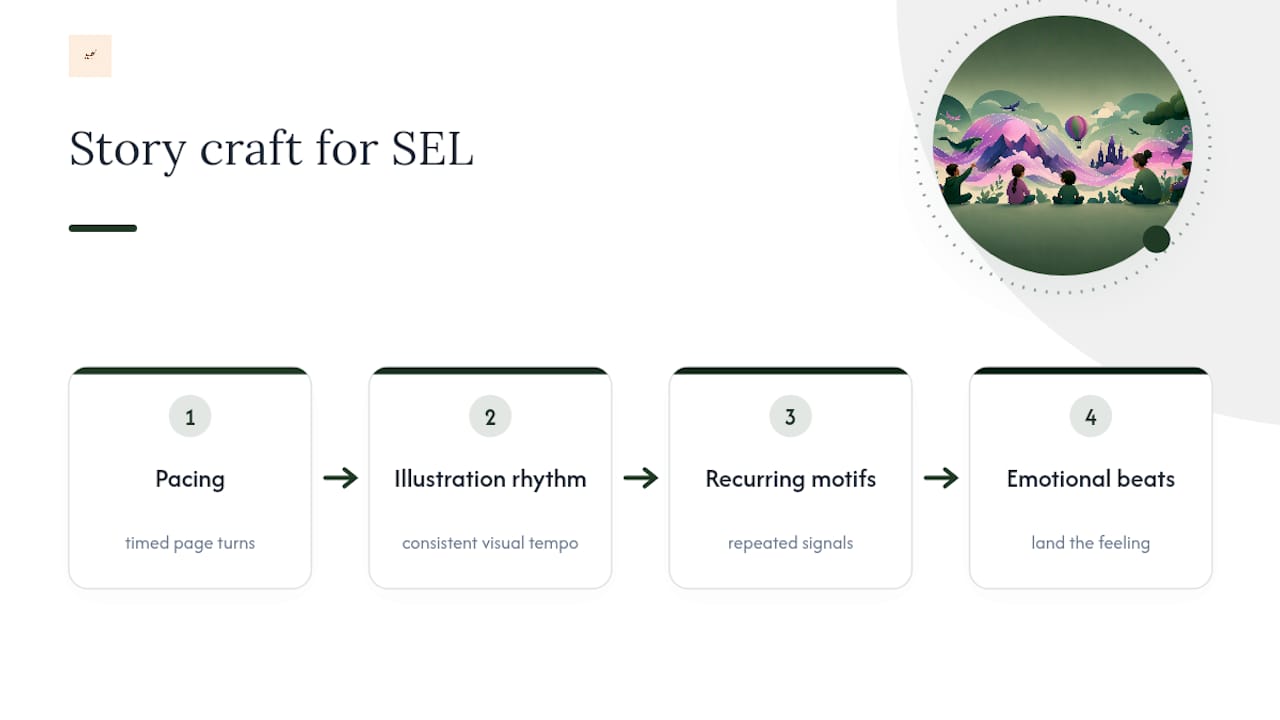
Libraries and educators who treat book selection as purely a content checklist, does it mention feelings, does it check a diversity box, miss half of what makes a picture book work. The other half is craft: pacing, illustration rhythm, and whether the story respects a child's intelligence enough to let them arrive at the feeling themselves.
Icon Literary: picture books and kits built for SEL from the page up
Icon Literary designs picture books and companion materials with CASEL competencies built into the story structure itself, not added as an afterthought discussion guide. That means librarians and parents get read-aloud-ready books where the mental-state questions practically write themselves, because the character arcs are built to invite them.
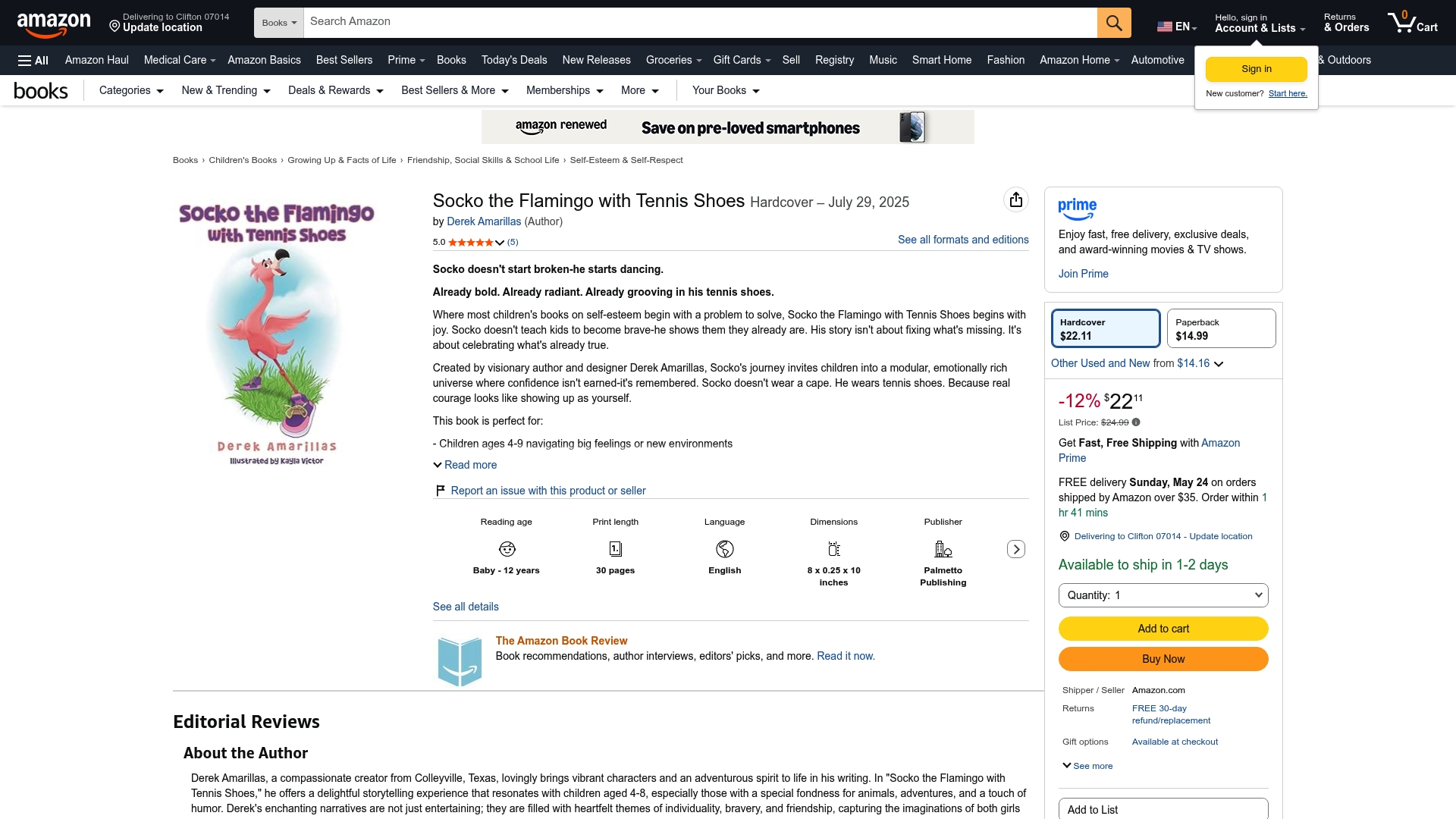
The catalog includes original picture books for ages 3 to 8, printable activity kits that turn a single storytime into a week of take-home practice, and themed card decks that work as emotion-match or perspective-shift tools without any extra prep. Libraries can pull a book for a storytime and hand families a matching kit on the way out. Parents can use the same materials at home to keep a single library visit's momentum going for weeks. Browse the Icon Literary catalog to see current titles and formats, or visit the main site for partnership inquiries if you're building a library or classroom program at scale.
Frequently Asked Questions
What is the role of picture books in public library SEL programs? Picture books give libraries a ready-made, low-cost tool for teaching CASEL-aligned skills, especially when librarians model mental-state questions during storytime and send families home with follow-up prompts.
How do picture books support social-emotional learning specifically? They pair a visual narrative with a text narrative, letting children practice reading emotional cues in illustrations while building the vocabulary to name what they see, a combination linked to stronger learning understanding in controlled classroom research.
What should I look for when choosing SEL picture books at the library? Check for CASEL alignment, illustration-driven emotional cues, authentic cultural representation, and age-appropriate emotional complexity, and cross-reference against trusted sources like ALSC Notable or Booklist before committing to a title.
Are wordless picture books good for SEL? Yes. Because there's no text to rely on, children narrate the story from images alone, which strengthens perspective-taking and empathy more directly than text-heavy books.
How can parents use library picture books for SEL at home? Borrow from a library's SEL-themed display, ask one mental-state question per page during read-aloud ("What is she feeling right now?"), and reinforce it with a simple take-home activity like drawing how a scene made your child feel.
Do library SEL storytime programs actually work? Evidence from early-literacy program evaluations shows measurable gains in children's literacy behaviors and shifts in parent reading habits at home, particularly when programs run as a series rather than a single session.
Sources
- Picture book reading improves children's learning understanding (PMC)
- Wordless storytelling: building visual literacy (University of Illinois)